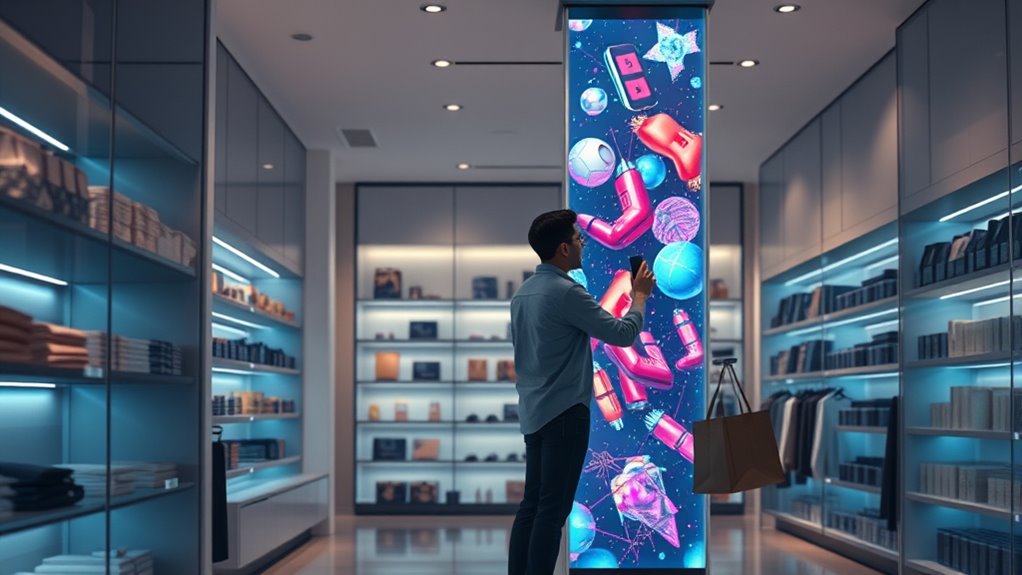

The next retail revolution is all about voice-led, visual, and AI-powered technologies transforming how you shop. With smarter voice assistants, you can find products, place orders, and get support hands-free, while visual AI helps you quickly locate items by images or scans. These innovations make shopping more personalized, efficient, and secure, shaping the future of retail. Keep exploring to discover how these advances will change your shopping experience even further.

Get hardware and tech essentials delivered free with Prime
- Fast, free delivery on millions of items
- Prime Video, Amazon Music and more included
- Member-only deals all year
Key Takeaways
- Voice, visual, and AI technologies are transforming retail by enabling personalized, seamless, and intuitive shopping experiences.
- Consumers increasingly expect tailored recommendations, boosting loyalty and sales through AI-driven personalization.
- Voice interfaces facilitate hands-free searches, ordering, and support, enhancing multi-channel shopping convenience.
- Visual AI enables quick product searches via images, real-time inventory management, and cashierless checkout systems.
- The retail AI market is projected to reach $243.7 billion by 2025, driving continuous innovation in the industry.
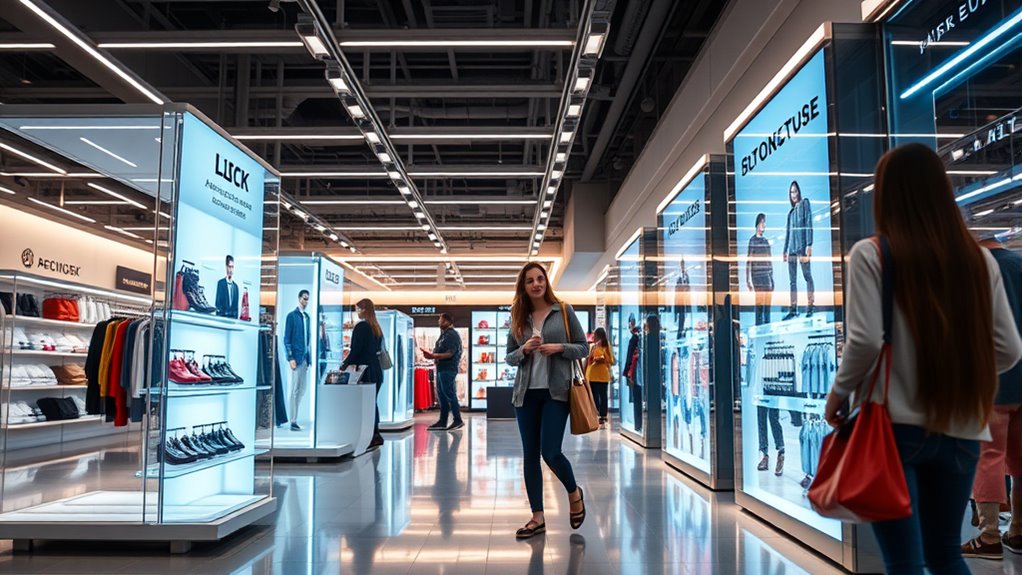
The retail landscape is undergoing a profound transformation as voice-led, visual, and AI-powered technologies reshape how you discover, browse, and purchase products. These innovations are not just trends—they’re revolutionizing the shopping experience, making it more personalized, efficient, and intuitive. By 2025, AI is expected to influence over half of all retail purchase decisions in the U.S., driving both operational efficiency and hyper-personalization valued at nearly a quarter-trillion dollars. You’ll notice this shift through increased relevance in product recommendations, tailored offers, and seamless interactions across channels. Major retailers like Amazon and Walmart already generate over $200 billion in sales from AI-driven personalized experiences, emphasizing how vital this technology has become. As a consumer, you now expect personalized shopping interactions, with about 71% of shoppers wanting tailored recommendations. When retailers deliver on this, they see a sales boost of around 5% to 7%, along with a 2-5 percentage point improvement in operating profit margins. Meanwhile, 65% of shoppers feel more loyal to brands that provide personalized experiences, though 33% get frustrated with irrelevant suggestions. For retailers, maintaining trust through ethical AI use is essential, especially as privacy concerns grow and AI increasingly automates and supports workforce productivity. The U.S. retail AI market is projected to reach $243.7 billion in 2025, further fueling these innovations. Voice-led interfaces further elevate your shopping experience by enabling hands-free product searches, ordering, and customer support. With AI-enhanced voice assistants, these interactions become more natural, understanding your intent and preferences better than ever before. Voice search complements mobile shopping, making it more accessible—particularly for visually impaired or multitasking shoppers. It also reduces friction during checkout and customer service, allowing real-time offers and assistance to be delivered seamlessly. When combined with visual recognition technologies, voice interfaces create multi-modal experiences that facilitate discovery and purchasing workflows, providing a richer, more intuitive retail environment. These innovations mean you can simply speak or show an image to find what you’re searching for, speeding up the journey from discovery to purchase. Visual AI technologies are transforming how products are found and bought. Visual search tools let you upload images or take pictures to locate exactly what you want, cutting down on search time. Automated smart carts and autonomous stores use visual AI to scan items in real-time, letting you enjoy touchless checkout and increasing store efficiency. In warehouses, AI-powered robots leverage computer vision to quickly locate and pack products, optimizing logistics. Moreover, higher contrast ratios in visual technology enhance the clarity of product images, ensuring that you see the details that matter most. Visual AI also boosts security by spotting suspicious activity and helps manage inventory through real-time shelf monitoring. These advancements ensure products are available when you want them, and stores operate more smoothly. Overall, AI-driven insights into customer behavior and operations empower retailers to make smarter decisions, increasing sales, margins, and profitability. As these technologies continue to evolve, your shopping experience will become more personalized, convenient, and secure—fueling the next wave of retail innovation.
voice-activated shopping assistant
As an affiliate, we earn on qualifying purchases.
As an affiliate, we earn on qualifying purchases.
Frequently Asked Questions
How Will Voice-Led Shopping Impact Traditional Retail Jobs?
Voice-led shopping will change your retail jobs markedly. You might see fewer roles focused on manual tasks like checkout or product searches, but new opportunities will arise in managing voice systems, AI training, and customer support. To stay relevant, you’ll need to upskill in digital literacy, AI, and voice technology. Embracing these changes can help you adapt and find new roles in a more automated, tech-driven retail environment.
What Privacy Concerns Arise With Ai-Powered Retail Technologies?
You might worry about AI-powered retail technologies collecting and using your data without clear consent, leading to privacy breaches. You could feel uncomfortable if your data is used in ways you don’t understand or trust, especially with risks of bias or inaccurate recommendations. Many shoppers want transparency, control, and assurance that their personal information won’t be misused or shared without permission. Protecting your privacy remains a key concern as AI evolves in retail.
How Accessible Are These New Retail Innovations for All Consumers?
Can everyone truly access these new retail innovations? While many find voice assistants and visual AI helpful, accessibility isn’t universal. You might struggle with complex systems, lack the latest devices, or face privacy concerns. Smaller retailers may lack resources, and the digital divide leaves some behind. So, despite progress, these innovations still exclude certain groups, making it clear that true inclusivity requires ongoing effort and thoughtful design.
Will Small Retailers Be Able to Adopt Voice and Visual Tech Affordably?
Yes, small retailers can adopt voice and visual tech affordably, thanks to ready-made solutions starting around $5,000. While more customized systems may cost more, many small businesses find the investment worthwhile because of benefits like increased efficiency and reduced operational costs. Additionally, the growing usability and accuracy of these technologies make adoption easier, enabling small retailers to improve customer experience and stay competitive without breaking the bank.
How Do These Technologies Influence Consumer Behavior Long-Term?
Think of these technologies as a personal shopping assistant that learns your preferences over time. As a result, you’ll shop faster, with 47% quicker purchases and a 35% boost in order value. Over the long run, they shape your habits, making shopping more seamless and personalized. You’ll trust AI more, rely on voice for daily essentials, and enjoy smoother, more engaging experiences, creating loyalty and transforming how you buy.
As an affiliate, we earn on qualifying purchases.
Conclusion
As you step into this new retail era, remember that voice-led, visual, and AI-powered experiences will transform how you shop, making it faster and more personalized than ever. Don’t get stuck in the past like a dial-up modem—embrace these innovations now. The future’s knocking, and it’s smarter, sleeker, and more intuitive. Get ready to shop like it’s 2099, today, because this revolution isn’t waiting around.
AI-powered personalized shopping
As an affiliate, we earn on qualifying purchases.
As an affiliate, we earn on qualifying purchases.
hands-free smart speaker for shopping
As an affiliate, we earn on qualifying purchases.
As an affiliate, we earn on qualifying purchases.
Halloween Picks
halloween
As an affiliate, we earn on qualifying purchases.