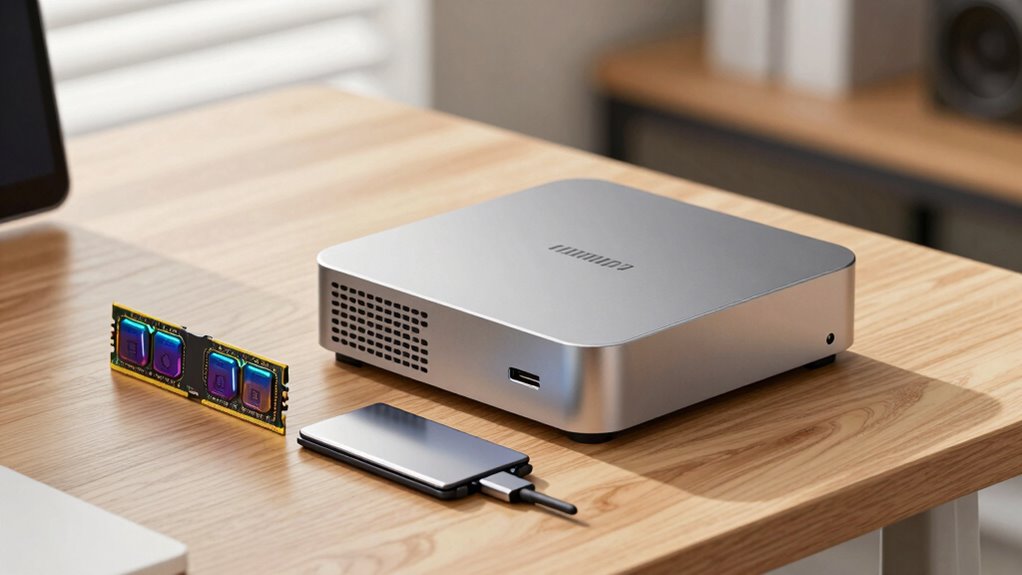
Start by choosing at least 8GB of RAM for everyday tasks or 16GB+ for gaming and multitasking. Make sure the RAM is compatible with your mini PC’s motherboard and CPU, and consider faster speeds for better responsiveness. Select a storage setup that balances speed and capacity, like an SSD or hybrid drive, and add encryption for security. Pick a versatile smart port—such as USB-C—to support data, power, and peripherals. Keep these tips in mind, and you’ll be set for a powerful, future-proof mini PC.

Get hardware and tech essentials delivered free with Prime
- Fast, free delivery on millions of items
- Prime Video, Amazon Music and more included
- Member-only deals all year
Key Takeaways
- Prioritize at least 8GB RAM for basic tasks, and 16GB+ for gaming and multitasking, ensuring compatibility with your mini PC.
- Choose fast SSD storage, preferably NVMe, for responsive performance, and consider hybrid or scalable options for future needs.
- Select a USB-C port for versatile connectivity, supporting data transfer, charging, and display output to maximize device flexibility.
- Balance components for future upgrades, including accessible RAM slots, expandable storage, and support for newer connectivity standards.
- Opt for a compact, well-ventilated case that complements your aesthetic while supporting cooling and easy maintenance.
How to Choose the Right RAM for Your Mini PC
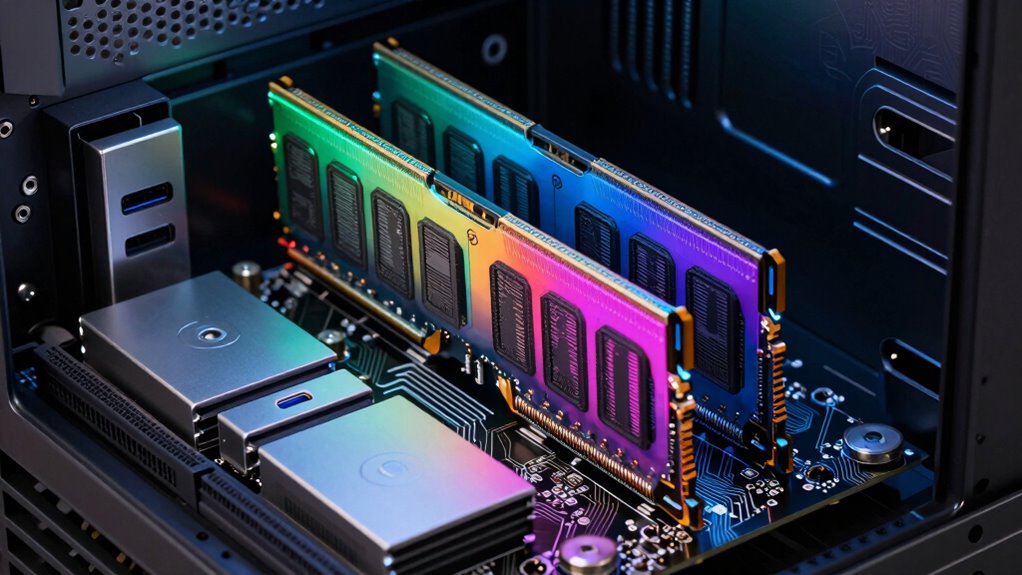
Choosing the right RAM for your mini PC is essential for guaranteeing smooth performance and multitasking capabilities. When selecting RAM, consider your needs beyond basic tasks—gaming peripherals demand faster, reliable memory to prevent lag, while strong network security benefits from sufficient RAM to handle multiple security tools and software. Opt for at least 8GB of RAM for everyday use, but upgrade to 16GB or more if you’re into gaming or running multiple security applications simultaneously. Check your mini PC’s compatibility and supported RAM type to avoid issues. Faster RAM speeds can improve overall responsiveness, especially during intensive tasks. Compatibility considerations are vital to ensure your chosen RAM works seamlessly with your system. Additionally, understanding system bottlenecks can also help you optimize your setup for better overall performance. Properly configuring your RAM settings can prevent performance issues and enhance your device’s longevity. Being aware of memory upgrades can help you plan future enhancements and prevent potential compatibility problems. Ultimately, balancing capacity and speed ensures your mini PC performs efficiently, whether gaming, securing your network, or multitasking with various applications.
What RAM Speed Do You Need for Optimal Performance?
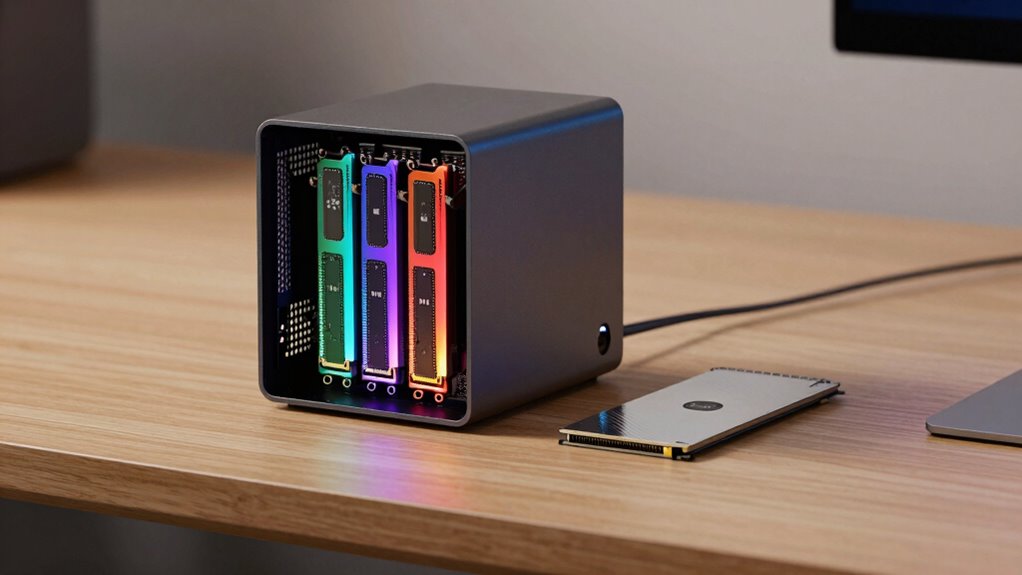
Once you’ve selected the right amount of RAM, the next step is to contemplate how RAM speed impacts your mini PC’s performance. Higher RAM speeds can improve data transfer rates, making tasks smoother and reducing latency. However, your system’s memory compatibility is vital; not all motherboards support the fastest RAM modules. Check your mini PC’s specifications to find the maximum supported speed. If you’re interested in RAM overclocking, verify your motherboard and CPU can handle the increased speeds safely. Remember, faster isn’t always better if your system can’t fully utilize it. For most users, sticking to the recommended RAM speed for your setup provides the best balance of performance and stability. Additionally, understanding the role of artificial intelligence in optimizing system performance can help you make more informed hardware choices. Incorporating system optimization tools that leverage AI can further enhance your mini PC’s efficiency, especially when managing hardware resources in real-time.
How to Select the Best Storage Options for Your Mini PC

Choosing the right storage options depends on understanding the different types and their benefits, like speed and reliability. You should consider how the capacity aligns with your current and future needs, ensuring your setup stays relevant. Balancing performance, size, and future-proofing helps you pick the best storage for your mini PC. Additionally, exploring options like enterprise USB backups can provide robust and scalable solutions for data security.
Storage Types and Benefits
Selecting the right storage type for your mini PC is essential because it directly impacts speed, reliability, and overall performance. SSDs offer faster data access, making your system feel more responsive, while HDDs provide larger capacities at a lower cost. For added security, consider storage options that support data encryption, protecting your sensitive information. Cloud backup options complement local storage by providing off-site safety, ensuring your data stays safe even if hardware fails. If you handle sensitive data, choosing encrypted storage helps prevent unauthorized access. Hybrid setups combining SSDs and HDDs can balance speed and capacity efficiently. Ultimately, your choice depends on your needs for speed, storage size, and security, ensuring your mini PC runs smoothly and safely. Incorporating smart home safety features can further enhance your overall setup by safeguarding your data and devices from potential threats.
Speed and Performance
To guarantee your mini PC delivers peak speed and performance, focus on the type of storage you choose. Solid-state drives (SSDs) offer faster read/write speeds than traditional HDDs, ensuring quicker boot times and smoother multitasking. Consider NVMe SSDs for ultimate performance, especially if speed is a priority. Keep security concerns in mind—encrypted drives or secure storage options help protect sensitive data. Additionally, select a storage solution that complements your mini PC’s aesthetic design; sleek, compact drives blend seamlessly without clutter. The right choice balances speed with security and style, giving you a responsive system that looks good and keeps your data safe. Prioritize high-speed, reliable storage to maximize your mini PC’s performance.
Capacity and Future Proofing
When considering storage options for your mini PC, it’s vital to think about capacity needs and how they might evolve over time. You want enough space for current files, applications, and future growth, without sacrificing energy efficiency or aesthetic design. Opt for SSDs with higher capacities, but also consider external drives for flexibility. To future-proof, select storage that can be easily upgraded or expanded as your requirements grow. Additionally, understanding storage scalability can help ensure your setup remains efficient as your data storage needs increase. Considering the modular design of storage options can further enhance your ability to adapt and upgrade your system seamlessly.
Which Smart Ports Are Essential for a Mini PC?
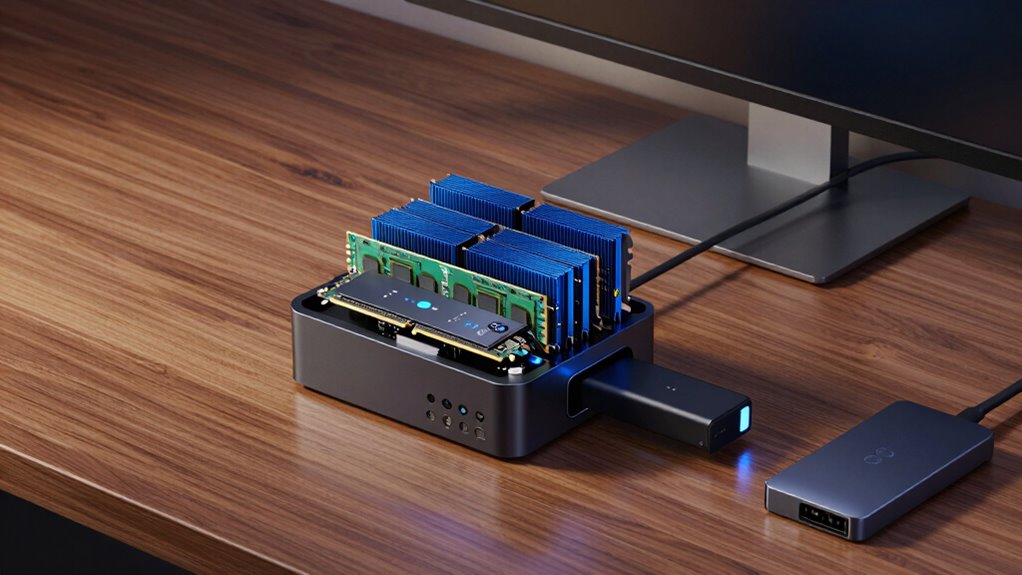
When choosing ports for your mini PC, consider the flexibility of USB-C, which can handle data transfer, charging, and video output all in one. An HDMI port is essential for connecting a monitor or TV, ensuring clear visuals. Additionally, an Ethernet port provides a stable internet connection, especially important for work or streaming. Including a port with high refresh rates can also enhance gaming or multimedia experiences.
USB-C Versatility
USB-C has become a must-have port for mini PCs because of its versatility and speed. It supports fast data transfer, power delivery, and multiple functionalities through a single port. With USB-C, you can easily connect peripherals, handle wireless charging, and enable Bluetooth connectivity without extra adapters. This makes your setup cleaner and more efficient. To maximize its potential, focus on these key features:
- Wireless charging support – charge compatible devices directly via USB-C, reducing clutter.
- Bluetooth connectivity – connect wireless peripherals seamlessly.
- Fast data transfer and power delivery – transfer files quickly and power your mini PC efficiently.
- Future-proofing is also essential, as USB-C standards continue to evolve and expand their capabilities. Additionally, choosing a port that supports multi-functionality ensures your setup remains adaptable to new devices and technologies.
Having USB-C with these features ensures your mini PC stays versatile, future-proof, and capable of handling multiple tasks effortlessly.
HDMI for Display
Ever wondered how you can easily connect your mini PC to a display? HDMI is the go-to port for this, offering seamless video and audio transfer. When choosing an HDMI port, consider the display resolution you want—whether Full HD, 4K, or even 8K. HDMI standards, like HDMI 2.0 or HDMI 2.1, determine the maximum resolution and refresh rate your setup can handle, so picking the right version is vital for future-proofing. Most mini PCs now support at least HDMI 2.0, ensuring smooth 4K playback. Make sure your monitor or TV also supports the HDMI standard you choose for ideal performance. A good HDMI port helps you get the best visual experience, whether you’re working, gaming, or streaming.
Ethernet for Stability
Have you considered how your mini PC stays connected reliably during intensive tasks or streaming? Ethernet is vital for stability, especially when wireless connectivity might falter. A wired connection ensures faster speeds, lower latency, and fewer interruptions. Plus, it helps with power management, reducing strain on wireless modules.
Here are three smart ports to prioritize:
- Gigabit Ethernet port — ensures fast, stable wired connection.
- USB-C with Ethernet support — offers versatile connectivity options.
- Multiple Ethernet ports — useful for network management or bridging.
Choosing the right Ethernet port helps maintain a steady connection, minimizes lag, and supports your mini PC’s performance under load. It’s a smart investment for reliable, consistent network stability.
Balancing Performance and Budget in Your Mini PC Build
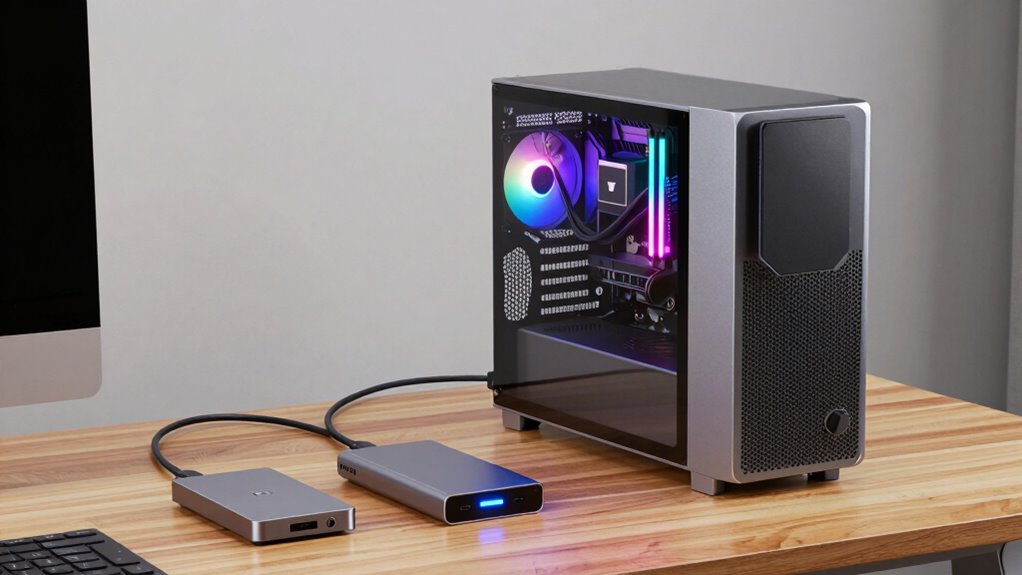
Balancing performance and budget is essential when building a mini PC, especially since space constraints limit your options for high-end components. To get the most value, choose energy-efficient parts that save power and reduce heat, lowering your overall costs. Remote management features can help you maintain and troubleshoot your system without needing physical access, saving time and money. Prioritize components that meet your core needs—such as a capable CPU and sufficient RAM—without overspending on extras you’ll rarely use. Consider integrated graphics for basic tasks instead of dedicated GPUs to cut costs. By focusing on efficient, scalable components, you guarantee your mini PC delivers solid performance while staying within your budget, making it a smart, sustainable investment.
Tips for Future-Proofing Your Mini PC Setup

To guarantee your mini PC remains useful for years to come, focus on selecting components that can handle future software updates and increasing workloads. Prioritize upgrading your wireless connectivity options, like choosing Wi-Fi 6 or newer, to ensure faster, more reliable connections as networks evolve. Invest in effective cooling solutions, such as advanced fans or heat sinks, to prevent overheating during heavier tasks and extend hardware lifespan. Additionally, consider future-proofing by choosing a motherboard with multiple RAM slots and support for larger SSDs, enabling easy upgrades down the line. These steps help your mini PC stay relevant, perform smoothly, and adapt to tech advancements without requiring a complete overhaul.
Common Mistakes to Avoid When Picking RAM, Storage, and Ports
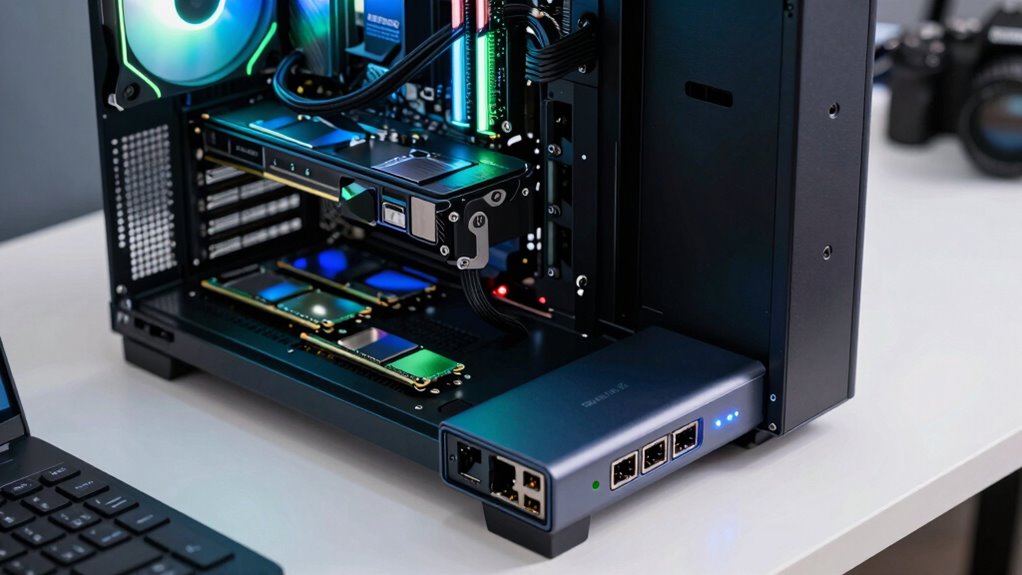
When choosing RAM, storage, and ports, you might overlook compatibility issues that can cause problems later. It’s also easy to ignore future expansion needs, which could limit your mini PC’s growth. Being aware of these mistakes helps you build a setup that’s reliable now and adaptable later.
Overlooking Compatibility Issues
Many people overlook compatibility issues when selecting RAM, storage, and ports for their mini PC, which can lead to costly mistakes or system instability. Disregarding these factors often results in hardware conflicts that prevent components from working together smoothly. To avoid this, consider these key points:
- Check your motherboard’s specifications to guarantee compatible RAM speeds and sizes.
- Verify that your storage device fits the available ports and supports the right interface (e.g., SATA or NVMe).
- Confirm that ports, like USB types or HDMI, match your peripherals and display requirements.
- Understand the importance of hardware compatibility to ensure all components work seamlessly together.
Ignoring Future Expansion
Failing to contemplate future expansion options can leave your mini PC feeling limited shortly after purchase. If you overlook upgrade potential, you might struggle with remote access or adding new storage down the line, forcing a costly replacement. Think ahead about how you’ll grow your setup without sacrificing aesthetic design or functionality. Incorporating fundamentals like compatible blades and proper handling techniques can ensure your setup remains efficient and safe as you upgrade.
How to Upgrade Your Mini PC’s RAM, Storage, and Ports Later
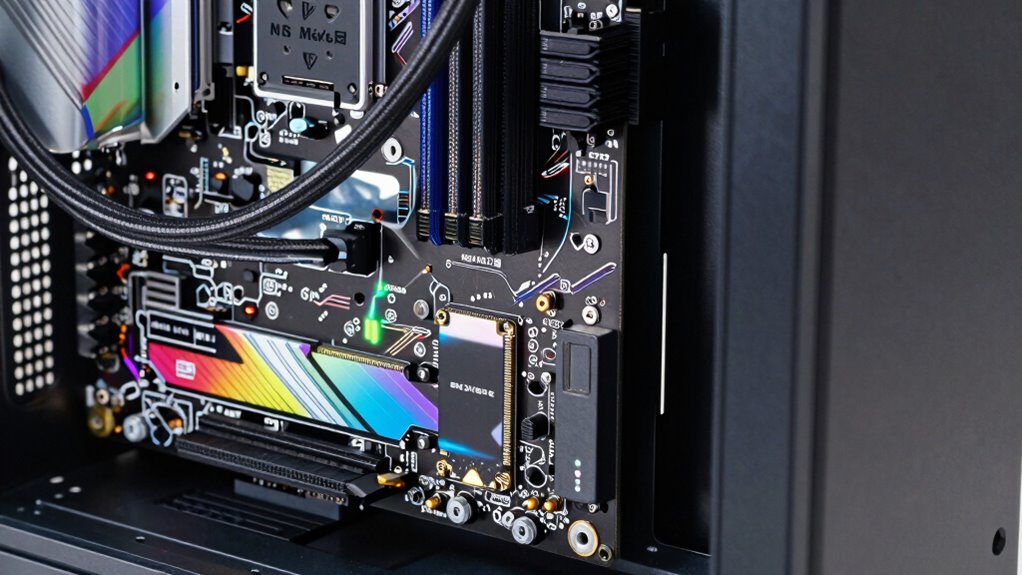
Upgrading your mini PC’s RAM, storage, and ports can substantially enhance its performance and extend its lifespan, and doing so later is often straightforward if you plan ahead. To make upgrades easier, choose a mini PC with accessible components, especially for RAM and storage. When upgrading:
- Prioritize adding more RAM, which can improve multitasking without affecting mini PC aesthetics or cooling.
- Opt for larger or faster storage options, ensuring compatibility with your system’s interface.
- Select a mini PC with versatile ports, such as USB-C, to future-proof your setup and simplify expansion.
Keeping your mini PC well-ventilated helps maintain optimal mini PC cooling, especially after upgrades. Planning for these upgrades ensures your mini PC remains efficient and sleek over time.
The Best Practices for Building a Reliable Mini PC
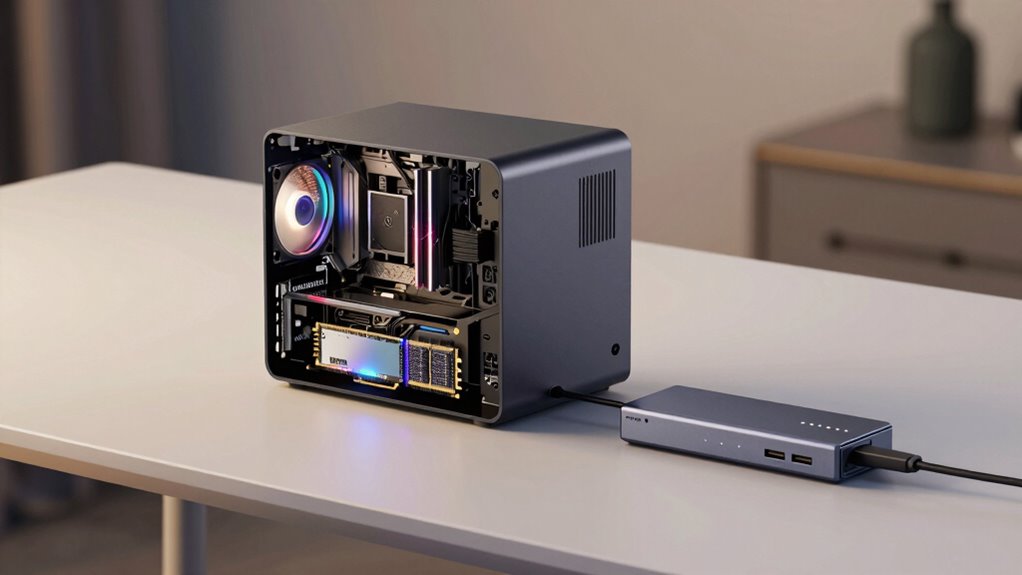
Building a reliable mini PC starts with careful component selection and thoughtful assembly. To guarantee stability and performance, choose quality parts, like a solid power supply and cooling system. Proper cable management prevents overheating and improves airflow. When setting up for cloud gaming or dual monitors, prioritize a dependable GPU and sufficient RAM. Use a sturdy chassis that supports future upgrades. Regularly update firmware and drivers to maintain compatibility. Consider a backup solution for critical data. Keep your workspace organized to avoid accidental damage. These practices help you build a mini PC that’s dependable, especially when multitasking or streaming content. Additionally, paying attention to thermal management ensures your system remains cool under load, extending component lifespan and maintaining optimal performance. Implementing security measures can also protect your setup from potential cyber threats, particularly if your mini PC is connected to the internet. Proper power management further enhances system reliability by preventing unexpected shutdowns or hardware stress during power fluctuations. Incorporating monitoring tools can help you keep an eye on system health and proactively address issues before they cause failures. Regularly inspecting and cleaning internal components also helps maintain thermal efficiency over time.
Final Tips for Building a Powerful, Future-Ready Mini PC

To guarantee your mini PC remains powerful and future-proof, focus on selecting versatile components that can handle upcoming technology demands. Prioritize mini PC aesthetics by choosing sleek designs that blend seamlessly into your workspace, while ensuring good airflow. Effective cooling solutions are essential—consider advanced fans, heat sinks, or liquid cooling to prevent overheating during intensive tasks. Incorporate modern family expectations into your setup by choosing components that accommodate evolving user needs and preferences.
Here are three final tips:
- Invest in quality cooling solutions to maintain performance and extend component lifespan.
- Opt for a compact, stylish case that offers good ventilation and complements your setup.
- Choose adaptable components, like upgradeable RAM and storage, to future-proof your build.
With these tips, your mini PC will stay powerful, stylish, and ready for future challenges.
Frequently Asked Questions
How Does Mini PC Size Impact Component Compatibility?
Your mini PC size directly impacts component compatibility due to its compact design. Smaller cases often limit the number and size of components you can install, creating component limitations. You might have to choose slimmer or specialized parts, like low-profile graphics cards or smaller storage drives. This means you must carefully select components that fit within the size constraints, ensuring your mini PC remains functional without sacrificing performance.
Are There Specific Brands Recommended for Mini PC RAM and Storage?
You should choose reputable brands like Kingston, Crucial, or Samsung for mini PC RAM and storage to guarantee brand compatibility and component longevity. These brands are known for quality and reliability, making them a smart choice for your setup. By selecting well-established brands, you reduce the risk of compatibility issues and extend your mini PC’s lifespan, assuring smooth performance and fewer replacements down the line.
What Are the Best Cooling Solutions for Mini PC Components?
Did you know cooling efficiency directly impacts mini PC lifespan? For best cooling, consider liquid cooling solutions—they’re highly effective at managing heat in tight spaces. Additionally, customizing fan configurations helps improve airflow and keeps components cool during intensive tasks. Combining liquid cooling with well-placed fans ensures your mini PC maintains peak performance while preventing overheating, ultimately extending its longevity and reliability.
Can I Upgrade My Mini Pc’s Ports Later Easily?
Yes, upgrading your mini PC’s ports later is generally easy, especially if it supports peripheral compatibility and future expansion. Many mini PCs have accessible ports or modular designs that let you add or replace USB, HDMI, or other connections without much hassle. Check your device’s specifications first, but with the right setup, you can enhance its connectivity as your needs grow, ensuring your mini PC remains versatile over time.
How Do Power Supply Requirements Vary With Different Mini PC Setups?
Power supply needs vary greatly depending on your mini PC setup. For example, high-performance configurations with powerful CPUs and GPUs demand more wattage, impacting power efficiency. You should consider voltage regulation to guarantee stable operation. On average, mini PCs use between 65W and 150W, but gaming or workstation models may require more. Matching your power supply to your setup ensures peak performance and longevity, preventing overloads and inefficiencies.
Conclusion
Building a mini PC isn’t just about choosing the fastest RAM or biggest storage—it’s about smartly balancing performance with budget. While high-speed RAM and ample storage might seem tempting, overlooking essential ports or future upgrades can limit your setup’s potential. Think of your mini PC as a compact powerhouse: it’s not just how much you pack in, but how well you optimize each component. Make thoughtful choices today, for a future-ready, reliable mini PC tomorrow.
Halloween Picks
halloween
As an affiliate, we earn on qualifying purchases.