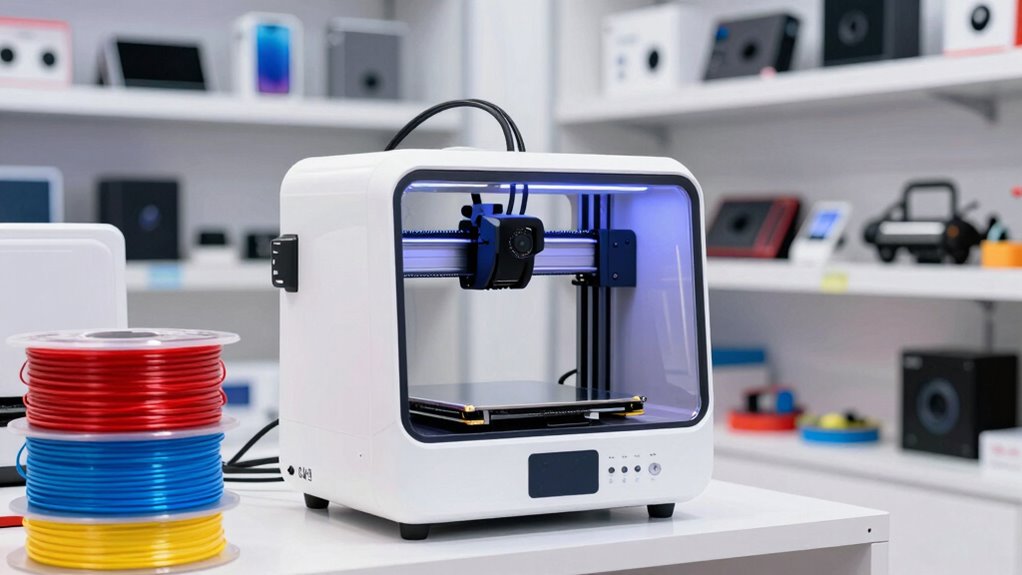

When buying your first 3D printer, focus on key features that matter, like filament compatibility, build volume, and ease of use. Don’t get sidetracked by speed or flashy specs that don’t suit beginners. Instead, prioritize reliable performance and user-friendly setup. By staying on track with what truly impacts your projects, you’ll make a better choice. Keep going, and you’ll discover how to pick the best printer for your needs.

Get hardware and tech essentials delivered free with Prime
- Fast, free delivery on millions of items
- Prime Video, Amazon Music and more included
- Member-only deals all year
Key Takeaways
- Focus on material compatibility and ease of use rather than just print speed or brand reputation.
- Prioritize your specific project needs and desired print quality over flashy features.
- Choose a beginner-friendly FDM printer with a heated bed and simple setup.
- Set a realistic budget that balances performance and long-term material costs.
- Avoid comparing technical specs; instead, evaluate user reviews and reliability for your skill level.
beginner FDM 3D printer with heated bed
As an affiliate, we earn on qualifying purchases.
As an affiliate, we earn on qualifying purchases.
What Beginner Buyers Need to Know Before Buying a 3D Printer
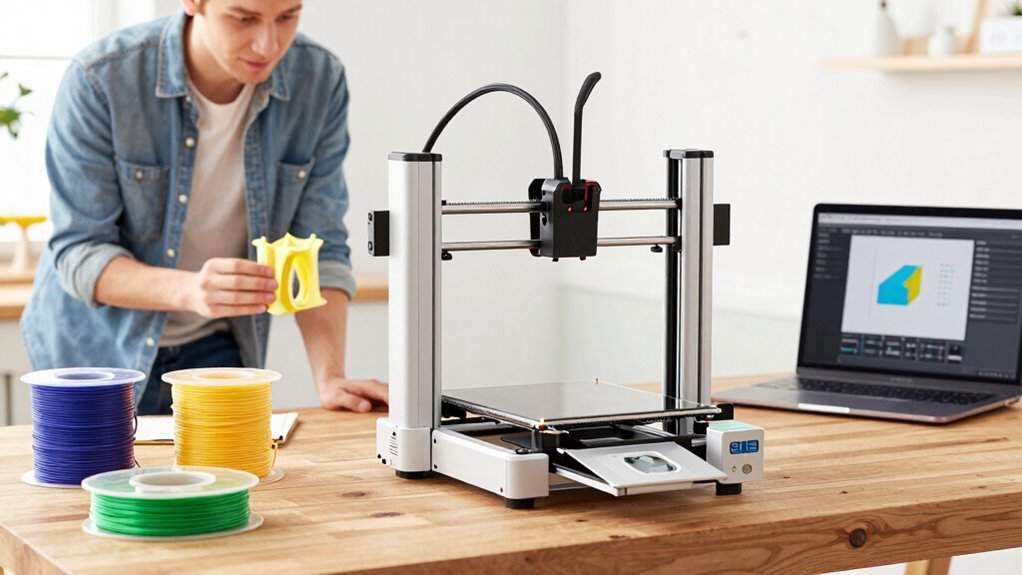
Before you buy your first 3D printer, it’s important to understand what features and specifications matter most for beginners. Material compatibility is essential—look for a printer that works with common filaments like PLA, ABS, or PETG, so you’re not limited in your options. Printing speed also matters; a faster printer can help you complete projects quicker and keep your workflow smooth. Keep in mind that some printers may sacrifice quality for speed, so find a balance that suits your needs. Ease of use, setup, and reliable performance are equally important, but don’t overlook how well the machine handles different materials and how quickly it can produce quality prints. Focusing on these key features makes your first purchase more successful. Additionally, understanding contrast ratio can help you choose a projector that displays clear and vibrant images, which is especially important if you plan to use it for presentations or viewing media. When evaluating options, paying attention to **Material compatibility** can ensure your printer remains versatile as you grow in your skills.
best filament compatible 3D printer for beginners
As an affiliate, we earn on qualifying purchases.
As an affiliate, we earn on qualifying purchases.
How to Choose the Right 3D Printer for Your Needs
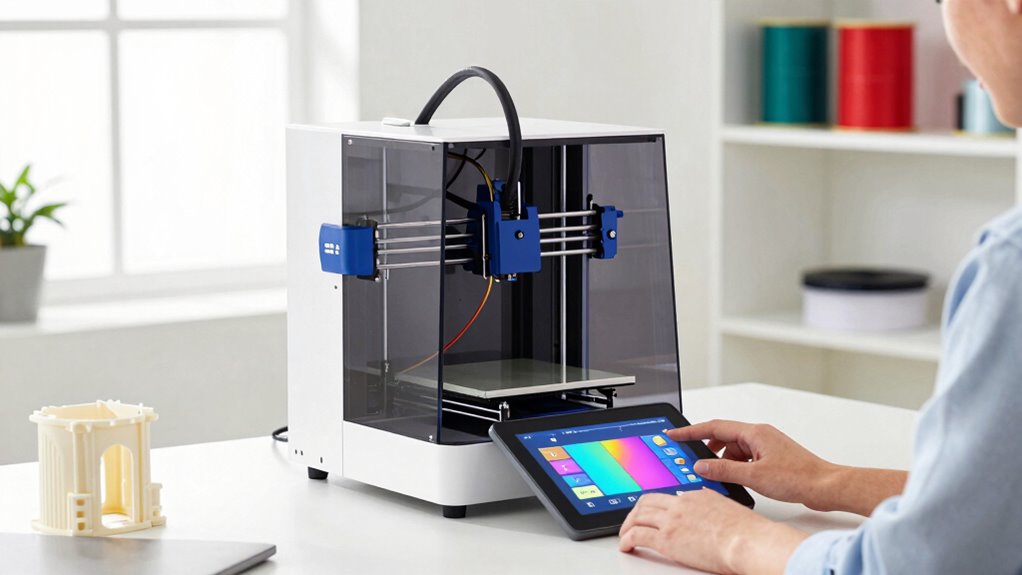
Choosing the right 3D printer depends on understanding your specific needs and goals. To make an informed decision, consider these key factors:
Selecting the ideal 3D printer requires understanding your unique needs and priorities.
- Material compatibility — Confirm the printer works with the materials you want to use, like PLA, ABS, or flexible filaments. Being aware of different printer types and their features can help you select the best fit for your projects.
- Print speed — Decide if faster production is essential or if slower, more detailed prints suit your projects.
- Build volume — Match the printer’s size capabilities to the size of your typical prints.
- User interface — Choose a model with an intuitive interface for easier operation and troubleshooting.
- Understanding the knowledge — Being aware of different printer types and their features can help you select the best fit for your projects.
easy setup 3D printer for beginners
As an affiliate, we earn on qualifying purchases.
As an affiliate, we earn on qualifying purchases.
How Much Should You Budget for Your First 3D Printer?
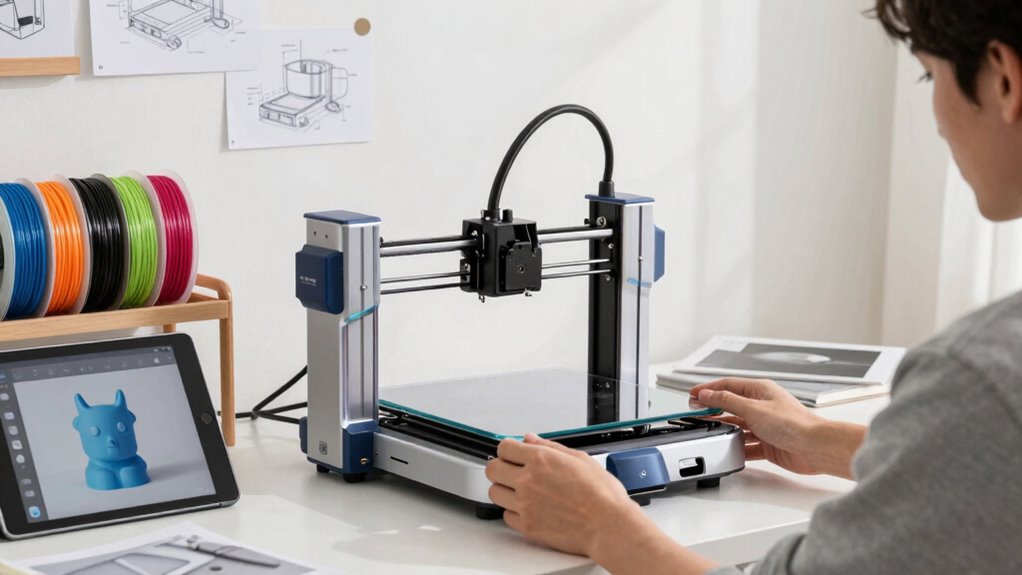
Understanding your budget is essential when purchasing your first 3D printer, as prices can vary widely based on features and capabilities. Budget range options typically start around a few hundred dollars for basic models and go up to several thousand for advanced units. Consider material compatibility, since some printers handle specific filaments better than others, which impacts long-term costs. Print speed also matters—faster printers can save you time but often come with a higher price tag. Decide what’s more important for your projects: affordability or performance. It’s wise to set a realistic budget that balances quality with your needs. Remember, investing in a reliable printer within your budget guarantees smoother operation and better results, making your 3D printing journey more enjoyable. Additionally, understanding the features and capabilities of different models can help you make a more informed decision. Being aware of the initial investment involved can also help set realistic expectations for your 3D printing experience. Furthermore, considering material handling capabilities can ensure you select a printer that accommodates the types of filaments you plan to use. A thorough review of brand reputation and customer support can also guide you toward a more satisfying purchase.
affordable 3D printers for first-time users
As an affiliate, we earn on qualifying purchases.
As an affiliate, we earn on qualifying purchases.
Which Type of 3D Printer Is Best for Beginners?
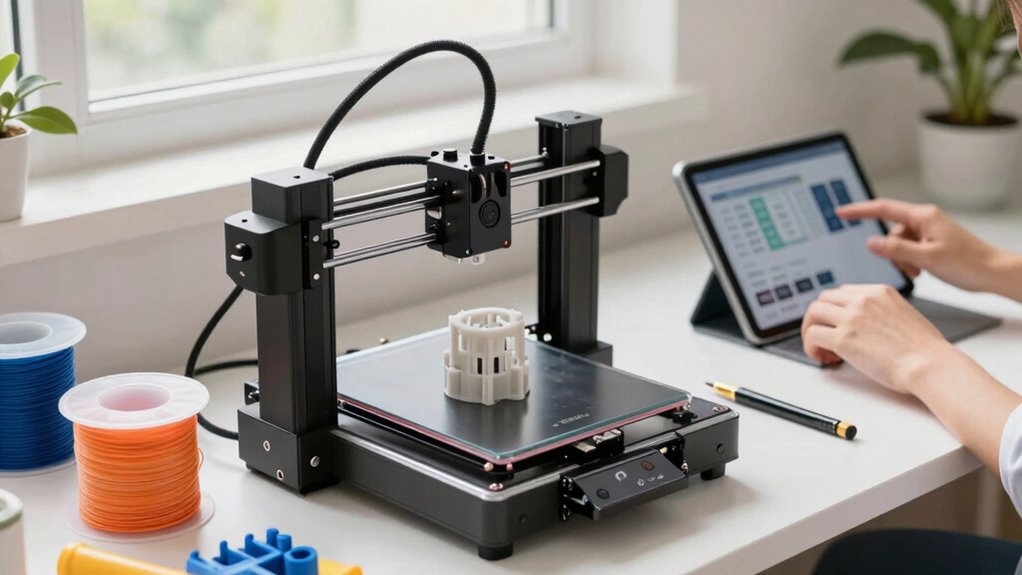
When starting out, selecting the right type of 3D printer can considerably impact your experience and results. For beginners, FDM (Fused Deposition Modeling) printers are ideal because they’re affordable, reliable, and easy to use. Consider these key factors:
- Print bed: Look for a printer with a heated print bed to improve adhesion and reduce warping.
- Filament compatibility: Choose a printer that works with common filaments like PLA and ABS to keep options open.
- Ease of setup: Opt for models with minimal assembly and user-friendly interfaces.
- Build volume: Select a size that fits your projects but isn’t overwhelming for a beginner.
This focus helps guarantee your first 3D printing experience is smooth, enjoyable, and successful.
Common Mistakes to Avoid When Buying Your First 3D Printer
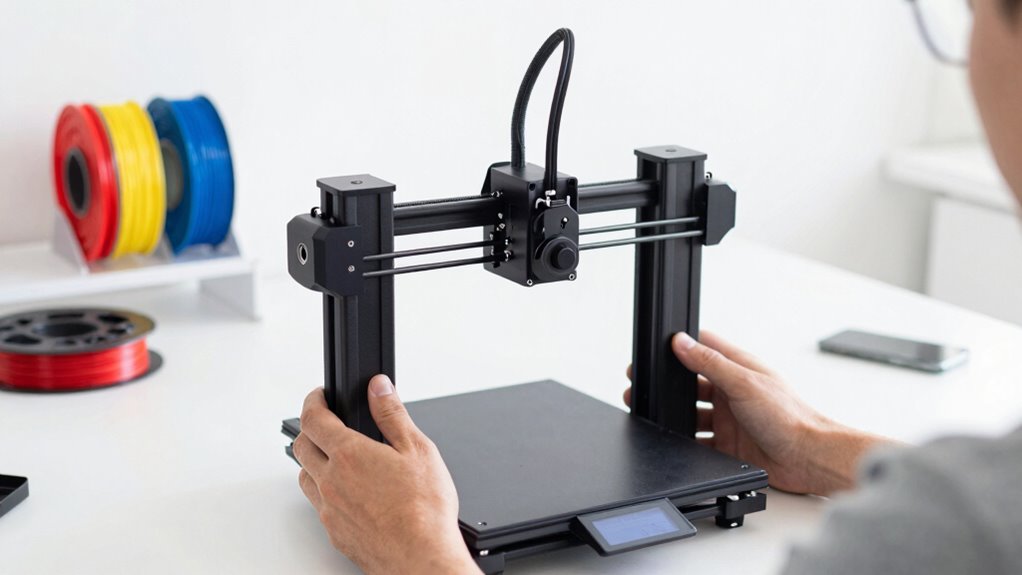
Buying your first 3D printer can be exciting, but it’s easy to make mistakes that could hinder your experience. One common mistake is ignoring filament compatibility; not all printers support every filament type, which can limit your options or cause printing issues. Be sure to check what materials the printer can handle before buying. Another mistake is focusing too much on print speed; faster isn’t always better if it sacrifices print quality or causes jams. Instead, look for a balanced speed that matches your projects and skill level. Avoid rushing into a purchase without researching these factors. Taking the time to understand filament compatibility and print speed guarantees you choose a printer that meets your needs and prevents frustration down the line.
Frequently Asked Questions
Can I Upgrade or Modify My 3D Printer Later?
Yes, you can upgrade or modify your 3D printer later. Many models support firmware modifications to improve performance or reveal new features. Hardware upgrades like adding a better extruder, improving the print bed, or upgrading the stepper drivers are also common. Just make certain your printer’s design allows for these upgrades, and check compatibility to avoid issues. Upgrading keeps your printer versatile and helps you achieve better print quality over time.
What Safety Precautions Should I Follow When Using a 3D Printer?
When using a 3D printer, prioritize filament safety by handling materials carefully and avoiding skin contact with fumes. Guarantee proper ventilation requirements are met by setting up your printer in a well-ventilated area or using an air purifier. Always keep the workspace clean, wear protective gear if needed, and supervise the printing process to prevent accidents. These precautions help keep your environment safe and your prints successful.
How Long Does It Typically Take to Learn 3D Printing?
Learning 3D printing is like climbing a gentle hill—initially slow, but gains come quickly with practice. The learning curve varies, but most beginners develop essential skills within a few weeks to months. As you experiment and troubleshoot, your confidence deepens. It’s not just about mastering the basics; it’s about ongoing skill development. With patience and curiosity, you’ll find yourself creating complex prints sooner than you think.
Are There Online Communities for Beginner 3D Printer Users?
Yes, there are many online communities for beginner 3D printer users, where you can learn about filament types, printer calibration, and troubleshooting. These groups often share tips, tutorials, and project ideas, helping you improve your skills quickly. Joining forums or social media groups allows you to ask questions and get support from experienced users, making your 3D printing journey more enjoyable and successful.
What Are the Best First Projects to Try With My 3D Printer?
Think of your first projects as planting seeds in a garden. Start with simple items like keychains or small toys to get comfortable with filament types and print resolution. These projects teach you how different materials behave and how to fine-tune your settings. As you gain confidence, you’ll enjoy creating more complex objects. Keep experimenting, and soon you’ll be harvesting impressive 3D prints with ease.
Conclusion
Choosing your first 3D printer isn’t about finding the fastest or the most expensive; it’s about finding what truly fits your needs. Don’t get caught up comparing specs that don’t matter for beginners. Instead, focus on your goals and budget. Like starting a new hobby, patience and understanding matter more than perfection. When you stop chasing the wrong comparisons, you’ll find a machine that sparks your creativity and growth.
Halloween Picks
halloween
As an affiliate, we earn on qualifying purchases.