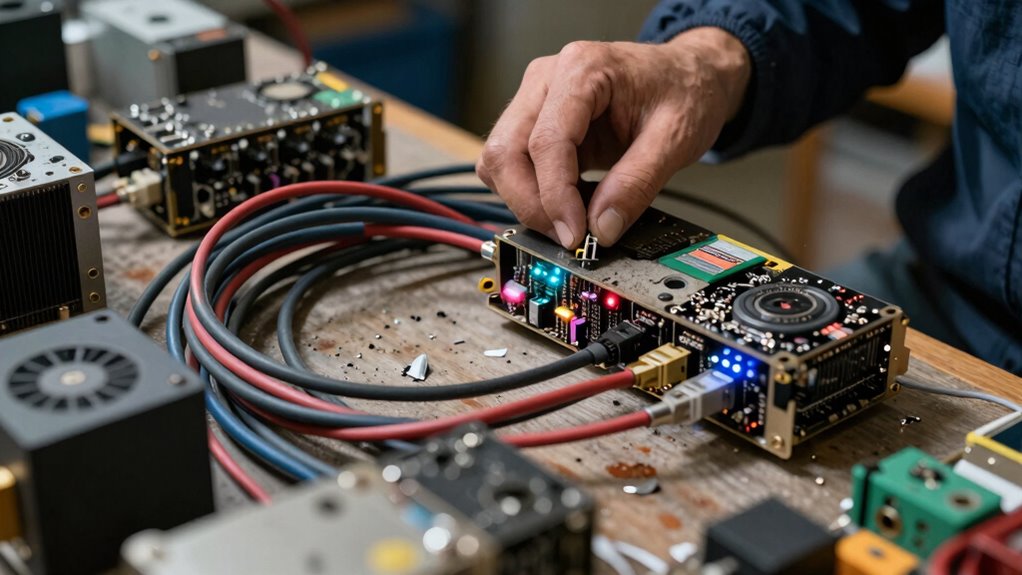

Plug-and-play mining still faces hurdles because hardware compatibility issues and energy efficiency challenges make seamless setup difficult. Different mining gear often requires specific components or firmware, causing delays or failures. The lack of universal standards worsens the situation, making integration tricky and costly. Plus, rapid hardware evolution leads to obsolescence, adding ongoing upgrade costs. If you want to understand why these obstacles persist and how they might be overcome, there’s more to explore.

Get hardware and tech essentials delivered free with Prime
- Fast, free delivery on millions of items
- Prime Video, Amazon Music and more included
- Member-only deals all year
Key Takeaways
- Diverse hardware options and lack of universal standards cause compatibility issues, hindering seamless plug-and-play setup.
- Rapid technological advancements lead to obsolescence, making long-term, plug-and-play solutions difficult to maintain.
- Energy efficiency challenges require specialized hardware, complicating simple, universal plug-and-play implementations.
- Variability in environmental conditions and power sources affects hardware performance and integration.
- Industry-wide standardization efforts are still evolving, delaying reliable, universally compatible plug-and-play mining solutions.

Plug-and-play mining promises to simplify the deployment of cryptocurrency mining hardware, but several challenges hinder its widespread adoption. While the idea of a quick, hassle-free setup sounds appealing, the reality is more complex. One major obstacle is ensuring energy efficiency. Cryptocurrency mining consumes significant power, and not all hardware is optimized for low energy use. When you try to deploy a pre-configured system, it might work perfectly in one environment but fall short in another, leading to higher electricity costs and reduced profitability. Efficient hardware is essential for making mining sustainable and economically viable, but many plug-and-play solutions still struggle to deliver the energy savings needed to compete with custom setups. This discrepancy often results in higher operational costs, which can discourage widespread adoption.
Plug-and-play mining faces challenges with energy efficiency and hardware compatibility across diverse setups.
Another hurdle lies in hardware compatibility. The variety of mining hardware on the market means that not all devices are designed to work seamlessly together. When you attempt to use a plug-and-play solution, it may require specific hardware components or firmware versions, limiting flexibility. Compatibility issues can cause delays, hardware failures, or suboptimal performance, defeating the purpose of a simple, turn-key system. You might find yourself troubleshooting hardware mismatches or needing additional adapters, which complicates what should be a straightforward process. This lack of standardization hampers the scalability of plug-and-play mining, making it less appealing for those who want an easy, reliable setup without extensive technical knowledge. Additionally, the absence of industry standards contributes to these compatibility challenges, further complicating efforts to create truly universal solutions. As a result, inconsistent hardware ecosystems also increase the risk of hardware obsolescence, which can deter investment in plug-and-play systems. Developing standardized interfaces could help mitigate some of these issues by improving hardware interoperability. Moreover, standardization efforts are crucial for fostering innovation and ensuring the longevity of plug-and-play solutions.
Furthermore, the rapid pace of technological advancement complicates matters. Hardware that’s compatible and efficient today might become obsolete in months, forcing you to upgrade or replace components sooner than expected. This constant evolution challenges manufacturers trying to produce truly plug-and-play solutions that remain relevant over time. As a result, you may hesitate to invest in a system that could quickly become outdated or require complex upgrades, adding risk and uncertainty.
In essence, while the concept of plug-and-play mining is attractive, the issues of energy efficiency and hardware compatibility reveal why it’s still harder than it looks. Achieving a balance between simplicity, performance, and sustainability demands more than just pre-packaged hardware. It requires ongoing innovation, standardization, and a comprehensive approach to hardware design, which is why many miners remain cautious. Until these challenges are addressed, plug-and-play mining will continue to face hurdles, preventing it from becoming the universal solution it promises to be.
cryptocurrency mining hardware compatibility kit
As an affiliate, we earn on qualifying purchases.
As an affiliate, we earn on qualifying purchases.
Frequently Asked Questions
What Are the Main Technical Barriers to Plug-And-Play Mining?
You face technical barriers like firmware updates that often require manual intervention, making seamless integration tough. Power efficiency also poses challenges, as mining hardware needs to optimize energy use without sacrificing performance. These issues hinder true plug-and-play mining, since devices must be compatible, easily updateable, and energy-efficient. Overcoming these barriers demands advanced hardware design and smarter software solutions to simplify setup and operation for users.
How Does Hardware Compatibility Impact Plug-And-Play Mining Setups?
Imagine trying to fit a puzzle piece where it just doesn’t belong—that’s how hardware compatibility affects your plug-and-play mining setup. When hardware integration isn’t seamless, it complicates installation and troubleshooting. A confusing user interface further hampers your experience, making it harder to optimize performance. If components aren’t compatible or the interface isn’t user-friendly, your mining operation becomes a frustrating puzzle rather than a smooth, automated process.
Are There Cost Differences Between Traditional and Plug-And-Play Mining?
Yes, there are cost differences. Plug-and-play mining setups often have higher upfront costs due to bundled hardware and simplified installation, reducing setup time. A thorough cost analysis shows these can be more expensive initially but might save money long-term through efficiency and reduced maintenance. Market trends indicate increasing demand for user-friendly solutions, which could balance out costs over time, making plug-and-play more attractive despite the higher initial investment.
What Security Concerns Exist With Plug-And-Play Mining Devices?
Imagine leaving your door unsecured—plug-and-play mining devices face similar risks. Firmware vulnerabilities can be exploited, giving hackers access to your network. Insider threats also loom, as trusted individuals might intentionally or unintentionally compromise security. These devices often lack robust defenses, making them tempting targets. You must stay vigilant, regularly update firmware, and monitor for suspicious activity to protect your mining operation from these hidden dangers.
How Scalable Are Plug-And-Play Mining Solutions?
Plug-and-play mining solutions are moderately scalable, but hardware integration challenges can limit growth. As you add more devices, compatibility issues may arise, requiring technical adjustments. While these solutions enhance user experience by simplifying setup, expanding your operation might still demand technical expertise. Overall, scalability depends on your ability to seamlessly integrate multiple units without compromising performance or security, making large-scale deployment a bit more complex than it initially appears.
As an affiliate, we earn on qualifying purchases.
Conclusion
You might think plug-and-play mining is a simple switch, but it’s more like assembling a complex puzzle where each piece needs perfect fit and timing. Don’t be fooled by the shiny surface—underneath, there’s a web of technical hurdles and hidden intricacies. Embrace the challenge like a skilled sailor steering stormy seas; patience and knowledge will steer you through. Remember, the most straightforward path often hides the most turbulent waters beneath.
energy-efficient mining hardware
As an affiliate, we earn on qualifying purchases.
As an affiliate, we earn on qualifying purchases.
universal mining hardware adapters
As an affiliate, we earn on qualifying purchases.
As an affiliate, we earn on qualifying purchases.
Columbus Day / Indigenous Peoples' Day Picks
long weekend sales
As an affiliate, we earn on qualifying purchases.