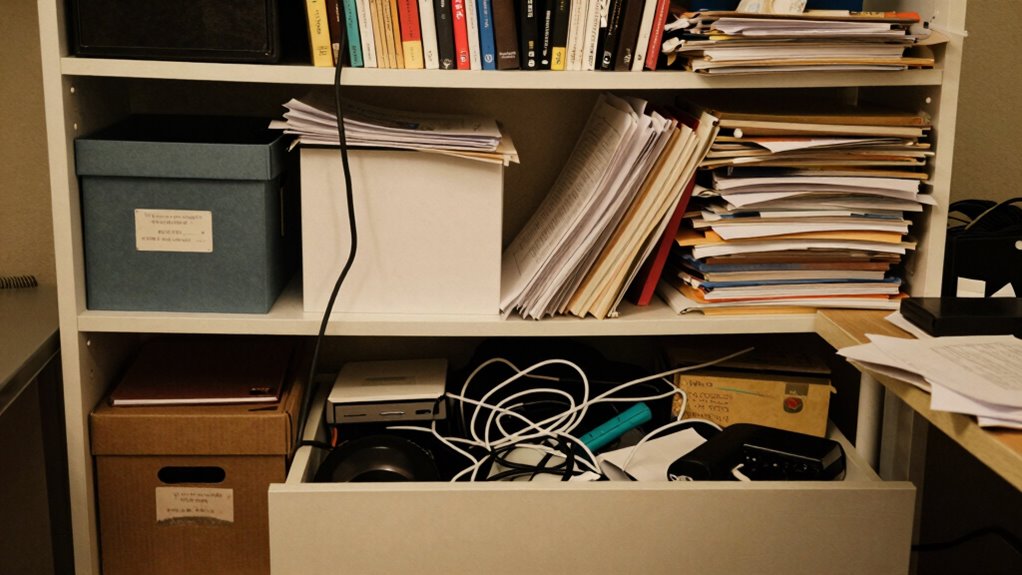

Storing all your data in one place may seem convenient, but it exposes you to major risks like data loss, security breaches, and system failures. If something goes wrong, you could lose access to critical information all at once. It also makes your system more vulnerable to cyberattacks since hackers only need one entry point. Staying aware of these risks can help you avoid costly problems in the future—there’s more to take into account if you’re ready to explore further.

Get hardware and tech essentials delivered free with Prime
- Fast, free delivery on millions of items
- Prime Video, Amazon Music and more included
- Member-only deals all year
Key Takeaways
- Centralized storage creates a single point of failure, risking total data loss during system crashes or hardware failures.
- It increases security vulnerabilities, making all data accessible through one breach point.
- Managing growing data becomes complex and resource-intensive, hindering scalability and efficiency.
- Data redundancy and scattered copies complicate maintaining data integrity across the system.
- Long-term risks include operational inefficiencies, security breaches, and costly recovery efforts.

Storing everything in one place may seem convenient at first, but it often hides a hidden problem that can cause serious issues down the line. When all your data is centralized, you risk creating a single point of failure. If a system crash or hardware failure occurs, you could lose access to all your critical information at once. This setup also invites data redundancy, where duplicate copies of the same information accumulate unnecessarily. Data redundancy not only wastes storage space but also increases the chance of inconsistencies, making it harder to keep your data accurate and up-to-date. The more copies you have scattered across a single storage hub, the more difficult it becomes to maintain integrity, leading to confusion and potential errors down the line. Additionally, centralized storage can lead to performance bottlenecks, slowing down access and operational efficiency. Another major concern is security vulnerabilities. When everything is stored in one location, a breach or cyberattack can compromise all your data at once. Hackers only need to find a single entry point to access everything, which heightens the risk of sensitive information falling into the wrong hands. If your storage system lacks robust security measures, an attacker can exploit vulnerabilities easily, causing data leaks, identity theft, or unauthorized changes. Relying on a single storage point also means that if you don’t implement strong access controls, unauthorized users might gain access more easily. The concentration of data makes it a tempting target, and a single security breach could have devastating consequences, exposing personal information, proprietary data, or confidential records. Furthermore, storing everything in one place hampers your ability to scale efficiently. As your data grows, managing it becomes more complex and resource-intensive. You may find yourself constantly trying to optimize storage space or improve security, but the centralized approach often makes these tasks more difficult. It also limits flexibility, as you’re tied to one system or location, reducing your options for disaster recovery and backup strategies. Distributed storage, when implemented properly, can help improve resilience and reduce these risks. In short, while centralizing your data might seem like a straightforward solution, it introduces significant risks. Data redundancy can lead to inconsistency, and security vulnerabilities become magnified. You might save time initially, but the long-term consequences—loss of data, security breaches, and operational inefficiencies—can be costly. To safeguard your information and streamline management, it’s crucial to consider distributed or segmented storage options. This approach can help mitigate some of the security vulnerabilities associated with centralized storage, making your data more resilient to threats. Adopting redundancy mitigation strategies can further enhance your data integrity and security. Doing so helps minimize risks, improve security, and keep your data accurate and accessible when you need it most.
external hard drive with encryption
As an affiliate, we earn on qualifying purchases.
As an affiliate, we earn on qualifying purchases.
Frequently Asked Questions
How Can I Securely Back up My Centralized Storage?
To securely back up your centralized storage, you should use strong encryption protocols to protect your data, both during transfer and at rest. Implement strict access controls to limit who can view or modify your backups, ensuring only authorized individuals have access. Regularly update your security measures and test backups to confirm data integrity. This way, your backups stay safe from unauthorized access or potential breaches.
What Are the Costs of Maintaining One Large Storage System?
Maintaining one large storage system can be costly due to ongoing expenses like hardware upgrades, energy consumption, and maintenance. You also need to take into account data redundancy, which guarantees data safety but increases storage needs and costs. Additionally, as your data grows, storage scalability becomes essential; if your system isn’t scalable, you’ll face expensive upgrades or migrations. Balancing these factors helps manage costs while keeping your data secure and accessible.
How Do I Prevent Data Loss in a Single Storage Location?
To prevent data loss in a single storage location, you should regularly back up your data and implement robust disaster recovery plans. Address data fragmentation by organizing files efficiently, and reduce access bottlenecks with faster storage solutions or load balancing. Keep an eye on your storage health, update security protocols, and monitor system performance. These steps guarantee your data stays safe, accessible, and less prone to loss.
What Are the Best Tools for Managing Centralized Storage?
You need powerful tools to manage centralized storage effectively. Look for solutions that prioritize data redundancy, ensuring backups are always available in case of failure. Simultaneously, they should offer robust user access controls, so only authorized individuals can retrieve or modify data. These tools, like Synology NAS, QNAP, or cloud solutions such as Dropbox Business, keep your data safe, accessible, and organized—yet the real challenge lies in choosing the right one for your needs.
How Does Centralized Storage Impact Data Retrieval Speed?
Centralized storage can slow your data retrieval speed due to data fragmentation and access bottlenecks. When all data sits in one place, retrieval may become sluggish as systems struggle to process large volumes efficiently. You might experience delays, especially during peak times, because multiple users access the same storage, creating competition and reducing overall speed. To mitigate this, consider optimizing data organization and implementing faster access protocols.
network attached storage (NAS) device
As an affiliate, we earn on qualifying purchases.
As an affiliate, we earn on qualifying purchases.
Conclusion
So, safeguard your system, steer clear of sharing everything in one space, and stay savvy about security. Spreading your data reduces risks, repairs setbacks, and preserves peace of mind. Don’t let a single mistake magnify into a major mess. Stay smart, stay secure, and always think ahead. Your data’s safety depends on your strategy—so keep it clever, cautious, and controlled. Because in the end, your peace of mind is worth protecting.
data backup and recovery software
As an affiliate, we earn on qualifying purchases.
As an affiliate, we earn on qualifying purchases.
cloud storage security solutions
As an affiliate, we earn on qualifying purchases.
As an affiliate, we earn on qualifying purchases.
Halloween Picks
halloween
As an affiliate, we earn on qualifying purchases.