Mobile payments are easy and fast, using trusted networks to let you pay with a few taps and usually at low or no extra cost. Crypto wallets offer more control and privacy, relying on decentralized technology but requiring you to manage private keys and handle slower transactions. While mobile payments focus on convenience, crypto wallets prioritize security and autonomy. Keep exploring to discover more about how these options compare and which might suit you best.

Get hardware and tech essentials delivered free — and shop member deals
- Fast, free delivery on millions of items
- Access to Prime Big Deal Days deals on October 6–7
- Prime Video, Amazon Music and more included
Key Takeaways
- Mobile payments utilize trusted networks and tokenization for security, while crypto wallets rely on private keys and blockchain encryption.
- Mobile payments offer quick, easy transactions at widespread retail points; crypto wallets require technical setup and management.
- Crypto wallets provide decentralization and greater user control over funds, unlike mobile payments linked to centralized institutions.
- Transaction speed favors mobile payments with instant processing; crypto transactions can be slower and incur miner fees.
- Mobile payments prioritize convenience and mainstream acceptance; crypto wallets emphasize security, privacy, and user autonomy.
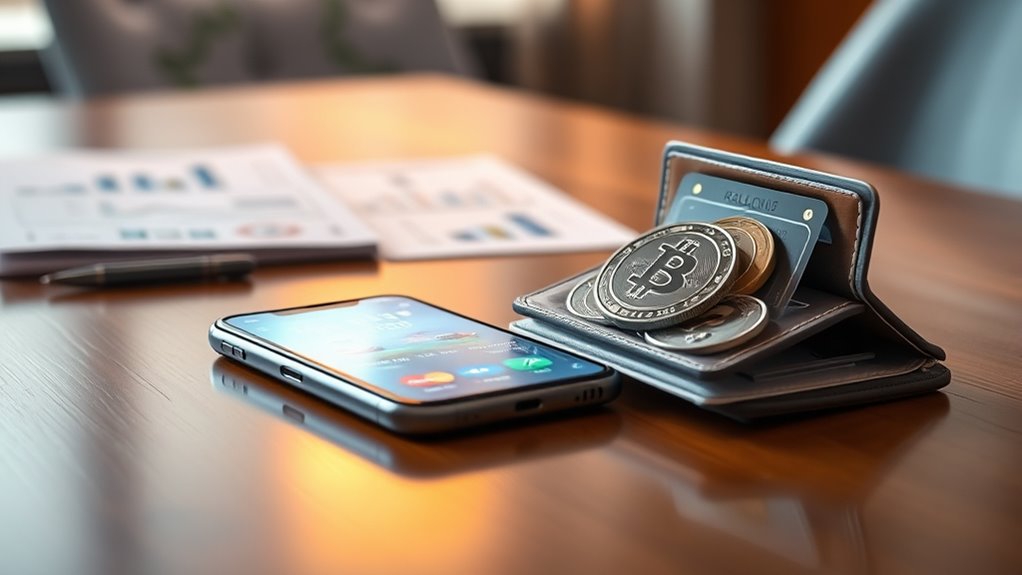
In today’s digital age, mobile payments and crypto wallets are two popular ways to manage your money electronically. Both offer convenience, but they serve different needs and operate through distinct systems. When comparing these options, digital security is a top concern. Mobile payment platforms like Apple Pay, Google Pay, or Samsung Pay utilize established security measures, such as tokenization and biometric authentication, to protect your financial information. These systems are integrated into trusted networks, which often means they are less vulnerable to hacking. Crypto wallets, on the other hand, rely on private keys and encryption to safeguard your digital assets. While they offer strong security through blockchain technology, they also require you to be more proactive in managing your private keys. If you lose access to your crypto wallet or private keys, recovery can be complicated or impossible, highlighting the importance of digital security awareness. Additionally, some crypto wallets incorporate features like decentralization, which enhances user control but also increases responsibility for security.
User accessibility is another critical aspect to consider. Mobile payments are designed for ease of use; you can link your existing bank accounts or credit cards and make transactions with just a few taps on your smartphone. These platforms are widely accepted at retail stores, online shops, and even for peer-to-peer transfers, making them highly accessible for everyday use. Crypto wallets, however, often demand more technical knowledge. Setting up a wallet involves understanding blockchain concepts and managing private keys securely. While many crypto wallets are user-friendly, they generally aren’t as universally accepted for purchases as mobile payments. You might need to transfer funds from your crypto wallet to a mobile payment app or exchange to spend them, which adds an extra step. Nonetheless, the decentralized nature of crypto wallets appeals to those seeking greater control over their finances and the potential for financial privacy.
Both systems also differ in terms of transaction speed and costs. Mobile payments typically process transactions instantly and usually don’t cost much, if anything, beyond what your bank or card issuer charges. Crypto transactions can take longer, especially during periods of high network congestion, and may involve fees paid to miners or validators. Despite these differences, both tools are evolving to enhance user experience and security. Mobile payments increasingly incorporate biometric security features, while crypto wallets are expanding with multi-signature options and hardware wallet integrations for added safety.
Mobile payments offer quick, low-cost transactions, while crypto wallets may involve longer processing times and fees.
Ultimately, your choice depends on your priorities: mobile payments excel in convenience and mainstream acceptance, while crypto wallets offer the allure of decentralization and control. Understanding the key differences and similarities helps you make informed decisions suited to your financial goals and comfort level with digital security and user accessibility.
Frequently Asked Questions
Can Crypto Wallets Be Used for Everyday Mobile Payments?
Yes, you can use crypto wallets for everyday mobile payments. They allow you to store digital currency, making transactions quick and secure. However, transaction speed can vary depending on network congestion, so some payments might take longer than traditional mobile payment apps. Still, with the right wallet and network, crypto wallets can be a convenient way to handle daily purchases, offering a seamless experience for digital currency transactions.
Are Mobile Payments More Secure Than Crypto Wallets?
Mobile payments tend to be more secure than crypto wallets because they often use biometric authentication, like fingerprint or facial recognition, adding an extra layer of protection. They also offer faster transaction speeds, making everyday payments quick and convenient. Crypto wallets, while secure with encryption, can be more vulnerable if not properly protected. So, for daily use, mobile payments generally provide a safer, smoother experience.
How Do Transaction Fees Compare Between the Two?
Ever wondered if paying with your phone or crypto wallet costs more? Transaction costs vary: mobile payments usually have flat or low fee structures, often covered by merchants or minimal for users. Crypto wallets, on the other hand, can have fluctuating fee structures based on network congestion, leading to potentially higher or variable transaction fees. Typically, mobile payments are cheaper for everyday use, while crypto fees depend on network activity.
Can Crypto Wallets Integrate With Traditional Banking Systems?
Crypto wallets can integrate with traditional banking systems, but it’s often limited by regulatory challenges and bank policies. You might find some services offering bank integration, enabling easier transfers between crypto and fiat accounts. However, strict regulations and compliance requirements can slow or restrict this process. Always check if your wallet provider supports bank integration and stay aware of potential regulatory hurdles that could affect seamless transactions.
Do Mobile Payment Apps Support Cryptocurrencies?
Most mobile payment apps don’t support cryptocurrencies directly. They primarily handle digital currency like fiat money and rely on traditional banking systems. However, some apps are starting to integrate blockchain security features, allowing users to manage certain cryptocurrencies. If you want to use digital currency on your mobile device, look for apps that specifically support crypto wallets, ensuring strong blockchain security to protect your assets.
Conclusion
Think of mobile payments and crypto wallets as two different vehicles on your financial journey. Mobile payments are like your reliable family car—easy, quick, and widely accepted. Crypto wallets, on the other hand, are like a high-tech drone—innovative and powerful, but requiring more skill to navigate. Whichever you choose, remember that understanding their differences helps you steer confidently toward your financial goals. After all, knowing your vehicle guarantees a smoother ride ahead.
Halloween Picks
halloween
As an affiliate, we earn on qualifying purchases.