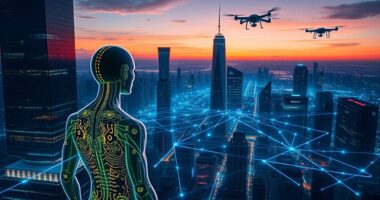
Robots use artificial intelligence to navigate complex environments, recognize objects, and make real-time decisions. They analyze sensor data with machine learning algorithms, allowing them to adapt to changing conditions and avoid obstacles automatically. AI also helps robots interpret commands and understand their surroundings, making tasks smoother and more efficient. As these technologies evolve, they become more intuitive and capable. If you keep exploring, you’ll discover how these advancements are shaping the future of robotics.

Get hardware and tech essentials delivered free with Prime
- Fast, free delivery on millions of items
- Prime Video, Amazon Music and more included
- Member-only deals all year
Key Takeaways
- Robots utilize machine learning algorithms to analyze sensor data for smarter navigation and decision-making.
- AI enables robots to recognize objects, interpret gestures, and understand speech for improved interaction.
- Autonomous navigation combines sensors and AI to help robots avoid obstacles and adapt to dynamic environments.
- Real-time AI processing allows robots to assess terrain, debris, and scenarios for safe, efficient path planning.
- Enhanced AI-driven interaction technologies, like visual cues, improve human-robot communication across various industries.

Robotics and AI are transforming the way we live and work, revolutionizing industries from manufacturing to healthcare. One of the most impressive advancements is how robots now navigate complex environments independently. This is made possible through autonomous navigation, where robots use a combination of sensors, cameras, and sophisticated algorithms to understand their surroundings and move safely without human intervention. With autonomous navigation, robots can perform tasks like delivering packages, exploring hazardous areas, or assisting in warehouses, all while avoiding obstacles and adapting to dynamic conditions.
At the core of this capability are machine learning algorithms, which enable robots to improve their performance over time. Instead of relying on pre-programmed instructions, these algorithms analyze data from sensors and experiences to make smarter decisions. For example, a delivery robot can learn the best routes in a busy city, recognizing patterns like traffic congestion or construction zones and adjusting its path accordingly. Machine learning algorithms also help robots recognize objects, interpret gestures, and understand speech, creating more natural interactions between humans and machines.
Machine learning algorithms help robots adapt, recognize objects, and communicate naturally over time.
You’ll find these technologies working hand in hand — autonomous navigation relies heavily on machine learning algorithms to process vast amounts of environmental data quickly and accurately. This synergy allows robots to adapt to new environments without extensive reprogramming, making them more versatile and efficient. In industrial settings, robots equipped with these capabilities streamline manufacturing processes by moving parts between stations or inspecting products for defects with high precision. In healthcare, autonomous robots navigate hospital corridors to deliver medications or supplies, reducing workload on staff and increasing efficiency.
The power of machine learning algorithms extends beyond navigation. They enable robots to develop a sense of context, improving their ability to make real-time decisions. For instance, a robot working in a disaster zone can analyze terrain and debris, choosing the safest path forward. As these algorithms accumulate more data, robots become increasingly capable, learning from each experience and refining their behaviors. This continuous learning process means they can handle unpredictable scenarios that would be difficult to program explicitly. Additionally, advances in projector technology are enabling robots to project visual cues or instructions in complex environments, further enhancing their interaction capabilities.
Frequently Asked Questions
How Do Robots Learn From New Experiences?
You can see that robots learn from new experiences through robot learning, which involves adaptive algorithms. These algorithms enable robots to analyze data from their environment, adjust their actions, and improve performance over time. As you interact with a robot, it continually updates its understanding, becoming more effective at tasks. This constant adaptation allows robots to handle unpredictable situations and learn from their mistakes, enhancing their capabilities with each new experience.
Can Robots Develop Emotions Through AI?
Like a painter mixing colors, robots can simulate emotions through AI, but they don’t truly feel them. Emotional simulation and empathy development enable robots to recognize and respond to human feelings, creating the illusion of emotion. However, these machines lack genuine consciousness or emotional depth. They can mimic emotional responses, but developing authentic emotions remains beyond current AI capabilities, making their empathy more like a mirror than a soul.
What Are the Limitations of Current AI in Robotics?
You should know that current AI in robotics faces limitations like ethics concerns and privacy issues. These systems often lack genuine understanding, making them prone to errors in complex situations. Privacy can be compromised if robots collect sensitive data without proper safeguards. Additionally, ethical dilemmas about autonomy and decision-making restrict how AI is deployed, meaning you can’t rely entirely on robots for critical tasks until these issues are addressed and resolved.
How Secure Are Ai-Powered Robots From Hacking?
AI-powered robots face cybersecurity vulnerabilities that can be exploited by hackers. While manufacturers implement hacking prevention measures, no system is entirely secure. You should stay vigilant by regularly updating software, using strong passwords, and monitoring for unusual activity. These steps help protect robots from hacking, ensuring their operations remain safe and reliable. Remember, ongoing security measures are essential to defend against evolving cyber threats targeting AI systems.
Will Robots Replace Human Workers Entirely?
You might think robots will entirely replace human workers, but only 14% of jobs are fully automatable. While AI can handle repetitive tasks, it lacks human empathy and ethical judgment, which are essential in many roles. Robots won’t fully replace humans; instead, they’ll complement your work, requiring you to adapt and develop skills that leverage emotional intelligence and ethical considerations—areas where humans excel over machines.
Conclusion
As you step into the future, robotics and AI become your guiding stars, illuminating new horizons. These intelligent machines are like skilled dancers, gracefully weaving through complex tasks with precision and agility. With each advancement, they transform the world into a vast playground of endless possibilities. Embrace this technological symphony, where human ingenuity and machine intelligence dance together, creating a masterpiece that’s only just beginning to unfold. The future’s canvas is yours to shape.
Halloween Picks
halloween
As an affiliate, we earn on qualifying purchases.