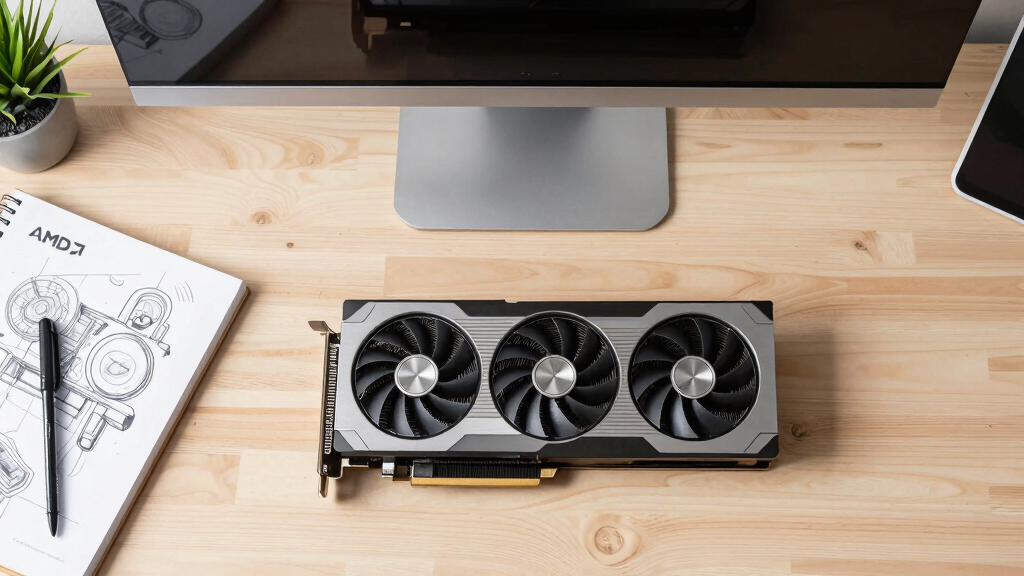

For creators seeking reliable AMD graphics cards, choosing the right model depends on balancing performance, budget, and workload demands. The AMD Radeon RX 580 stands out as a versatile choice for intermediate tasks, while the AMD Radeon Pro W7800 offers professional-grade capabilities for demanding 3D rendering and AI applications. Budget constraints often lead to compromises on raw power, but some low-profile options still deliver decent performance for light tasks. The main tradeoffs in this category revolve around balancing price, performance, and feature set. Continue reading for a detailed breakdown of the best AMD options for creators in 2026.
Listen free for 30 days with Audible
Thousands of audiobooks and originals — cancel anytime.
Start your free trialAs an affiliate, we earn on qualifying purchases.
Key Takeaways
- The highest-performing cards like the Radeon Pro W7800 excel in professional workloads but come with a higher price tag.
- The RX 580 remains a solid mid-range option for creators on a budget, especially for 1080p projects.
- Premium models with larger VRAM, such as the RX 9070 XT, are better suited for 4K editing and intensive rendering tasks.
- Low-profile options like the Radeon R7 350 serve niche needs but lack the horsepower for demanding creative work.
- The choice between gaming-oriented and workstation cards hinges on the specific software compatibility and workload requirements.


More Details on Our Top Picks
XFX Radeon RX 580 GTS XXX Edition 1386MHz OC+, 8GB GDDR5, VR Ready, Dual BIOS, 3xDP HDMI DVI, AMD Graphics Card (RX-580P8DFD6)
This model stands out for offering a solid balance of performance and affordability, making it an excellent choice for creators on a budget. Compared to higher-end options like the RX 580 Gaming, this card provides reliable 1080p performance with decent VR capabilities, though it lacks the raw power for intensive 4K editing or complex 3D rendering. Its dual BIOS and cooling technology help maintain stability during longer sessions, but the older Polaris architecture means it’s less future-proof for demanding workloads. This pick makes the most sense for creators who need a dependable GPU without breaking the bank but are willing to accept some performance limitations for more intensive tasks.
Pros:- Affordable price point for creators on a tight budget
- VR Ready with low latency for immersive content creation
- Effective cooling with dual dissipation technology
- Supports multiple display outputs for multitasking
Cons:- Limited performance for 4K video editing or complex 3D rendering
- Older Polaris architecture may become outdated for future workloads
Best for: Entry-level content creators and hobbyists seeking affordable VR and HD editing capabilities.
Not ideal for: Professional video editors or 3D artists requiring high-end rendering power and future-proofing for large projects.
- Memory:8GB GDDR5
- Core Clock Speed:1386MHz OC+
- VR Ready:Yes
- Display Outputs:3xDP, HDMI, DVI
- Cooling Technology:Double Dissipation
- Process Technology:14nm Polaris
Bottom line: Ideal for beginners and hobbyists who want reliable VR and HD editing at a reasonable price.
MOUGOL AMD Radeon R7 350 4GB Low Profile Graphics Card, Dual HDMI Ports for Multi-Monitor, 4GB GDDR3 128-Bit, SFF Half-Height Video Card for Slim Desktop PC, Support Windows 10/8.1/7
This pick makes the most sense for creators working within constrained spaces, such as small desktops or HTPC setups, thanks to its low-profile design. While it’s significantly less powerful than the RX 580, it’s suitable for basic editing, web streaming, and multitasking on dual monitors. Compared with the RX 580 or RX 580 Gaming, it’s much less capable for demanding tasks but excels in quiet operation and space savings. Its 4GB GDDR3 memory and 128-bit bus support HD video playback and light productivity, though it’s not suited for heavy rendering or 4K content creation. This card is best for those upgrading legacy systems or building compact workstations.
Pros:- Compact form factor fits small desktops easily
- Dual HDMI ports support multi-monitor setups
- Low power consumption with no external power required
- Quiet operation ideal for home or office use
Cons:- Limited performance for intensive editing or rendering
- Older GDDR3 memory technology reduces future-proofing
Best for: Creators with small or space-limited builds needing multi-monitor support for light editing or streaming.
Not ideal for: Professionals doing high-resolution video editing, 3D rendering, or GPU-intensive workflows.
- Memory:4GB GDDR3
- Memory Interface:128-bit
- Core Clock Speed:800MHz
- Outputs:2x HDMI
- Form Factor:Low Profile / Half-Height
- Supported OS:Windows 10/8.1/7
Bottom line: Best suited for space-constrained creators who prioritize multi-monitor support over raw GPU power.
ASUS Dual NVIDIA GeForce RTX 3050 6GB OC Edition Gaming Graphics Card – PCIe 4.0, 6GB GDDR6 Memory, HDMI 2.1, DisplayPort 1.4a, 2-Slot Design, Axial-tech Fan Design, 0dB Technology, Steel Bracket
This model makes the most sense for creators who need solid GPU acceleration for editing, rendering, and AI tasks, especially compared to the AMD R7 350 and RX 580. Its Ampere architecture provides double the FP32 throughput and advanced ray-tracing with RT cores, making it suitable for 4K video editing, 3D workflows, and AI-enhanced content creation. The Axial-tech fans and 0dB technology help keep noise levels low during light workloads, though it may run hotter under heavy loads compared to premium RTX models. While it’s not as powerful as the RTX 3060 Ti or 4070, it strikes a good balance for creators stepping up from entry-level cards without investing in high-end GPUs.
Pros:- Significant performance boost over AMD R7 350 and RX 580
- Supports PCIe 4.0 for future compatibility
- Quiet operation with 0dB technology during low loads
- HDMI 2.1 and DisplayPort 1.4a for high-res displays
Cons:- Higher price point than AMD options like RX 580
- Limited availability in some regions may affect purchase
Best for: Intermediate to advanced creators requiring efficient 4K editing, AI features, and ray-tracing effects.
Not ideal for: Budget-conscious hobbyists or those with very limited case space who need the smallest form factor.
- Memory:6GB GDDR6
- GPU Architecture:Ampere
- Core Clock Speed:4000 MHz
- Outputs:HDMI 2.1, DisplayPort 1.4a
- Cooling Design:Axial-tech Fans
- Process Technology:Samsung 8nm
Bottom line: Best for creators seeking a capable, future-ready GPU for 4K editing and AI workloads without going to top-tier prices.
MOUGOL AMD Radeon RX 580 Gaming Graphics Card, 8GB GDDR5 256-Bit, Dual Fan Cooling, DP/HDMI/DVI Video Output, PCI Express X16 3.0, Support Windows 11/10/7
This pick makes the most sense for creators needing a capable mid-range GPU for editing, streaming, and multitasking, especially compared to lower-end options like the R5 230, while offering better performance for gaming and content creation. Its 8GB GDDR5 memory and 256-bit bus support smooth multitasking and texture-heavy workloads, with a core clock of 1206 MHz providing solid acceleration for 1080p and some 1440p workflows. Compared to the older R7 350, the RX 580 offers significant performance improvements, but it is still not suitable for demanding 4K rendering or high-end 3D work. Dual fans help with thermal management, but it can run hotter during prolonged heavy workloads. Best for those who want a balance of price and performance for general content creation.
Pros:- Strong 8GB VRAM for multitasking and texture-heavy projects
- Supports multiple outputs for multi-monitor setups
- Good thermal management with dual fans
- Supports DirectX 12 and OpenGL 4.6
Cons:- Not suitable for heavy 4K rendering or complex 3D workflows
- Older PCIe 3.0 interface limits future bandwidth compared to newer cards
Best for: Intermediate creators working on 1080p/1440p editing, streaming, and light 3D tasks.
Not ideal for: High-end 4K video editors or professionals requiring advanced rendering capabilities.
- Memory:8GB GDDR5
- Bus Width:256-bit
- Core Clock:1206 MHz
- Outputs:DP, HDMI, DVI
- Cooling:Dual Fan
- Supported OS:Windows 11/10/7
Bottom line: A well-rounded choice for creators needing reliable 1080p and light 1440p editing without overspending.
MOUGOL AMD Radeon R5 230 Low Profile Graphics Card with 2G 64Bit GDDR3 Memory Equip with PCI Express*16 2*HDMI Video Card for Office Working, Compatible with Windows 10/8/7/RHEL/Ubuntu/Linux
This card makes the most sense for creators with very basic needs, such as office work, light streaming, or simple multimedia tasks, especially compared to the RX 580 or GTX 3050. Its 2GB GDDR3 memory and 128-bit bus support HD video playback and basic multitasking but cannot handle demanding editing or rendering workloads. Its low profile and quiet operation make it suitable for slim desktops or HTPCs, but it’s not intended for content creation beyond basic multimedia. Support for multiple OS including Linux broadens its use in diverse environments, though performance limitations are significant. It’s best for those upgrading legacy systems or handling light, routine tasks.
Pros:- Very affordable and energy-efficient
- Low profile fits small desktops
- Supports multiple OS, including Linux
- Quiet operation suitable for home/office environments
Cons:- Limited performance for any demanding content creation
- Only 2GB VRAM restricts multitasking and high-res workflows
Best for: Creators doing basic multimedia, web streaming, and office tasks on space-constrained systems.
Not ideal for: Video editors or 3D artists needing acceleration for rendering or high-resolution content.
- Memory:2GB GDDR3
- Memory Interface:128-bit
- Core Clock Speed:625MHz
- Outputs:2x HDMI
- Form Factor:Low Profile
- Supported OS:Windows 10/8/7, Linux
Bottom line: Best suited for creators with minimal performance needs in space-limited or budget systems.
MOUGOL AMD Radeon RX 580 Gaming Graphics Card, 8GB GDDR5 256-Bit, Dual Fan Cooling, DP/HDMI/DVI Video Output, PCI Express X16 3.0, Support Windows 11/10/7
This model makes the most sense for creators who need dependable performance for editing, streaming, and multitasking at 1080p or 1440p, outperforming the R5 230 and matching the RX 580 Gaming in many tasks. Its 8GB GDDR5 and 256-bit bus support smooth workflows in Adobe Premiere, DaVinci Resolve, and light 3D work, while the dual fans keep temperatures stable during extended sessions. Compared to the RTX 3050, it offers less ray-tracing and AI features but is more budget-friendly for creators focusing on traditional editing and rendering workflows. Its support for Windows 11 makes it suitable for modern systems, but it’s not geared for high-end 4K or VR workloads. An excellent choice for creators seeking value and performance in a mid-tier card.
Pros:- Solid 8GB VRAM for multitasking and editing
- Supports high-res outputs and multi-monitor setups
- Reliable cooling system for extended use
- Compatible with Windows 11 for current systems
Cons:- Lacks advanced ray-tracing and AI features of RTX series
- PCIe 3.0 interface limits bandwidth compared to newer cards
Best for: Intermediate creators focused on HD and 1440p editing, streaming, and light 3D rendering.
Not ideal for: Professionals working on high-end 4K content or complex 3D rendering requiring the latest GPU features.
- Memory:8GB GDDR5
- Bus Width:256-bit
- Core Clock:1206 MHz
- Outputs:DP, HDMI, DVI
- Cooling:Dual Fan
- Supported OS:Windows 11/10/7
Bottom line: A dependable, cost-effective GPU for mid-range content creators focused on HD workflows.
AMD Radeon™ Pro W7800, Professional Graphics Card, Workstation, AI, 3D Rendering, 32GB GDDR6, DisplaPort™ 2.1, AV1, 45 TFLOPS, 70 CUS, 260W TDP, 8K
The AMD Radeon™ Pro W7800 stands out for its massive 32GB GDDR6 memory, making it ideal for demanding 3D rendering, high-resolution video editing, and complex VFX workflows. Compared to the Sapphire RX 9070 XT, it offers a more professional focus with extensive API support including OpenCL, DirectX, and Vulkan, plus optimized driver stability for professional applications like Maya and DaVinci Resolve. Its 45 TFLOPS FP32 performance ensures fast rendering of heavy projects, but the 260W TDP means you’ll need a robust power supply and cooling solution, which could be a drawback for smaller workstations. The card’s capability to support up to 12K displays and AV1 encoding makes it future-proof for high-resolution workflows. This pick makes the most sense for high-end studios and professionals working on large-scale projects where stability and memory are critical, rather than gamers or casual creators.
Pros:- Massive 32GB GDDR6 memory supports ultra-high-resolution projects
- 45 TFLOPS FP32 performance accelerates complex workloads
- Excellent API support for professional software and real-time rendering
Cons:- 260W TDP requires a high-capacity power supply and advanced cooling
- Higher price point limits accessibility for hobbyists
- Overkill for less demanding creative tasks
Best for: Studio professionals and 3D artists handling large, multi-layered projects requiring maximum GPU memory and stability.
Not ideal for: Small-scale creators or those on a tight budget who don’t need the extensive API support or such high memory capacity.
- Compute Units:70
- Memory:32GB GDDR6
- Display Support:up to 12K, AV1
- Performance:45 TFLOPS
- Power Consumption:260W TDP
- Video Outputs:DisplaPort™ 2.1, AV1
Bottom line: This card is best suited for high-end professional studios and creators working on large projects where stability, memory, and performance are paramount.
Sapphire 11348-03-20G Pulse AMD Radeon™ RX 9070 XT Gaming Graphics Card with 16GB GDDR6, AMD RDNA 4
The Sapphire RX 9070 XT Pulse delivers excellent performance for creators who also value gaming prowess, with 16GB GDDR6 and a 256-bit memory interface that ensures smooth editing and rendering at high resolutions. Compared to the Radeon Pro W7800, it offers a more gaming-oriented approach with higher clock speeds (up to 2970 MHz) and three cooling fans, making it suitable for real-time viewport manipulation and GPU-accelerated rendering in software like DaVinci Resolve or Blender. While it doesn’t match the professional API support or memory capacity of the W7800, its 16GB memory strikes a balance for most high-end creative tasks. The card’s maximum resolution of 7680×4320 supports 8K workflows, and its multiple outputs (2x HDMI, 2x DisplayPort) facilitate multi-monitor setups. It makes sense for creators who want a versatile GPU capable of both gaming and professional work, but it’s less ideal for those needing maximum stability and API compatibility.
Pros:- 16GB GDDR6 memory balances high-resolution editing and gaming
- High boost clock speeds up to 2970 MHz for fast viewport interactions
- Supports 8K resolution with multiple display outputs
Cons:- Less professional API support compared to the W7800
- Memory size may be limiting for very large, multi-layered projects
- Primarily designed for gaming, which might affect stability in some professional workflows
Best for: Creators who need strong performance for editing, rendering, and viewport work, with occasional gaming or 8K workflows.
Not ideal for: Professionals requiring extensive API support, large memory buffers, or working on massive projects with complex VFX layers.
- Memory:16GB GDDR6
- Memory Interface:256-bit
- GPU Clock Speed:up to 2970 MHz
- Maximum Resolution:8K (7680×4320)
- Video Output:2x HDMI, 2x DisplayPort
- Performance:Depends on workload, gaming and rendering
Bottom line: This GPU offers a compelling mix of gaming and creative performance, ideal for creators seeking versatility without the need for highest-end professional features.
How We Picked
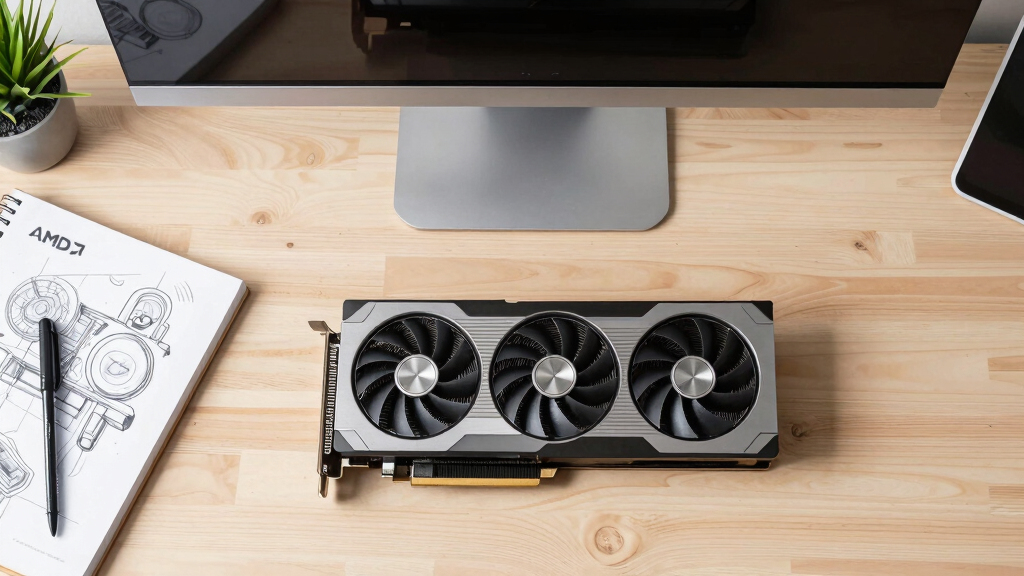
The selection process focused on evaluating each graphics card’s performance in creative workflows, including rendering, video editing, and 3D modeling. We prioritized cards with sufficient VRAM, robust driver support, and compatibility with popular creative software. Build quality, power efficiency, and price-to-performance ratios also played key roles in our rankings. Cards that cater specifically to professional workloads, such as workstation GPUs, were contrasted with gaming models to highlight their unique advantages and tradeoffs. Our goal was to present a balanced lineup that addresses different budgets and creative needs, ensuring each pick offers clear value for its intended audience.Factors to Consider When Choosing Best AMD Graphics Cards For Creators
Choosing the best AMD graphics card for your creative work involves understanding several key factors. Beyond raw performance, considerations like VRAM capacity, driver stability, and software compatibility can significantly impact your workflow. It’s also important to recognize the tradeoffs between gaming-oriented cards and professional-grade options. This guide will walk you through the critical aspects to evaluate before making a purchase, helping you find the right balance between cost and capability.Performance and Workload Compatibility
Matching a GPU’s performance level with your specific creative tasks is essential. Light photo editing and basic video projects may only require mid-range cards like the RX 580, while professional 3D rendering or AI workloads benefit from higher-end options like the Radeon Pro W7800. It’s important to consider benchmarks relevant to your software to avoid bottlenecks. Overestimating your needs can lead to unnecessary expenses, but underestimating can hamper productivity, so evaluate your typical project requirements carefully.
VRAM and Memory Capacity
VRAM acts as the working memory for graphics-intensive tasks. For 1080p editing, 4GB to 8GB of VRAM is usually sufficient, but 4K projects or complex 3D models demand 16GB or more. Professional cards like the RX 9070 XT with 16GB GDDR6 are designed to handle large files and multitasking seamlessly. Choosing a card with inadequate VRAM can cause lag and crashes, especially during intensive rendering or large dataset processing. Always align VRAM capacity with your project size and future expansion plans.
Software Compatibility and Drivers
Compatibility with your creative software is vital. AMD’s driver support has improved significantly, but some professional applications still favor NVIDIA’s ecosystem. Check whether your key programs optimize for AMD hardware and if the drivers are stable enough for daily use. Professional-grade cards like the Radeon Pro series often come with optimized drivers for software like Autodesk, Adobe, and Blender, reducing crashes and bugs. Investing in a card with reliable driver support can save you hours of troubleshooting over time.
Price-to-Performance Ratio
Balancing cost and capability is a common challenge. Mid-range cards such as the RX 580 offer decent performance at a lower price, making them attractive for hobbyists or small studios. Conversely, high-end models like the RX 9070 XT or Radeon Pro W7800 command premium prices but deliver significant performance gains. Avoid the trap of overspending on features you won’t use, but don’t skimp on essential capabilities that could bottleneck your workflow. Consider your current needs and potential growth to find the best value.
Power and Size Considerations
Power requirements and physical size can influence compatibility with your existing setup. Premium cards often need higher wattage supplies and may require additional power connectors. Low-profile options, while more versatile for small cases, typically lack the power needed for demanding tasks. Measure your case’s space and power capacity beforehand to prevent installation issues. A well-matched power supply and case ensure your chosen GPU performs reliably without additional upgrades.
Frequently Asked Questions
Can I use a gaming AMD card for professional creative work?
Yes, many gaming AMD cards, such as the RX 580 or RX 9070 XT, can handle creative tasks like editing, 3D modeling, and rendering. However, they may lack the optimized drivers and stability features that professional-grade cards offer, which can lead to occasional crashes or software incompatibilities. For casual or hobbyist projects, gaming cards often provide a good balance of performance and affordability. For intensive professional workflows, investing in workstation-certified GPUs can yield more reliable and consistent results.
Is VRAM more important than GPU power for creative work?
Both VRAM and GPU power are critical, but their importance depends on your specific projects. VRAM determines how large your files and textures can be without slowing down, which is vital for high-resolution video editing and complex 3D scenes. GPU power, measured in compute performance, impacts rendering speed and real-time editing responsiveness. For large, detailed projects, ample VRAM prevents bottlenecks, while higher GPU performance accelerates rendering and processing. Ideally, choose a card that balances both aspects according to your workflows.
Are professional AMD cards worth the extra cost?
Professional AMD cards like the Radeon Pro series are designed for stability, driver support, and features tailored to creative professionals. They excel in tasks such as 3D rendering, CAD, and AI workloads where reliability and precision matter. Although they come at a premium, their optimized drivers and longer lifespan can justify the investment for serious work. If your projects demand consistent performance and you work with software that benefits from workstation hardware, professional cards are a worthwhile choice.
Should I prioritize raw gaming performance or professional features?
The decision depends on your primary use case. If gaming performance is a priority alongside occasional creative work, a gaming-oriented AMD card like the RX 580 or RX 9070 XT makes sense. However, for dedicated professional tasks requiring stability, large dataset handling, and software compatibility, professional-grade GPUs like the Radeon Pro series are better suited. Balancing your workload with your budget will guide you toward the right choice.
What is the best way to future-proof my GPU purchase?
To future-proof your investment, select a GPU with higher VRAM and performance headroom than your current needs. Consider models with support for upcoming standards like PCIe 5.0 or DisplayPort 2.0, which can improve compatibility with future hardware upgrades. Also, paying attention to cooling solutions and power requirements can extend the lifespan and reliability of your setup. While premium cards cost more upfront, they tend to remain capable for longer, providing better value over time.
Conclusion
For general creative work and mid-range projects, the AMD Radeon RX 580 offers a balanced mix of performance and affordability, making it ideal for hobbyists and small studios. Those needing professional-grade reliability and features will find the Radeon Pro W7800 to be a worthwhile investment, especially for 3D rendering and AI tasks. Budget-conscious creators should consider low-profile options like the Radeon R7 350, but be aware of their limitations. For demanding workflows requiring large VRAM and raw power, the Sapphire RX 9070 XT stands out as the best high-end choice. Ultimately, your selection should align with your project scope, budget, and software compatibility. As an affiliate, we earn on qualifying purchases.Flea & tick season Picks
flea and tick prevention