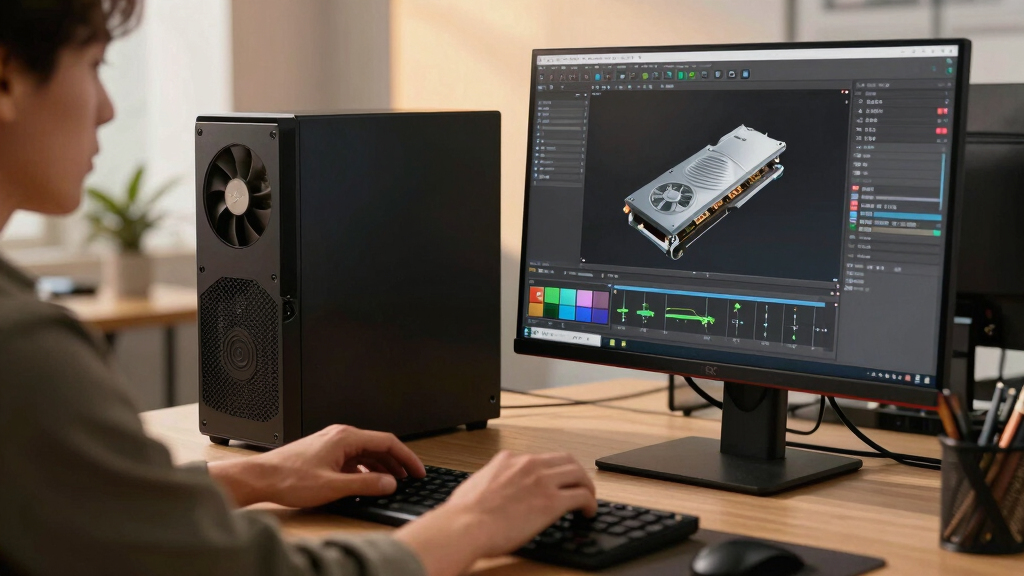

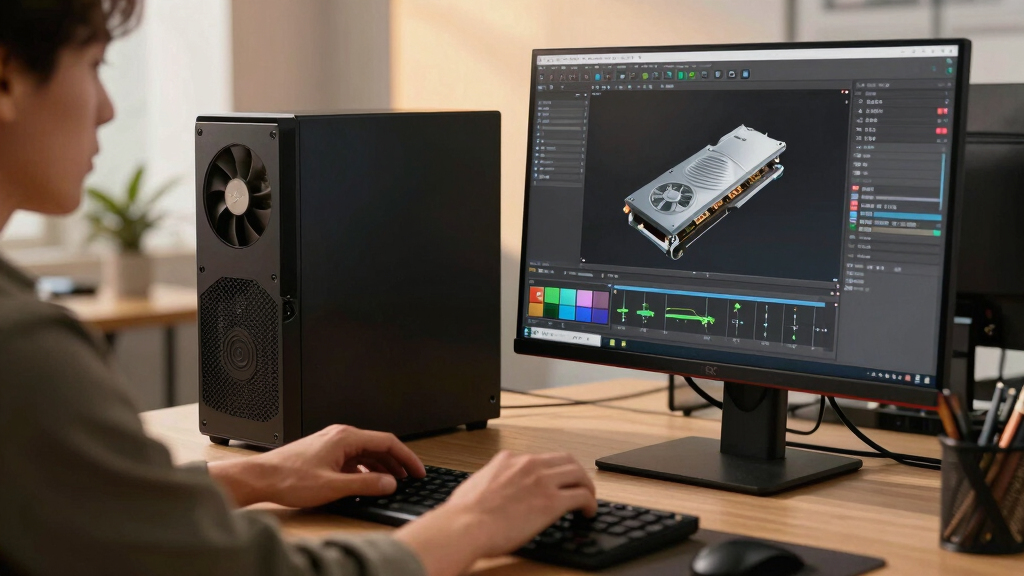
Choosing the right Radeon GPU for AI-assisted workloads in 2026 depends heavily on your specific needs and budget. The AMD Radeon RX 7900 XTX offers exceptional raw power for demanding models, but comes at a premium. Meanwhile, the Radeon RX 7800 XT provides solid performance with better value, suitable for mid-tier AI tasks. For those starting out or with less intensive needs, the Radeon RX 7700 delivers reliable performance at a more accessible price point. Each option involves tradeoffs between cost, power consumption, and compatibility—so I’ll help you weigh these factors to find your ideal GPU.
Key Takeaways
- The Radeon RX 7900 XTX is best for high-end AI workloads demanding maximum processing power.
- The RX 7800 XT offers a balance of performance and cost, ideal for mid-tier AI projects.
- The RX 7700 is suitable for beginners or light AI tasks with budget constraints.
- Memory and bandwidth are critical for large models; prioritize these specs in your choice.
- Power consumption and cooling are important considerations for long-term AI training setups.
More Details on Our Top Picks
As an affiliate, we earn on qualifying purchases.
How We Picked
Our selection process focused on evaluating the latest Radeon GPUs released for 2026, emphasizing performance benchmarks relevant to AI workloads. We considered GPU core counts, VRAM size, memory bandwidth, and support for AI-accelerating features like matrix compute units. Price-to-performance ratios were also key, alongside compatibility with popular AI frameworks and power efficiency. We avoided models that lack sufficient VRAM or have limited driver support for AI tasks, ensuring each pick is practical for real-world AI use cases.
As an affiliate, we earn on qualifying purchases.
Factors to Consider When Choosing Best Radeon GPUs For AI Assisted Workloads
When selecting a Radeon GPU for AI work in 2026, focus on core count, VRAM size, and bandwidth. High-end models excel at large training jobs, but they come with higher costs and energy needs. Mid-tier options balance power with efficiency, suitable for most research and development needs. Entry-level GPUs are best for learning, inference, or small projects. Consider your model size, workload complexity, and power budget to make the best choice.
Core Count and Architecture
The number of compute units directly impacts processing power. Higher core counts mean faster training for large models but also increase power consumption. The latest architectures also provide more efficient AI acceleration, so prioritize newer models if possible.
VRAM and Bandwidth
VRAM determines how large your models and datasets can be. For extensive deep learning tasks, 16GB or more is recommended. Memory bandwidth influences data transfer speed; higher bandwidth helps reduce bottlenecks during training.
Power and Cooling
High-performance GPUs require robust cooling and power supplies. Factor in your system’s capacity to handle these demands, especially if operating continuously during long training sessions.
Compatibility and Framework Support
AMD’s ROCm ecosystem and compatibility with frameworks like TensorFlow and PyTorch are essential for seamless AI development. Confirm your software environment supports the GPU before purchase.
high VRAM Radeon GPU for AI training
As an affiliate, we earn on qualifying purchases.
As an affiliate, we earn on qualifying purchases.
Frequently Asked Questions
Can I use a Radeon GPU for large-scale AI training?
Yes, high-end Radeon GPUs like the RX 7900 XTX are designed to handle large models thanks to their high core counts and VRAM. They are suitable for intensive training tasks in research or enterprise environments.
Is VRAM more important than core count for AI workloads?
Both are critical, but VRAM primarily affects the size of models and datasets you can process. Core count influences training speed. For large models, VRAM often takes priority, but for faster training, higher core counts matter more.
Are AMD Radeon GPUs compatible with popular AI frameworks?
Yes, recent Radeon GPUs support AMD’s ROCm ecosystem, which integrates with frameworks like TensorFlow and PyTorch, ensuring broad compatibility for AI development.
What should I consider regarding power requirements?
High-end Radeon GPUs demand substantial power and cooling solutions. Make sure your system’s power supply can handle the GPU’s wattage and that adequate cooling is available for sustained AI workloads.
Is the budget RX 7700 suitable for AI inference?
Yes, the RX 7700 works well for inference tasks and small-scale training, especially if cost and power efficiency are priorities. It may struggle with very large models or extensive training datasets.
Conclusion
If you require maximum processing power for large AI models and have the budget and system capacity, the Radeon RX 7900 XTX is the best choice. For those seeking a balance between performance and cost, the RX 7800 XT provides excellent mid-tier capabilities. Beginners or users with limited budgets should consider the RX 7700 for smaller projects or learning purposes. Evaluate your workload size, budget, and system compatibility to select the GPU that best fits your AI journey in 2026.