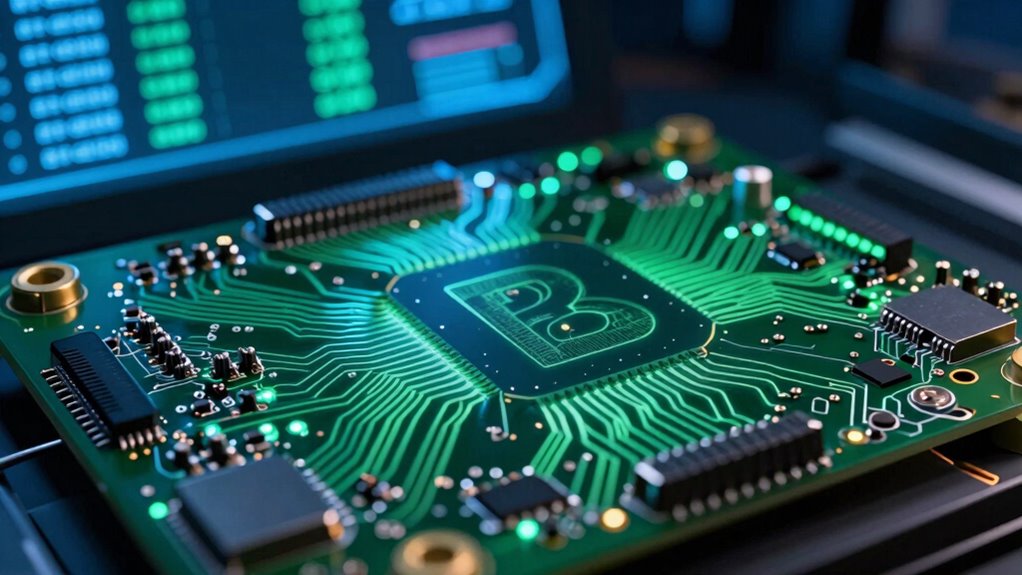

You need to understand that blockchain governance is as crucial as speed because it guarantees the network remains secure, fair, and adaptable over time. Good governance involves transparent decision-making, fair token distribution, and community participation, all of which build trust and resilience. Without it, fast blockchains risk instability, malicious attacks, and fragmentation. Balancing speed with strong governance helps guarantee long-term success. Keep exploring how governance shapes the future of blockchain networks.

Get hardware and tech essentials delivered free with Prime
- Fast, free delivery on millions of items
- Prime Video, Amazon Music and more included
- Member-only deals all year
Key Takeaways
- Strong governance ensures effective decision-making, evolving the blockchain without compromising stability or security.
- Balanced governance prevents centralization, protecting the network from malicious actors and ensuring fair participation.
- Good governance fosters community trust and transparency, vital for long-term network adoption and resilience.
- Governance mechanisms enable the network to adapt to new challenges and technological advancements.
- Without proper governance, even fast blockchains risk fragmentation, insecurity, and loss of user confidence.

Have you ever wondered how decisions are made in a decentralized blockchain network? It’s a process that relies heavily on governance, guaranteeing that everyone involved has a say, even when no central authority exists. At the core of this process are consensus mechanisms, the rules and protocols that validate transactions and maintain the network’s integrity. These mechanisms determine how the network agrees on the state of the blockchain, whether through proof of work, proof of stake, or other methods. But beyond technical validation, governance also involves how the network evolves—how rules are changed, upgrades are implemented, and conflicts are resolved. Without effective governance, a blockchain risks becoming fragmented or insecure, which can undermine trust and stability. Effective governance is essential for ensuring that the network can adapt to changing conditions and community needs over time. Understanding how consensus mechanisms function helps clarify why governance is so vital for long-term network health. A well-designed governance structure can also prevent centralization of power, which is crucial for maintaining decentralization. Additionally, governance models influence how decisions are made and how inclusive the process is for all participants. Token distribution plays a critical role in this governance landscape. The way tokens are allocated influences who holds power within the network. If tokens are concentrated among a few large holders, decision-making may skew toward their interests, potentially leading to centralization. Conversely, a fair and transparent token distribution encourages broader participation, making governance more democratic and resilient. Token holders often have voting rights, allowing them to influence key decisions, such as protocol upgrades or fee adjustments. This decentralization of voting power ensures that no single entity can dominate the network’s direction, which is essential for maintaining trust and aligning incentives. Understanding the tokenomics and its impact on governance helps emphasize the importance of equitable participation. Understanding the importance of both token distribution and consensus mechanisms reveals why blockchain governance matters as much as blockchain speed. While fast transaction processing is crucial for user experience, it’s meaningless if governance isn’t robust enough to adapt or resolve disagreements. A network that prioritizes speed but neglects governance risks becoming unstable or susceptible to malicious attacks. Proper governance ensures that the network can grow sustainably, adapt to new challenges, and incorporate community feedback. It’s about striking a balance—speed for efficiency and governance for stability. Furthermore, community participation in governance decisions fosters a more resilient and inclusive network environment. In essence, effective governance can serve as a safeguard against malicious actors and ensure the longevity of the network. In the end, you need to recognize that blockchain’s success depends on more than just technical speed; it hinges on effective governance structures that empower participants and safeguard the network’s future. When token distribution is fair and consensus mechanisms are well-designed, they create a foundation of trust. Without this, even the fastest blockchain can falter. So, remember, building a truly resilient and scalable blockchain isn’t just about quick transactions—it’s about fostering governance that sustains innovation, fairness, and security over the long haul.
As an affiliate, we earn on qualifying purchases.
Frequently Asked Questions
How Does Governance Impact Blockchain Security?
Governance impacts blockchain security by ensuring that updates to smart contracts and consensus protocols are properly managed and agreed upon. When governance is effective, it minimizes vulnerabilities and malicious attacks, keeping the network safe. You’re involved in shaping rules that determine how consensus protocols validate transactions and how smart contracts operate. Strong governance fosters trust, prevents forks, and maintains network integrity, making your blockchain more resilient against security threats.
Can Governance Models Prevent Network Forks?
Think of governance models as the captain steering a ship through rough seas. Yes, they can help prevent network forks by aligning stakeholder influence through robust consensus mechanisms. When everyone agrees on rules and changes, the network stays on course. Strong governance fosters stability, ensuring that disagreements don’t cause costly splits. By actively involving stakeholders and establishing clear decision-making processes, you considerably reduce the risk of disruptive forks.
Who Holds Decision-Making Power in Blockchain Governance?
In blockchain governance, decision-making power rests with the community through voting and stakeholder influence. You, as a participant, can shape protocol changes by casting votes or influencing key stakeholders. These stakeholders, including developers, miners, and users, collectively determine network rules and upgrades. Your involvement in community voting guarantees that decisions reflect the consensus, making governance a shared responsibility that balances individual influence with the broader network’s interests.
How Are Governance Disputes Resolved?
You might think governance disputes are settled through formal courts, but in blockchain, community consensus and stakeholder influence are key. Disputes are often resolved via voting systems, diplomatic discussions, or code upgrades agreed upon by network participants. This decentralized approach encourages transparency, but it also requires active engagement from stakeholders to guarantee fair resolutions. Ultimately, the collective voice determines how conflicts are addressed and resolved.
Does Governance Influence Blockchain Scalability?
Yes, governance influences blockchain scalability through decisions on token distribution and consensus mechanisms. When governance is robust, it guides the fair distribution of tokens, encouraging participation, and aligning interests. Consensus mechanisms, like proof-of-stake or proof-of-work, depend on governance rules to scale effectively. Poor governance can lead to network congestion or disagreements, hindering scalability. Clear governance guarantees smoother upgrades and better handling of increasing transaction loads.
As an affiliate, we earn on qualifying purchases.
Conclusion
So, here’s the irony: while everyone races to make blockchain faster, they often forget that governance is what keeps it all from crashing down. You might have lightning-speed transactions, but without solid rules and community trust, it’s just a matter of time before chaos reigns. So, next time you cheer for speed, remember—without good governance, your shiny new blockchain isn’t much more than a speeding ticket waiting to happen.
blockchain consensus mechanism hardware
As an affiliate, we earn on qualifying purchases.
As an affiliate, we earn on qualifying purchases.
token distribution management software
As an affiliate, we earn on qualifying purchases.
As an affiliate, we earn on qualifying purchases.
Halloween Picks
halloween
As an affiliate, we earn on qualifying purchases.