
If you’re deciding between ultrawide and dual monitors, you’ll find that ultrawides often win for seamless multitasking and a sleek look, especially for creative work that benefits from a single, curved display. However, dual monitors offer more flexibility and customization for various tasks and ergonomic comfort over the long term. Both setups have their merits, but exploring further reveals which option truly suits your work style and space.

Get hardware and tech essentials delivered free with Prime
- Fast, free delivery on millions of items
- Prime Video, Amazon Music and more included
- Member-only deals all year
Key Takeaways
- Ultrawides excel in seamless multitasking and immersive workflows, minimizing window switching and distractions.
- Dual monitors offer greater ergonomic flexibility and customization for varied tasks and user preferences.
- Cost and space considerations often favor dual monitors initially, despite ultrawides’ sleek, compact design.
- Visual quality and color accuracy may be better suited for ultrawides, especially for creative work.
- Long-term flexibility and adaptability generally favor dual setups for evolving workspace needs.
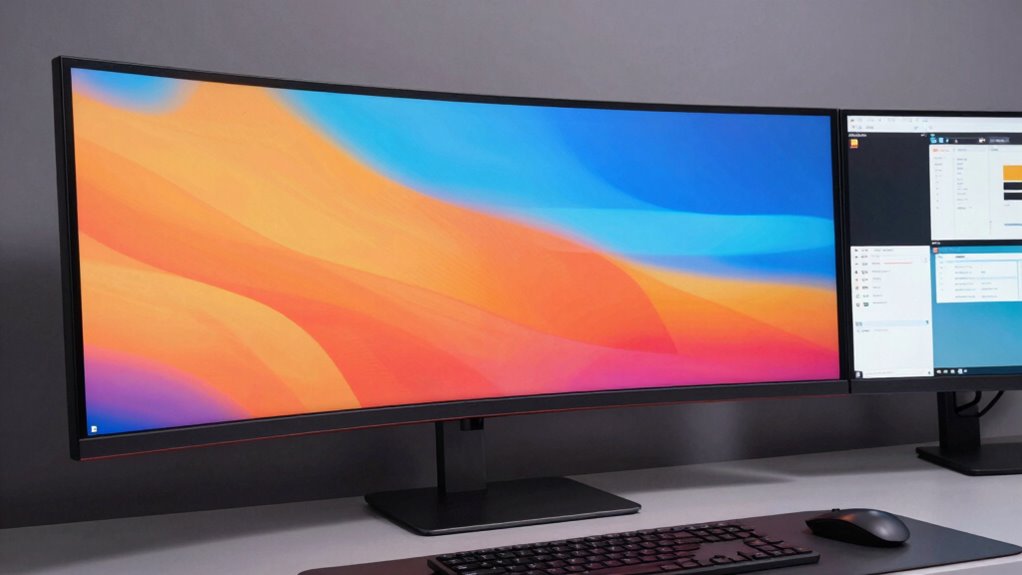
ultrawide curved monitor for creative work
As an affiliate, we earn on qualifying purchases.
As an affiliate, we earn on qualifying purchases.
How Do Ultrawide and Dual Monitors Differ in Design and Setup?
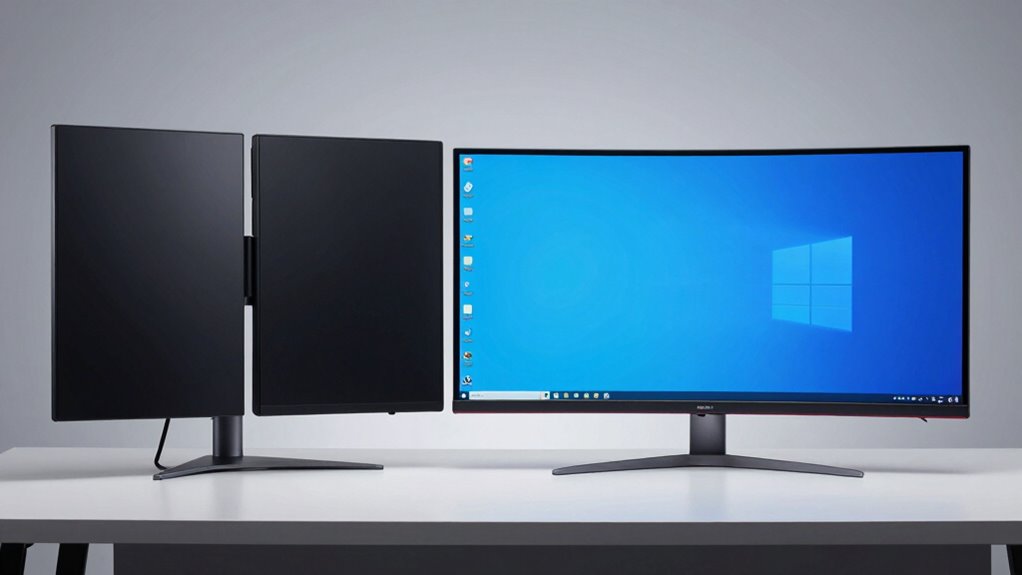
Have you ever wondered how ultrawide and dual monitors differ in design and setup? Ultrawide monitors feature a single, seamless screen, providing a sleek, unified appearance that enhances aesthetic appeal. They promote ergonomic positioning by reducing the need for multiple monitor adjustments and minimizing gaps that can strain your neck and eyes. Dual monitors, on the other hand, consist of two separate screens, which can be arranged side-by-side or stacked. This setup offers flexibility in positioning, allowing you to customize each monitor’s height and angle for better ergonomic comfort. Contrast ratio plays a significant role in the overall visual experience, impacting the clarity and depth of images displayed across the monitors. Additionally, the design of each setup influences how well it integrates into your workspace and affects your overall productivity. While ultrawide monitors create a clean, minimalist look, dual setups may look more versatile but can be less cohesive. Your choice depends on your preferences for a streamlined aesthetic versus customizable ergonomics and configuration options.
As an affiliate, we earn on qualifying purchases.
Which Setup Boosts Productivity for Different Work Styles?
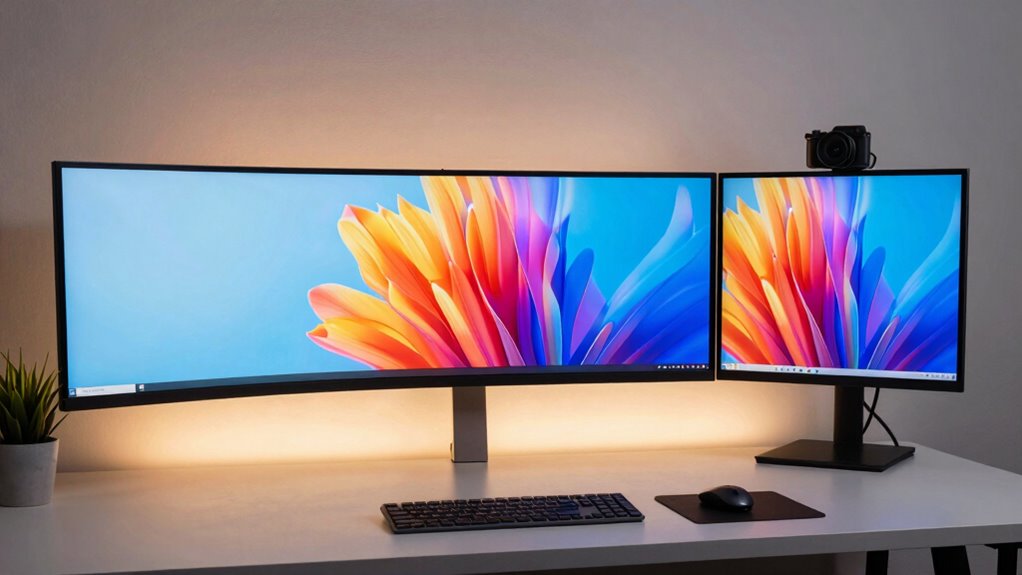
The choice between ultrawide and dual monitors can considerably impact your productivity depending on your work style. If you prefer a seamless, immersive workspace, an ultrawide monitor offers ergonomic benefits by reducing the need to switch between screens, helping you stay focused. Its panoramic display suits creative tasks, data analysis, and multitasking without breakpoints. Conversely, dual monitors provide flexibility, allowing you to organize apps and windows for different projects. They can be positioned for ideal ergonomic benefits, minimizing neck strain. Aesthetic appeal also plays a role—dual setups can look more customizable, while ultrawides deliver a sleek, modern look. Your work style—whether multitasking, detailed editing, or organization—determines which setup boosts your productivity best. Additionally, understanding how to optimize performance parts like flywheels and engine upgrades can enhance your overall experience, whether in work or leisure.
As an affiliate, we earn on qualifying purchases.
What Are the Cost and Space Requirements of Each Setup?
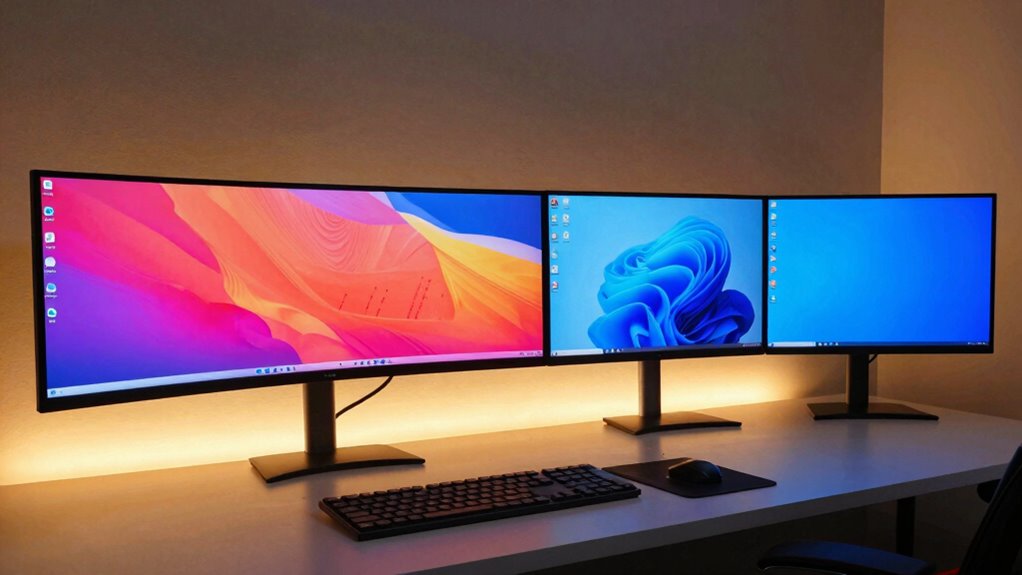
Choosing between ultrawide and dual monitors involves considering both the initial investment and the space they occupy. Ultrawides tend to be costlier upfront but require less desk space, creating a sleek aesthetic appeal. Dual monitors are often more affordable initially but need more room, which can impact ergonomic considerations. Here’s a quick comparison:
| Setup | Cost | Space Needed | Aesthetic Appeal | Ergonomic Considerations |
|---|---|---|---|---|
| Ultrawide | Higher | Compact | Sleek, seamless | Fewer adjustments |
| Dual | Lower | Larger | Traditional | More flexible |
Your choice impacts comfort, budget, and visual harmony—think about which factors matter most for your setup. Additionally, understanding electrical basics can help ensure safe and efficient setup of your monitors. Considering sustainable fabric technology can also inspire eco-friendly choices in your workspace design, especially when selecting environmentally conscious accessories or materials. When evaluating power sources, choosing a reliable battery inverter generator can provide consistent energy, especially in setups requiring mobility or backup power.
best ultrawide monitor for multitasking
As an affiliate, we earn on qualifying purchases.
As an affiliate, we earn on qualifying purchases.
How Do Visual Quality and Multitasking Compare?
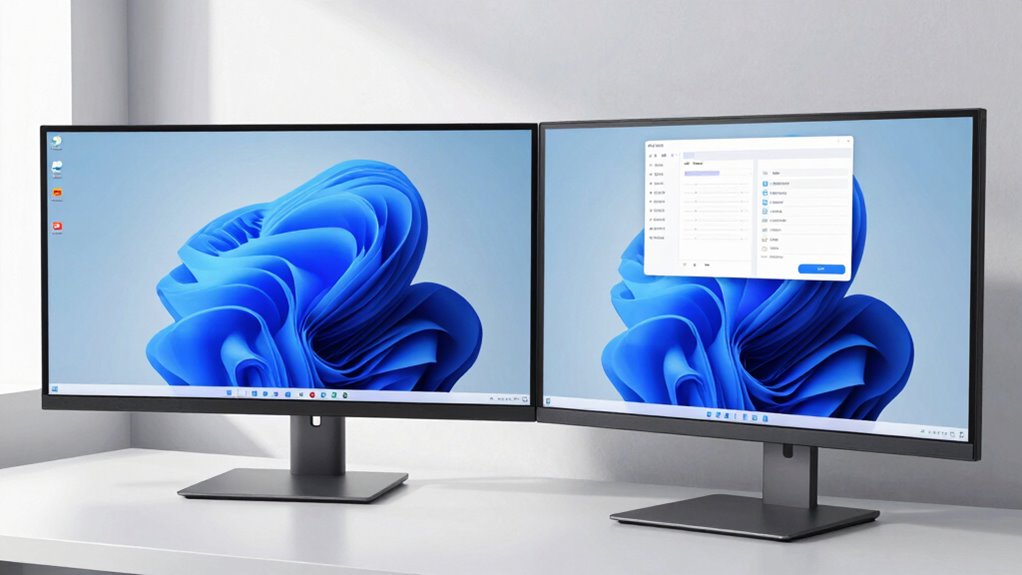
When it comes to visual quality and multitasking capabilities, the differences between ultrawide and dual monitors become more apparent. Ultrawides typically offer better color accuracy across a seamless, curved display, providing consistent visuals ideal for design or media work. This consistent visual quality is especially beneficial for professionals working with color accuracy where precision matters. This setup reduces bezels and distractions, enhancing ergonomic comfort by allowing you to view multiple applications without shifting focus. Dual monitors, on the other hand, may have varying color accuracy between screens, which can be an issue for tasks demanding precise color matching. However, they enable flexible positioning, giving you more control over your workspace layout. For multitasking, ultrawides excel by offering one expansive screen, minimizing window switching. Additionally, some ultrawide monitors incorporate advanced display technologies that improve brightness and contrast, further enhancing visual quality. These display features can make a significant difference in professional workflows requiring high fidelity. Ultimately, your choice depends on whether visual cohesion or flexible multitasking is more important for your work style.
Is One Setup More Flexible and Better for the Long Term?
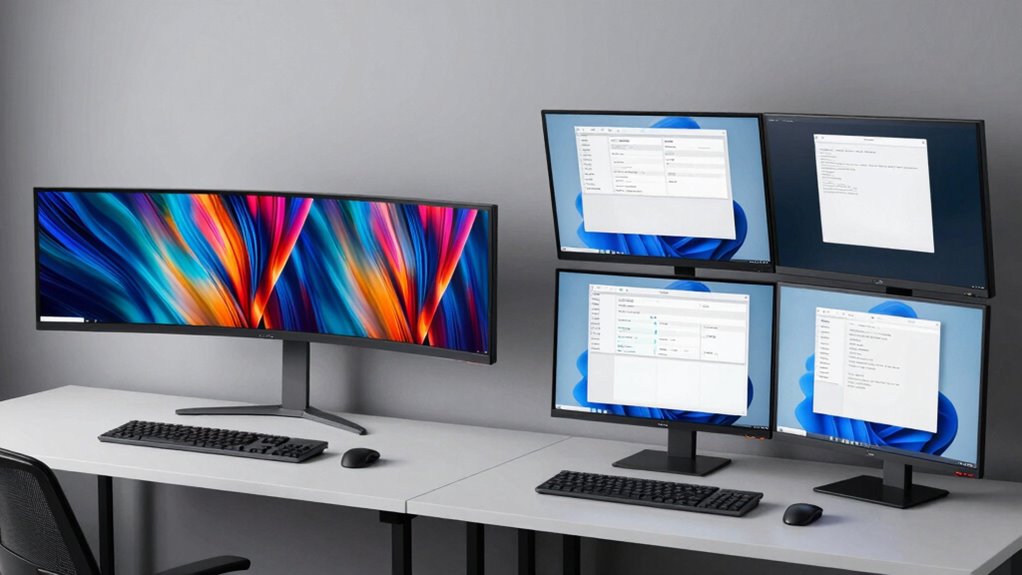
Is one monitor setup truly more flexible and better suited for the long term? It depends on your needs. An ultrawide offers seamless workspace, reducing the need for multiple monitors and improving ergonomic benefits by minimizing neck strain. Its streamlined design also enhances aesthetic appeal, creating a clean, modern look. Conversely, dual monitors provide flexibility by allowing you to customize each screen’s position and size, which can adapt better to evolving tasks. Over time, this adaptability can make dual setups more practical, especially if your work involves different applications requiring varied screen configurations. Both setups have their strengths, but for long-term use, consider how each aligns with your workflow, ergonomic comfort, and aesthetic preferences to determine which one truly suits your needs. Additionally, understanding the fundamentals of workspace ergonomics can help optimize comfort and efficiency regardless of your monitor choice. Incorporating workspace organization principles can also help keep your workspace tidy and efficient.
How to Choose the Right Monitor Setup for Your Needs?
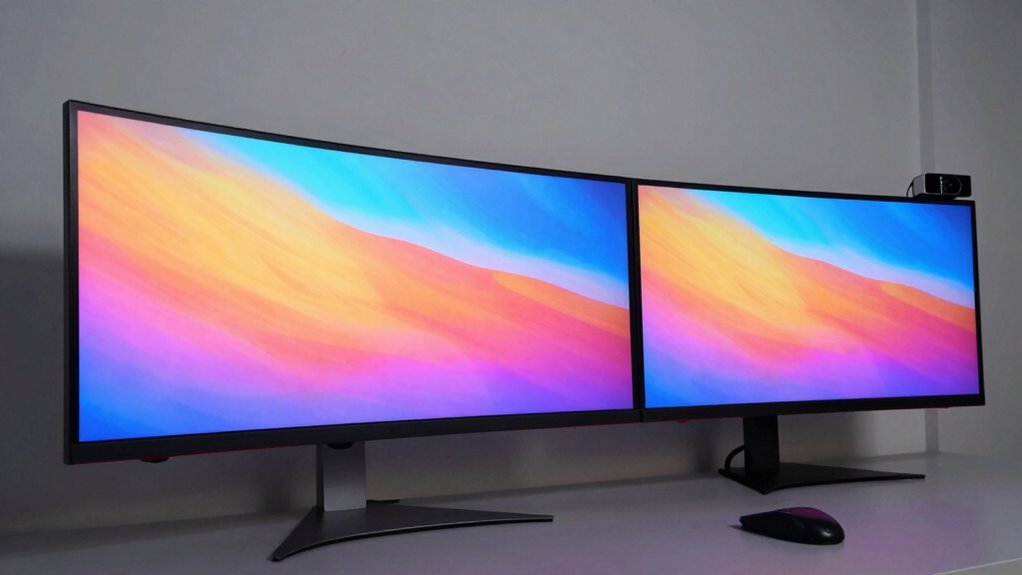
To select the right monitor setup, you need to assess your specific work habits and space constraints. Consider how you use your computer daily—do you multitask with multiple applications or focus on a single task? If ergonomic benefits matter, look for configurations that promote good posture, such as adjustable stands or curved screens. For gaming performance, choose setups that minimize lag and maximize immersion—ultrawide monitors often excel here. Dual monitors can boost productivity by enabling easy multitasking without switching windows. Think about your available desk space, budget, and whether you prioritize comfort or performance. Additionally, understanding different data storage options can help ensure your setup includes reliable backup solutions. Ultimately, your ideal setup balances ergonomic benefits with your primary use, whether it’s work, gaming, or both, ensuring you get the most out of your investment.
Frequently Asked Questions
Which Setup Is Easier to Transport and Move Around?
You’ll find dual monitors easier to transport because they generally have less setup weight and fewer portability challenges. Ultrawide monitors tend to be larger, heavier, and more cumbersome to move, making them less practical for frequent relocation. With dual setups, you can disconnect and pack each monitor separately, reducing the risk of damage. So, if portability matters, dual monitors usually win because of their lighter weight and simpler setup.
How Do Ultrawide and Dual Monitors Perform for Gaming?
For gaming, ultrawide monitors often deliver a more immersive experience thanks to their wider field of view, but dual monitors can be better for multitasking. Ultraride screens typically have high refresh rates, reducing motion blur, while dual setups may have varied refresh rates. Color accuracy varies by model, but ultrawides generally provide more consistent visuals, making them ideal for immersive gaming, especially with fast-paced action.
Can Both Setups Support Multiple Devices Simultaneously?
Yes, both setups can support multiple devices simultaneously, transforming your workspace into a multimonitor productivity paradise. With a dual monitor setup, you can easily connect two or more devices, making multitasking seamless. Ultrawide monitors, on the other hand, provide an immersive experience that can handle multiple inputs at once, offering a sleek, single-screen solution. Either way, you’re creating an environment where multitasking feels like commanding a spaceship!
Which Setup Offers Better Compatibility With Existing Hardware?
Ultrawide monitors generally offer better compatibility with existing hardware because they often support higher resolution flexibility and fewer cables, simplifying cable management. They usually connect via a single cable, reducing clutter and making setup easier. Dual monitors might require additional adapters or ports, which can complicate compatibility. So, if you want seamless integration and cleaner cable management, an ultrawide setup is often the smarter choice.
How Does Each Setup Impact Eye Strain and Ergonomics?
Ultrawide monitors often improve visual comfort by reducing the need to turn your head and minimizing bezel distractions, promoting better ergonomic benefits. Dual monitors can cause more eye strain if not positioned correctly, as your eyes shift between screens. With proper setup, both setups can minimize eye strain, but ultrawides generally provide a more seamless viewing experience, leading to enhanced ergonomic benefits and better overall visual comfort for long work sessions.
Conclusion
Choosing between ultrawide and dual monitors is like selecting the right compass for your journey—each guides you differently, depending on your destination. Whether you prioritize seamless flow or versatile multitasking, understanding your workflow and space will steer you toward the best fit. Remember, no setup is a one-size-fits-all solution. Trust your instincts, weigh your needs, and set sail with confidence—your ideal workspace is out there, waiting to be discovered.
Fall Picks
fall essentials
As an affiliate, we earn on qualifying purchases.