
Mesh Wi-Fi systems can effectively eliminate dead zones and improve coverage in your home, but if not set up correctly or maintained regularly, they may cause slow speeds or interference. Factors like poor placement, environmental obstacles, or outdated firmware can impact performance. To avoid new problems, you should optimize your network setup, keep devices updated, and monitor your connection. There’s more to uncover about ensuring your mesh Wi-Fi works flawlessly and avoids common pitfalls.

Get hardware and tech essentials delivered free — and shop member deals
- Fast, free delivery on millions of items
- Access to Prime Big Deal Days deals on October 6–7
- Prime Video, Amazon Music and more included
Key Takeaways
- Proper placement of mesh nodes is essential to eliminate dead zones and prevent new interference issues.
- Environmental factors like walls and electronics can cause interference, requiring channel optimization and clear line of sight.
- Regular firmware updates and device maintenance improve performance and reduce the chance of new problems arising.
- Overloading the network with too many devices can create congestion and slow down the mesh Wi-Fi system.
- Upgrading outdated or incompatible mesh systems helps avoid security vulnerabilities and persistent dead zones.
mesh Wi-Fi system for large home
As an affiliate, we earn on qualifying purchases.
As an affiliate, we earn on qualifying purchases.
What Is a Mesh Wi-Fi System and How Does It Work?

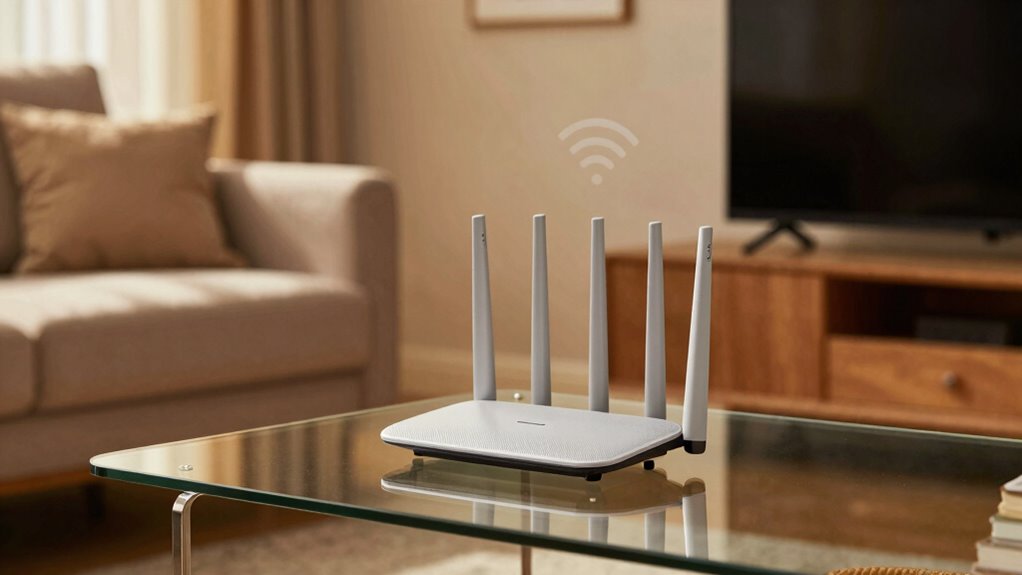
Have you ever experienced dead zones in your home where Wi-Fi signals are weak or drop completely? A mesh Wi-Fi system can fix that. It consists of a main router connected to your modem and several satellite nodes placed around your house. These nodes communicate seamlessly with each other, creating a unified network that covers a larger area. Unlike traditional routers, mesh systems by top brands like Netgear, Eero, and Google Nest use multiple access points to eliminate dead spots. Plus, they prioritize Wi-Fi security, ensuring your network stays protected. When set up correctly, a mesh system enhances coverage and maintains consistent speeds. This way, you avoid interruptions, buffering, and weak signals, giving you reliable internet throughout your home. Additionally, understanding the importance of signal strength can help you optimize placement and improve overall connectivity.
As an affiliate, we earn on qualifying purchases.
How Mesh Wi-Fi Eliminates Dead Zones and Boosts Coverage
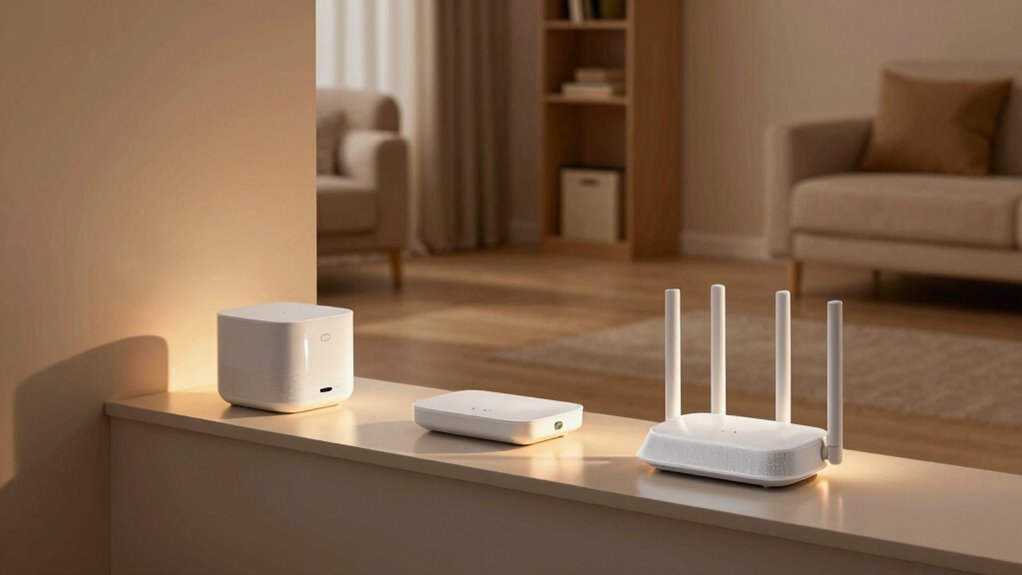
Mesh Wi-Fi systems work by creating a seamless network that covers your entire home, effectively eliminating dead zones. Multiple nodes communicate wirelessly, ensuring strong, consistent coverage in every room. This setup boosts your Wi-Fi range and reduces connection dropouts, so streaming, gaming, and browsing stay smooth. Additionally, mesh systems often include wireless security features, helping protect your network from threats, while parental controls give you management over connected devices, keeping your family safe online. By intelligently routing data between nodes, the system maintains peak speeds even in larger spaces. This extensive coverage minimizes weak signals and dead zones, providing reliable internet access wherever you need it most. Incorporating efficient network design principles can further optimize your system’s performance and reliability, especially in environments with challenging Wi-Fi interference. Proper placement of nodes and understanding home network setup can significantly enhance overall connectivity and stability. Ensuring your system is well-configured can also prevent network congestion that might otherwise lead to slower speeds and connectivity issues.
wireless channel optimizer for mesh networks
As an affiliate, we earn on qualifying purchases.
As an affiliate, we earn on qualifying purchases.
Why Your Mesh Wi-Fi Might Be Slow or Interfered With
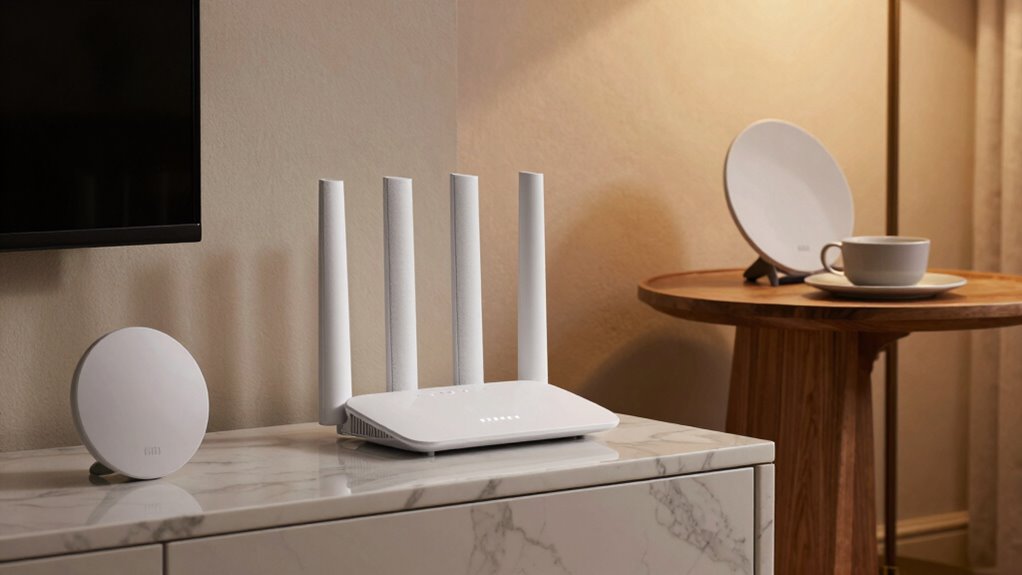
Even though mesh Wi-Fi systems are designed to improve coverage, they can still be slow or experience interference under certain conditions. Factors like Wi-Fi security settings or incompatible devices can reduce speed. Interference from other wireless devices, thick walls, or too many connected gadgets strain your network’s performance. Ensuring your mesh network compatibility with your devices is key. Also, secure Wi-Fi settings, like strong passwords, prevent unauthorized access that could slow down your connection. Recognizing early warning signs for connectivity issues can help you address problems before they significantly impact your network. Additionally, understanding proper gear care can ensure your router and connected devices operate efficiently and maintain optimal performance. Proper maintenance of your network hardware, such as firmware updates and regular resets, can further optimize network stability, especially when you implement network troubleshooting practices to identify and resolve issues quickly. Regularly checking for firmware updates can also help prevent performance issues caused by outdated software.
As an affiliate, we earn on qualifying purchases.
How to Troubleshoot and Fix Mesh Wi-Fi Connectivity Issues
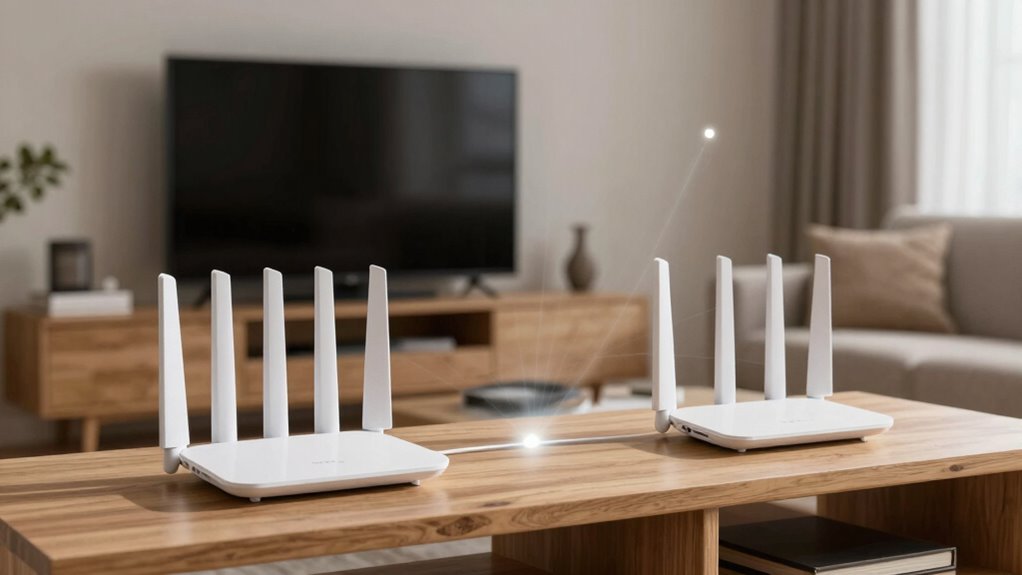
When troubleshooting mesh Wi-Fi issues, start by checking for signal interference from other devices and moving your router to a better location. Next, make sure your firmware is up to date and your settings are optimized for performance. Addressing these points can greatly improve your connection stability and coverage. Additionally, ensuring your network equipment fits well within your space can help prevent dead zones, much like proper gear fit improves off-road comfort. Regularly monitoring your network’s performance can also help identify issues before they become significant problems. Paying attention to digital concepts like network topology can further enhance your overall connectivity experience. Understanding the essential DIY tools for network setup and maintenance can empower you to troubleshoot and repair issues more effectively. Incorporating enterprise USB backups into your data management routine can also safeguard your network against potential data loss during troubleshooting.
Signal Interference Solutions
Signal interference is a common culprit behind weak or dropped Wi-Fi connections, especially in busy households with many electronic devices. To troubleshoot, start by checking for channel congestion—other nearby networks may be overlapping, causing interference. Use your router’s app or settings to scan for less crowded channels and switch to one with less traffic. Additionally, verify device compatibility; some older gadgets may struggle with the mesh system’s frequency bands, leading to connectivity issues. Updating firmware on your mesh nodes can also improve performance and reduce interference. Keep an eye on electronics like cordless phones, microwaves, and Bluetooth devices that may disrupt signals. Managing these sources of interference helps create a more stable, reliable mesh Wi-Fi network. Also, consider your home’s layout and construction materials, as thick walls or metal fixtures can block signals and contribute to dead zones. Understanding wireless signal propagation can help you optimize placement and avoid potential obstacles. To further enhance network stability, interference mitigation strategies can be employed to reduce signal disruptions and improve overall coverage. Being aware of environmental factors like nearby large metal objects or appliances can also help in troubleshooting persistent connectivity issues.
Proper Router Placement
Proper router placement is essential for maximizing your mesh Wi-Fi network’s coverage and stability. You should focus on router positioning to guarantee the best signal distribution. Place your main router in a central location, away from walls, metal objects, or thick furniture that can block signals. Avoid signal obstacles such as appliances or electronics that emit interference. Elevate your router off the floor, ideally on a shelf or mounted on a wall, to improve signal reach. Keep mesh nodes within a reasonable distance from each other, avoiding areas with thick walls or large metal surfaces that can weaken signals. Proper placement minimizes dead zones and prevents connectivity issues, ensuring a stronger, more reliable mesh network throughout your home. Additionally, understanding signal interference can help you identify sources of disruption and optimize your router’s placement for better performance. Recognizing nail biology and its influence on health can also remind us of the importance of proper maintenance and care, similar to how regular updates and adjustments can improve your Wi-Fi network’s reliability. Regularly testing your network’s performance can help you identify and resolve issues promptly, much like ongoing device maintenance ensures optimal operation.
Firmware and Settings Check
After ensuring your router and nodes are well-placed, the next step is to verify that their firmware and settings are up to date. Regular firmware updates improve performance, fix bugs, and enhance security. Check that your network password is strong for maximum password security. Access your mesh system’s admin panel to review settings and guarantee they match recommended configurations. Consider resetting and reconfiguring if issues persist. Additionally, verify that:
- Firmware updates are installed for all devices
- Password security is robust and unique
- Network names are correctly configured
- DHCP and IP settings are consistent
- Firmware version is the latest available
Keeping firmware current and settings streamlined helps prevent connectivity issues and secures your network against potential threats.
Tips to Set Up Your Mesh Network for Optimal Performance

To get the best performance from your mesh network, start by placing the nodes in ideal locations—avoid corners and obstructions. Make certain your network is properly configured, with each node connected correctly and settings refined. This setup will guarantee a strong, reliable connection throughout your space. Additionally, regularly checking for water damage and leaks can prevent potential issues that might disrupt your network performance. Ensuring your environment is free of external noise can also help maintain a stable connection. Paying attention to indoor air quality can indirectly support your network’s longevity by reducing dust and debris that may cause equipment buildup or malfunctions.
Optimal Node Placement
Choosing the right spots for your mesh nodes is essential to maximizing your Wi-Fi coverage. To optimize placement, consider device compatibility and minimize signal overlap. Place nodes centrally, away from thick walls or metal objects that block signals. Keep a distance between nodes—not too close, to prevent interference, and not too far, to ensure strong connections. Use a mesh Wi-Fi app to identify dead zones and test signal strength. Confirm each node has a clear line of sight when possible.
- Position nodes at different heights for better coverage
- Avoid placing nodes near microwaves or cordless phones
- Maintain a distance of at least 30 feet between nodes
- Check device compatibility for seamless handoff
- Regularly test signal strength and adjust placement accordingly
Proper Network Configuration
Properly configuring your mesh network is vital to achieving the best performance. Start by updating firmware on all nodes to guarantee stability and security. Secure your network with strong, unique passwords to protect against unauthorized access—network security is essential. Confirm your devices are compatible with your mesh system; incompatible devices can cause connectivity issues or reduce speed. Place nodes in central locations, away from obstructions, to maximize coverage. Disable unnecessary features that might interfere with performance, like unused guest networks. Use the network management app to fine-tune settings, such as channel selection, to reduce interference. Regularly check for firmware updates and monitor connected devices to prevent bandwidth hogs. Proper setup ensures seamless connectivity, keeps your network secure, and maintains device compatibility for an ideal mesh Wi-Fi experience.
When Should You Upgrade or Switch Your Mesh Wi-Fi System?

Knowing when to upgrade or switch your Mesh Wi-Fi system can save you from ongoing connectivity issues and frustration. If you notice persistent dead zones, slow speeds, or frequent disconnects, it’s time to evaluate an upgrade. You should also assess if your current system lacks strong mesh security or device compatibility with new gadgets. Additionally, if your network struggles to handle multiple devices or streaming demands, upgrading can improve performance.
Consider these signs:
- Outdated hardware that no longer supports current security protocols
- Devices frequently dropping from the network
- Slow speeds despite ideal placement
- Incompatibility with newer devices or smart home tech
- Increased security risks due to obsolete firmware
Frequently Asked Questions
Can Mesh Wi-Fi Systems Improve Security for My Home Network?
Yes, mesh Wi-Fi systems can improve your home network security. They often support advanced encryption protocols like WPA3, which protect your data from hackers. Plus, regular firmware updates are essential, as they fix vulnerabilities and enhance security features. By keeping your system updated and using strong encryption, you create a safer network environment, reducing the risk of unauthorized access and ensuring your connected devices stay protected.
Are There Compatibility Issues With Certain Internet Service Providers?
You might face some ISP compatibility issues with mesh Wi-Fi systems, especially if your provider uses specific configurations or hardware. To avoid problems, check your ISP’s compatibility list before buying. Also, keep your mesh system’s firmware updated regularly, as updates often improve compatibility and performance. Doing so guarantees your mesh Wi-Fi works smoothly with your internet service and minimizes potential connection issues.
How Does Mesh Wi-Fi Impact Overall Network Latency?
Mesh Wi-Fi can reduce overall network latency by efficiently managing data traffic, but it might also introduce slight delays if network congestion or signal interference occurs. As multiple nodes communicate, congestion increases, potentially causing higher latency. Signal interference from other devices or thick walls can disrupt the mesh system’s performance, leading to delayed responses. To minimize these issues, optimize placement and reduce interference sources, ensuring smoother, faster connectivity.
Can Mesh Networks Support Multiple Devices Simultaneously Without Slowdown?
Yes, mesh networks can support multiple devices simultaneously without slowdown, but it depends on your bandwidth sharing and signal interference. If your network has high bandwidth and minimal interference, multiple devices can operate smoothly. However, heavy signal interference or limited bandwidth can cause slowdowns as devices compete for resources. To keep performance at its best, verify your mesh system is well-placed and your internet plan offers enough bandwidth for your device count.
What Are the Energy Consumption Differences Between Mesh and Traditional Routers?
You might assume mesh networks use more power than traditional routers, but that’s not always true. Mesh systems often prioritize energy efficiency, so their power consumption can be comparable or even lower, especially when optimized for multiple devices. They intelligently manage power to reduce unnecessary energy use. So, if you’re concerned about energy consumption, a well-designed mesh system can offer efficient power use without sacrificing performance, unlike some traditional routers.
Conclusion
In the battle to conquer Wi-Fi dead zones, a mesh system can feel like your ultimate superhero—saving the day and transforming your internet experience. But beware: it can also turn into a villain, causing slowdowns and interference chaos. With the right setup and troubleshooting, you can tame this technological beast. So, gear up, follow the tips, and master your mesh network—because a flawless Wi-Fi connection isn’t just a luxury, it’s your digital lifeline!
Fall Picks
fall essentials
As an affiliate, we earn on qualifying purchases.