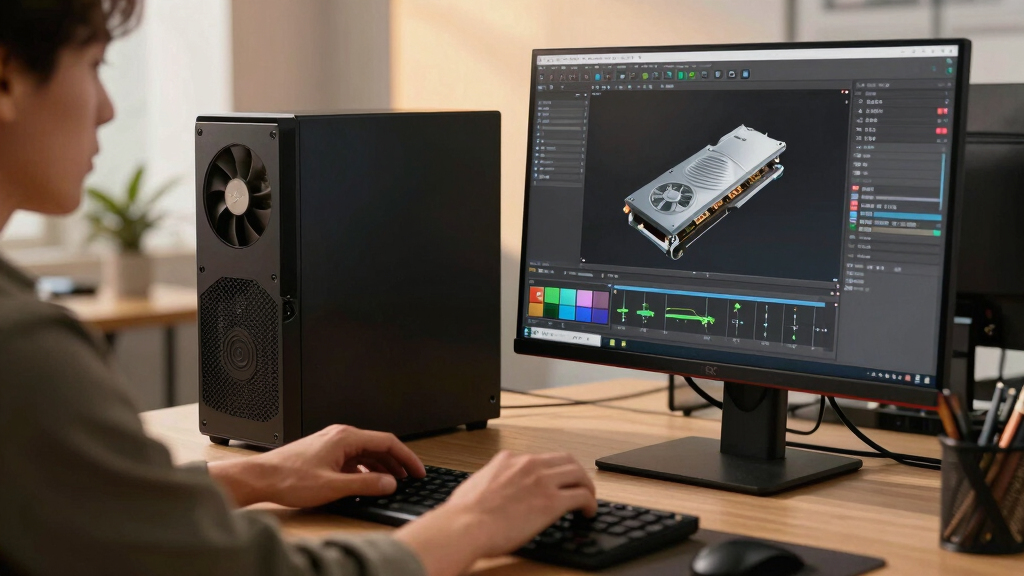

Choosing the best Radeon GPU for AI assisted workloads involves balancing raw performance, memory capacity, and stability. The GIGABYTE Radeon AI PRO R9700 stands out for its overall reliability and compatibility with AI frameworks. The AMD Radeon™ Pro W7800 offers a professional-grade option with optimized drivers for AI tasks, while the Sapphire AMD Radeon AI PRO R9700 provides a compelling mix of performance and value. Each of these options faces tradeoffs between price, power consumption, and feature set. Continue reading for a detailed breakdown of these top picks and how they compare.

Get hardware and tech essentials delivered free with Prime
- Fast, free delivery on millions of items
- Prime Video, Amazon Music and more included
- Member-only deals all year
Key Takeaways
- The top Radeon GPUs for AI workloads feature high VRAM capacities, with 32GB being common among premium options.
- Professional-grade cards like the Radeon Pro series deliver better stability and driver support for AI applications but come at a higher cost.
- Power consumption and cooling solutions vary significantly, impacting operational costs and setup complexity.
- Price-to-performance ratios differ widely, making some lower-cost models suitable for entry-level AI tasks while premium cards target advanced workloads.
- Connectivity and PCIe support, especially PCIe 5.0, are important for future-proofing and maximizing data throughput in AI pipelines.
| GIGABYTE Radeon AI PRO R9700 AI TOP 32G Graphics Card |  | Best Overall for AI Workloads and Scalability | Graphics Coprocessor: Radeon AI PRO R9700 | Memory: 32 GB GDDR6 | GPU Clock Speed: 2350 MHz | VIEW LATEST PRICE | See Our Full Breakdown |
| AMD Radeon™ Pro W7800 Professional Graphics Card |  | Best for High-Resolution, Precision Workloads | Compute Units: 70 CU | AI Accelerators: 2 per CU | FP32 Performance: 45 TFLOPS | VIEW LATEST PRICE | See Our Full Breakdown |
| ASUS Radeon AI PRO R9700 32GB GDDR6 Graphics Card |  | Best for Heat Management and Reliability | Memory: 32 GB GDDR6 | Memory Bus: 256 bit | Graphics Processor: Radeon AI PRO R9700 | VIEW LATEST PRICE | See Our Full Breakdown |
| Sapphire AMD Radeon AI PRO R9700 Graphics Card with 32GB GDDR6 |  | Best for High-Performance Multi-Display AI Workstations | Memory Size: 32 GB | Memory Interface: 256-bit | Boost Clock: Up to 2920 MHz | VIEW LATEST PRICE | See Our Full Breakdown |
| ASUS Turbo Radeon AI PRO R9700 32GB Graphics Card |  | Best for Heavy AI Workflows with Multi-GPU Support | GPU Architecture: RDNA 4 | AI Accelerators: 128 | TOPS: 1,531 (INT4) | VIEW LATEST PRICE | See Our Full Breakdown |
| AMD Radeon™ Pro W7900 Professional Graphics Card |  | Best for High-End Professional Workstations | Compute Units: 96 CU | AI Accelerators: 2 per CU | FP32 Performance: 61 TFLOPS | VIEW LATEST PRICE | See Our Full Breakdown |
| ASRock Radeon AI PRO R9700 32GB Professional Graphics Card, AMD RDNA 4, GDDR6, PCIe 5.0, DisplayPort 2.1a, Blower Cooler |  | Best for Multi-GPU Workstations and Professional AI Development | Memory: 32GB GDDR6 | Boost Clock: 2920 MHz | Bus: 256-bit | VIEW LATEST PRICE | See Our Full Breakdown |
| Radeon GPUs for AI assisted workload | Memory | AI Accelerators |
|---|---|---|
| GIGABYTE Radeon AI PRO R9700 A | 32 GB GDDR6 | — |
| AMD Radeon™ Pro W7800 Professi | 32GB GDDR6 | 2 per CU |
| ASUS Radeon AI PRO R9700 32GB | 32 GB GDDR6 | — |
| Sapphire AMD Radeon AI PRO R97 | — | — |
| ASUS Turbo Radeon AI PRO R9700 | — | 128 |
| AMD Radeon™ Pro W7900 Professi | 48GB GDDR6 | 2 per CU |
| ASRock Radeon AI PRO R9700 32G | 32GB GDDR6 | 2nd Gen |
More Details on Our Top Picks
GIGABYTE Radeon AI PRO R9700 AI TOP 32G Graphics Card
The GIGABYTE Radeon AI PRO R9700 AI TOP 32G stands out for its combination of massive memory capacity and cutting-edge PCIe Gen 5 support, making it ideal for large-scale AI models and data-intensive tasks. Unlike the AMD Radeon™ Pro W7800, which offers exceptional compute power for professional visualization, this card emphasizes high memory bandwidth and scalability, crucial for training extensive AI datasets. Its vapor chamber cooling and robust build enhance stability during prolonged workloads, but its size and cost may be barriers for some users. This card makes the most sense for enterprise AI labs or research teams needing consistent multi-GPU setups.
Pros:- Massive 32GB GDDR6 memory for handling large datasets
- Supports PCIe Gen 5 for rapid data transfer
- Advanced vapor chamber cooling ensures thermal stability during heavy workloads
Cons:- High price point limits accessibility for smaller teams
- Large size may require custom or spacious cases
Best for: Data scientists and AI researchers running large models that benefit from high memory and multi-GPU scalability
Not ideal for: Casual users or gamers, since it’s optimized for AI and professional workloads, not gaming or everyday use
- Graphics Coprocessor:Radeon AI PRO R9700
- Memory:32 GB GDDR6
- GPU Clock Speed:2350 MHz
- Video Output Interface:DisplayPort, HDMI
- Interface:PCI-Express x16
- Memory Clock Speed:20000 MHz
Our verdict“This GPU is designed for AI professionals needing large memory and scalability, but its cost and size may be prohibitive for smaller setups.”
AMD Radeon™ Pro W7800 Professional Graphics Card
The AMD Radeon™ Pro W7800 excels in professional environments where high-resolution display support and precise computations are key. Its 70 compute units and 45 TFLOPS of FP32 performance outperform many gaming-focused cards, making it ideal for demanding 3D rendering and AI tasks requiring high accuracy. Compared to the Radeon AI PRO R9700, the W7800 offers more specialized support for 8K workflows and API compatibility suited for creative industries. Its 260W TDP and price tag suggest it’s best for dedicated workstations rather than casual use, but it sacrifices some scalability and multi-GPU flexibility.
Pros:- Supports 8K at 60Hz and 12K at 60Hz, ideal for high-res workflows
- High compute power with 45 TFLOPS FP32 performance
- Excellent API support for professional applications
Cons:- Requires significant power supply (260W TDP)
- Premium price limits accessibility for casual users
Best for: AI developers and 3D artists working with ultra-high-resolution data and complex simulations
Not ideal for: Budget-conscious hobbyists or gamers who won’t utilize its professional-grade features
- Compute Units:70 CU
- AI Accelerators:2 per CU
- FP32 Performance:45 TFLOPS
- Memory:32GB GDDR6
- Display Support:8K at 60Hz, 4K at 120Hz
- TDP:260W
Our verdict“Best suited for professional environments demanding high-res output and compute precision, but less ideal for gaming or casual tasks.”
ASUS Radeon AI PRO R9700 32GB GDDR6 Graphics Card
The ASUS Radeon AI PRO R9700 emphasizes thermal efficiency with its wave design, reducing memory temperatures by up to 16%, which is critical during extended AI training. Its large 32GB GDDR6 memory supports demanding workloads, though details on compatibility and power requirements are less explicit, raising questions about setup complexity. Compared to the Sapphire AMD Radeon AI PRO R9700, ASUS’s focus on heat dissipation makes it a better choice for environments where thermal stability is paramount, but it might come at a higher cost. This card is best for users who prioritize thermal performance in sustained AI tasks.
Pros:- Large 32GB GDDR6 memory supports extensive AI models
- Wave design improves heat dissipation significantly
- Enhanced thermal performance reduces memory temps under load
Cons:- Lack of detailed compatibility and power info could complicate installation
- Potentially higher cost due to thermal enhancements
Best for: AI engineers and data scientists needing reliable thermal performance for long training sessions
Not ideal for: Enthusiasts seeking detailed specs or gaming-focused setups, as cooling is its primary benefit
- Memory:32 GB GDDR6
- Memory Bus:256 bit
- Graphics Processor:Radeon AI PRO R9700
Our verdict“Ideal for AI workloads where thermal stability and consistent performance are priorities, but less suited for users who need detailed setup info.”
Sapphire AMD Radeon AI PRO R9700 Graphics Card with 32GB GDDR6
The Sapphire AMD Radeon AI PRO R9700 combines high clock speeds with extensive display support, making it suitable for multi-monitor AI research stations. Its 32GB GDDR6 memory and PCIe 5.0 interface enable fast data throughput, but its high power consumption and cooling needs may demand advanced case setups. Compared with ASUS’s model, the Sapphire offers higher boost clocks—up to 2920MHz—delivering quick performance bursts, yet potentially at the expense of thermal management. This card is well suited for users operating high-resolution multi-display AI environments where speed and output flexibility matter.
Pros:- Large 32GB GDDR6 memory for demanding workloads
- High boost clock speeds up to 2920MHz for performance spikes
- Multiple DisplayPort 2.1a outputs facilitate multi-monitor setups
Cons:- High power consumption may necessitate advanced cooling solutions
- Limited info on availability and pricing
Best for: AI teams managing multi-monitor setups requiring rapid performance and high display output
Not ideal for: Small office or home users with limited power or cooling capacity, due to high power needs
- Memory Size:32 GB
- Memory Interface:256-bit
- Boost Clock:Up to 2920 MHz
- Outputs:4 x DisplayPort 2.1a
Our verdict“Suitable for multi-display AI environments demanding fast clocks and high output, but requires robust power and cooling setups.”
ASUS Turbo Radeon AI PRO R9700 32GB Graphics Card
The ASUS Turbo Radeon AI PRO R9700 offers a blend of high VRAM, multiple AI accelerators, and PCIe 5.0 support, making it a strong choice for large-scale AI training and inference. Its 128 AI accelerators enable fast inference speeds, and with 1,531 TOPS in INT4, it excels at deploying AI models efficiently. Compared to the other R9700 options, the ASUS model emphasizes durability with its dual ball fan bearings and phase-change thermal pads, promoting long-term stability during intensive workloads. However, its focus on AI and multi-GPU scaling means it may be less appealing for users seeking a straightforward graphics card without complex setup needs.
Pros:- 128 AI accelerators for rapid inference and training
- Supports PCIe 5.0 for multi-GPU scaling
- Robust cooling with phase-change thermal pads and durable bearings
Cons:- Less suitable for gaming or general graphics tasks
- Requires advanced multi-GPU setup knowledge
Best for: AI researchers and developers managing multi-GPU clusters for large-scale training and inference
Not ideal for: Casual gamers or those with limited experience in multi-GPU configurations, due to setup complexity
- GPU Architecture:RDNA 4
- AI Accelerators:128
- TOPS:1,531 (INT4)
- VRAM:32GB GDDR6
- Memory Bandwidth:640GB/s
- Interface:PCIe 5.0
Our verdict“Designed for AI workflows demanding multi-GPU scalability and high inference throughput, but less accessible for casual or single-GPU users.”
AMD Radeon™ Pro W7900 Professional Graphics Card
The AMD Radeon™ Pro W7900 stands out for its enormous 48GB GDDR6 memory and exceptional FP32 performance of 61 TFLOPS, making it ideal for AI, 3D rendering, and complex workflows. Compared to the ASRock Radeon AI PRO R9700, which offers a slightly lower memory capacity but a more balanced price point, the W7900 excels in memory-hungry tasks and multi-display support, especially at ultra-high resolutions. However, it comes with a hefty price tag and high power requirements, which could be a barrier for smaller studios or individual researchers. This card is best suited for large-scale AI labs or studios needing maximum memory and display options. The extensive API compatibility ensures smooth integration with professional software, but its cost and power draw limit its appeal to only those with robust infrastructure.
Pros:- Massive 48GB GDDR6 memory for handling large datasets
- Exceptional 61 TFLOPS FP32 performance boosts compute-intensive tasks
- Supports ultra-high-resolution displays up to 12K
Cons:- High cost makes it less accessible for casual or smaller-scale use
- Requires a substantial 295W power supply, increasing infrastructure needs
- Designed primarily for professional environments, limiting its versatility for casual users
Best for: Large AI research facilities, professional 3D rendering studios, and enterprise workstation users needing maximum memory and display support
Not ideal for: Small teams or individual developers with budget constraints, or users with limited power supply capacity
- Compute Units:96 CU
- AI Accelerators:2 per CU
- FP32 Performance:61 TFLOPS
- Memory:48GB GDDR6
- Display Support:4K, 8K, 12K
- Display Outputs:1x Mini DisplayPort, 3x DisplayPort 2.1
- TDP:295W
Our verdict“This card is perfect for large-scale AI and visualization tasks where maximum memory and performance justify the investment.”
ASRock Radeon AI PRO R9700 32GB Professional Graphics Card, AMD RDNA 4, GDDR6, PCIe 5.0, DisplayPort 2.1a, Blower Cooler
The ASRock Radeon AI PRO R9700 offers a compelling combination of 32GB GDDR6 memory and advanced RDNA 4 architecture, optimized for AI workloads and content creation. Unlike the AMD Radeon™ Pro W7900, which emphasizes raw memory capacity and display support, the R9700 focuses on efficiency with PCIe 5.0 support and reliable cooling, making it suitable for multi-GPU setups in demanding environments. Its blower cooler, while effective at maintaining thermal stability, can generate more noise compared to larger, quieter solutions. This makes it a practical choice for professional workstations where multiple GPUs are needed, but less ideal for quiet office environments. For users with existing PCIe 5.0 infrastructure and a need for consistent performance under load, the R9700 delivers solid value despite potential noise issues.
Pros:- 32GB GDDR6 memory supports large AI datasets and professional workflows
- Advanced RDNA 4 architecture with AI accelerators and ray tracing
- Reliable vapor chamber cooling ensures sustained high performance
Cons:- Designed mainly for professional environments, limiting casual or gaming uses
- Blower cooling can be noisier compared to larger, fan-based cooling solutions
- Compatibility verification needed with specific systems or software environments
Best for: Workstation builders, AI developers, and content creators utilizing multi-GPU configurations and PCIe 5.0 compatibility
Not ideal for: Small-scale or single-GPU setups, or those prioritizing noise-sensitive environments, due to blower cooling
- Memory:32GB GDDR6
- Boost Clock:2920 MHz
- Bus:256-bit
- Architecture:AMD RDNA 4
- AI Accelerators:2nd Gen
- Ray Tracing:3rd Gen
- Display Outputs:4 x DisplayPort 2.1a
- PCIe Support:PCIe 5.0
- Cooling:Blower cooler
Our verdict“This GPU is well-suited for multi-GPU, PCIe 5.0-enabled workstations where sustained performance and cooling are priorities.”

How We Picked
Our evaluation focused on performance benchmarks relevant to AI workloads, including compute throughput and VRAM capacity. We prioritized cards with robust driver support and proven stability in AI applications, especially those compatible with popular frameworks like TensorFlow and PyTorch. Build quality, cooling solutions, and power efficiency also played significant roles, as these impact operational costs and longevity. We ranked the GPUs based on a composite score that balances raw performance, usability, and value, ensuring options cater to different user needs—from entry-level AI developers to enterprise professionals.
Factors to Consider When Choosing Best Radeon GPUs For AI Assisted Workloads
Selecting the right Radeon GPU for AI workloads requires understanding several key factors. Not all cards are created equal, and tradeoffs between performance, cost, and features can significantly influence your experience. Here are the main considerations to guide your decision-making process.Performance and Compute Power
AI workloads demand high computational throughput, especially in floating point operations. Look for GPUs with high TFLOPS ratings and optimized compute cores. While top-tier cards deliver the best speed, they also come with higher costs and power requirements. Balancing performance with your specific workload size is essential to avoid overspending on unnecessary capacity or underperforming for demanding tasks.
Memory Capacity and Bandwidth
AI models benefit from large VRAM pools, which allow handling bigger datasets and models without frequent data swapping. Cards with 32GB of VRAM are common among premium options and are ideal for large-scale training. However, more memory often translates into higher cost and power consumption, so consider your actual workload needs before opting for maximum VRAM.
Driver Support and Ecosystem Compatibility
For AI tasks, reliable driver support and compatibility with frameworks like TensorFlow, PyTorch, and CUDA alternatives are critical. Professional-grade Radeon cards typically offer better stability and support, reducing headaches during long training runs or deployment. Cheaper or less-established models might lack optimized drivers, leading to potential crashes or compatibility issues.
Power Consumption and Cooling
High-performance GPUs consume significant power and require effective cooling solutions. Overlooking these factors can lead to higher operational costs or thermal throttling, which reduces performance. Consider your setup’s capacity to handle these demands and whether the cooling solutions included meet your noise and temperature preferences.
Connectivity and Future-Proofing
Features like PCIe 5.0 support and DisplayPort 2.1a compatibility can future-proof your system, enabling faster data transfer and higher display resolutions. While not immediately essential, these features can extend the useful life of your GPU, especially in rapidly evolving AI and data environments. Evaluate your motherboard’s capabilities and consider investing in newer standards for long-term benefits.
Frequently Asked Questions
Is VRAM more important than GPU compute power for AI workloads?
VRAM size is critical for handling large datasets and complex models without bottlenecks. However, compute power determines how fast the AI models are trained or inferred. Ideally, a balance of both is best: large VRAM to manage data and sufficient compute throughput to process it efficiently. Choosing a GPU with adequate VRAM and strong compute performance ensures smoother operation and better scalability for your AI projects.
Can I use consumer-grade Radeon GPUs for professional AI tasks?
While some consumer Radeon cards can handle AI workloads, professional-grade GPUs typically provide better driver support, stability, and compatibility with enterprise AI frameworks. Consumer cards may lack the necessary certifications or optimized drivers, leading to potential reliability issues during long or intensive training sessions. For critical or large-scale AI work, investing in a professional-grade GPU is generally advisable.
How much does cooling impact GPU performance in AI workloads?
Effective cooling is vital because high-performance GPUs generate substantial heat, which can cause thermal throttling if not managed properly. Overheating reduces performance and can shorten the lifespan of the hardware. Choosing a GPU with a robust cooling solution or ensuring your system has adequate airflow helps maintain peak performance during extended AI training or inference tasks.
Is PCIe 5.0 support necessary for AI workloads today?
PCIe 5.0 offers increased bandwidth, which can benefit data transfer speeds between the GPU and CPU, especially with large datasets. While not essential for all AI tasks today, it provides future-proofing and can reduce bottlenecks as datasets grow larger. If your motherboard supports PCIe 5.0, opting for a compatible GPU can extend the relevance and efficiency of your setup.
Should I prioritize price or performance when choosing a Radeon GPU for AI?
Balance is key: while higher-performance GPUs deliver faster AI processing, they also come at a premium. If your workloads are modest or just starting, a mid-range card with sufficient VRAM and compute capabilities may offer better value. Conversely, for intensive training or large models, investing in a top-tier GPU can save time and reduce frustration, making higher performance worth the extra cost.
Conclusion
For users seeking the best overall performance for demanding AI workloads, the AMD Radeon™ Pro W7800 offers a professional-grade solution with excellent stability and support. Budget-conscious developers or small labs might find the Sapphire AMD Radeon AI PRO R9700 provides impressive value without sacrificing too much power. Professionals requiring maximum stability and future-proofing will benefit from the AMD Radeon™ Pro W7900, featuring advanced cooling and PCIe 5.0 support. Beginners or those with lighter workloads should consider entry-level options that balance cost and capability, ensuring they don’t overspend on features they won’t utilize. Ultimately, your choice depends on your workload size, budget, and long-term plans.
Halloween Picks
halloween
As an affiliate, we earn on qualifying purchases.