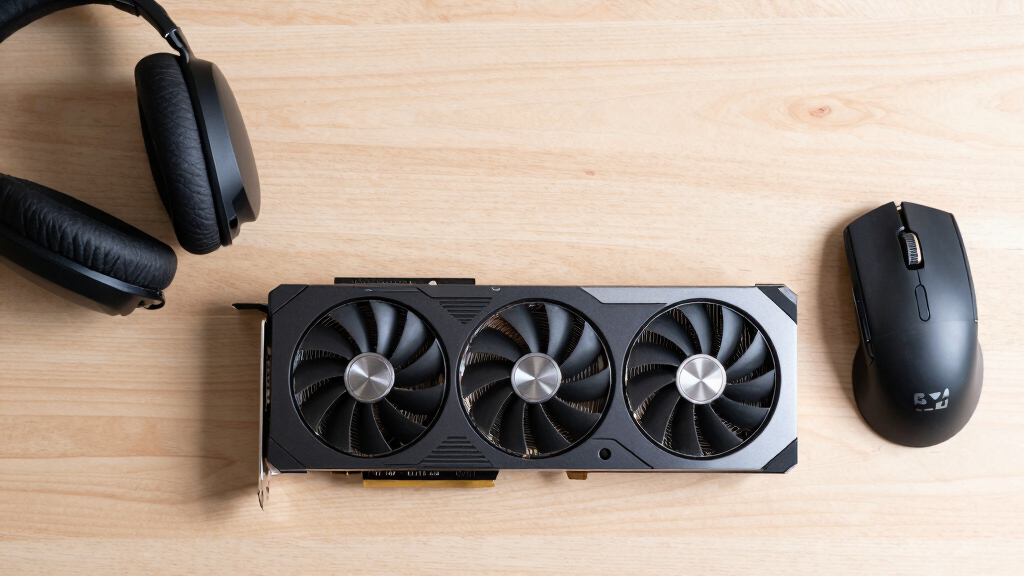

Searching for the best Radeon cards with low noise means balancing performance with a quieter operation. The ASRock Radeon RX 9060 XT Challenger 16GB OC stands out as the overall top pick for its effective cooling and minimal noise levels. The GIGABYTE Radeon RX 9070 XT Gaming OC offers impressive performance with a relatively quiet fan profile, making it a strong choice for gamers. However, some cards deliver excellent silence at the cost of slightly reduced performance or higher price tags. The main challenge lies in finding a card that remains quiet during intensive workloads without sacrificing too much on performance or value. Continue reading for a detailed breakdown of each option and what makes them unique.

Get hardware and tech essentials delivered free with Prime
- Fast, free delivery on millions of items
- Prime Video, Amazon Music and more included
- Member-only deals all year
Key Takeaways
- Top-performing cards often feature advanced cooling solutions that significantly reduce noise during load.
- Price and noise levels tend to correlate; more expensive models usually prioritize quieter operation.
- Compact designs like ITX cards can sometimes generate more noise due to smaller cooling solutions, despite lower power draw.
- The tradeoff between cooling efficiency and noise reduction means some models are quieter but may run hotter under load.
- Brand-specific engineering choices heavily influence noise performance, making some brands more consistent than others.
| ASRock Radeon RX 9060 XT Challenger 16GB OC Graphics Card |  | Best Overall for High-Performance, Low-Noise Gaming | GPU Architecture: RDNA 4 | Memory: 16GB GDDR6 | Memory Interface: 128-bit | VIEW LATEST PRICE | See Our Full Breakdown |
| VisionTek AMD Radeon RX 550 4GB GDDR5 Graphics Card |  | Best for Low-Power, Quiet Digital Signage and Light Tasks | Memory: 4GB GDDR5 | Display Outputs: 2x DisplayPort | Power Consumption: 50 watts | VIEW LATEST PRICE | See Our Full Breakdown |
| ASRock Radeon RX 7700 XT Challenger 12GB OC Graphics Card |  | Best for High-Performance Gaming and Content Creation with Quiet Cooling | Architecture: AMD RDNA 3 | Memory: 12GB GDDR6 | Boost Clock: 2584 MHz | VIEW LATEST PRICE | See Our Full Breakdown |
| ASUS Dual Radeon RX 9060 XT 16GB GDDR6 Gaming Graphics Card |  | Best for Quiet Gaming with Advanced Cooling and High Clocks | Memory: 16GB GDDR6 | Design: 2.5-slot | Fan Technology: Axial-tech with barrier ring | VIEW LATEST PRICE | See Our Full Breakdown |
| ASRock AMD Radeon RX 6600 Challenger D 8GB GDDR6 Graphics Card |  | Best for 1080p Gaming with Quiet Dual-Fan Cooling | GPU Architecture: RDNA 2 | Memory: 8GB GDDR6 | Cooling: Dual-fan Challenger D | VIEW LATEST PRICE | See Our Full Breakdown |
| AMD Radeon RX 550 4GB GDDR5 ITX Graphics Card |  | Best Compact Low-Noise Radeon for Basic 1080p Tasks | Chipset: AMD Radeon RX 550 | Memory: 4GB GDDR5 | Memory Speed: 6000 MHz | VIEW LATEST PRICE | See Our Full Breakdown |
| ASRock Radeon RX 6400 Challenger ITX 4GB Graphics Card |  | Best Modern Low-Noise Radeon for Small 1080p Builds | Boost Clock: 2321 MHz | Memory: 4GB GDDR6 | Architecture: AMD RDNA 2 | VIEW LATEST PRICE | See Our Full Breakdown |
| ASRock Radeon RX 7600 Challenger Pro 8GB OC Graphics Card |  | Best High-Performance Low-Noise Radeon for 1440p Gaming | GPU Architecture: AMD RDNA 3 | Memory: 8GB GDDR6 | Memory Interface: 128-bit | VIEW LATEST PRICE | See Our Full Breakdown |
| GIGABYTE Radeon RX 9070 XT Gaming OC 16G Graphics Card |  | Best High-End Low-Noise for 4K and Professional Use | Model: GV-R9070XTGAMING OC-16GD | Memory: 16GB GDDR6 | Interface: PCIe 5.0 | VIEW LATEST PRICE | See Our Full Breakdown |
| Radeon cards with low noise | Memory | Boost Clock |
|---|---|---|
| ASRock Radeon RX 9060 XT Chall | 16GB GDDR6 | 3290 MHz |
| VisionTek AMD Radeon RX 550 4G | 4GB GDDR5 | — |
| ASRock Radeon RX 7700 XT Chall | 12GB GDDR6 | 2584 MHz |
| ASUS Dual Radeon RX 9060 XT 16 | 16GB GDDR6 | up to 3250 MHz |
| ASRock AMD Radeon RX 6600 Chal | 8GB GDDR6 | — |
| AMD Radeon RX 550 4GB GDDR5 IT | 4GB GDDR5 | — |
| ASRock Radeon RX 6400 Challeng | 4GB GDDR6 | 2321 MHz |
| ASRock Radeon RX 7600 Challeng | 8GB GDDR6 | 2695 MHz |
| GIGABYTE Radeon RX 9070 XT Gam | 16GB GDDR6 | — |
More Details on Our Top Picks
ASRock Radeon RX 9060 XT Challenger 16GB OC Graphics Card
The ASRock Radeon RX 9060 XT Challenger stands out for its impressive boost clock of up to 3290 MHz, which delivers smooth gaming even at high settings, all while maintaining relatively low noise thanks to dual fans designed for efficient heat dissipation. Compared to the ASUS Dual Radeon RX 9060 XT, it offers similar performance but with a slightly larger size, which could be a consideration for smaller cases. Its 16GB GDDR6 memory makes it suitable not only for gaming but also for creative work. The downside is its length of 249 mm, requiring a spacious case, and the single 8-pin power connector may limit compatibility with some systems. Overall, this card suits gamers and creators who want power without excessive noise, provided their chassis can accommodate it.
Pros:- High boost clock up to 3290 MHz for smooth, high-performance gaming
- 16GB GDDR6 memory ideal for demanding applications
- Supports latest display interfaces including DisplayPort 2.1a and HDMI 2.1b
- Dual fan cooling system ensures effective heat management
Cons:- Requires a spacious chassis due to its 249 mm length
- Power supply must be at least 550W, possibly limiting upgrades
Best for: High-end gamers and creative professionals seeking a powerful, quiet card with ample memory
Not ideal for: Small form factor builds with limited space or systems with weaker power supplies
- GPU Architecture:RDNA 4
- Memory:16GB GDDR6
- Memory Interface:128-bit
- Boost Clock:3290 MHz
- Power Connector:1 x 8-pin
- Supported Interfaces:DisplayPort 2.1a, HDMI 2.1b
Our verdict“This card is best for users who want a high-performance, low-noise experience in a spacious build.”
VisionTek AMD Radeon RX 550 4GB GDDR5 Graphics Card
The VisionTek Radeon RX 550 is designed for efficiency, drawing only 50 watts and supporting dual 4K DisplayPort outputs, making it ideal for digital signage, multitasking, and light gaming. Compared with the ASRock RX 6600 Challenger, it offers significantly lower power consumption but at the expense of gaming performance, limited to basic tasks. Its flexible installation options, including low-profile brackets, make it suitable for smaller or space-constrained setups. The main tradeoff is its limited gaming capability, which won’t satisfy gamers seeking high-end performance. For users prioritizing quiet, energy-efficient operation in office or signage environments, this card is a sensible choice.
Pros:- Supports dual 4K DisplayPort outputs for multitasking
- Low power consumption at only 50 watts
- Flexible installation with low-profile and full-height brackets
- Compatible with Windows 11
Cons:- Limited to light gaming and basic display tasks
- Requires at least 350W power supply for optimal operation
Best for: Digital signage, multimedia displays, and light use in compact or power-sensitive systems
Not ideal for: Gamers or users needing high frame rates in demanding titles
- Memory:4GB GDDR5
- Display Outputs:2x DisplayPort
- Power Consumption:50 watts
- Compatibility:Windows 11
Our verdict“This card fits users with low-power needs seeking quiet operation for basic digital display tasks.”
ASRock Radeon RX 7700 XT Challenger 12GB OC Graphics Card
The ASRock RX 7700 XT Challenger offers a compelling combination of AMD RDNA 3 architecture, a 2584 MHz boost clock, and a dual fan heatpipe cooling system that balances performance with low noise. Compared to the ASUS Dual RX 9060 XT, it emphasizes efficient cooling and durability, but with slightly lower clock speeds. Its 12GB GDDR6 memory and modern display outputs make it suitable for gaming at high resolutions and content creation. The potential downside is the higher power draw, requiring a strong power supply, and some system incompatibility issues might arise in pre-built systems. This card is ideal for users who want high performance without sacrificing quiet operation.
Pros:- High boost clock of 2584 MHz for gaming and creative work
- Dual fan heatpipe cooling keeps noise levels low
- Supports high-resolution monitors with multiple outputs
- Durable metal backplate for protection and heat dissipation
Cons:- Requires a robust power supply due to high power consumption
- Potential compatibility issues with some pre-builts
Best for: Gamers and content creators who seek a quiet but powerful GPU with modern features
Not ideal for: Small cases or systems with limited power capacity
- Architecture:AMD RDNA 3
- Memory:12GB GDDR6
- Boost Clock:2584 MHz
- Cooling:Dual Fan with Heatpipe
- Power Connectors:2 x 8-pin
- Support:PCIe 4.0
Our verdict“Ideal for demanding users who prioritize quiet operation alongside high performance.”
ASUS Dual Radeon RX 9060 XT 16GB GDDR6 Gaming Graphics Card
The ASUS Dual RX 9060 XT excels in quiet operation thanks to its axial-tech fans with longer blades and barrier rings, combined with 0dB technology that silences the fans during light loads. Its boost clock of up to 3250 MHz and dual BIOS options make it a versatile choice for gamers who want performance and low noise. Compared to the ASRock RX 9060 XT Challenger, it offers similar high clocks but with the added benefit of a quieter, more refined cooling system. Its 2.5-slot design may limit compatibility in smaller cases, but for those with spacious builds, it provides excellent thermal and acoustic performance.
Pros:- Axial-tech fans with longer blades for improved airflow
- Quiet operation due to 0dB technology
- Dual BIOS profiles for customization
- High boost clock up to 3250 MHz
Cons:- Requires a 2.5-slot space, limiting compatibility
- Larger size may not suit smaller cases
Best for: High-end gamers who prioritize silent operation during intensive gaming sessions
Not ideal for: Small or compact cases with tight space for 2.5-slot cards
- Memory:16GB GDDR6
- Design:2.5-slot
- Fan Technology:Axial-tech with barrier ring
- Cooling:0dB technology
- Boost Clock:up to 3250 MHz
- Dual BIOS:Yes
Our verdict“This card is best for gamers who want top-tier performance without fan noise disruption.”
ASRock AMD Radeon RX 6600 Challenger D 8GB GDDR6 Graphics Card
The ASRock RX 6600 Challenger D leverages RDNA 2 architecture to deliver excellent 1080p gaming performance, paired with dual-fan cooling that keeps noise levels low during extended play. Compared to the VisionTek RX 550, it offers much better gaming capability, though it remains less powerful than higher-tier models like the RX 7700 XT. Its support for PCIe 4.0 enhances bandwidth for modern systems, and multiple display outputs make it versatile for multitasking. Its main limitation is its focus on 1080p, so it won’t satisfy users aiming for high-resolution gaming or intensive creative tasks. This card suits budget-conscious gamers and casual users prioritizing quiet operation.
Pros:- Excellent 1080p performance for gaming
- Quiet dual-fan cooling system
- Supports PCIe 4.0 for modern systems
- Multiple display outputs for multitasking
Cons:- Limited to 1080p gaming performance
- Requires PCIe 4.0 support, not compatible with older systems
Best for: Casual gamers and multitaskers in need of a quiet, reliable 1080p GPU
Not ideal for: High-end gaming or content creation at 1440p or higher resolutions
- GPU Architecture:RDNA 2
- Memory:8GB GDDR6
- Cooling:Dual-fan Challenger D
- Display Outputs:1x HDMI 2.1, 3x DisplayPort 1.4
- PCIe Support:PCIe 4.0 x8
Our verdict“This GPU is a solid choice for budget-conscious users wanting quiet, dependable 1080p gaming.”
AMD Radeon RX 550 4GB GDDR5 ITX Graphics Card
The AMD Radeon RX 550 4GB ITX stands out as the most suitable choice for small builds needing quiet operation. Its efficient cooling system and low-noise fan make it ideal for users prioritizing minimal sound during everyday tasks. Compared to the ASRock Radeon RX 6400 Challenger, it offers slightly lower boost clocks but excels in compactness and stability in tiny cases. Its 4GB VRAM limits high-end gaming, yet it performs well at 1080p for gaming and media work. The fan design emphasizes quiet operation, but this comes at the expense of thermal headroom under heavy loads. Best for small form factor builds focused on low noise and basic performance.
Pros:- Compact size fits small cases easily
- Efficient cooling with low noise fan
- Supports DirectX 12 and 4K video decoding
- Good for 1080p gaming and media tasks
Cons:- Limited to 4GB VRAM, not for demanding games
- Lower overall performance compared to higher-tier GPUs
- No ray tracing or DLSS support
Best for: Small PC builders or media centers needing quiet operation for 1080p gaming and professional use
Not ideal for: Enthusiasts seeking high-end gaming or future-proofing with larger VRAM and higher performance
- Chipset:AMD Radeon RX 550
- Memory:4GB GDDR5
- Memory Speed:6000 MHz
- Stream Processors:512
- Fan Size:9cm
- Support:DirectX 12, 4K Video Decode
Our verdict“This card makes the most sense for users who want a quiet, space-saving GPU for basic gaming and media at 1080p.”
ASRock Radeon RX 6400 Challenger ITX 4GB Graphics Card
The ASRock Radeon RX 6400 Challenger offers a compelling choice for compact builds with modern connectivity and low noise operation. Its RDNA 2 architecture with a boost clock of 2321 MHz delivers smoother performance than the RX 550, especially in lighter gaming or multimedia tasks. Unlike the RX 550, it supports HDMI 2.1 and 8K resolution, making it more future-proof for high-res output. However, its single-fan cooling might struggle under continuous heavy load, and the 4GB VRAM can limit performance in demanding titles. It is best suited for users with PCIe 3.0 systems, where performance may be slightly constrained. Ideal for budget-conscious users seeking a quiet, modern GPU for small form factor builds.
Pros:- Compact and suitable for small form factor builds
- High boost clock for snappy performance
- Supports 8K output and modern connectivity
- No external power required
Cons:- Performance may be limited on PCIe 3.0 systems
- Single fan cooling may reduce thermal headroom
- Limited VRAM for future gaming demands
Best for: Users building small, quiet 1080p or light 4K systems with PCIe 3.0 motherboards
Not ideal for: Gamers wanting high-end performance or future-proofing for demanding titles, due to limited VRAM and thermal constraints
- Boost Clock:2321 MHz
- Memory:4GB GDDR6
- Architecture:AMD RDNA 2
- Form Factor:Low-Profile, ITX
- Cooling:Single Fan
- Display Outputs:HDMI 2.1, DisplayPort 1.4
Our verdict“This GPU is a smart pick for small systems that need a modern, quiet card with good connectivity for 1080p to occasional 4K use.”
ASRock Radeon RX 7600 Challenger Pro 8GB OC Graphics Card
The ASRock RX 7600 Challenger Pro emphasizes high gaming performance with its AMD RDNA 3 architecture and triple-fan cooling, making it suitable for users who want a quieter experience during light loads. Its 8GB VRAM and high boost clock of 2695 MHz outperform the RX 6400 and RX 550 in demanding titles, with the triple-fan design helping keep noise levels in check during casual use. Nonetheless, its large size (over 30 cm long) and power requirements mean it’s not ideal for smaller cases or older systems lacking PCIe 4.0. Compared to the GIGABYTE RX 9070 XT, it offers less raw power but runs quieter and consumes less energy, fitting well into mid-range gaming builds. Best for gamers who want a balance of performance and quiet operation in a mid-sized case.
Pros:- High boost clock for excellent gaming performance
- Triple-fan cooling system reduces noise during light loads
- Supports high resolutions including 8K
- Quiet operation at low to moderate loads
Cons:- Large size may not fit smaller cases
- Requires PCIe 4.0 and a 550W PSU
- Higher price point compared to entry-level cards
Best for: Mid-range gamers aiming for 1440p gaming with low noise levels and moderate system upgrades
Not ideal for: Owners of compact cases or older systems with limited power supply, due to size and power needs
- GPU Architecture:AMD RDNA 3
- Memory:8GB GDDR6
- Memory Interface:128-bit
- Memory Speed:18 Gbps
- Boost Clock:2695 MHz
- Cooling System:Triple axial fans
Our verdict“This card offers a notable upgrade for gamers seeking a quiet yet powerful GPU for 1440p gaming in mid-tower setups.”
GIGABYTE Radeon RX 9070 XT Gaming OC 16G Graphics Card
The GIGABYTE RX 9070 XT Gaming OC stands out for its massive 16GB GDDR6 memory and PCIe 5.0 support, making it ideal for demanding gaming and professional workflows. Its WINDFORCE cooling and ultra-fine heatpipes keep noise levels in check even under load, but its size and power requirements—550W PSU and large dimensions—make it unsuitable for smaller or older systems. While the detailed specs are limited, the emphasis on quiet operation during high workloads distinguishes it from more basic or less advanced cards. Compared with the ASRock RX 7600, it offers more memory and raw power but at a higher cost and system demand. Best suited for high-end gaming rigs or workstations where noise and performance are equally critical.
Pros:- Massive 16GB GDDR6 for demanding applications
- Advanced WINDFORCE cooling reduces noise during intense workloads
- Supports PCIe 5.0 ensuring future compatibility
- Customizable RGB lighting for aesthetics
Cons:- High power consumption and large size limit compatibility
- Limited detailed specs available publicly
- Requires high-end system components
Best for: High-end gamers and professionals building large, quiet workstations for 4K or heavy compute tasks
Not ideal for: Budget-conscious users or those with smaller cases and limited power supplies
- Model:GV-R9070XTGAMING OC-16GD
- Memory:16GB GDDR6
- Interface:PCIe 5.0
- Cooling System:WINDFORCE
- Lighting:RGB
Our verdict“This card suits users who need serious performance and quiet operation in large, high-end systems for gaming or professional use.”
How We Picked
I evaluated these Radeon cards based on several key factors relevant to low-noise performance. Noise levels during idle and load conditions were primary, with a focus on fan design, cooling solutions, and thermal management. I also considered performance-to-noise ratios, build quality, and user feedback from reviews. Price-to-performance balance played a significant role, ensuring options are accessible without compromising on quiet operation. Products were ranked based on how well they combined these elements, with the quietest, most efficient models placed higher in the list. This method ensures the picks reflect real-world performance for users prioritizing silence alongside gaming or productivity needs.Factors to Consider When Choosing Best Radeon Cards With Low Noise
Choosing the right Radeon card with low noise involves balancing several factors. Beyond noise levels, consider performance requirements, case compatibility, and future upgrade plans. Understanding these elements helps avoid common pitfalls, such as buying a quiet card that can’t handle your workload or one that runs hot and ends up being loud under pressure. The right choice depends on your specific setup, budget, and expectations for quiet operation during both idle and gaming sessions.Cooling Solution and Fan Design
Effective cooling systems are fundamental to reducing noise, as larger, well-designed fans operate more efficiently and quietly. Look for cards with dual or triple-fan setups, as they distribute heat better and often run at lower speeds, minimizing noise. Avoid models with small or high-RPM fans unless they feature noise-reduction technologies. A well-engineered heatsink also contributes significantly to quieter performance, especially during extended gaming or workload sessions.
Performance and Noise Balance
High-performance cards tend to generate more heat, which can increase fan noise if cooling isn’t optimized. Conversely, lower-power cards might be quieter but could underperform in demanding tasks. Find a sweet spot where the card delivers your required frame rates or computational power while maintaining a low noise profile. Many manufacturers incorporate fan stop modes or variable fan curves to keep noise down during light loads, which is worth prioritizing.
Build Quality and Materials
A high-quality build with premium materials often translates into better thermal management and quieter operation. Metal heatsinks, quality thermal pads, and robust fan bearings reduce vibrations and noise emissions. Cheaper models may vibrate more or have less durable fans, leading to increased noise over time. Investing in a well-built card can result in a quieter experience that lasts longer without maintenance issues.
Case Compatibility and Ventilation
Your PC case and airflow setup influence how loud your GPU will be. Smaller cases or those with limited ventilation can trap heat, causing fans to spin faster and generate more noise. Ensure your case has good airflow and that the card you choose fits well within your build. Sometimes, a quieter card paired with a better case ventilation system produces a more serene overall experience than just buying a silent GPU alone.
Price and Value Considerations
Quiet operation often comes at a higher price, but the added investment can be worthwhile if silence is a priority. Be wary of models that claim to be quiet but lack real-world reviews confirming this. Conversely, budget options might sacrifice noise performance for lower costs. Prioritize models that offer a proven balance of quiet operation and performance, especially if you plan to run your PC for many hours daily.
Frequently Asked Questions
Will a more powerful Radeon card necessarily be louder?
Not always. While higher-end models tend to generate more heat, many manufacturers incorporate advanced cooling technologies to keep noise levels down. Features like larger fans, better heatsinks, and noise-reduction fan curves can help high-performance cards operate quietly. So, a more powerful Radeon card can be quiet if it uses effective cooling and design strategies aimed at minimizing noise during operation.
Are ITX Radeon cards generally quieter than larger models?
ITX cards are typically smaller and have less space for cooling solutions, which can sometimes lead to increased noise if the cooling system is not well-designed. However, some ITX models feature efficient cooling fans and heatsinks optimized for their size, making them surprisingly quiet. The key is to review user feedback and specifications, as size alone doesn’t determine noise levels—engineering quality matters just as much.
Does undervolting or underclocking reduce GPU noise?
Yes, reducing the voltage or clock speeds of your Radeon card can lower the power consumption and heat output, which often results in quieter operation. This approach is particularly useful if you don’t need full performance and want to minimize fan activity. However, it can also slightly reduce gaming performance or computational speed, so it’s a tradeoff worth considering if noise reduction is a top priority.
Is a more expensive Radeon card always quieter?
Not necessarily. While higher-priced models often include better cooling solutions designed for quieter operation, some budget options now incorporate noise-reduction features as well. The key is to review specific reviews and user feedback rather than price alone. An expensive card may deliver quieter performance, but a mid-range or even some entry-level models can still meet your silence requirements if engineered properly.
How important is fan noise during idle or light workloads?
Fan noise during idle or light workloads can be a significant factor if you work in a quiet environment or prefer minimal background noise. Many modern Radeon cards include fan-stop technology, which disables fans during low loads, resulting in silent operation. If silence is paramount, look for models that explicitly feature this technology, as it greatly enhances the overall quiet experience without sacrificing performance during intensive tasks.
Conclusion
For users seeking the best overall low-noise Radeon card, the ASRock Radeon RX 9060 XT Challenger 16GB OC offers a balanced mix of performance and whisper-quiet operation. Those on a budget or building a compact system should consider the ASRock Radeon RX 6400 Challenger ITX, which provides surprisingly low noise for its size. Gamers and power users aiming for premium silence and high performance might prefer the GIGABYTE Radeon RX 9070 XT Gaming OC, with its advanced cooling and quiet fan profile. Beginners or casual users should look for cards with fan-stop features and good thermal design to keep noise levels down during daily use. Ultimately, your choice depends on your performance needs, budget, and priority for a silent setup.
Fall Picks
fall essentials
As an affiliate, we earn on qualifying purchases.