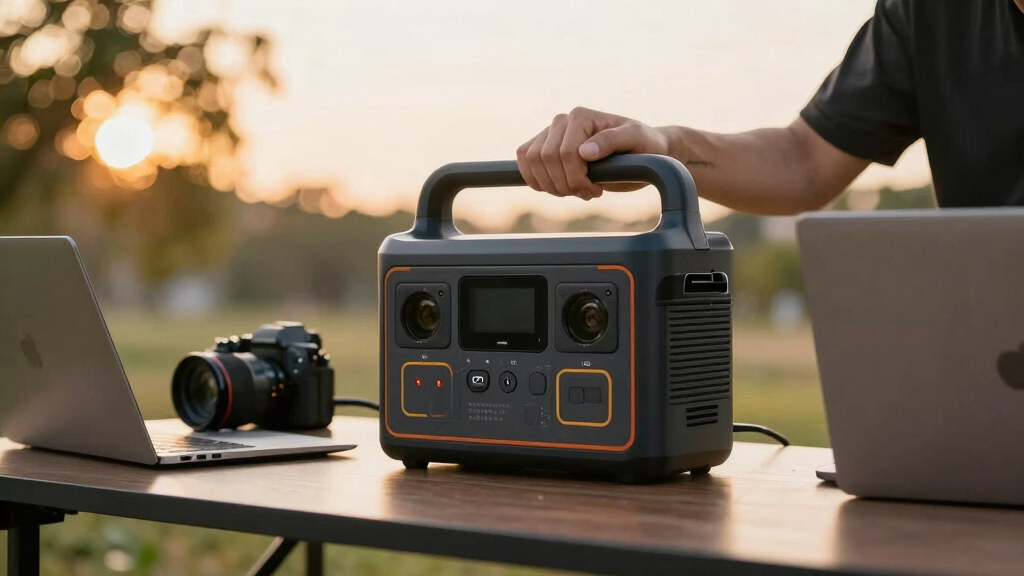

For creators who rely on portable power, choosing the right station can make or break a shoot or project. The BLUETTI Elite 100 V2 stands out as the best overall with its balanced capacity and versatility. Anker SOLIX C1000 Gen 2 offers impressive power for extended outdoor shoots, while the Jackery Explorer 300 is ideal for light, on-the-go needs. However, tradeoffs like size, weight, and price mean that not every option suits every creator. Continue reading for a detailed breakdown of the best portable power stations for creators in 2026.

Get hardware and tech essentials delivered free with Prime
- Fast, free delivery on millions of items
- Prime Video, Amazon Music and more included
- Member-only deals all year
Complete the kit


Key Takeaways
- High-capacity units like the ABOK Ark3600 and AFERIY expandability are best for long-term, off-grid projects.
- Weight and portability vary greatly, with compact models suitable for quick shoots and larger ones for sustained use.
- Power output matters—more wattage supports heavier equipment but often comes with increased size and cost.
- Battery chemistry impacts lifespan and safety; LiFePO4 models generally offer better longevity for frequent use.
- Price often correlates with capacity and features, so choosing a model that matches your typical workload maximizes value.
| BLUETTI Elite 100 V2 Portable Power Station for Camping 1024Wh 1800W |  | Best Overall for Versatility and Capacity | Capacity: 1024Wh | AC Output: 1800W | Surge Power: 3600W | VIEW LATEST PRICE | See Our Full Breakdown |
| Anker SOLIX C1000 Gen 2 Portable Power Station, 1024Wh, 2000W |  | Best for High Power and Fast Recharging | Capacity: 1024Wh | Power Output: 2000W | Recharging Time: 49 minutes via AC | VIEW LATEST PRICE | See Our Full Breakdown |
| Anker SOLIX S2000 Portable Power Station, 2010Wh, 3000W Peak, Home Backup |  | Best for Long-Term Power and Home Backup | Capacity: 2010Wh | Peak Power: 3000W | Continuous Power: 1500W | VIEW LATEST PRICE | See Our Full Breakdown |
| Jackery Explorer 300 Portable Power Station, 292Wh |  | Best for Lightweight and Compact Use | Capacity: 292Wh | AC Outlets: 2 | USB-C Port: 100W PD | VIEW LATEST PRICE | See Our Full Breakdown |
| ABOK Ark3600 Portable Power Station 3600W, 3840Wh LiFePO4 Battery |  | Best for Heavy-Duty Power and Expandability | Wattage: 3600W | Battery Capacity: 3840Wh (expandable to 11520Wh) | Peak Power: 4500W | VIEW LATEST PRICE | See Our Full Breakdown |
| EF ECOFLOW Delta 3 Portable Power Station, 1024Wh, 1800W |  | Best Overall for Versatile Outdoor Power and Emergency Backup | Capacity: 1024Wh | Power Output: 1800W | Charge Time: 56 minutes | VIEW LATEST PRICE | See Our Full Breakdown |
| Jackery Explorer 1000 v2 Portable Power Station, 1070Wh, 1500W |  | Best for Lightweight, Reliable Power for Camping and Emergencies | Wattage: 1500W | Capacity: 1070Wh | Runtime: 42 minutes | VIEW LATEST PRICE | See Our Full Breakdown |
| ALLWEI Portable Power Station 300W, 256Wh Solar Generator LiFePO4 Battery |  | Best for Lightweight, Short-Term Camping and Emergency Use | Capacity: 256Wh | Wattage: 300W | Runtime: 1500 hours | VIEW LATEST PRICE | See Our Full Breakdown |
| BLUETTI AC180 Portable Power Station 1152Wh LiFePO4 Solar Generator |  | Best for Home Backup and Versatile Outdoor Power | Battery Capacity: 1152Wh | Power Output: 1800W | Charge Time: 1 hour | VIEW LATEST PRICE | See Our Full Breakdown |
| AFERIY 3840Wh Portable Power Station, Expandable Solar Generator to 11.5kWh |  | Best for Large-Scale Power Needs and Long-Term Outdoor Use | Battery Capacity: 3840Wh | Expandable Capacity: up to 11.5kWh | Continuous Output: 3600W | VIEW LATEST PRICE | See Our Full Breakdown |
| EF ECOFLOW DELTA 3 Max Portable Power Station, 2048Wh LFP Battery, 2400W |  | Best for Heavy-Duty Creative Work and Long-Lasting Backup | Battery Capacity: 2048Wh | Battery Type: LiFePO4 | Continuous Power: 3400W | VIEW LATEST PRICE | See Our Full Breakdown |
| portable power stations for creator | Weight | Capacity | Dimensions |
|---|---|---|---|
| BLUETTI Elite 100 V2 Portable | 25 pounds | 1024Wh | 12.6"L x 8.5"W x 9.8"H |
| Anker SOLIX C1000 Gen 2 Portab | less than 11% lighter than similar models | 1024Wh | 14% smaller than comparable models |
| Anker SOLIX S2000 Portable Pow | 35.7 lbs | 2010Wh | 8.2 x 11.1 x 12.7 inches |
| Jackery Explorer 300 Portable | 7.5 lbs | 292Wh | 9.1 x 5.2 x 7.8 inches |
| ABOK Ark3600 Portable Power St | Heavy, specific weight not provided | — | Size not specified, but sizable |
| EF ECOFLOW Delta 3 Portable Po | — | 1024Wh | — |
| Jackery Explorer 1000 v2 Porta | 23.8 pounds | 1070Wh | — |
| ALLWEI Portable Power Station | 6.4 pounds | 256Wh | — |
| BLUETTI AC180 Portable Power S | 37.4 pounds | — | — |
| AFERIY 3840Wh Portable Power S | 80.46 lbs | — | — |
| EF ECOFLOW DELTA 3 Max Portabl | — | — | 9.4"L x 12"W x 19.44"H |
More Details on Our Top Picks
BLUETTI Elite 100 V2 Portable Power Station for Camping 1024Wh 1800W
The BLUETTI Elite 100 V2 stands out for its high-capacity 1024Wh LiFePO₄ battery and over 4000 cycles, making it a reliable choice for creators who need consistent power during extended outdoor shoots or emergencies. Compared with the Anker SOLIX C1000, it offers a slightly larger battery but at a heavier weight, which could impact portability. Its 1800W continuous output is sufficient for most creative devices, though it might fall short for high-wattage equipment like large lighting rigs. The fast 70-minute recharge and multiple input options enhance usability, but the lack of wheels and its 25-pound weight could challenge portability for some. This pick makes the most sense for creators who prioritize battery longevity and multiple charging methods, even if it means sacrificing some ease of transport.Pros:- High-capacity 1024Wh LiFePO₄ battery with over 4000 cycles
- Fast 70-minute recharge via AC or solar input
- Multiple charging options including solar, AC, and car
Cons:- Limited to 1800W continuous power, restricting high-wattage device use
- Weight of 25 pounds can hinder portability, especially without built-in wheels
Best for: Outdoor creators and emergency preparedness enthusiasts who need a reliable, long-lasting power source with flexible charging options
Not ideal for: Travelers seeking ultra-lightweight gear or those with limited space, since it’s relatively bulky and weighty
- Capacity:1024Wh
- AC Output:1800W
- Surge Power:3600W
- Weight:25 pounds
- Dimensions:12.6″L x 8.5″W x 9.8″H
- Battery Type:LiFePO₄
- Cycle Life:4000+ cycles
- Input Charging:70 minutes (fast charge)
Our verdict“Best suited for creators who need dependable, long-lasting power with versatile charging, regardless of portability challenges.”
Anker SOLIX C1000 Gen 2 Portable Power Station, 1024Wh, 2000W
The Anker SOLIX C1000 Gen 2 offers a compelling balance of high power output—up to 2000W—and rapid recharging, making it ideal for creators who need to run multiple devices or larger equipment quickly. Its 1024Wh capacity is comparable to the BLUETTI but with a more robust 2000W continuous output, surpassing many competitors like the Jackery Explorer 300, which only offers 300W. The inclusion of HyperFlash technology allows for recharging in just 49 minutes via AC, a major advantage for creators on tight schedules. Its compact size and lighter weight, along with solar compatibility, enhance portability, but the higher price and complex features could overwhelm beginners or casual users. This model makes the most sense for users who value speed and power, willing to invest in advanced tech.Pros:- Ultra-fast recharge in 49 minutes via AC with HyperFlash tech
- High continuous output of 2000W suitable for multiple devices
- Compact, lightweight design with solar recharging capability
Cons:- Relatively high price may deter budget buyers
- Complex features could require a learning curve for beginners
Best for: Creators needing rapid recharging and high power output for demanding or multiple devices on the go
Not ideal for: Budget-conscious users or those new to portable power systems, due to its higher cost and feature complexity
- Capacity:1024Wh
- Power Output:2000W
- Recharging Time:49 minutes via AC
- Number of Ports:10
- Weight:less than 11% lighter than similar models
- Dimensions:14% smaller than comparable models
- Battery Cycles:4000 cycles
Our verdict“Ideal for creators who prioritize fast recharging and high power capacity, especially when handling multiple or demanding devices.”
Anker SOLIX S2000 Portable Power Station, 2010Wh, 3000W Peak, Home Backup
The Anker SOLIX S2000 combines a large 2010Wh capacity with a 3000W peak output, making it a top choice for creators who need reliable, extended power for home or outdoor use. Its battery’s 15-year lifespan and 10,000 cycles significantly surpass typical models like the BLUETTI Elite, ensuring long-term durability. Its compact size and multiple recharging options—including AC, solar, and car—offer versatility. However, it lacks a 12V DC port, which could limit some device connections, and its runtime depends heavily on the load. This unit is tailored for creators who prioritize longevity and consistent power over maximum portability, making it less ideal for frequent backpacking.Pros:- High-capacity 2010Wh battery with a 15-year lifespan
- Supports multiple recharging methods including solar
- Compact and lightweight considering its capacity
Cons:- No 12V DC port, limiting some device compatibility
- Runtime varies with device load, not suited for high-demand equipment
Best for: Creators focused on long-term reliability and home backup with occasional outdoor needs
Not ideal for: Travelers or creators who need ultra-lightweight gear for frequent mobility or backpacking
- Capacity:2010Wh
- Peak Power:3000W
- Continuous Power:1500W
- Battery Type:LFP
- Battery Cycle Life:10,000 cycles
- Dimensions:8.2 x 11.1 x 12.7 inches
- Weight:35.7 lbs
- Recharging Options:AC, solar, generator, car
Our verdict“Best for creators seeking durable, long-lasting power solutions for home backup and extended outdoor projects.”
Jackery Explorer 300 Portable Power Station, 292Wh
The Jackery Explorer 300 excels in portability, weighing only 7.5 pounds and offering a 292Wh capacity, making it perfect for quick camping trips or emergency kits. Its durable LiFePO₄ batteries support over 4,000 charge cycles, comparable to larger units like the Anker SOLIX C1000, but with a much smaller capacity—limiting its ability to power more demanding devices. Its multiple outlets—including USB-C, USB-A, and car port—provide versatile charging, and fast solar charging can reach 80% in less than 3 hours. The downside is the limited 300W rated output, which restricts running high-power equipment. This is best for creators who prioritize lightweight convenience over heavy-duty power.Pros:- Extremely lightweight at 7.5 pounds
- High number of charge cycles supporting long-term use
- Multiple versatile charging ports including fast-charging USB-C
Cons:- Limited to 300W rated output, restricting larger device use
- No included solar panel, requiring separate purchase for solar recharge
Best for: Creators needing a highly portable power source for small devices and quick trips
Not ideal for: Creators requiring sustained power for high-wattage equipment or multi-day shoots
- Capacity:292Wh
- AC Outlets:2
- USB-C Port:100W PD
- Rated Output:300W
- Charge Cycles:over 4,000
- Weight:7.5 lbs
- Dimensions:9.1 x 5.2 x 7.8 inches
- Recharging Time:4 hours
Our verdict“Great for lightweight, on-the-go creators who need reliable power for small devices and quick setup.”
ABOK Ark3600 Portable Power Station 3600W, 3840Wh LiFePO4 Battery
The ABOK Ark3600 offers a substantial 3840Wh capacity and a peak output of 4500W, making it ideal for creators who need to power large, demanding equipment or extend runtime significantly. Its expandability up to 11520Wh provides flexibility for long projects or emergency scenarios. The Bluetooth app control and multiple ports—including AC, USB-C, and DC—add to its versatility. However, its weight and size could make it less convenient for frequent outdoor use, and lengthy charging times might be a concern if not using solar or multiple inputs. This model is best suited for creators who require long-lasting, high-capacity power with room to grow.Pros:- High-capacity 3840Wh battery, expandable to 11520Wh
- Peak power of 4500W supports heavy equipment
- Bluetooth app enables remote monitoring and control
Cons:- Heavy and less portable for frequent outdoor use
- Longer charging times if not using multiple sources
Best for: Creators working on extended outdoor productions or needing backup power for critical equipment
Not ideal for: Travelers or creators who prioritize portability over capacity and expandability
- Wattage:3600W
- Battery Capacity:3840Wh (expandable to 11520Wh)
- Peak Power:4500W
- Cycle Life:Over 4000 cycles
- Dimensions:Size not specified, but sizable
- Weight:Heavy, specific weight not provided
- Charging Methods:AC, PV, car
- Additional Features:Bluetooth app, extendable handle, wheels
Our verdict“Perfect for creators who need serious, expandable power for large-scale projects or long-term backup, despite portability tradeoffs.”
EF ECOFLOW Delta 3 Portable Power Station, 1024Wh, 1800W
The EF ECOFLOW Delta 3 stands out for its impressive 1024Wh capacity combined with an 1800W output, making it capable of running multiple appliances simultaneously. Unlike the BLUETTI AC180, which offers similar capacity but slightly lower output, the Delta 3 also features a rapid 56-minute recharge time. Its expandable capacity up to 5kWh makes it a flexible choice for longer trips or emergency situations. The durable LiFePO4 batteries promise a 10-year lifespan, reducing long-term replacement costs. However, its size and weight might limit portability for some users, especially compared to lighter models like the Jackery Explorer 1000 v2. This pick is ideal for creators needing a reliable, high-capacity power source in outdoor or emergency settings, despite the higher initial cost and bulk.
Pros:- Fast full charge in just 56 minutes
- Expandable capacity up to 5kWh for long-term use
- Durable LiFePO4 batteries with a 10-year lifespan
- Can power 13 appliances simultaneously
Cons:- High initial cost may be prohibitive for budget-conscious users
- Large size and weight could hinder portability
Best for: Creators who need a robust, expandable power station for outdoor shoots, events, or emergency backup.
Not ideal for: Travelers prioritizing lightweight gear or those with strict portability needs, due to its size and weight.
- Capacity:1024Wh
- Power Output:1800W
- Charge Time:56 minutes
- Expansion Capacity:up to 5kWh
- Battery Type:LiFePO4
- Battery Cycles:4000
Our verdict“Best suited for creators needing high capacity and expandability for outdoor or emergency power, accepting the tradeoff of size and cost.”
Jackery Explorer 1000 v2 Portable Power Station, 1070Wh, 1500W
The Jackery Explorer 1000 v2 offers a solid 1070Wh capacity with a 1500W continuous output, making it a dependable choice for outdoor creators who value portability. Compared with the EF ECOFLOW Delta 3, it’s lighter at just 23.8 pounds, making it easier to carry to remote locations. Its fast charging capability, completing in about an hour, rivals higher-end models. Multiple ports, including USB-C and AC outlets, accommodate a variety of devices. However, it lacks expandable capacity and doesn’t include solar panels, which might limit its use in off-grid scenarios. This model is ideal for creators who need reliable power on the go but don’t require extensive capacity or expansion options, accepting the tradeoff of lower total capacity and fewer advanced features.
Pros:- High capacity with 1070Wh for extended use
- Fast charging in about 1 hour
- Multiple output ports including USB-C and AC
- Lightweight and portable at 23.8 pounds
Cons:- No included solar panel or solar charging capability
- Limited to 1500W, restricting larger appliances
Best for: Outdoor creators and hobbyists who need a portable, dependable power source for short-term use and don’t require expansion.
Not ideal for: Long-term outdoor projects or large-scale filming setups needing higher capacity or expandability.
- Wattage:1500W
- Capacity:1070Wh
- Runtime:42 minutes
- Weight:23.8 pounds
- Charging Time:1 hour
- Ports:Multiple including USB-C, AC
Our verdict“Ideal for outdoor creators seeking a portable, reliable power solution for short-term use without the need for expansion.”
ALLWEI Portable Power Station 300W, 256Wh Solar Generator LiFePO4 Battery
The ALLWEI Portable Power Station offers 256Wh capacity with a 300W continuous output, making it suitable for basic outdoor needs. Its lightweight design at just 6.4 pounds makes it a strong contender for quick trips or emergency backup. It supports multiple recharging methods, including solar, AC, and car power, providing flexibility for off-grid use. Compared to higher-capacity options like the BLUETTI AC180, it’s less capable of running larger appliances but excels in portability and ease of use. Its runtime, roughly 1500 hours at low loads, is excellent for small devices, but it cannot power larger equipment or multiple devices simultaneously for extended periods. This unit fits best for creators with minimal power needs during outdoor shoots or emergencies, where size and weight are critical.
Pros:- Lightweight and highly portable at 6.4 pounds
- Supports multiple recharging methods including solar
- Long runtime for small devices
- Supports up to 6 devices simultaneously
Cons:- Limited to 300W continuous power, unsuitable for larger appliances
- Charging times can be slow depending on method
Best for: Casual outdoor creators and emergency responders needing lightweight backup power for small devices.
Not ideal for: Creators needing to power larger equipment or run multiple devices continuously for long durations.
- Capacity:256Wh
- Wattage:300W
- Runtime:1500 hours
- Weight:6.4 pounds
- Charging Options:Solar, AC, car
- Ports:Multiple including USB
Our verdict“Best for lightweight, short-term power needs in outdoor or emergency settings, with portability as a key advantage.”
BLUETTI AC180 Portable Power Station 1152Wh LiFePO4 Solar Generator
The BLUETTI AC180 provides 1152Wh of capacity with a rapid 1-hour recharge time, making it highly efficient for both emergency and outdoor use. Its 1800W output, with a boost mode up to 2700W, allows it to handle larger appliances like microwaves or coffee makers—something the Jackery Explorer 1000 v2 can’t match in terms of raw power. While it’s somewhat heavy at 37.4 pounds, its multiple outlets and fast solar charging make it a versatile choice for home backup or outdoor projects. The limited detail on accessory compatibility can be a downside, but overall, it’s a solid option for users who need fast recharge and high power capacity, even if portability is less of a priority.
Pros:- Fast charging in just 1 hour
- High capacity suitable for various devices
- Multiple outlets with boost mode for higher power needs
- Reliable for both outdoor and home backup
Cons:- Heavy at 37.4 pounds, less portable for frequent moving
- Limited detailed specs for accessories
Best for: Creators who want a reliable, high-capacity power station for home backup or outdoor use with quick recharge times.
Not ideal for: Travelers who prioritize lightweight gear or need ultra-portable solutions for short trips.
- Battery Capacity:1152Wh
- Power Output:1800W
- Charge Time:1 hour
- Weight:37.4 pounds
- Maximum Power with Boost:2700W
- Number of Outlets:11
Our verdict“Best for creators seeking a high-capacity, fast-recharging power station for reliable backup and outdoor use, accepting the added weight.”
AFERIY 3840Wh Portable Power Station, Expandable Solar Generator to 11.5kWh
The AFERIY 3840Wh offers an enormous 3840Wh capacity, expandable to 11.5kWh, making it suitable for extended off-grid projects or backup for larger setups. Its 3600W continuous output surpasses most competitors, including the EF ECOFLOW Delta 3, which is more suited for moderate loads. The ability to recharge in as little as 1.5 hours and seamless UPS transfer make it a compelling choice for creators who require near-constant power without interruptions. The heavy weight at over 80 pounds is a clear tradeoff for its massive capacity and advanced features. This unit makes the most sense for creators with large power demands, such as video production or multiple device charging, willing to handle transportation challenges.
Pros:- Expandable capacity up to 11.5kWh for extensive use
- Fast recharge time of 1.5 hours
- Seamless UPS backup with ultra-low transfer time
- Smart app control for remote monitoring
Cons:- Heavy at over 80 pounds, difficult to transport
- Higher price point reflecting its advanced capabilities and size
Best for: Professional creators needing large, expandable power solutions for extended mobile workflows or backup.
Not ideal for: Travelers or casual users who prioritize portability and lighter gear, given its weight and size.
- Battery Capacity:3840Wh
- Expandable Capacity:up to 11.5kWh
- Continuous Output:3600W
- Recharge Time:1.5 hours
- Weight:80.46 lbs
- Number of Ports:15
Our verdict“Best for high-demand professional creators who require massive, expandable power with quick recharge and reliable backup, accepting heavy weight and cost.”
EF ECOFLOW DELTA 3 Max Portable Power Station, 2048Wh LFP Battery, 2400W
The EF ECOFLOW DELTA 3 Max stands out for its impressive 2048Wh LiFePO4 battery, making it a strong choice for creators who need reliable, extended power while on the go. Compared to the Jackery Explorer 300, which offers just 292Wh, this model can sustain multiple devices or even small appliances for hours, but it does so at a cost of increased weight and size. Its rapid charging capability—going from 0-80% in just over an hour—means less downtime, a critical factor for creators with tight schedules. The 3400W continuous output supports powerful gear like lighting rigs or small studio equipment, while the durable build and 5-year warranty add peace of mind. However, the absence of a gas option limits its use to solar and AC sources, and its weight makes it less ideal for frequent transport. This pick makes the most sense for creators who prioritize high capacity and long runtime over ultra-light portability.
Pros:- Large 2048Wh capacity for long-lasting power
- Fast charging from 0-80% in just over an hour
- High continuous power output of 3400W supports demanding devices
- Built-in durability with a 5-year warranty
Cons:- Relatively heavy and bulky for frequent portability
- Limited to solar or AC charging—no gas option
Best for: Creators who need extended, reliable power for filming, editing, or outdoor shoots and can handle a heavier device.
Not ideal for: Travelers or outdoor creators seeking the lightest possible power station, as its size and weight may be cumbersome.
- Battery Capacity:2048Wh
- Battery Type:LiFePO4
- Continuous Power:3400W
- Peak Power:3400W
- Charging Time:0-80% in 1.13 hours
- Output Wattage:2400W
- Runtime:up to 10 hours
- Dimensions:9.4″L x 12″W x 19.44″H
- Material:Aluminum, Plastic
- Warranty:5 years
Our verdict“This model is ideal for creators who need substantial, reliable power and can manage its size, especially for extended outdoor projects or studio backup needs.”
How We Picked
Our evaluation focused on performance, usability, build quality, and value for creators. We prioritized models that deliver reliable power output, fast recharge times, and ease of use in varied shooting environments. Durability and portability also played key roles, ensuring each station can withstand outdoor conditions while remaining manageable to carry. The ranking reflects a balance between capacity, weight, price, and feature set, helping creators find options that fit different workflows and budgets.Factors to Consider When Choosing Best Portable Power Stations For Creators
Choosing the best portable power station involves balancing capacity, portability, and features. Creators need a reliable power source that matches their specific equipment and shooting style. Beyond specs, it’s essential to consider practical factors like recharge speed, user interface, and durability. Making informed decisions involves understanding these broader considerations to select a station that won’t just meet expectations today but stands up to future demands.Capacity and Power Output
The primary factor is how much power you need. Larger capacity stations like the ABOK Ark3600 are suited for extended shoots or powering multiple devices simultaneously, while smaller units like the Jackery Explorer 300 are better for quick, lightweight tasks. Equally important is the continuous and peak wattage—the ability to handle demanding equipment like cameras, lights, and laptops without issues. Matching your load requirements to the station’s specs avoids surprises in critical moments.
Portability and Weight
Portability can be a decisive factor, especially for creators who frequently move between locations. Compact models such as the ALLWEI or Jackery Explorer 300 are easier to carry but often come with lower capacity. Larger units like the Anker SOLIX S2000 or AFERIY offer more power but are heavier and bulkier, making them less convenient for on-the-go use. Consider your typical shooting setup and how much weight you’re willing to carry for the desired power level.
Recharge Speed and Solar Compatibility
Fast recharge times are vital if you’re shooting over multiple days or in remote areas where power sources are scarce. Many models now support solar input, which extends usability in off-grid environments. However, solar compatibility varies and may require additional investment. Assess whether rapid recharging or solar options matter most for your workflow, and choose a station that balances these features with capacity and size.
Build Quality and Durability
For outdoor creators, ruggedness counts. Look for stations with sturdy casing, weather resistance, and reliable connectors. Cheaper models may skimp on durability, risking damage in rough conditions. Investing in a well-built unit can save money and frustration over time, especially if you frequently shoot outdoors or in unpredictable environments. Consider customer reviews about durability and the manufacturer’s warranty as part of your decision.
Price and Long-Term Value
While it might be tempting to choose the most affordable option, it’s crucial to evaluate long-term value. Higher-capacity units or those with advanced features like expandability or fast charging often cost more initially but can reduce the need for multiple devices or replacements later. Conversely, budget models may suffice for occasional use but could fall short for regular, demanding workflows. Match your investment to your shooting frequency and equipment needs to get the best return.
Frequently Asked Questions
How long does a portable power station typically last during a shoot?
The runtime depends on the power draw of your equipment and the station’s capacity. For example, a 1024Wh unit powering a 100W camera setup could run for roughly 10 hours, but this varies with load and device efficiency. Many stations also support pass-through charging, allowing you to keep devices powered while recharging the station itself. Planning based on your typical device consumption helps ensure uninterrupted shoots.
Can I run high-power devices like lights and laptops at the same time?
Most portable stations specify a maximum continuous wattage that indicates what they can support simultaneously. For example, a station with 1800W output can handle several small devices or a few larger ones, but exceeding this will cause shutdowns or damage. Always check the combined wattage of your gear and choose a station with some headroom to avoid overloads during critical moments.
Are solar panels necessary, or can I rely solely on wall outlets?
Solar panels are optional but highly beneficial if you plan to shoot in remote locations or want to extend your power independence. They allow recharging without access to grid power, which is especially useful for long outdoor shoots. However, solar charging can be slow and dependent on weather conditions, so having a wall outlet recharging option remains essential for flexibility and quick turnaround times.
How does battery chemistry affect the lifespan of a power station?
Batteries with LiFePO4 chemistry typically last longer—often over 2000 charge cycles—and are safer due to better thermal stability. These features make LiFePO4-based stations more cost-effective over time, especially for frequent use. Conversely, older lithium-ion models may degrade faster, requiring earlier replacement, which adds to long-term costs.
What should I prioritize if I need a power station for multiple devices and extended shoots?
If your work involves multiple devices or long shoots, prioritize capacity, wattage, and expandability. Larger units with higher capacity and multiple AC/DC outlets will better support your workflow. Consider models like the ABOK Ark3600 or AFERIY for their high capacity and potential for adding solar or additional batteries, ensuring you won’t run out of power during critical moments.
Conclusion
For creators seeking a reliable all-around performer, the BLUETTI Elite 100 V2 offers balanced capacity and portability. Those who need extended outdoor shooting power should consider the ABOK Ark3600 or Aferiy for their expandability and massive capacity. Beginners or light users will find the Jackery Explorer 300 offers simplicity and affordability, while professionals with demanding setups may prefer the Anker SOLIX S2000 or EF ECOFLOW Delta 3 Max for their high wattage and build quality. Match your specific workflow, budget, and portability needs to choose the best fit for your creative projects in 2026.Halloween Picks
halloween
As an affiliate, we earn on qualifying purchases.