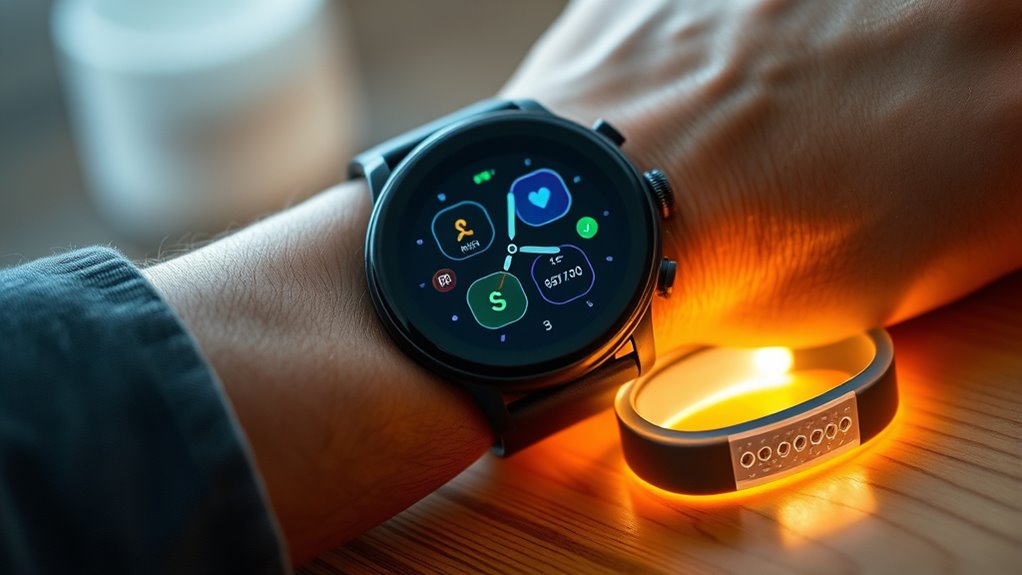

Wearable technology like smartwatches and fitness trackers work by combining sensors, software, and connectivity to monitor your health, activity, and location in real time. They use accelerometers and gyroscopes to track movement, heart rate sensors for health metrics, and GPS for location. The data is processed and displayed through user-friendly interfaces, syncing with your devices via Bluetooth or Wi-Fi. Keep exploring how these features work together to support your wellness journey.

Get hardware and tech essentials delivered free — and shop member deals
- Fast, free delivery on millions of items
- Access to Prime Big Deal Days deals on October 6–7
- Prime Video, Amazon Music and more included
Key Takeaways
- Wearables use sensors like accelerometers, gyroscopes, heart rate monitors, and GPS to collect health and activity data.
- Processed sensor data is displayed through user-friendly interfaces for real-time insights and goal tracking.
- They connect to smartphones or cloud services via Bluetooth or Wi-Fi for data synchronization and notifications.
- Power-efficient components and rechargeable batteries ensure long-lasting use and minimal downtime.
- Software algorithms interpret sensor data to monitor health metrics and motivate users toward fitness goals.
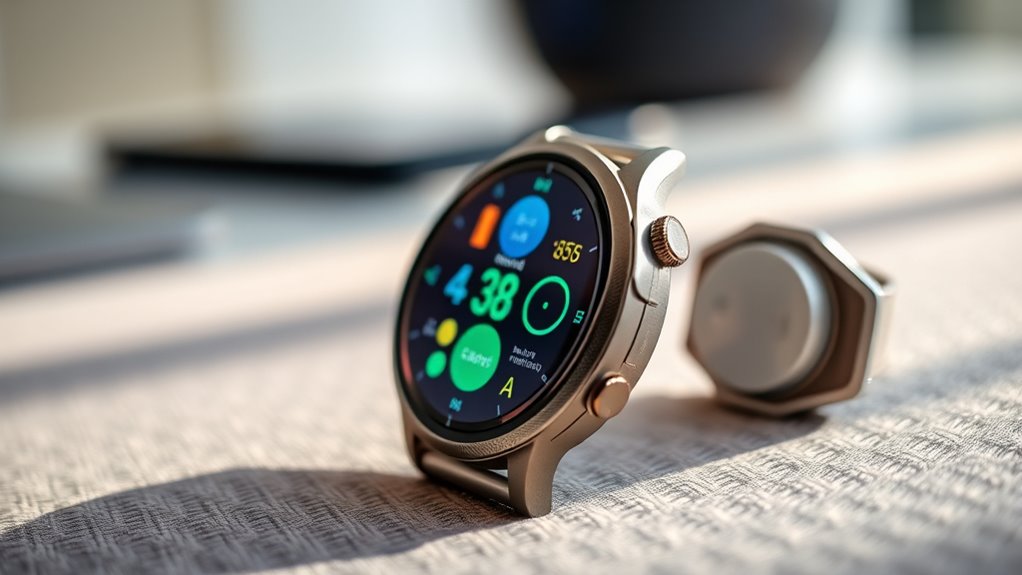
Wearable technology has transformed the way you monitor your health, stay connected, and enhance everyday activities. When it comes to fitness tracking and health monitoring, smartwatches and other wearables have become indispensable tools. They are designed to seamlessly integrate into your daily routine, providing real-time data that helps you stay motivated and informed. Whether you’re running, cycling, or simply going about your day, these devices continuously collect data on your physical activity, heart rate, sleep patterns, and more. This instant feedback allows you to make smarter choices and track your progress over time.
Wearable devices seamlessly track your activity, health metrics, and sleep, empowering smarter fitness and wellness choices daily.
At the core of how wearables work is a combination of sensors, software, and connectivity. Accelerometers and gyroscopes detect movement and orientation, enabling your device to count steps, measure distance, and analyze activity intensity. Heart rate sensors use optical technology, shining light through your skin to monitor blood flow and provide accurate heart rate readings. Some advanced wearables also include GPS modules to map your routes and provide detailed location tracking. All this sensor data is processed by sophisticated algorithms that interpret your activity levels and health metrics, presenting you with clear, actionable insights via a user-friendly interface. Additionally, the integration with devices like smartphones enhances the overall functionality and user experience.
Connectivity is crucial for these devices to deliver value. Wearables sync with smartphones or cloud services via Bluetooth or Wi-Fi, allowing you to view detailed reports, set goals, or receive notifications. This constant connection ensures that your health data is always up-to-date and accessible across multiple platforms. With apps tailored to specific needs—whether fitness, wellness, or medical monitoring—you can personalize your experience to focus on what matters most to you.
Power management is another key element that keeps these devices functional. Most wearables are equipped with rechargeable batteries optimized for long-lasting use. They also employ low-power sensors and efficient processors to extend battery life, so you don’t have to worry about frequent charging. When you do need to recharge, it’s usually quick and straightforward, ensuring your device is ready to support your health goals without interruption.
In essence, wearable technology works by combining advanced sensors, smart software, and reliable connectivity to deliver a detailed picture of your health and activity. It empowers you to take control of your fitness journey, offering insights that motivate and inform. As these devices continue to evolve, expect even more precise sensors, improved battery life, and smarter integrations, making them an even more crucial part of your daily life. Moreover, advancements in sensor technology are enabling wearables to provide more accurate and comprehensive health data than ever before.
Frequently Asked Questions
How Do Wearables Sync With Smartphones or Other Devices?
You sync wearables with your smartphone through device pairing using Bluetooth or Wi-Fi. Once paired, your wearable automatically updates data by establishing a connection, allowing seamless data synchronization. You can also manually initiate syncs via the wearable’s app or settings. This process guarantees your health stats, notifications, and other info stay current across devices, providing you with real-time updates and a smooth, integrated experience.
What Security Measures Protect My Data on Wearable Devices?
You might think your wearable’s data is vulnerable, but it’s safeguarded by strong security measures. Data encryption scrambles your info, making it unreadable to unauthorized users. Biometric authentication, like fingerprint or facial recognition, ensures only you can access sensitive data. These measures work together, creating a secure environment that keeps your personal health and activity information safe from breaches and unauthorized access.
How Long Does the Battery Last on Typical Smartwatches?
A typical smartwatch’s battery lifespan ranges from one to three days, depending on usage and features. You’ll need to charge it every one or two days, which affects the charging frequency. To extend battery life, consider adjusting screen brightness, disabling unnecessary notifications, or turning off features like GPS when not in use. Regularly monitoring your smartwatch’s battery health helps you plan charging and keep it functioning at its best.
Can Wearables Detect Health Issues Before Symptoms Appear?
Imagine your wearable as a vigilant guardian, quietly monitoring your body’s signals. It can detect early signs of health issues before symptoms appear, aiding in early detection and preventive care. By continuously tracking essential signs like heart rate, blood oxygen, and activity levels, your wearable alerts you to potential risks, empowering you to seek medical advice sooner and maintain better health.
Are There Compatibility Issues Between Different Wearable Brands?
You might encounter compatibility issues between different wearable brands, especially regarding brand compatibility and device synchronization. Not all devices sync seamlessly across brands, which can limit your options. To avoid frustration, check if the wearable supports your preferred brand and verify it offers easy device synchronization. Using devices within the same brand often guarantees better compatibility, but some third-party apps can help bridge compatibility gaps if needed.
Conclusion
Now that you know how smartwatches and wearables work, you can see how seamlessly they fit into your daily life. From tracking your fitness to staying connected, these devices make everything easier and more efficient. Imagine the possibilities when your wearable technology becomes an extension of yourself—what new adventures could you reveal? Embrace the future of innovation and let these gadgets help you live smarter, healthier, and more connected every day.
Fall Picks
fall essentials
As an affiliate, we earn on qualifying purchases.