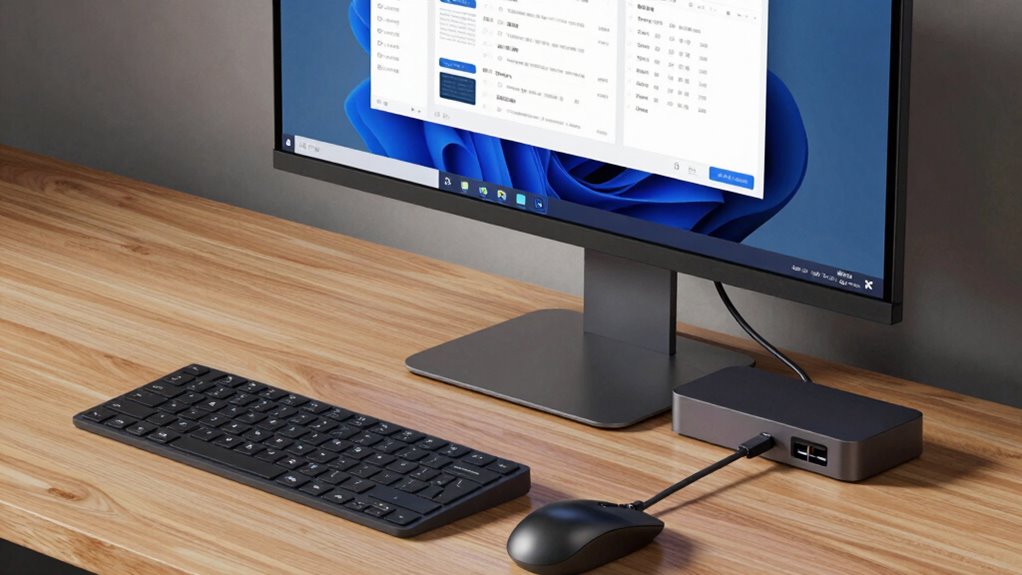

Skipping KVM switches and USB-C ports can cost you time, clutter, and frustration. With KVM, you control multiple devices from one keyboard, monitor, and mouse, making switching seamless. USB-C offers faster data transfer, charging, and cleaner connections, reducing cable chaos. Together, they boost your workflow by simplifying device management and improving workspace organization. Stick around to discover how these features can transform your setup and maximize your productivity beyond expectations.

Get hardware and tech essentials delivered free with Prime
- Fast, free delivery on millions of items
- Prime Video, Amazon Music and more included
- Member-only deals all year
Key Takeaways
- KVM switches streamline device management, reducing clutter and saving time switching between multiple computers.
- USB-C offers faster data transfer and integrated power delivery, enhancing workflow efficiency.
- Skipping these features leads to disorganized setups, increased cable clutter, and frequent technical disruptions.
- They enable seamless device and monitor switching, improving ergonomics and reducing fatigue.
- Investing in KVM and USB-C improves workspace scalability, future-proofs hardware, and boosts long-term productivity.
KVM switch for multiple computers
As an affiliate, we earn on qualifying purchases.
As an affiliate, we earn on qualifying purchases.
What Are KVM Switches and USB-C Ports? Definitions and Functions
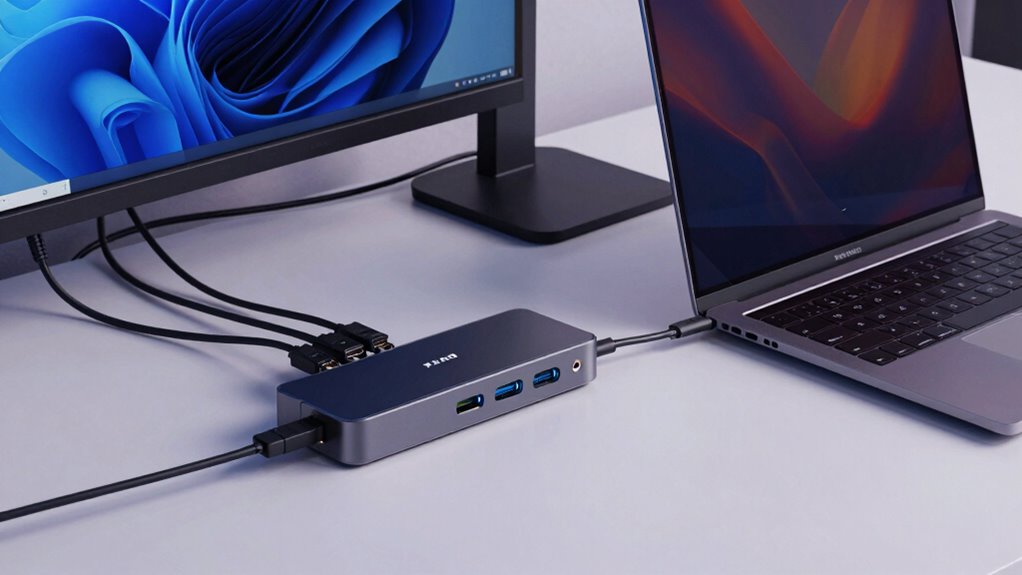
KVM switches and USB-C ports are essential tools that streamline your workspace by connecting multiple devices efficiently. A KVM switch allows you to control several computers with a single keyboard, monitor, and mouse, simplifying device management. USB-C ports serve multiple functions, including data transfer, device synchronization, and power delivery. With USB-C, you can connect smartphones, tablets, and laptops seamlessly, enabling quick device synchronization and charging. Power delivery ensures your devices receive the necessary power while connected, reducing cable clutter and the need for multiple chargers. These tools help optimize your productivity by making device management more straightforward and reliable. Understanding their core functions helps you harness their full potential, saving time and enhancing your workflow. Digital concepts are continually evolving, offering new opportunities to improve how we work and connect.
As an affiliate, we earn on qualifying purchases.
Common Mistakes When Upgrading Your Workspace Without KVM and USB-C

Upgrading your workspace without considering device compatibility can lead to frustrating connection issues and wasted money. You might also overlook how your setup needs to adapt to future changes, limiting flexibility. Color accuracy is often neglected, but it can significantly impact your viewing and working experience, especially when dealing with detailed visuals. Ignoring these aspects can make your workspace less efficient and harder to expand down the line. Incorporating thorough product research ensures you choose devices that work seamlessly together and support future upgrades.
Overlooking Device Compatibility
Failing to check device compatibility before upgrading your workspace can lead to frustrating setbacks. If your devices aren’t compatible with KVM switches or USB-C hubs, you might face connectivity issues, losing valuable time and productivity. Overlooking this step can compromise device security, exposing your system to vulnerabilities if incompatible hardware doesn’t meet security standards. Additionally, incompatible peripherals can clash with your aesthetic design, creating a cluttered or disorganized workspace. To avoid these problems, verify that your devices support USB-C standards and are compatible with your chosen KVM setup. Ensuring compatibility upfront saves you from costly returns, setup headaches, and potential security gaps. device compatibility is a crucial factor often overlooked during workspace upgrades. A well-planned upgrade considers both device security and aesthetic harmony, making your workspace more efficient and visually appealing. Incorporating Free Floating design principles can help optimize your workspace layout for both form and function. Moreover, considering the water-resistant features of certain peripherals can protect your setup in environments prone to spills or moisture. Additionally, understanding regional differences in device standards can prevent unexpected incompatibilities, especially when sourcing hardware from different markets.
Neglecting Workspace Flexibility
Neglecting workspace flexibility can considerably hinder your productivity, especially if you don’t incorporate solutions like KVM switches or USB-C hubs. Rigid setups force you to disconnect and reconnect devices, disrupting flow and reducing efficiency. Proper flexibility allows you to switch between devices seamlessly, boosting ergonomic comfort and maintaining aesthetic design. For example, a cluttered desk with tangled cables can decrease focus, while a flexible workspace keeps everything organized and accessible. Consider this:
| Flexibility Aspect | Benefit | Example |
|---|---|---|
| Device Switching | Faster workflows | One cable connects multiple devices |
| Adjustable Layout | Ergonomic comfort | Sit or stand with ease |
| Modular Design | Aesthetic appeal | Clean, minimal setup |
| Easy Expansion | Future-proofing | Add new peripherals anytime |
Additionally, embracing hormesis through adaptable environments can enhance overall well-being and productivity. Neglecting these aspects limits your workspace’s potential, hampering productivity and comfort.
Ignoring Future Expansion
When you skip planning for future expansion, your workspace can quickly become outdated and inflexible. Without considering future scalability, you might find yourself stuck with hardware that no longer meets your needs. Upgrading devices or adding new peripherals becomes a hassle if your current setup isn’t designed for easy hardware expansion. Ignoring this aspect compels you to repeatedly overhaul your workspace, wasting time and money. Incorporating KVM switches and USB-C connections early on ensures seamless hardware expansion, allowing you to easily connect new devices or upgrade components without disrupting your workflow. By thinking ahead, you create a flexible environment that adapts to your evolving needs, saving you from costly, disruptive upgrades down the line. Prioritize future scalability to maintain productivity and avoid unnecessary setbacks.
USB-C docking station for laptop
As an affiliate, we earn on qualifying purchases.
As an affiliate, we earn on qualifying purchases.
How KVM Switches Simplify Managing Multiple Devices
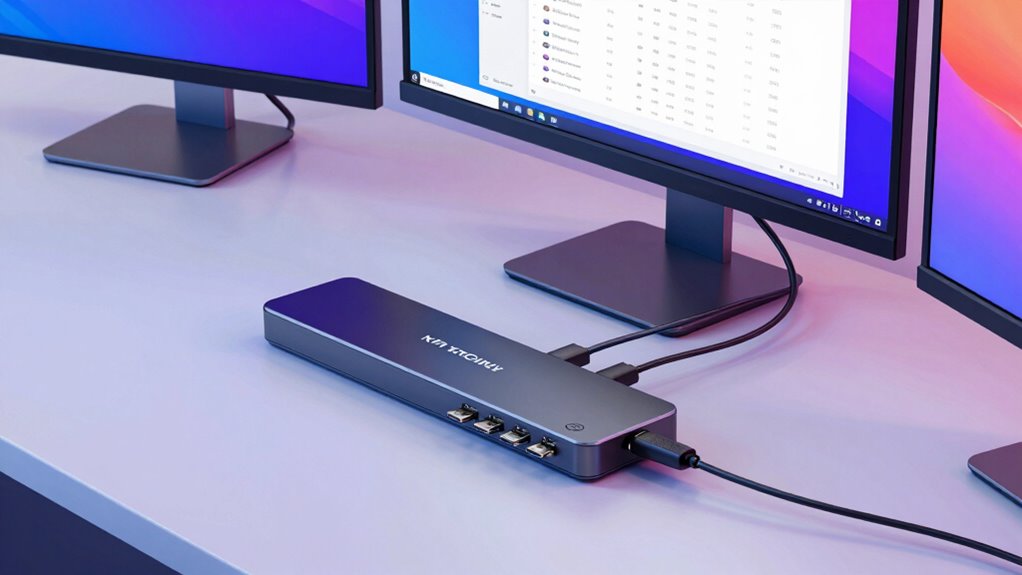
Managing multiple devices can quickly become cluttered and inefficient, but KVM switches simplify this process by allowing you to control several computers or servers from a single keyboard, monitor, and mouse. They reduce cable clutter, making your workspace cleaner and easier to maintain. With a KVM switch, you can switch seamlessly between devices with the press of a button, saving time and effort. This setup also supports ergonomic design by minimizing the need to constantly unplug and replug cables or reposition equipment. As a result, you stay organized and comfortable, boosting productivity. Incorporating natural light into your workspace can further enhance focus and reduce eye strain, creating a more pleasant environment. KVM switches streamline device management, making multi-device workflows smoother and less stressful. Ultimately, they help you create a more efficient, tidy, and ergonomic workspace.
As an affiliate, we earn on qualifying purchases.
Benefits of USB-C Ports for Faster, Cleaner Connections
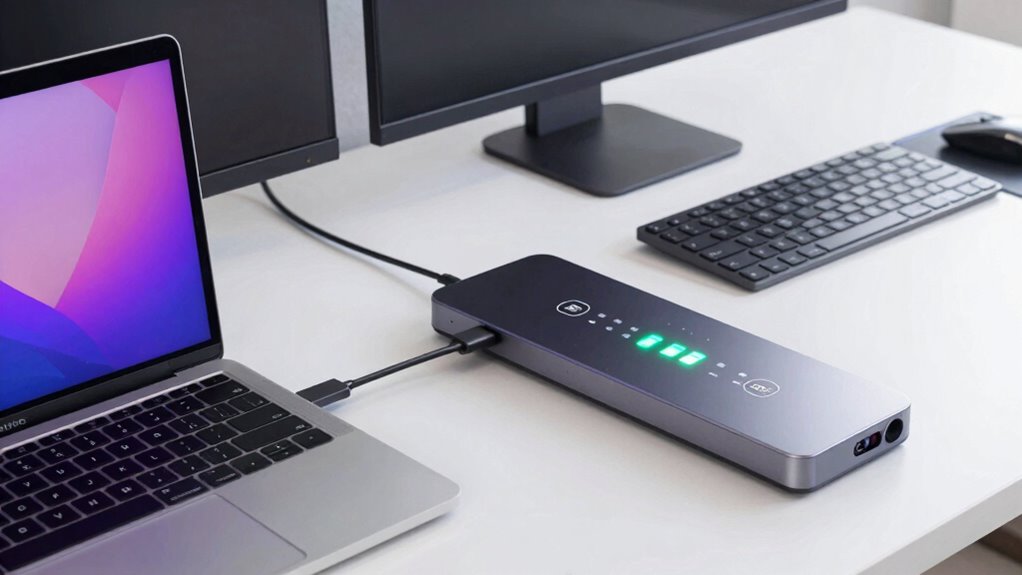
USB-C ports enable faster data transfer, so you can move files and sync devices quickly. They also simplify connections by supporting multiple peripherals through a single port. This means less clutter and more efficient workspace setup. Additionally, USB-C ports are increasingly used in trusted resources to ensure reliable and secure connectivity. Using USB-C can also help prevent connection hazards and improve overall safety when managing multiple devices.
Faster Data Transfer
Thanks to its high data transfer speeds, USB-C ports enable you to move large files quickly and efficiently, reducing wait times and boosting productivity. With faster transfer rates, you spend less time waiting for data to load or back up, allowing you to focus on more important tasks. USB-C also supports data encryption, ensuring your sensitive information stays secure during transfers. The streamlined user interface makes it easy to connect and manage devices seamlessly, minimizing setup time and avoiding clutter. This combination of speed and security enhances your workflow, especially when handling large multimedia files or critical documents. Overall, USB-C’s faster data transfer capabilities help you stay productive by providing quick, clean, and secure connections for all your data needs.
Simplified Device Connections
Because USB-C ports support a single, versatile connection standard, they considerably simplify how you set up and manage your devices. With just one cable, you can connect wireless peripherals, external displays, and ergonomic accessories without clutter. This reduces cable mess and streamlines your workspace, making it easier to switch between devices or reorganize. USB-C’s fast data transfer and power delivery mean fewer cords and adapters, giving you a cleaner, more efficient setup. Plus, many USB-C ports support charging and data simultaneously, so you can keep your devices powered while working. This simplicity helps you stay focused and reduces frustration, especially when managing multiple peripherals. Overall, USB-C ports make device connections faster, cleaner, and more flexible, boosting your productivity.
How KVM and USB-C Reduce Workspace Clutter
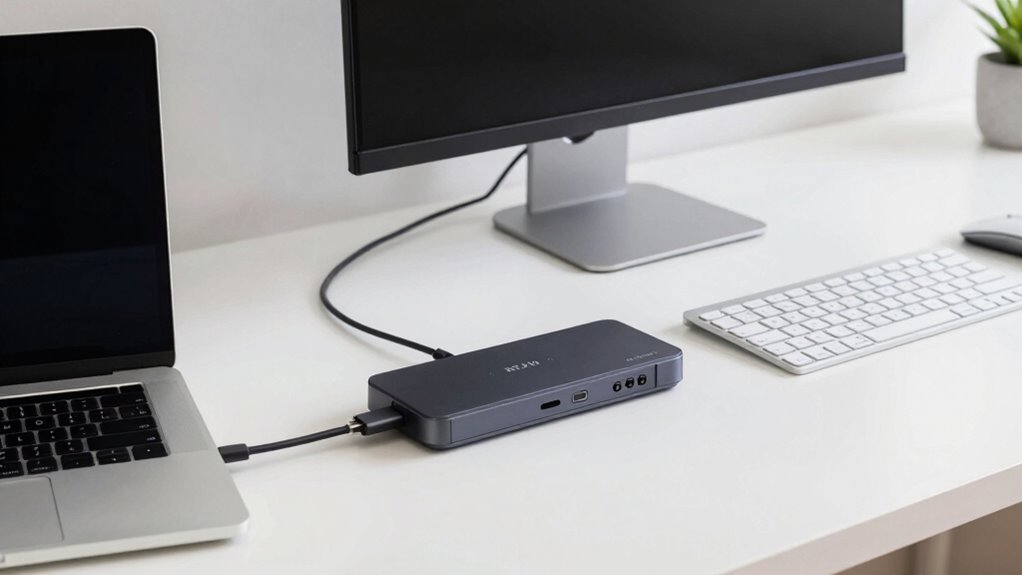
Using KVM switches combined with USB-C connections can considerably cut down on workspace clutter by eliminating the need for multiple cables and devices. Instead of juggling separate cables for each device, a single USB-C cable can handle power, data, and video transfer. This streamlines cable management, reducing tangles and freeing up desk space. With fewer cables, your workspace looks cleaner and more organized, making it easier to focus. Plus, a tidy setup promotes an ergonomic environment, minimizing strain caused by cluttered or awkwardly arranged equipment. You won’t have to constantly unplug and reconnect devices, which means less frustration and more efficiency. Additionally, understanding drone bees and hive health can remind us of the importance of maintaining a balanced environment, much like keeping a workspace organized. Incorporating cable management techniques can further enhance your setup and prevent future clutter. Overall, integrating KVM switches with USB-C helps you maintain a sleek, clutter-free workspace that supports your productivity.
Boost Workflow Efficiency With KVM Switches and USB-C Ports
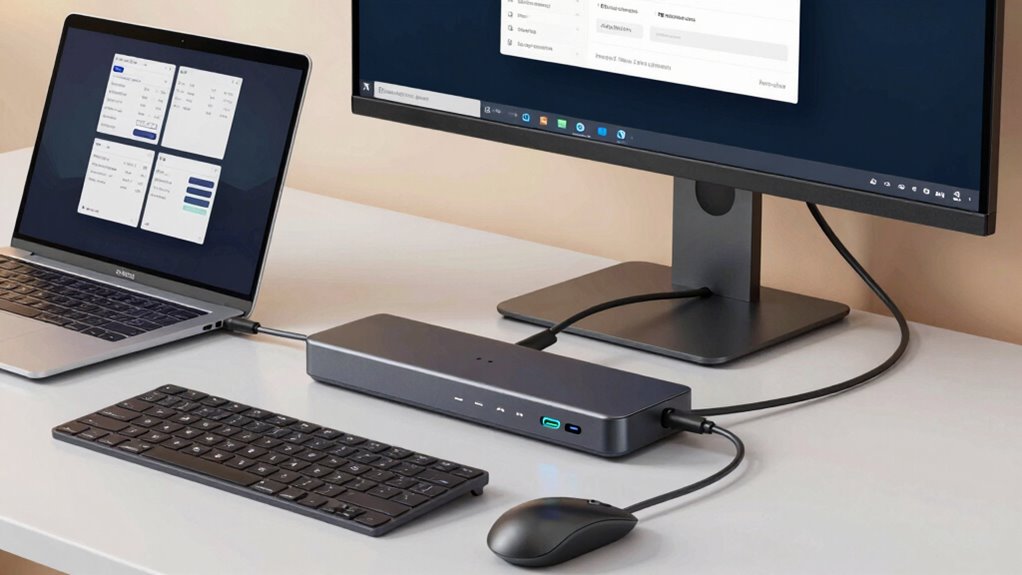
Integrating KVM switches with USB-C ports can considerably boost your workflow efficiency by enabling seamless control of multiple devices from a single interface. This setup simplifies switching between workstations, making remote collaboration smoother and reducing downtime. Plus, it supports ergonomic design, allowing you to work comfortably without constantly reconnecting cables or switching peripherals. Using a KVM with USB-C enhances productivity by streamlining device management and minimizing clutter, so you can focus on tasks instead of technical frustrations. Additionally, device management becomes more straightforward, helping prevent technical issues before they disrupt your work.
Choosing the Best KVM Switch and USB-C Devices for Your Setup

When selecting a KVM switch and USB-C devices, you need to prioritize compatibility with your existing hardware and guarantee seamless connectivity. Focus on quality and durability to avoid frequent replacements and maintain reliable performance. Making informed choices here helps you build a setup that’s both efficient and long-lasting. Incorporating reliable performance considerations ensures your devices support your productivity without interruptions.
Compatibility and Connectivity
Choosing the right KVM switch and USB-C devices for your setup depends on ensuring compatibility and seamless connectivity. You want devices that work smoothly with your existing hardware, supporting features like wireless charging or ergonomic design for comfort. Confirm that your USB-C devices deliver enough power and data transfer rates to match your needs. Compatibility issues can cause frustrating delays, so double-check port types, standards, and supported protocols. Also, consider whether your KVM switch supports multiple monitor setups or audio sharing. Investing in devices that match your workflow will improve efficiency without the hassle of constant troubleshooting. Additionally, verifying support for USB-C Power Delivery (PD) ensures your devices can handle charging and data transfer simultaneously without issues.
Quality and Durability
Since investing in a high-quality KVM switch and USB-C devices can substantially impact your setup’s longevity, prioritizing durability is essential. You want devices with excellent build quality that can withstand frequent use without failures. Look for rugged materials, reinforced connectors, and reliable shielding against interference. Device durability ensures your setup remains stable and reduces the need for replacements or repairs. High-quality devices often feature better internal components, which translate to consistent performance over time. Skimping on build quality might save money initially but can lead to frustration and costly replacements later. Choosing durable, well-made KVM switches and USB-C devices guarantees your productivity tools stay reliable, saving you time and hassle in the long run.
Setting Up Your KVM Switch and USB-C Ports for Maximum Productivity

To maximize your productivity, setting up your KVM switch and USB-C ports correctly is essential. Start by organizing cables neatly to prevent clutter and make switching seamless. Use cable management tools like clips or sleeves to keep everything tidy and accessible. Ensure your workspace is ergonomically set up: position monitors at eye level, keyboard and mouse within comfortable reach, and maintain good posture. Connect your devices via USB-C ports for fast data transfer and charging, reducing desk clutter. Test your setup to confirm all devices switch smoothly with the KVM. Finally, label cables and ports for quick identification, saving you time during daily shifts. Proper cable management and ergonomic setup are key to unlocking the full productivity potential of your KVM and USB-C setup. Additionally, understanding your battery capacity can help you choose the right power solutions to keep your workspace running efficiently. Considering efficient energy use can further optimize your setup’s sustainability and cost-effectiveness.
Real-World Examples of KVM and USB-C Boosting Productivity
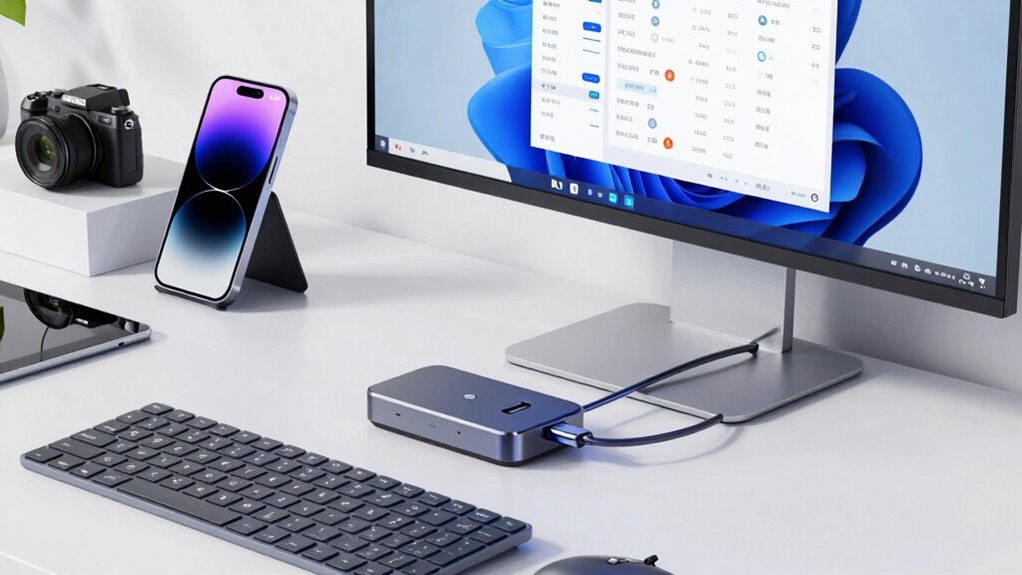
Many professionals have experienced firsthand how KVM switches paired with USB-C ports can streamline their workflows. For example, creative teams share screens effortlessly, switching between devices with a simple keystroke, saving time and reducing clutter. In corporate settings, smooth progression between laptops and desktops improve productivity during meetings and collaborative tasks. The ergonomic design of modern KVM setups minimizes strain during long work sessions, making switching seamless and comfortable. Additionally, the sleek aesthetic appeal of these devices fits well into modern office environments, enhancing overall workspace organization. This technology integration not only simplifies device management but also encourages a more efficient work environment. Proper ventilation is also crucial in maintaining optimal performance and safety when using multiple devices. With these real-world benefits, it’s clear that integrating KVM and USB-C technology can notably boost your productivity.
Troubleshooting Tips for Your KVM and USB-C Setup
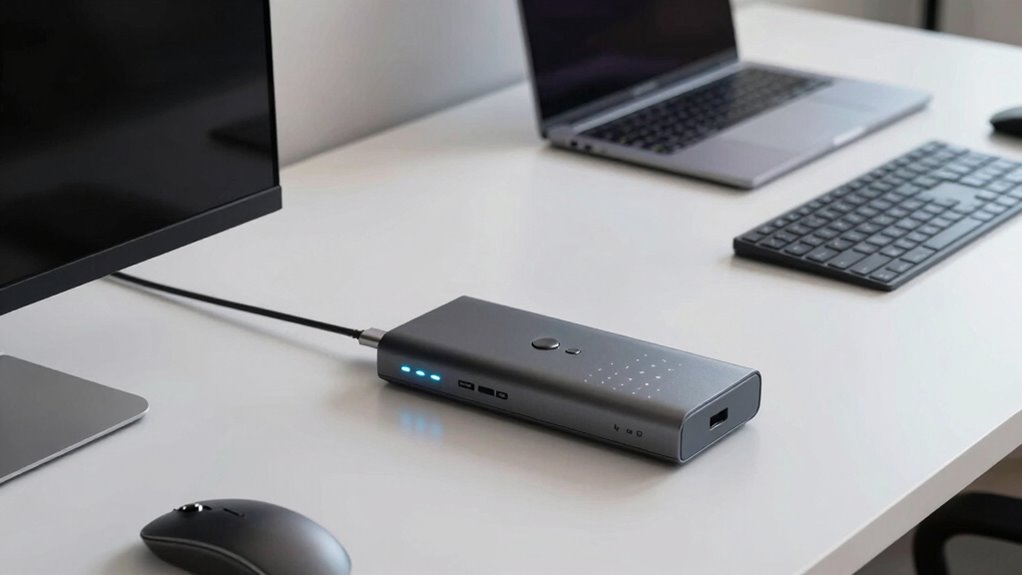
Troubleshooting your KVM and USB-C setup can seem intimidating, but most issues are straightforward to resolve with some targeted steps. Start by checking your cable management—loose or tangled cables can cause connectivity problems. Make certain your cables are properly plugged in and compatible with your devices. Keep ergonomic design in mind; uncomfortable setups might lead to connection fatigue or hardware stress. If your display isn’t working, verify your monitor’s input settings and refresh rates. Update your device drivers regularly to prevent compatibility issues. Finally, test your cables with different ports or devices to isolate the problem. Proper cable management and a focus on ergonomic design not only improve troubleshooting but also enhance long-term reliability and comfort. Incorporating knowledge about dog breeds can also help tailor your setup to specific needs, ensuring a comfortable and efficient workspace.
Frequently Asked Questions
Can KVM Switches Support Wireless Devices?
KVM switches typically don’t support wireless devices directly, as they mainly connect wired peripherals for device compatibility and reliability. However, you can connect wireless devices through compatible receivers or adapters, which then plug into the KVM. This setup allows wireless connectivity to work seamlessly across multiple systems. Just make sure your wireless peripherals are compatible with your KVM switch and the devices you’re connecting, ensuring smooth operation.
Are USB-C Ports Compatible With All Laptops?
USB-C ports aren’t compatible with all laptops, but many modern devices support USB-C compatibility for seamless laptop connectivity. To guarantee compatibility, check your laptop’s specifications or port type before buying accessories. If your laptop has a USB-C port, you can easily connect peripherals, charge your device, or transfer data. Keep in mind, some older laptops might lack USB-C, so always verify your device’s port options to avoid compatibility issues.
How Do KVM Switches Handle Audio and Video Signals?
KVM switches handle audio and video signals like a skilled traffic cop, managing multiple data streams smoothly. They transmit high video resolutions and maintain crisp audio quality, ensuring your displays stay sharp and sounds clear. When you switch between computers, the signals seamlessly transfer without loss. This means you get consistent video resolution and audio quality, making your workflow more efficient without any hiccups, just smooth and reliable performance.
What Security Features Do KVM Switches Offer?
KVM switches enhance security with features like remote management, allowing you to control systems securely over a network, reducing physical access risks. Many also offer hardware encryption, protecting sensitive data during transmission. These security features guarantee your setup stays protected from unauthorized access, making KVM switches a smart choice for secure environments. You get better control and peace of mind, knowing your data and devices are safeguarded effectively.
Is There a Difference Between USB-C and Thunderbolt Ports?
Yes, there is a difference between USB-C and Thunderbolt ports. USB-C offers universal compatibility and can handle data transfer, video output, and power delivery, making it versatile for many devices. Thunderbolt ports, often using USB-C connectors, provide faster data transfer speeds and support multiple displays for high-performance tasks. If you want seamless compatibility and efficient power delivery, USB-C is a great choice, but Thunderbolt is ideal for demanding setups.
Conclusion
So, next time you’re tempted to skip on KVM switches and USB-C ports, remember—they’re the secret sauces you’re ignoring at your own productivity peril. Why settle for tangled cables and juggling multiple devices when you can streamline, simplify, and maybe even impress your boss with your tech-savvy setup? Don’t be that person still wrestling with clutter—upgrade now and watch your efficiency soar. Or, you know, keep doing it the hard way. Your call.
Halloween Picks
halloween
As an affiliate, we earn on qualifying purchases.