Conference room TVs, projectors, and digital whiteboards each serve unique roles, so they aren’t interchangeable. TVs are great for crisp visuals in smaller spaces, while projectors offer large, flexible displays ideal for big rooms or immersive content. Digital whiteboards promote collaboration through real-time annotation and brainstorming. Choosing the right device depends on your room size, use, and presentation needs—keep exploring to discover how to pick the best options for your space.

Get hardware and tech essentials delivered free with Prime
- Fast, free delivery on millions of items
- Prime Video, Amazon Music and more included
- Member-only deals all year
Key Takeaways
- Different devices serve unique purposes: TVs for static visuals, projectors for large-scale displays, and whiteboards for interactive collaboration.
- Compatibility and setup vary; devices are designed for specific environments and functionalities, not interchangeable use.
- Technical features like resolution, connectivity, and interactivity differ, affecting their suitability for particular presentation needs.
- Cost, space, and installation requirements influence the choice; each device has distinct advantages and limitations.
- Using the wrong device can impair presentation quality, engagement, and collaboration, emphasizing the importance of selecting appropriate technology.
As an affiliate, we earn on qualifying purchases.
Why Your Office Needs Different Display Devices
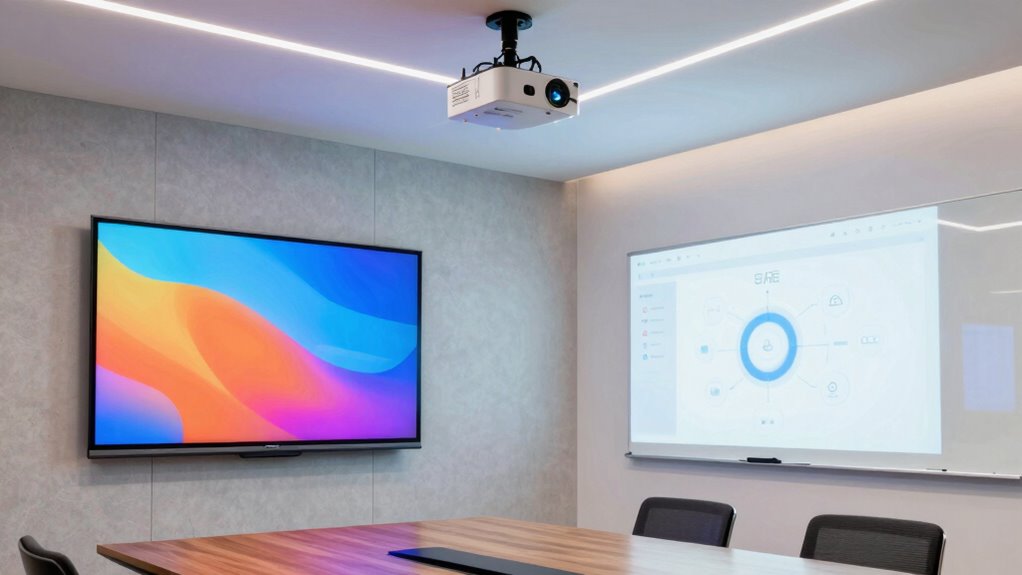
While a single display might seem sufficient for your office needs, different tasks require specialized devices to guarantee efficiency and clarity. For virtual collaboration, a large, high-resolution screen ensures everyone can see shared content clearly, reducing misunderstandings. Digital whiteboards excel in brainstorming sessions, allowing real-time input and seamless integration with collaboration tools. Conference room TVs offer crisp visuals for presentations, but their acoustics matter too; acoustic optimization minimizes echo and background noise, making audio clear during calls. Projectors create flexible, large-scale visuals ideal for training or group discussions. Additionally, understanding the contrast ratio of display devices can significantly impact image quality and viewing experience. Using the right display devices tailored to each task enhances productivity and communication, assuring your office runs smoothly whether you’re sharing ideas, presenting, or collaborating remotely. Incorporating display technology considerations can further optimize your workspace setup for better clarity and engagement.
portable projector for presentations
As an affiliate, we earn on qualifying purchases.
As an affiliate, we earn on qualifying purchases.
How to Choose the Right Conference Room TV
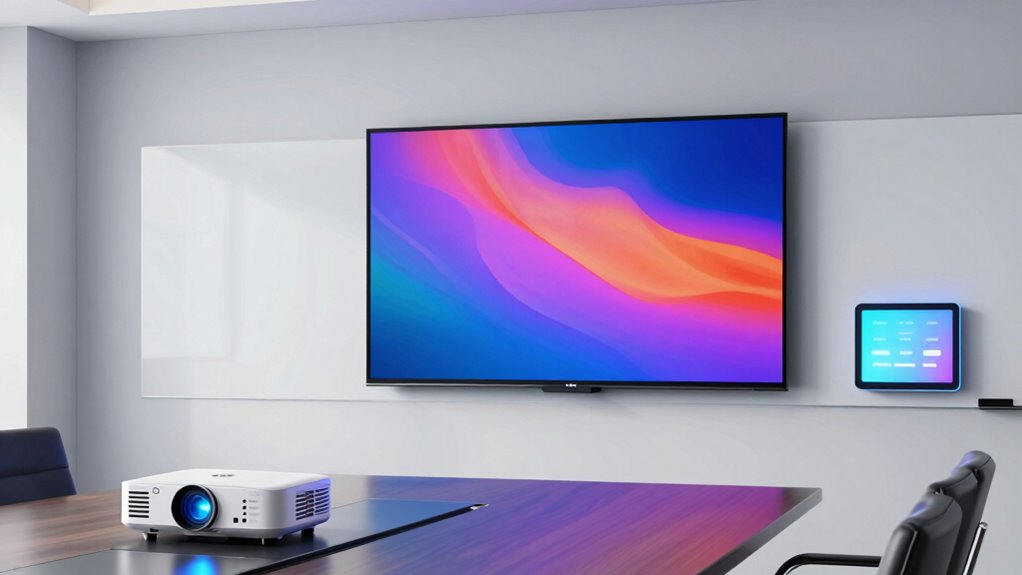
Choosing the right conference room TV involves evaluating your specific needs and the space you have available. Consider the room size and how viewers will sit to select an appropriate screen size. Look for models with good color calibration to guarantee visuals are clear and accurate, especially for detailed presentations or color-sensitive content. Check the mounting options—whether you need wall mounts, stands, or recessed installation—to maximize space and safety. Think about the TV’s resolution and connectivity options, ensuring compatibility with your existing devices. Also, consider features like anti-glare screens or wide viewing angles for better visibility from different seating areas. Making these choices helps you select a TV that enhances presentations and fits seamlessly into your conference room setup.
interactive digital whiteboard for collaboration
As an affiliate, we earn on qualifying purchases.
As an affiliate, we earn on qualifying purchases.
When to Use Projectors for Presentations
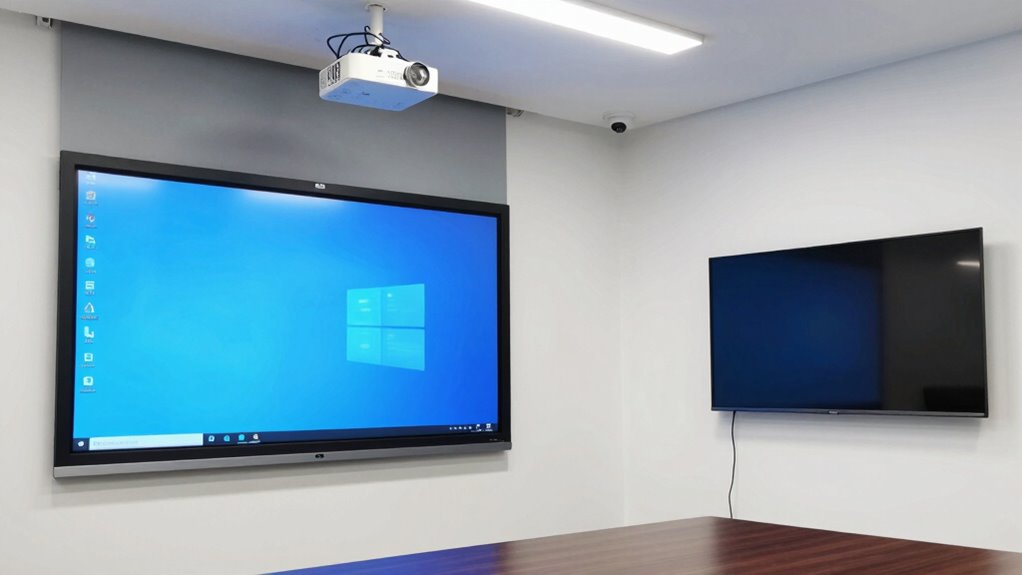
Projectors are an excellent choice for presentations when you need to display large, immersive visuals that can be easily seen from across the room. They foster interactive engagement by allowing audiences to focus on dynamic, vivid displays. Use projectors when you want to maximize visual clarity for detailed images or complex data, especially in larger spaces. They’re ideal for presentations that benefit from a big, shared visual experience. Consider a projector if your setup requires flexibility with screen size or if you want to create a more engaging atmosphere.
- Large, immersive displays for everyone
- Interactive engagement through dynamic visuals
- Flexibility in screen size and placement
- Clear display of detailed visuals or data
As an affiliate, we earn on qualifying purchases.
The Benefits of Digital Whiteboards for Collaboration
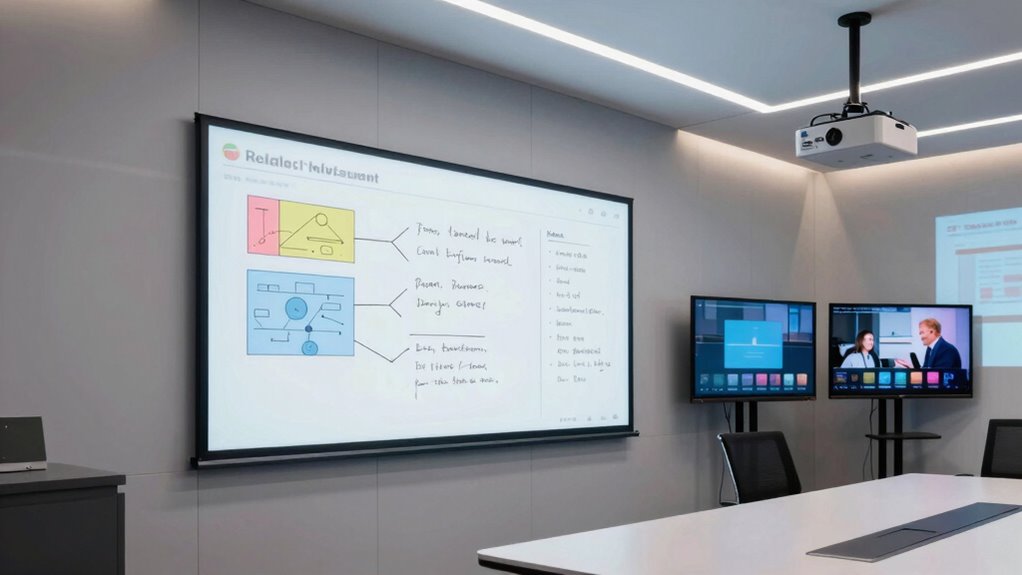
Digital whiteboards enhance collaboration by allowing you and your team to simultaneously contribute, brainstorm, and visualize ideas in real-time. This fosters interactive collaboration, making sessions more dynamic and productive. With visual engagement at the core, everyone stays focused and connected, regardless of physical location. You can easily draw, annotate, and share ideas instantly, breaking down communication barriers. The intuitive interface encourages spontaneous creativity and problem-solving, boosting team morale. Recognizing early signs of breast cancer symptoms can also lead to more effective teamwork and proactive health measures. Incorporating digital tools like whiteboards can further streamline communication and project management within teams. Utilizing visual engagement techniques can enhance understanding and retention during collaborative sessions.
Cost, Setup, and Flexibility of Presentation Devices
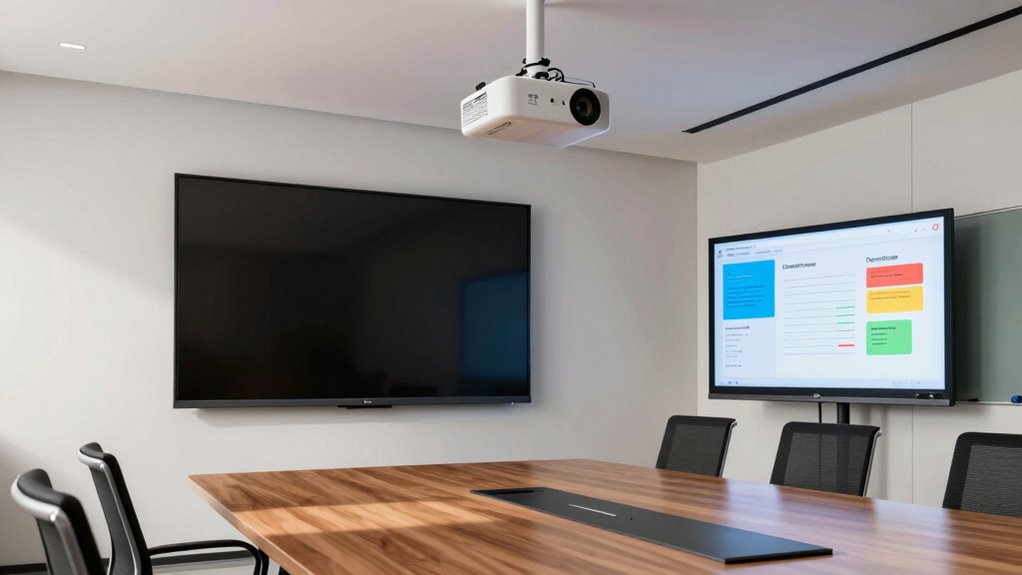
When choosing presentation devices, your budget and expenses play a key role in the decision-making process. You’ll want equipment that’s easy to set up and adapts quickly to different room layouts. Considering these factors guarantees you get the right balance of cost, convenience, and flexibility.
Budget Considerations and Expenses
Have you ever considered how much your choice of presentation devices impacts your budget? The costs go beyond initial purchase; factors like brand compatibility, energy efficiency, and ongoing maintenance play vital roles. Budgeting for a TV might seem straightforward, but add in high-quality projectors or digital whiteboards, and expenses can skyrocket. Energy-efficient models save money long-term but often have higher upfront costs. Compatibility issues can lead to additional investments in adapters or upgrades. Here’s what to keep in mind:
- Initial purchase price and ongoing maintenance costs
- Compatibility with existing tech infrastructure
- Energy efficiency to reduce utility bills
- Long-term flexibility and upgrade potential
Being strategic helps you balance quality with budget constraints.
Setup Ease and Adaptability
Are you often frustrated by how complicated it is to set up presentation devices in your conference room? Different devices vary in setup ease and adaptability, impacting your efficiency. TVs generally offer quick installation with minimal adjustments, thanks to their ergonomic design, making them user-friendly. Projectors might require more effort, with ceiling mounts and calibration needed for best image quality, but some models now feature flexible mounting options, boosting adaptability. Digital whiteboards often come with plug-and-play features, but their size and placement can affect aesthetic appeal and ease of use. Considering your space and needs, choosing devices that combine ergonomic design with simple setup processes can save time and reduce frustration. Additionally, understanding the multi-unit setups of devices can enhance coverage and flexibility in larger conference rooms. Ultimately, the right device enhances your conference experience without sacrificing flexibility or style.
Tips for Picking the Best Device for Your Space
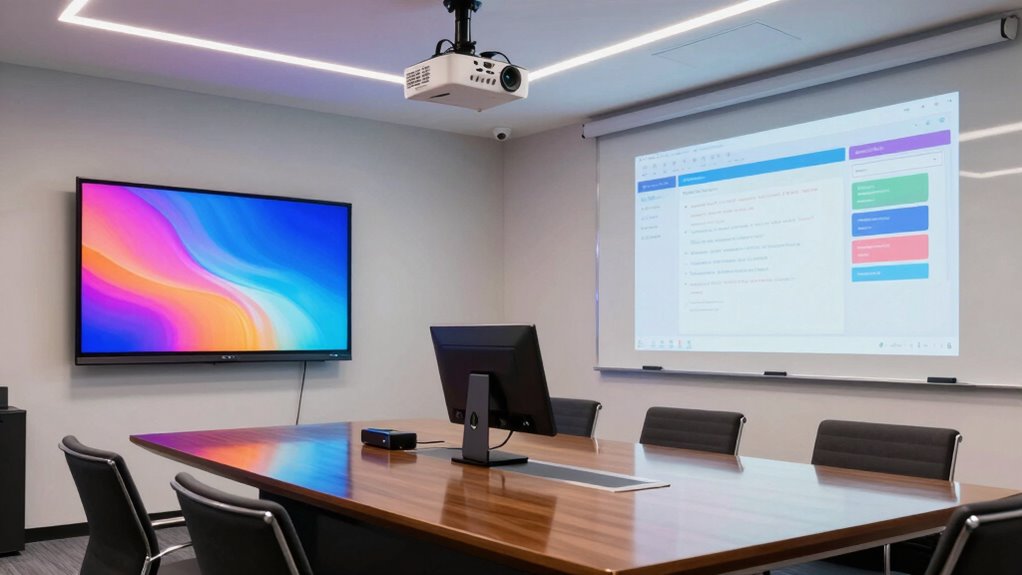
When choosing a device, consider your room’s size and layout to guarantee clear audio and visuals for everyone. Think about how you’ll use the space and what connectivity options you need for seamless presentations. Matching your device to these factors helps create an effective and hassle-free conference experience.
Room Size and Layout
Choosing the right device for your conference room begins with understanding its size and layout. Larger spaces require screens with higher resolution and bigger displays, while smaller rooms benefit from compact devices. Consider how furniture is arranged—if seats are spread out, you’ll need a device that guarantees everyone can see clearly. Acoustic treatment also plays a role; in rooms with echo issues, a whiteboard or projector might be better than a TV. Think about sightlines and how the device fits with existing furniture. Proper planning ensures your tech enhances communication without causing strain or distraction.
- Room dimensions and seating arrangements
- Sightline clarity and viewing angles
- Acoustic properties affecting display choice
- Furniture layout compatibility
Usage and Connectivity Needs
To guarantee your conference room tech meets your needs, focus on how you plan to use the space and what connectivity options are essential. For remote collaboration and multimedia integration, consider devices that support seamless video conferencing, screen sharing, and multiple input sources. Your setup should easily connect laptops, smartphones, and conferencing systems without hassle. Additionally, incorporating early detection features can help identify potential technical issues before they disrupt meetings.
Common Mistakes to Avoid When Selecting Presentation Tech
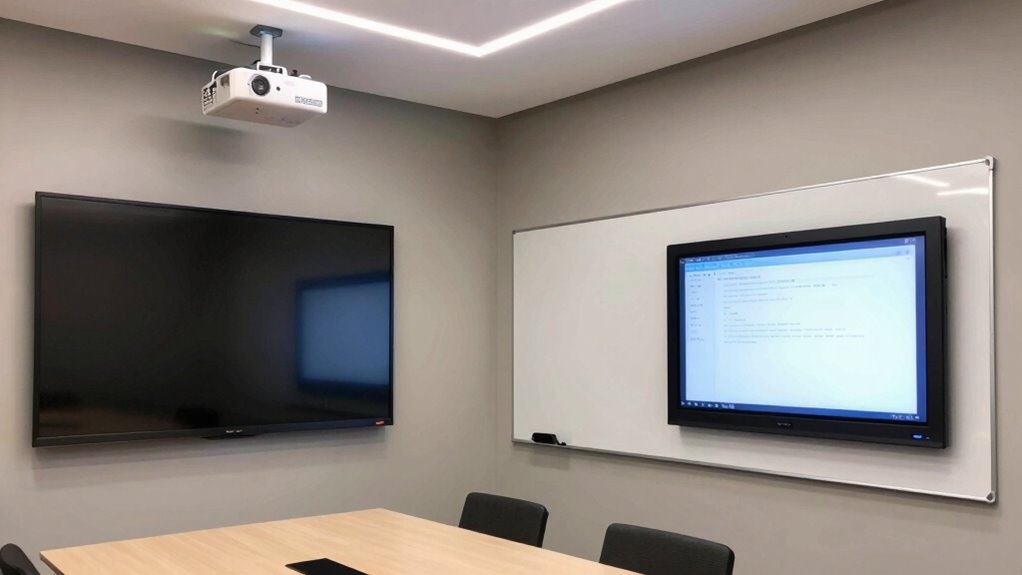
One common mistake is selecting presentation technology without fully understanding the specific needs of your conference room. This can lead to poor performance or unnecessary costs. To avoid this, consider factors like color calibration to guarantee visuals are clear and accurate. Also, check the power consumption to prevent high energy bills and ensure sustainability. Ignoring these details might result in equipment that doesn’t match your room’s size or usage patterns. Additionally, understanding the importance of venue-specific etiquette can help ensure your presentation equipment aligns with the setting’s expectations and standards.
Frequently Asked Questions
Can One Device Effectively Replace All Types of Presentation Displays?
No, one device can’t effectively replace all types of presentation displays because of device compatibility and cost considerations. You need different equipment for specific needs, like high-resolution TVs for clarity, projectors for larger audiences, or whiteboards for interactive sessions. Trying to use a single device may lead to poor visibility or functionality issues, and it may not be cost-effective or practical for varied presentation scenarios.
How Do Lighting Conditions Affect Different Presentation Devices?
Think of your presentation device as a chameleon—lighting conditions can drastically change its performance. Ambient glare, especially in bright rooms, can wash out projectors and strain your eyes on screens, while poor lighting hampers visibility on digital whiteboards. For vibrant, accurate colors and sharp contrast, a TV works best in well-lit spaces. Modifying lighting ensures your visuals stay clear, engaging, and true to the original display, no matter the environment.
Are There Specific Maintenance Requirements for Each Display Type?
Yes, each display type has specific maintenance needs. You should follow cleaning protocols tailored to each device—like wiping screens gently and avoiding harsh chemicals. Regularly check the power supply connections to prevent outages or damage. For projectors, replace bulbs as recommended. For TVs and whiteboards, keep vents clear of dust. Routine maintenance guarantees peak performance and extends the lifespan of your presentation equipment.
What Are the Long-Term Durability Differences Among These Devices?
In the grand saga of durability, your choice hinges on material composition and power consumption. Conference room TVs often boast sturdy panels, resisting wear over years, while projectors may sputter under dust and bulb burnout. Digital whiteboards, with fragile glass and electronic components, face longevity challenges. Power consumption impacts lifespan too—high energy devices tend to wear out faster, making your long-term investment a delicate dance of durability and efficiency.
How Do User Interfaces Vary Across Conference Room Display Options?
You’ll find that user interfaces vary markedly across conference room displays. With TVs, you often get familiar, straightforward menus that require little adjustment, making them easy for most users. Projectors may have more complex interfaces or rely on connected devices, so customization options can improve ease of use. Digital whiteboards often feature touch-friendly, customizable interfaces designed for collaboration, requiring some user familiarity but offering tailored tools for different presentation needs.
Conclusion
Choosing the right conference room tech is like planting the perfect garden—each device has its own unique bloom. By understanding their roles and blending them thoughtfully, you cultivate a space where ideas flourish effortlessly. Avoiding common pitfalls helps your setup grow strong and vibrant. Ultimately, selecting the right display devices ensures your meetings are seamless, allowing your team’s creativity to blossom and your collaboration to thrive in a harmonious, well-tended environment.
Fall Picks
fall essentials
As an affiliate, we earn on qualifying purchases.