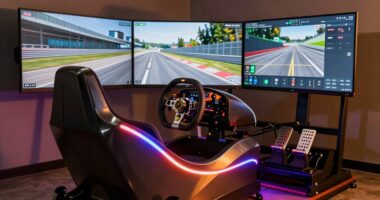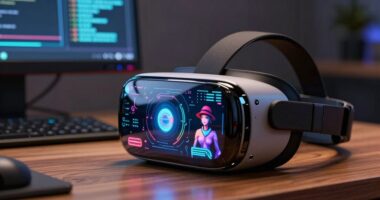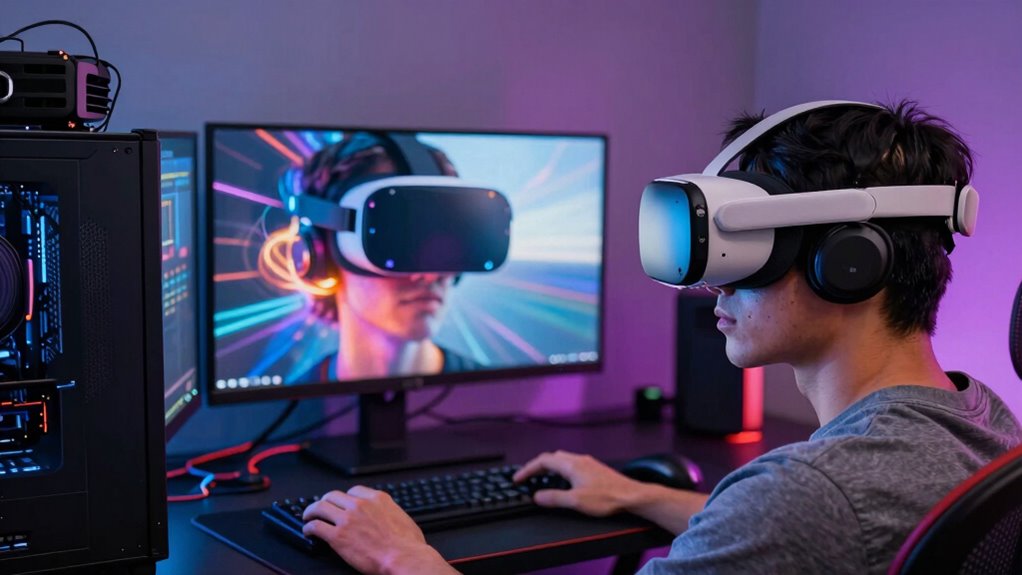

Choosing between standalone VR and PCVR really comes down to how much patience you’re willing to invest. If you prefer quick setup, portability, and easier use, then a standalone device suits you better. However, if you’re willing to spend time on setup, upgrades, and customization for better graphics and social features, PCVR offers a richer experience. The right choice depends on your lifestyle and expectations—exploring further will help you find the best fit.

Get hardware and tech essentials delivered free with Prime
- Fast, free delivery on millions of items
- Prime Video, Amazon Music and more included
- Member-only deals all year
Key Takeaways
- Standalone VR offers quick setup and ease of use, ideal for users with low patience for technical setup.
- PCVR provides higher graphics quality and customization, suited for users willing to invest time and patience.
- Longer, immersive sessions favor PCVR, but require patience for initial setup and system tuning.
- Casual users benefit from standalone VR’s simplicity, while enthusiasts may prefer PCVR’s performance and features.
- The choice depends on balancing patience for setup and maintenance against desired performance and social experience.
As an affiliate, we earn on qualifying purchases.
What Are the Main Differences Between Standalone VR and PCVR?
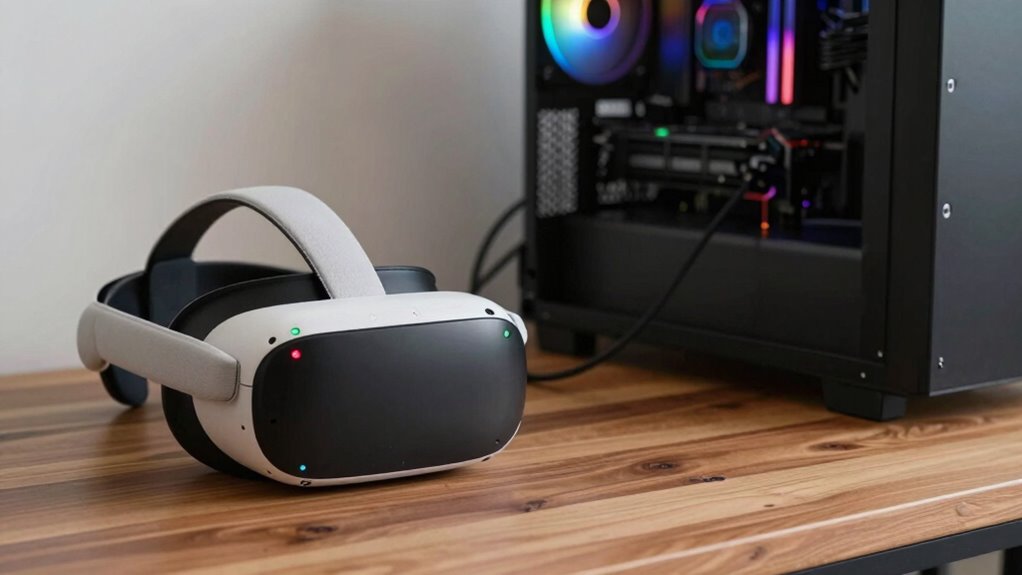
While both standalone VR and PCVR deliver immersive experiences, they differ considerably in hardware and performance. Standalone VR systems are compact, all-in-one devices with built-in processors, screens, and sensors, making them easy to set up and portable. They often feature wireless connectivity, allowing you to move freely without cables, and some models include haptic feedback to enhance immersion. In contrast, PCVR requires a powerful gaming PC connected via cables, offering higher-quality graphics and more complex tracking. While PCVR may provide more precise tracking and better visuals, it’s less convenient due to the wired setup. Additionally, the hardware requirements for PCVR are generally more demanding, which can influence overall performance and setup complexity. Your choice depends on how much you value portability versus performance. It’s also worth noting that compatibility between devices and software can vary, affecting your overall experience. Furthermore, the software ecosystem for standalone VR tends to be more streamlined, but may have limitations compared to PCVR.
As an affiliate, we earn on qualifying purchases.
How Your Patience Level Should Influence Your VR Choice
Your patience level plays a crucial role in determining which VR setup suits you best. If you prefer quick setup and immediate comfort, a standalone device might be ideal. These headsets generally offer better user comfort during longer sessions without the hassle of cables or complex configurations. However, if you’re willing to navigate a steeper learning curve for enhanced graphics and customization, PCVR could be more appealing. PCVR systems often require more patience during initial setup and troubleshooting but reward you with richer experiences. Consider how much time you’re willing to invest in learning new technology and how comfortable you need to be during extended play. Additionally, understanding the compatibility of hardware components can help reduce frustration during setup and optimize your overall experience. Being aware of system requirements can also streamline the setup process and prevent potential compatibility issues.
As an affiliate, we earn on qualifying purchases.
Are Standalone VR Devices Right for Casual Users? Pros and Cons
Are standalone VR devices suitable for casual users? For many, they are an appealing choice due to their convenience and ease of use. Comfort considerations play a vital role; these devices are often lightweight and wireless, allowing you to move freely without tangled cables. This makes them ideal for quick sessions or casual play. Social compatibility is another advantage, as you can easily share the experience with friends without needing a dedicated space or additional equipment. Additionally, many standalone VR devices are designed with user-friendly interfaces, making them accessible even for those new to virtual reality. Moreover, these devices often have competitive pricing and transparent fee structures, which can appeal to budget-conscious users. However, some casual users might find the limited graphics and performance frustrating for longer or more immersive sessions. While standalone VR offers simplicity and portability, it might fall short for those seeking richer visuals or more advanced features. Ultimately, if you prioritize ease and social fun over high-end specs, standalone VR could be a good fit. Additionally, understanding the performance limitations of these devices can help set realistic expectations for your virtual experiences.
As an affiliate, we earn on qualifying purchases.
Is PCVR Better for Enthusiasts? Benefits and Drawbacks
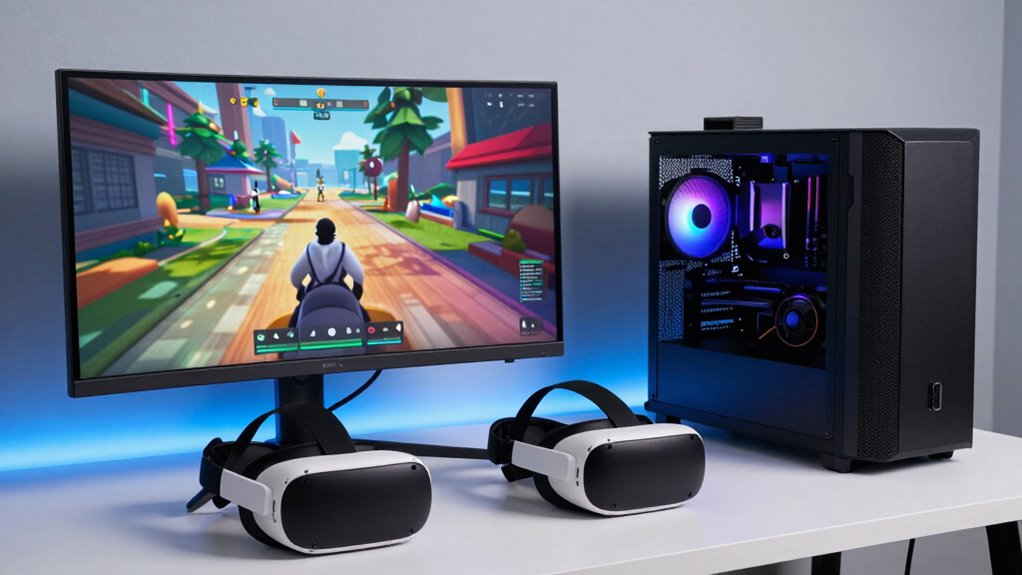
For enthusiasts seeking the most immersive and customizable VR experience, PCVR often stands out as the better choice. It offers higher-resolution graphics, a broader selection of games, and the ability to tweak comfort adjustments for prolonged sessions. However, PCVR can sometimes lead to increased motion sickness if your setup isn’t optimized, especially with quick movements or low frame rates. You have more control over hardware, so you can upgrade components to improve comfort and reduce discomfort. This flexibility is ideal if you’re willing to invest time in optimizing your system. Yet, the setup process can be complex and expensive, which might test your patience. Overall, PCVR appeals to enthusiasts who prioritize performance and customization, but it demands more effort to ensure a comfortable and enjoyable experience. Additionally, understanding hardware compatibility is crucial to avoid potential technical issues. Incorporating performance tuning can help mitigate some of the frustrations associated with setup and operation.
Key Factors to Consider When Choosing Your VR System
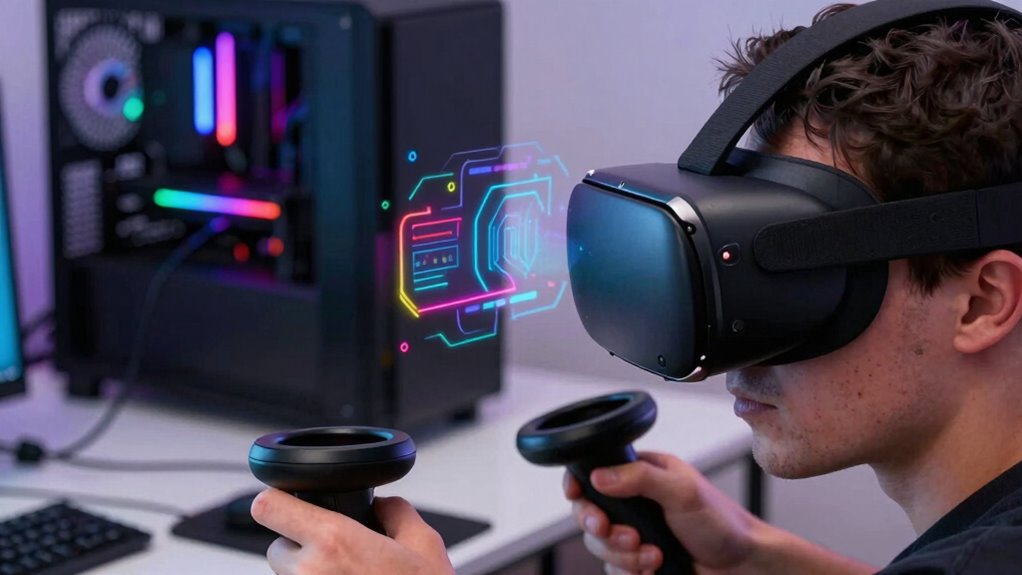
Choosing the right VR system involves balancing several important factors that can influence your overall experience. VR ergonomics is essential—ensure the headset fits comfortably and reduces fatigue during long sessions. Poor ergonomics can make extended play uncomfortable and diminish enjoyment. Additionally, software compatibility plays a critical role; verify that your preferred games and applications run smoothly on the system you choose. Standalone VR headsets often have a curated library, while PCVR offers broader compatibility but may require more setup. Consider how much time you’re willing to invest in setup and maintenance, as well as your comfort preferences. By evaluating these key factors—ergonomics and software compatibility—you can select a VR system that enhances immersion and suits your gaming style.
What to Expect When Setting Up Standalone VR for Quick Access
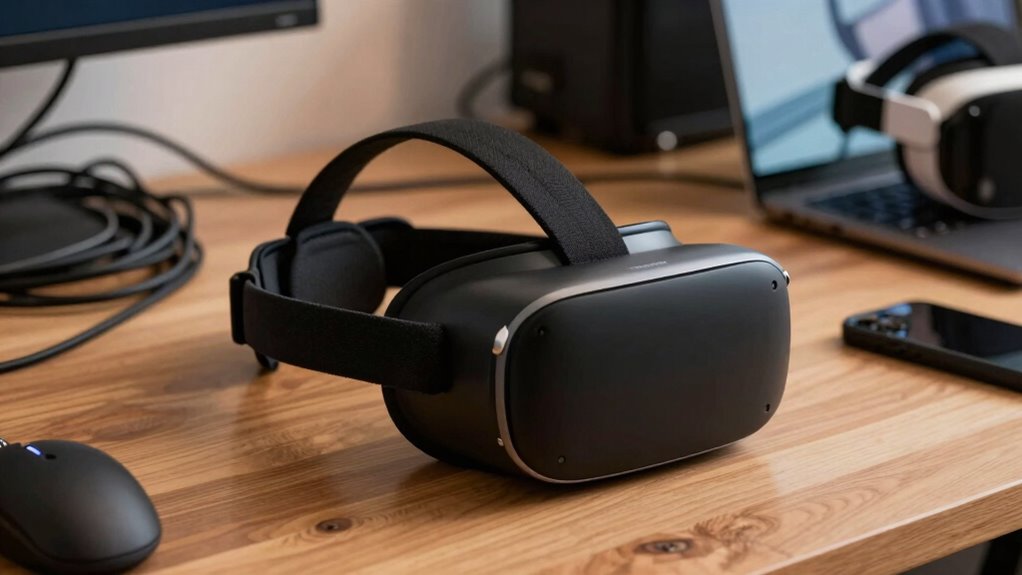
Setting up standalone VR for quick access is generally straightforward, designed to get you into your games with minimal fuss. Most devices feature a simple process: power on, connect wirelessly, and follow on-screen instructions. Wireless connectivity is key here, allowing you to move freely without tangled cables, which speeds up the setup. Many headsets offer a quick setup process that includes syncing controllers and updating firmware right out of the box. You’ll typically need a few minutes to prepare everything, then you’re ready to jump into your VR experience. The goal is minimal configuration, so you can start playing almost immediately. Expect a user-friendly experience focused on convenience, with most initial steps guided by the device itself for a smooth, hassle-free setup.
Managing PCVR Setup: Time, Skills, and Customization Tips
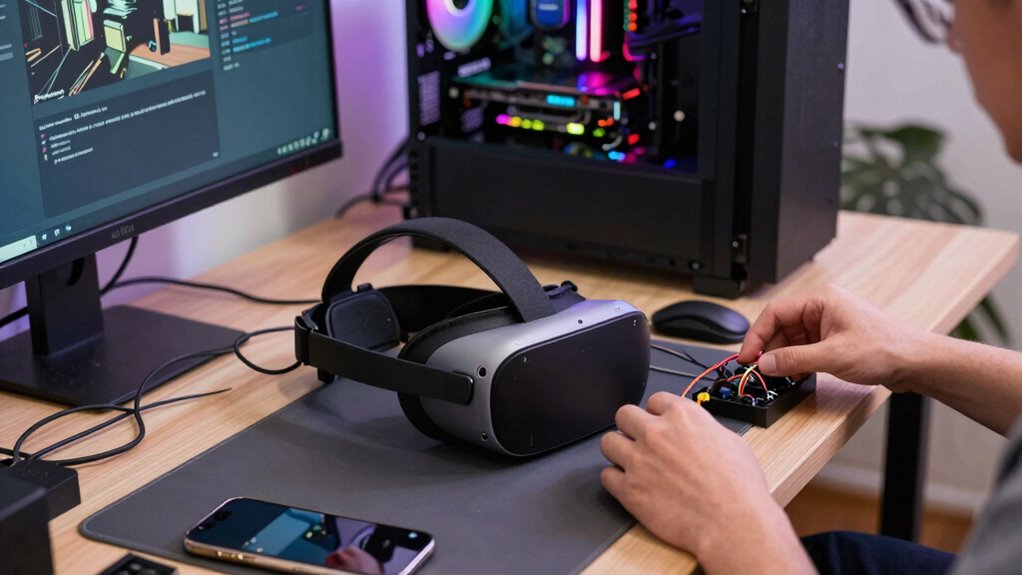
While managing a PCVR setup can seem intimidating at first, it’s mostly about understanding the process and being prepared to invest a bit more time and effort. You’ll need to connect your headset to a powerful PC, often via wired connections, but exploring wireless connectivity options can reduce clutter and improve comfort. Properly configuring sensors or base stations ensures accurate tracking, which is essential for immersion. Paying attention to ergonomic design in your setup—such as adjustable mounts and comfortable straps—helps prevent fatigue. Customization also involves software tweaks for peak performance. While the initial setup takes patience and some technical skills, the reward is a tailored VR experience that feels seamless and immersive, making the extra effort worthwhile.
Is Investing in PCVR Worth the Patience and Budget?
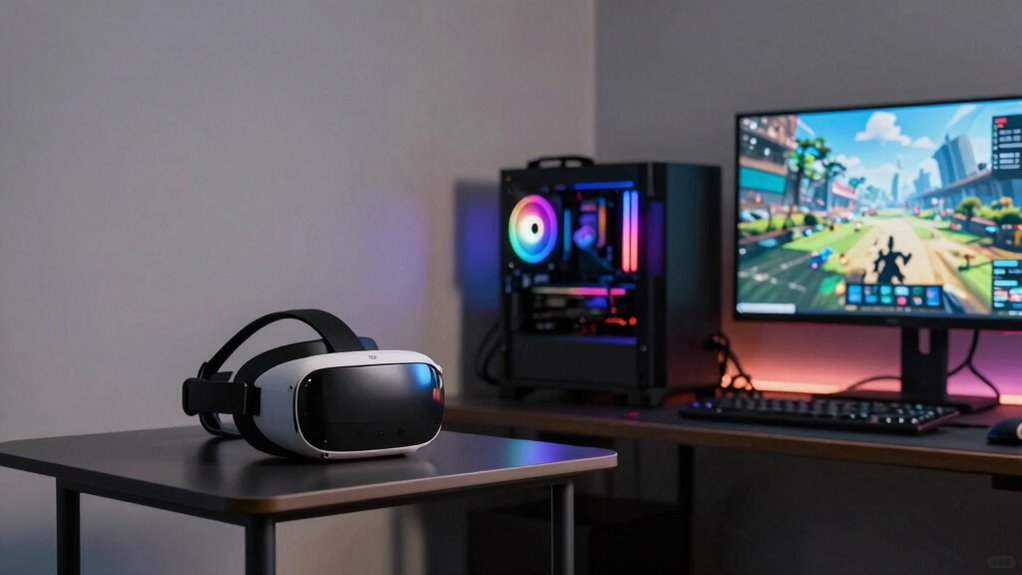
Investing in PCVR can be a worthwhile decision if you’re patient enough to navigate its setup and willing to spend more upfront. The enhanced graphics, precision tracking, and broader game library often justify the investment. However, it requires time and patience to optimize your experience, especially if motion sickness is a concern. PCVR also offers better social interaction options, making multiplayer experiences more immersive and engaging. Keep in mind, the cost varies depending on hardware choices. Here’s a quick comparison:
| Aspect | Standalone VR | PCVR |
|---|---|---|
| Setup Time | Minimal | Longer |
| Cost | Lower | Higher |
| Social Interaction | Limited | Advanced |
| Motion Sickness | Similar risks | Manageable with adjustments |
How to Make the Most of Your VR Experience Regardless of Your Patience
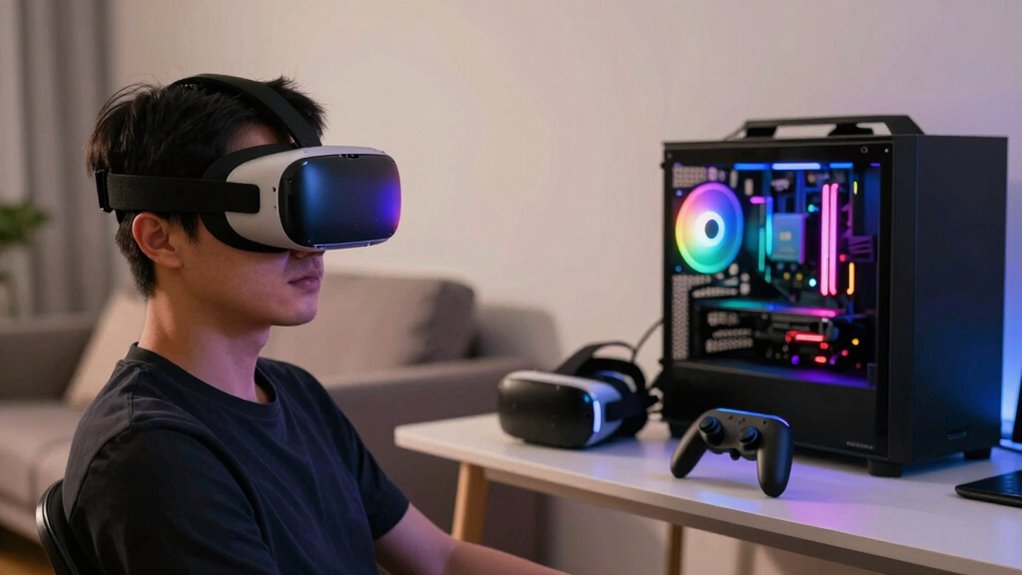
No matter which type of VR headset you choose, maximizing your experience comes down to understanding how to optimize comfort, controls, and immersion. Address comfort issues by adjusting straps and taking breaks to prevent fatigue, especially during long sessions. Fine-tune controls to suit your playstyle, ensuring fluid movement and easy access to menus. To enhance immersion, customize your environment and settings for clarity and minimal distractions. If social interactions matter, set up your space to comfortably engage with friends, whether through voice chat or multiplayer features. Remember, patience can improve your overall experience—don’t rush adjustments or learning curves. With thoughtful setup and a focus on comfort, you’ll enjoy more engaging, seamless VR sessions regardless of how patient you are. Additionally, exploring free floating options in your setup can help create a more flexible and immersive environment.
Which VR System Fits Your Lifestyle and Expectations?

Choosing the right VR system depends on your daily habits and what you expect from the experience. If you value quick setup and portability, a standalone headset might suit you best. But if you want premium visuals and performance, a PCVR setup could better match your lifestyle.
Setup Ease and Convenience
When it comes to setup ease and convenience, your lifestyle and expectations play an essential role in determining which VR system suits you best. Standalone VR headsets are typically quick to set up—just charge the device, put it on, and you’re ready to go—making them ideal if you value simplicity. PCVR systems, on the other hand, require connecting multiple cables, installing software, and ensuring your PC meets hardware specs, which can be time-consuming. Battery life also impacts convenience; standalone headsets often have limited battery duration but are portable, while PCVR headsets rely on tethered power sources. Additionally, ergonomic design influences comfort during extended sessions, with standalone devices generally offering more user-friendly, lightweight designs. Your patience for setup tasks will guide your choice. Natural landscapes and outdoor scenery in VR can enhance the immersive experience, but they often require more complex setup procedures with PCVR systems.
Mobility and Space Needs
Your lifestyle and available space considerably influence which VR system works best for you. If you value wireless freedom and minimal setup, a standalone VR headset offers mobility and requires less space, making it ideal for small or multi-purpose rooms. Conversely, PCVR setups often demand more space due to sensors and cables, limiting movement but providing enhanced performance. Consider these factors:
- Do you have a dedicated gaming area or limited space?
- Is wireless freedom a priority for your movement?
- Are you willing to accommodate sensors and cables for better visuals?
- Cabling issues such as cable failures or setup complexity can also impact your experience. Additionally, understanding the privacy and security implications of your VR system can help protect your data and ensure a safer experience. Being aware of VR system requirements can help you evaluate whether your current space and setup are suitable for optimal performance.
Choosing the right system depends on your living situation and how much space you’re willing to dedicate to VR. Both options have unique advantages aligned with different lifestyle needs.
Performance and Visual Fidelity
Performance and visual fidelity are crucial factors that can considerably influence your VR experience, especially if you’re aiming for immersive, high-quality graphics. Standalone VR headsets often have limited hardware compatibility, which can restrict graphics quality and smoothness. In contrast, PCVR systems typically offer superior performance because they leverage powerful PCs, but they require ongoing software updates to optimize hardware compatibility and fix bugs. These updates can improve visual fidelity over time, ensuring you get the best possible experience. If you prioritize high-resolution visuals and seamless performance, PCVR may be the better choice, provided you’re willing to manage the hardware and software maintenance. On the other hand, standalone headsets deliver decent graphics with less hassle but might not match the visual fidelity of PCVR.
Frequently Asked Questions
Can You Upgrade Standalone VR Devices Later?
You can’t upgrade standalone VR devices later, as they lack hardware flexibility. These headsets are designed with fixed components, meaning you’re limited to software updates for improvements. If you want to enhance performance or add new features, you’ll need to purchase a new device. Unlike PCVR, which allows hardware upgrades, standalone devices prioritize portability and simplicity, so plan accordingly before making your choice.
How Do VR Comfort and Ergonomics Compare?
Imagine slipping into a gentle embrace—VR comfort and ergonomics feel similarly inviting. You’ll find that standalone VR devices often emphasize ergonomic design, with lightweight frames and adjustable comfort features that contour to your head. PCVR headsets tend to be a bit heavier but offer customizable straps and padding, allowing you to tailor the fit. Both prioritize comfort, but your experience depends on how well their ergonomic design suits your personal preferences.
What Are the Long-Term Maintenance Costs?
Long-term maintenance costs mainly hinge on the cost factor and durability concerns. With standalone VR, you typically face lower ongoing expenses since it’s a self-contained device, but batteries and internal components may wear out faster, requiring replacements. PCVR setups might cost more over time due to PC upgrades and headset repairs, but they tend to be more durable. Regular cleaning and software updates help extend your device’s lifespan, saving money in the long run.
How Does VR Content Availability Differ?
Content availability is like a vast ocean—wide and varied. With PCVR, you get a treasure chest of diverse titles and platform exclusives, giving you more options to explore. Standalone VR offers a growing library, but it’s still catching up and might lack some high-end titles. Your choice depends on how much content variety you crave and your willingness to wait for new releases across platforms.
Are There Compatibility Issues Between Systems?
Yes, there can be compatibility issues between systems due to hardware limitations and software restrictions. Standalone VR headsets often have limited hardware capabilities, which can restrict the types of software or updates they support. PCVR systems, while more flexible, depend on your PC’s hardware and software compatibility. You might encounter issues with certain games or apps not working on one system or requiring specific updates or drivers.
Conclusion
Ultimately, choosing between standalone VR and PCVR depends on your patience and how deep you want to explore the virtual world. If you’re looking for quick fun, a standalone device might suit you better—think of it as your trusty steed for casual quests. But if you crave customization and cutting-edge tech, embracing the journey of PCVR could be your modern-day odyssey. Either way, your virtual adventure awaits—brace yourself for a voyage that even the bravest of knights would envy!
Evergreen bestsellers Picks
bestsellers
As an affiliate, we earn on qualifying purchases.