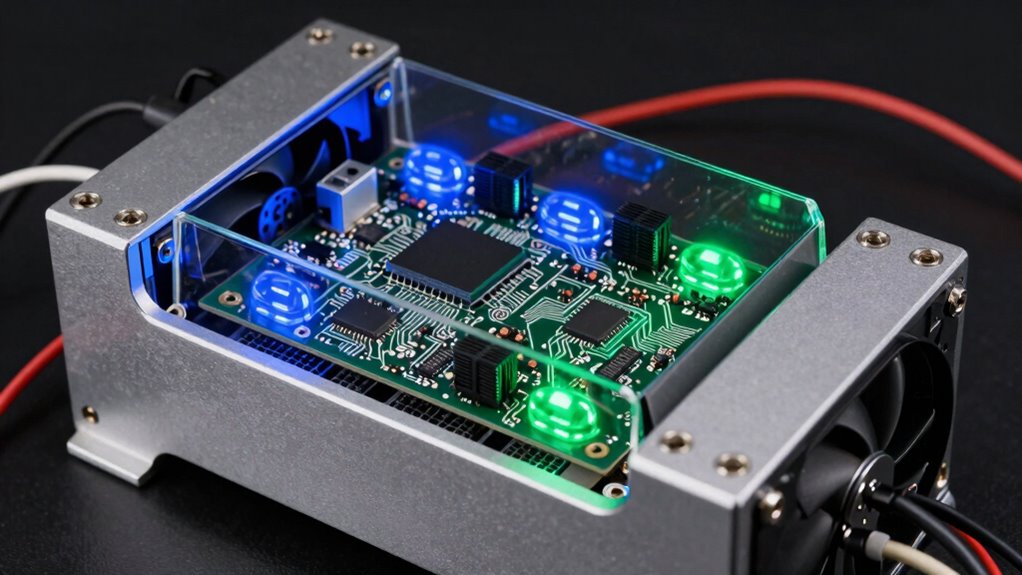

Understanding Scrypt helps explain why Litecoin mining feels more accessible and resistant to centralization. Unlike Bitcoin’s SHA-256, Scrypt is designed to be memory-intensive, making it hard for specialized hardware to dominate early on. This allows CPUs and GPUs to stay competitive for longer, promoting hardware diversity. While ASICs now increase efficiency, ongoing efforts aim to keep mining decentralized and secure. Stick around to discover how Scrypt continues shaping the future of Litecoin.

Get hardware and tech essentials delivered free with Prime
- Fast, free delivery on millions of items
- Prime Video, Amazon Music and more included
- Member-only deals all year
Key Takeaways
- Scrypt’s memory-intensive design levels the playing field, making mining accessible to CPUs and GPUs initially.
- Understanding Scrypt highlights how ASICs can increase mining power but may threaten network decentralization.
- Scrypt aims to prevent mining centralization, promoting a more secure and resilient Litecoin network.
- Knowledge of Scrypt emphasizes the importance of hardware diversity to maintain network security.
- Future developments focus on ASIC resistance to sustain fair mining opportunities and decentralization.
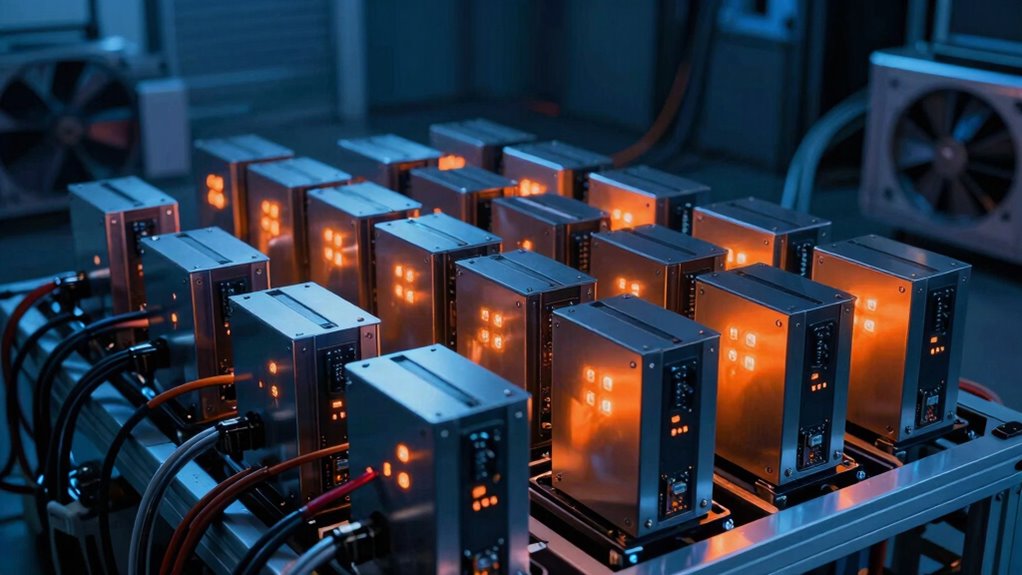
Understanding the role of Scrypt is key to making sense of Litecoin mining. Unlike Bitcoin’s SHA-256 algorithm, Scrypt was designed to be memory-intensive, which considerably impacts how you approach mining. This design choice was intentional, aiming to enhance cryptocurrency security by making it more resistant to centralization through specialized hardware. When you look at the evolution of mining hardware, it’s clear that Scrypt has helped level the playing field, at least initially, by preventing large-scale mining operations from dominating the network. Early on, CPUs and GPUs could efficiently mine Litecoin because Scrypt’s memory demands made it less profitable to develop ASICs (Application-Specific Integrated Circuits) that could outperform traditional hardware. This shift kept mining accessible for individual users and small operators, fostering a more decentralized and secure network.
As the mining hardware evolved, so did the competition. ASICs specifically built for Scrypt have now entered the scene, drastically increasing mining power and efficiency. However, the core advantage of Scrypt remains: it’s still more resistant to the kind of hardware centralization that plagued early Bitcoin mining. This ongoing evolution of mining hardware means you need to stay updated on what equipment is best suited for Litecoin. While ASICs can deliver higher hash rates and better energy efficiency, they also raise concerns about centralization, which could threaten the cryptocurrency’s security model. That’s why understanding the dynamics of mining hardware evolution and the role of Scrypt helps you make smarter decisions, whether you’re mining for profit or supporting the network. Additionally, the memory-intensive design of Scrypt continues to influence the development of mining hardware, emphasizing the importance of hardware diversity for network health. This continued emphasis on memory-hard algorithms aims to maintain a decentralized network structure and prevent dominance by a few large players. In fact, ongoing research seeks to improve ASIC resistance to further promote decentralization. Moreover, fostering hardware diversity is essential for maintaining the network’s overall resilience against potential vulnerabilities.
Furthermore, Litecoin’s use of Scrypt emphasizes the importance of cryptocurrency security. Its design aims to prevent a small group of miners from controlling most of the network’s hashing power. You, as a miner or investor, need to recognize that the choice of algorithm impacts the network’s resilience. If mining becomes overly centralized due to the availability of powerful ASICs, it could compromise the security that keeps Litecoin trustworthy. Because of this, many in the community continue to advocate for ASIC-resistant features, trying to keep the network accessible and secure for everyone.
As an affiliate, we earn on qualifying purchases.
Frequently Asked Questions
How Does Scrypt Differ From SHA-256 in Mining?
Scrypt differs from SHA-256 in mining by emphasizing memory-hard cryptographic complexity, making it more resistant to ASIC mining and favoring GPU use. It’s less hashing efficient than SHA-256, which is faster and more suitable for high-throughput processing. This design choice levels the playing field, preventing specialized hardware from dominating, and encourages broader participation in mining networks.
Can I Mine Litecoin With Regular Consumer Hardware?
You can mine Litecoin with regular consumer hardware, but it’s not practical. Imagine trying to race a sports car against a bicycle; your hardware isn’t built for the intense demands of mining. Mining hardware optimized for Scrypt, like ASICs, considerably outperforms regular computers. Plus, electricity costs can quickly outweigh profits, making it less feasible with basic hardware. For better results, investing in dedicated mining equipment is the smarter move.
What Are the Long-Term Benefits of Using Scrypt?
Using scrypt offers long-term benefits like improved energy efficiency, guaranteeing you consume less power during mining. It also encourages hardware specialization, which helps you stay competitive as technology advances. By focusing on scrypt, you ensure your setup remains more sustainable and adaptable over time, reducing operational costs and extending your mining profitability. This approach makes your mining efforts more efficient and future-proof in a rapidly evolving landscape.
Is Litecoin Mining Profitable Today?
Yes, Litecoin mining can still be profitable today, but market volatility affects your potential gains. You need to take into account fluctuating Litecoin prices and mining difficulty, which can impact your earnings. Additionally, the environmental impact of mining is a concern, as it consumes significant energy. To stay profitable, you should optimize your setup, stay updated on market trends, and weigh environmental costs against potential rewards.
How Does Scrypt Impact Network Security?
Scrypt enhances network security by making it more resistant to specialized hardware attacks, supporting quantum resistance. It requires more memory, which boosts energy efficiency and deters malicious miners from dominating the network. This increased complexity helps maintain decentralization and integrity, making it harder for bad actors to compromise the system. Overall, Scrypt’s design strengthens Litecoin’s network security by balancing energy use and resistance against evolving threats.
As an affiliate, we earn on qualifying purchases.
Conclusion
Once you grasp scrypt, mining Litecoin becomes like holding a key to a clearer, more accessible door—no need for the heavy, complex machinery of the past. It’s as if you’re steering a gentle river rather than a turbulent ocean, making the journey smoother and more inviting. Understanding scrypt transforms your approach, turning what once seemed like an intimidating mountain into a gentle hill you’re ready to climb. The path to Litecoin is now within your reach—simple, steady, and promising.
As an affiliate, we earn on qualifying purchases.
memory-intensive mining graphics card
As an affiliate, we earn on qualifying purchases.
As an affiliate, we earn on qualifying purchases.
Halloween Picks
halloween
As an affiliate, we earn on qualifying purchases.