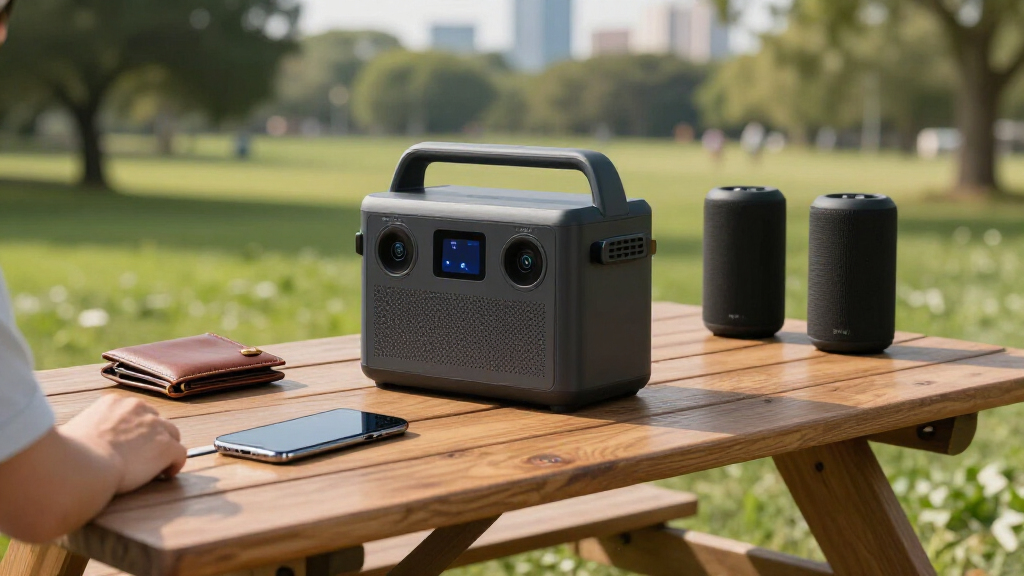

🔍 Read the full analysis: The Future Of AI Power: 9 Portable Stations To Consider In 2026 on ThorstenMeyerAI.com
TL;DR
In 2026, nine portable power stations stand out for powering AI applications, balancing capacity, portability, and versatility. This guide reviews top options and their implications.
As AI systems become more integral to various industries, a new wave of nine portable power stations is gaining prominence in 2026 for their ability to supply reliable, mobile energy. These stations are designed to meet the growing demand for powering AI hardware in diverse environments, from field research to remote data centers. The development underscores a shift toward more flexible, off-grid energy solutions that support AI deployment beyond traditional settings. This evolution is detailed in the original analysis.
Sources from ThorstenMeyerAI.com highlight nine portable power stations that are gaining attention in 2026 for their suitability in powering AI equipment. For detailed reviews, see the original analysis. Among these, the Jackery Explorer 1000 remains a top overall choice, offering a balanced mix of capacity, portability, and reliability. It features a capacity of around 1000Wh, sufficient for running high-performance AI hardware for several hours. For budget-conscious users, the Jackery Explorer 300 provides a smaller yet effective capacity, ideal for lighter AI tasks or backup power.
On the premium end, the Anker SOLIX S2000 delivers high wattage and capacity, making it suitable for more demanding AI applications, especially in off-grid or mobile scenarios. These stations incorporate advanced features like solar compatibility, fast recharge times, and durable battery chemistries such as LiFePO4, which enhances longevity and safety. When considering options, check out the top portable power stations for 2026. Experts emphasize that the main tradeoffs involve size versus power output and initial cost versus long-term value, with larger units offering more power at the expense of portability.
The 9 picks
- 1
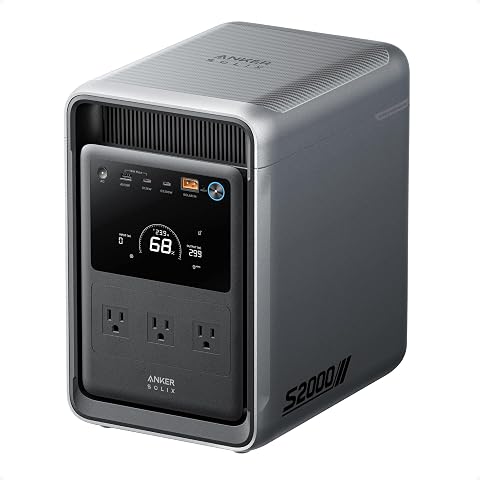 Anker SOLIX S2000 Portable Power Station, 2010Wh, 3000W PeakView on Amazon →
 - 2
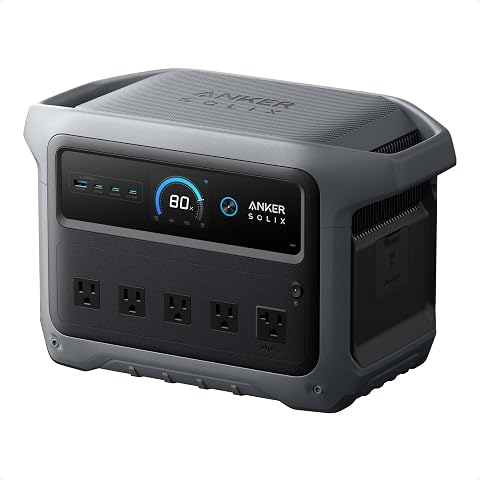 Anker SOLIX C1000 Gen 2 Portable Power Station, 1024Wh, 2000WView on Amazon →
 - 3
 Jackery Explorer 1000 v2 Portable Power Station, 1070Wh, 1500WView on Amazon →
 - 4
 BLUETTI Elite 100 V2 Portable Power Station for Camping 1024Wh 1800WView on Amazon →
 - 5
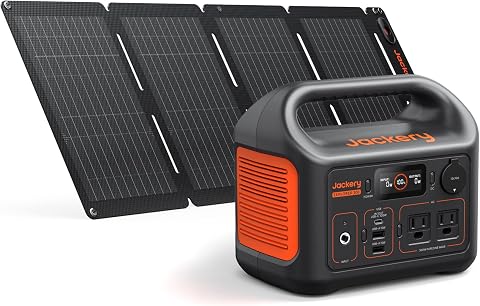 Jackery Solar Generator 300 and 40W Solar PanelView on Amazon →
 - 6
 Jackery Explorer 300 Portable Power Station, 292WhView on Amazon →
 - 7
 VTOMAN Jump 600X Portable Power Station, 600W, 268.8Wh LiFePO4 BatteryView on Amazon →
 - 8
 Portable Solar Generator 300W with 60W Solar PanelView on Amazon →
 - 9
 ALLWEI Portable Power Station 300W, 256Wh Solar Generator LiFePO4 BatteryView on Amazon →
Implications for AI Deployment and Remote Operations
The emergence of these nine portable power stations in 2026 signifies a major shift in how AI hardware can be deployed in remote or off-grid environments. They enable AI systems to operate continuously in locations previously limited by power constraints, such as disaster zones, research sites, or mobile command centers. This flexibility can accelerate AI-driven innovations in sectors like environmental monitoring, military, and emergency response, where reliable power sources are critical. Additionally, the focus on battery chemistry and solar integration reflects a broader trend toward sustainable and resilient energy solutions for AI infrastructure.
Evolution of Portable Power for AI in 2026
The trend toward portable power solutions for AI hardware has accelerated over the past few years, driven by increasing demand for mobility and off-grid capabilities. Previously, larger stationary generators dominated this space, but concerns over size, noise, and emissions prompted innovation in compact, high-capacity batteries. Companies like Jackery and Anker have introduced models optimized for AI applications, emphasizing features like fast charging, solar compatibility, and durable batteries. In 2026, these developments converge as multiple models are now positioned to meet diverse needs, from lightweight field units to high-capacity station setups for extended deployments.
“The rise of portable power stations in 2026 is a game-changer for AI deployment, making off-grid and mobile AI applications more feasible than ever.”
— Thorsten Meyer, AI Power Expert
Remaining Questions on Power Station Capabilities
While these nine stations are promising, it remains unclear how they will perform under continuous, high-demand AI workloads over extended periods. Specific data on battery cycle life under such loads, real-world solar recharging efficiency, and long-term durability are still emerging. Additionally, the compatibility of these stations with future AI hardware upgrades and their resilience in extreme environmental conditions are yet to be fully tested or verified.
Next Steps for Adoption and Validation
In the coming months, industry testers and early adopters will evaluate these stations in real-world AI deployments, providing data on performance, reliability, and cost-effectiveness. Manufacturers are expected to release firmware updates and new features to enhance compatibility and efficiency. Meanwhile, further innovations in battery chemistry and solar integration are likely to improve capacity and sustainability, making these stations even more suited for demanding AI applications. Monitoring these developments will be key for organizations planning to integrate portable power solutions into their AI workflows.
Key Questions
How long can these power stations support AI hardware?
The runtime depends on the capacity and power draw of the AI hardware. For example, a 1000Wh station might support high-performance AI systems for several hours, but exact durations vary based on load and efficiency.
Are these stations suitable for outdoor AI deployments?
Many models are designed with rugged features, solar compatibility, and weather resistance, making them suitable for outdoor use. However, specific environmental ratings should be checked for each model.
Can these power stations handle future AI hardware upgrades?
Most stations are compatible with current hardware, but future upgrades with higher power demands may require larger or more advanced models. Compatibility with new hardware depends on wattage and connector options.
Is solar charging essential for these stations?
Solar charging offers off-grid flexibility and sustainability benefits but is not mandatory. It depends on your operational environment and whether you need continuous power without grid access.
What is the cost range for these portable power stations?
Prices vary from around $300 for smaller models like the Jackery Explorer 300 to over $2,000 for high-capacity units like the Anker SOLIX S2000, reflecting differences in capacity, features, and durability.
Source: ThorstenMeyerAI.com