
📊 Full opportunity report: Acoustic Dampening, Placement, and the “Rig in the Closet” Setup on ThorstenMeyerAI.com — validation score, market gap, and execution plan.
TL;DR
This article explains proven methods for minimizing noise from AI workstations through strategic placement and acoustic treatment. Moving rigs out of the workspace into separate rooms or closets is often the most effective solution, with considerations for heat dissipation.
Moving high-power AI workstations into separate rooms or closets is the most effective way to reduce noise, according to recent expert guidance. This approach isolates sound at the source, making additional acoustic treatments unnecessary and significantly improving workspace comfort.
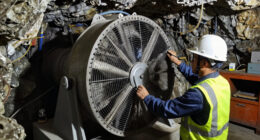
Experts emphasize that the most impactful method for noise reduction is relocating the rig away from the workspace, ideally into another room or closet. This method leverages distance and physical separation, which are more effective than acoustic foam or barriers alone. The ‘rig in the closet’ setup is popular among AI practitioners because it isolates noise but requires proper ventilation to prevent heat buildup. Sealing a closet without ventilation can cause the ambient temperature to rise, risking hardware overheating and throttling. To mitigate this, active ventilation—such as exhaust fans or ducted airflow—is necessary to maintain safe temperatures. Some companies produce purpose-built soundproof cabinets that combine acoustic lining with temperature control, but these can be costly. When placing a rig in a closet, ensuring airflow for heat dissipation is critical; otherwise, the noise reduction benefits are negated by thermal throttling and hardware failure.
Acoustic dampening
& the rig in the closet.
The most powerful noise fix isn’t a material — it’s a floor plan. A rig you can’t hear because it’s in another room beats any amount of foam. Tap the approaches in Part 1 to see what actually works.
(another room)
(levers 1–4)
(door / barrier)
(acoustic foam)
Contain the noise, not the heat
Why Proper Placement and Ventilation Are Critical
Effective noise management in AI workstations hinges on physical separation and proper airflow. Moving rigs into separate rooms or closets can drastically reduce workspace noise, improving comfort and productivity. However, neglecting heat dissipation can lead to hardware overheating, potentially causing failures or reduced lifespan. Proper ventilation ensures that noise reduction does not come at the expense of hardware reliability, making this strategy both practical and sustainable for high-power setups.soundproof computer server cabinet
As an affiliate, we earn on qualifying purchases.
As an affiliate, we earn on qualifying purchases.
Understanding Noise Sources and Effective Mitigation Strategies
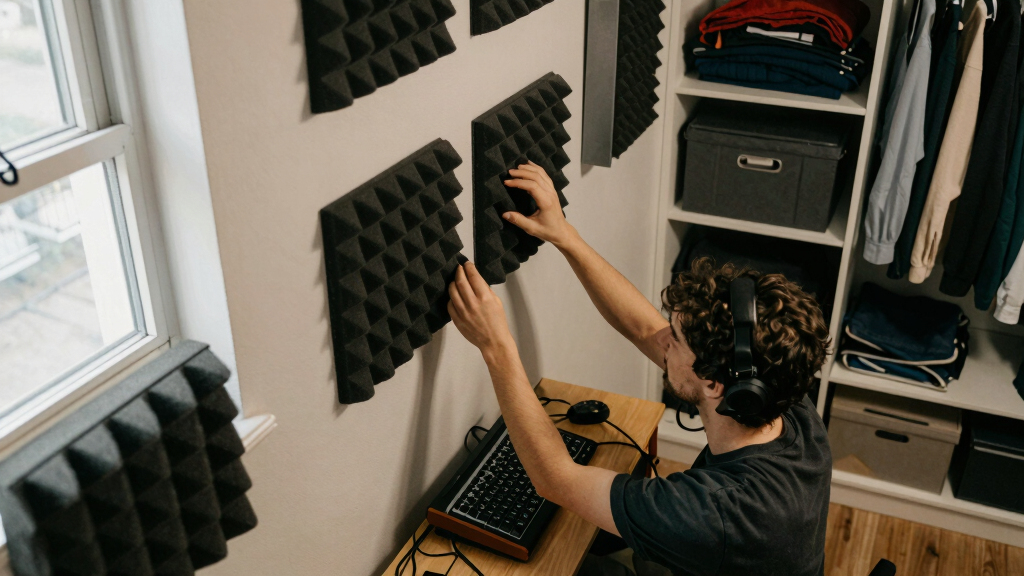
Traditional noise mitigation relies heavily on acoustic foam and barriers, which only address airborne sound and are less effective against structure-borne noise. Experts highlight that the hierarchy of noise reduction begins with distance and isolation, followed by source reduction, barriers, and acoustic treatments. The rise of AI and high-performance GPUs has increased the importance of managing heat and noise, leading practitioners to adopt solutions like relocating rigs to separate rooms or specialized soundproof cabinets. This approach aligns with the understanding that airborne noise is best reduced by barriers and foam, while structure-borne noise requires mechanical decoupling and ventilation. The concept of placing a rig in a closet is gaining popularity as a practical solution, provided heat is properly managed."The most effective noise reduction is moving the rig out of your workspace entirely, into another room or closet, where sound cannot reach you."
— Thorsten Meyer, AI workstation expert
As an affiliate, we earn on qualifying purchases.
Unresolved Challenges in Heat Management and Cost
While moving rigs into separate rooms or closets is effective, the optimal ventilation solutions and their costs vary. It is not yet clear how best to balance noise reduction with thermal management in different environments, especially in small or poorly ventilated spaces. Additionally, the long-term reliability and cost-effectiveness of custom soundproof cabinets versus DIY solutions remain under discussion among practitioners.
ventilated closet for high-power computers
As an affiliate, we earn on qualifying purchases.
As an affiliate, we earn on qualifying purchases.
Next Steps for Practitioners and Manufacturers
Practitioners are expected to experiment with different ventilation setups and enclosure designs to optimize noise and heat management. Meanwhile, manufacturers may develop more affordable, integrated solutions combining acoustic insulation and thermal control. Further research and case studies will clarify best practices for various workspace configurations, making quiet, reliable AI workstations more accessible.
acoustic treatment for server rooms
As an affiliate, we earn on qualifying purchases.
As an affiliate, we earn on qualifying purchases.
Key Questions
Is placing a rig in a closet always effective?
Not necessarily. It is effective only if proper ventilation is provided to prevent heat buildup. Without airflow, the risk of overheating and hardware failure increases.
What are the best ways to ventilate a closet containing a high-power rig?
Active ventilation with exhaust fans, ducted airflow, or purpose-built soundproof cabinets with integrated cooling are recommended to maintain safe temperatures while reducing noise.
How much does a purpose-built soundproof cabinet cost?
Prices vary widely, typically ranging from several hundred to several thousand dollars, depending on size, insulation quality, and cooling features.
Can I DIY a quiet enclosure for my AI rig?
Yes, but it requires careful design to ensure adequate ventilation and soundproofing. Improperly ventilated DIY enclosures risk overheating and hardware damage.
Source: ThorstenMeyerAI.com