📊 Full opportunity report: Organize Small Business Documents With Scanning And OCR on IdeaNavigator AI — validation score, market gap, and execution plan.
TL;DR
A proposal outlines a phone-based scanning app that uses OCR to classify, name and file documents for small offices. The idea has not been reported as a launched product; a five-office pilot scanning 200 documents per office is proposed to test accuracy and willingness to pay.
IdeaNavigator AI has outlined a proposed document-scanning app for small nonprofits, clinics and law offices, designed to use optical character recognition (OCR) to classify, name and file paper records. The proposal describes a product concept and a validation plan, not a launched service or a proven result; its suggested test would involve five offices scanning a backlog of 200 documents each.
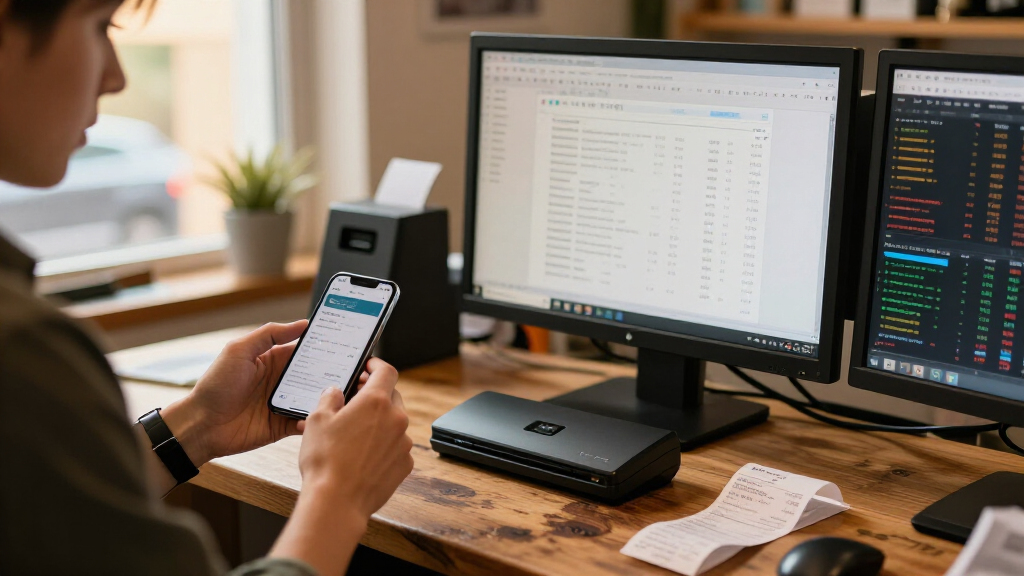
The proposed workflow would let an office worker photograph a stack of documents with a phone. The app would use OCR to read the pages, suggest a document category and filename, and save each item as a searchable PDF in a shared folder. An invoice, for example, could be labeled with its document type, date and vendor. The proposal does not specify which file-sharing service or phone platforms the product would support.
The intended users are office managers in paper-heavy small organizations, including nonprofits, clinics and law offices. The stated problem is that intake forms, invoices and records can accumulate in filing cabinets and remain hard to search. Basic scanning apps can produce image files without organizing them or extracting useful details, according to the product concept.
The proposed business model is a per-seat monthly subscription, with a page-volume limit and extra charges for usage above that cap. To assess demand, the plan recommends a one-week pilot with five small offices. Each office would scan a real backlog of 200 documents, and the test would measure how often the system classifies documents correctly and whether staff would pay per seat.
Filing Accuracy Could Determine Adoption
For a small office, a searchable archive could make it faster to locate records than searching through paper folders or piles of unsorted scans. Automatic naming and classification would address a step that ordinary scanning alone does not solve: deciding what each document is and where it belongs. That could reduce repetitive filing work if the system performs reliably.
But the proposal’s usefulness depends on accuracy in real office documents, not simply whether the app can capture a page. Misclassified or poorly named records could be difficult to find and may require staff to review or correct them. That concern carries added weight for clinics and law offices, where documents can contain sensitive personal, health or legal information. The proposal does not describe privacy, access controls, retention, security or compliance measures, so it does not establish how those risks would be handled.
The suggested pilot is a practical way to test the core value before assuming that small organizations will subscribe. Its results could show whether automated filing saves enough staff time to justify a recurring cost. No pilot findings, accuracy figures or customer commitments are provided.
document scanner app for small business
As an affiliate, we earn on qualifying purchases.
As an affiliate, we earn on qualifying purchases.
From Paper Backlogs to Searchable PDFs
The concept sits within the broader task of digitizing records at small organizations that may not have dedicated IT staff. It combines several steps—capturing a page, recognizing text, identifying document type, proposing a filename and saving a searchable file—rather than treating scanning as image capture alone.
IdeaNavigator AI presents on-device and API-based OCR, along with layout-aware models, as technologies that may now be affordable and accurate enough to support this workflow. That is the proposal’s rationale for exploring the product, not evidence that a particular system has achieved a stated accuracy level or price. No named software provider, technical benchmark or comparison with existing products is included.
The suggested test focuses on a defined group and workload: five small offices, one week and 200 documents per office. It would examine classification accuracy and willingness to pay, but the outline does not report that the test has begun. Nor does it specify document types, how accuracy would be scored, or whether users would review suggested labels before files are saved.
OCR document classification software
As an affiliate, we earn on qualifying purchases.
As an affiliate, we earn on qualifying purchases.
Accuracy, Privacy and Demand Untested
No product launch or pilot outcome is reported. The proposal gives no measured classification rate, processing time, subscription price or evidence that office managers would pay. It is also unclear how the system would handle handwritten notes, low-quality photographs, multi-page documents, duplicate records or pages containing more than one document.
Other open questions include whether users can correct labels, how corrections would affect later suggestions, and whether documents would be processed on a phone or sent to an external service. The concept does not set out encryption, access permissions, deletion policies or safeguards for confidential records. These details matter for the intended users, but cannot be inferred from the proposed scanning workflow.
As an affiliate, we earn on qualifying purchases.
A Five-Office Pilot Is Proposed
The next step in the outlined plan is a one-week pilot across five small offices, with each participant scanning 200 documents from an existing backlog. The test would track whether the app assigns the right category and filename, then ask whether participants would pay for access on a per-seat basis.
Those measures would provide an initial indication of workflow fit, but the proposal does not identify participating offices, a start date or a decision threshold for success. Until a pilot is reported, the app’s accuracy, business demand and suitability for sensitive records remain unverified.
Source: IdeaNavigator AI
As an affiliate, we earn on qualifying purchases.
Key Questions
Has the scanning app launched?
The information describes a product proposal, not a launch. No available details confirm that an app is built or offered to customers.
How would the proposed app organize documents?
A user would photograph pages with a phone. The system would use OCR to suggest a document type and filename, then save the result as a searchable PDF in a shared folder.
Has its classification accuracy been measured?
No accuracy result is reported. The proposal suggests testing classification on 200 documents at each of five offices, but does not say that the pilot has taken place.
What would the proposed service cost?
The suggested model is a monthly subscription for each seat, with a page-volume cap and overage pricing. No specific price is provided.
How would the app protect confidential records?
The proposal does not describe security, privacy, access or retention controls. Those details remain unknown, particularly for clinics and law offices handling sensitive records.
Source: IdeaNavigator AI