
At a Glance
| Criteria | Ledger Hardware Wallets | Trezor Hardware Wallets | Winner |
|---|---|---|---|
| Security Features | High-grade Secure Element chip, biometric verification, encrypted firmware updates | Open-source firmware, multiple security layers, optional passphrase support | A |
| User Interface & Ease of Use | Intuitive touchscreen interface, simple for beginners | Simple interface, some features require technical knowledge | B |
| Supported Cryptocurrencies | Supports over 5,000 cryptocurrencies including major coins | Supports over 1,600 cryptocurrencies, including major coins | A |
| Software & Firmware Transparency | Closed-source firmware with verified updates | Open-source firmware, transparent development | B |
| Device Design & Build Quality | Robust, sleek metal design, portable | Compact, plastic build, lightweight | A |
| Price & Value | Premium pricing with extensive features, good value for security-conscious users | More affordable, good value for tech-savvy users | B |
| Recovery & Backup Options | Recovery seed with secure backup options, encrypted cloud backup not supported | Recovery seed with advanced backup options, supports passphrase encryption | A |
| Community & Support | Large user community, extensive support resources | Growing community, active developer support | B |
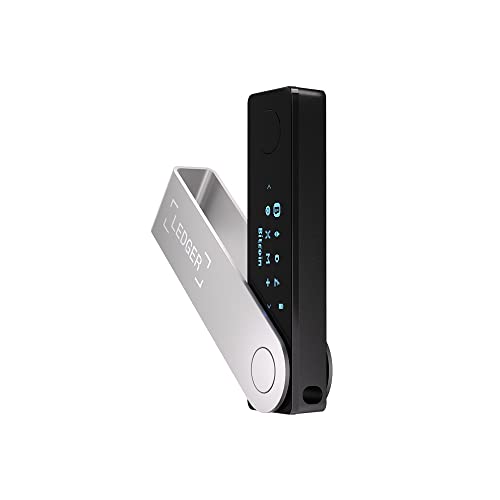
Ledger Nano X Crypto Wallet Signer - Securely Manage All Your Crypto Assets with This Bluetooth Enabled Classic - Onyx Black
Effortlessly build your crypto portfolio via the all in one Ledger Wallet app: buy, sell, send, receive, swap,...
As an affiliate, we earn on qualifying purchases.
Ledger Nano X Crypto Wallet Signer – Bluetooth Enabled, Onyx Black

The Ledger Nano X stands out for its blend of security and mobility, supporting over 15,000 coins and tokens. Its Bluetooth connectivity enables seamless management via iOS or Android devices, making it ideal for users who want quick access without sacrificing security. Compared with the Ledger Nano S Plus, it offers more coin support and wireless functionality but at a higher price and with less portability in terms of physical size. Its main tradeoff is reliance on Bluetooth, which, while convenient, introduces potential attack vectors if not properly secured. Overall, this pick makes the most sense for active traders or users managing diverse assets who prioritize ease of access.
Ledger Nano X Crypto Wallet Signer – Bluetooth Enabled, Onyx Black
- ✔ Connectivity: Bluetooth
- ✔ Compatibility: iOS
- ✔ Color: Onyx Black

Tangem Crypto Wallet Pack of 2 – Cold Storage Hardware Wallet for Bitcoin, Ethereum, NFTs & Altcoins
- ✔ Number of wallets: 2
- ✔ Supported coins: 14,100+
- ✔ Security: EAL6+

Ledger Nano S Plus – Classic Crypto Wallet, Gold, Compact, 1.1" Display, Desktop & Android Compatible
- ✔ Display: 1.1 inches
- ✔ Connectivity: USB-C
- ✔ Compatibility: Desktop, Android
Pros:
- Supports over 15,000 coins and tokens
- Bluetooth connectivity for mobile management
- Secure backup signer with authentication
Cons:
- Product color may vary slightly from pictures
- Requires careful handling to avoid scratches
- Battery life details are not specified
Best for: Mobile users managing large, diverse crypto portfolios
Not ideal for: Users seeking offline storage or those with limited Bluetooth security knowledge
Bottom line: The Ledger Nano X offers unmatched coin support and mobile convenience, making it ideal for active users who prioritize versatility.
“The Ledger Nano X offers unmatched coin support and mobile convenience, making it ideal for active users who prioritize versatility.”

TANGEM Crypto Wallet Pack of 2 – Trusted Cold Storage Hardware Wallet
Proven security at scale: Over 9 years and millions of cards issued with no known remote hacks, while...
As an affiliate, we earn on qualifying purchases.
Tangem Crypto Wallet Pack of 2 – Cold Storage Hardware Wallet for Bitcoin, Ethereum, NFTs & Altcoins
The Tangem Wallet Pack excels in offline security with its military-grade protection and waterproof, shockproof design. Supporting over 14,100 coins and tokens, these wallets are perfect for users prioritizing long-term cold storage, NFTs, and DeFi assets. Unlike connected wallets, they require physical management but eliminate online attack risks. This makes them a top choice for individuals who want hands-off security and durability, especially in harsh environments. The main tradeoff is the lack of immediate online access, which can complicate quick transactions or rebalancing. The higher initial cost and need for physical handling are also factors to consider.
Pros:
- High-security offline storage with military-grade protection
- Supports NFTs and DeFi assets
- Waterproof, shockproof, and durable for long-term use
Cons:
- Requires physical management of hardware wallets
- No direct online access, less convenient for frequent trades
- Potentially higher cost compared to software wallets
Best for: Long-term holders and security-conscious users storing large or sensitive assets offline
Not ideal for: Users who need frequent online transactions or quick access to funds
Bottom line: The Tangem pack is ideal for users who prioritize maximum offline security and rugged durability over convenience and quick access.
“The Tangem pack is ideal for users who prioritize maximum offline security and rugged durability over convenience and quick access.”

Ledger Nano S Plus - Classic Crypto Wallet
All your digital assets in one place. You can manage thousands of crypto including Bitcoin, Ethereum, Solana, Tether...
As an affiliate, we earn on qualifying purchases.
Ledger Nano S Plus – Classic Crypto Wallet, Gold, Compact, 1.1" Display, Desktop & Android Compatible
The Ledger Nano S Plus offers a compact design with a 1.1-inch display, making it a practical choice for users who prefer wired connections over wireless. It supports over 15,000 cryptocurrencies, including Bitcoin, Ethereum, and Solana, with industry-leading security features such as a certified Secure Element and offline private keys. Compared to the Nano X, it lacks Bluetooth, which means less convenience for mobile use but offers a simpler, more secure wired setup. Its main tradeoff is limited to desktop and Android compatibility, making it less ideal for iOS users or those seeking wireless management. Overall, this wallet is excellent for desktop-focused traders or those on a budget who still want strong security.
Pros:
- Supports over 15,000 cryptocurrencies
- High security with Secure Element and offline private keys
- Compact and portable with a clear display
Cons:
- Not compatible with iOS devices
- No Bluetooth connectivity
- Requires USB-C connection
Best for: Desktop and Android users who prefer wired, secure management of assets
Not ideal for: iOS users or those who prioritize wireless convenience
Bottom line: The Ledger Nano S Plus is the best wired option for desktop and Android users who want robust security in a compact form factor.
“The Ledger Nano S Plus is the best wired option for desktop and Android users who want robust security in a compact form factor.”
As an Amazon Associate we earn from qualifying purchases.
Key Differences
Ledger generally offers a more secure environment with a secure element chip and biometric options, making it suitable for users prioritizing maximum security. Its closed-source firmware provides a layer of protection against potential vulnerabilities, but reduces transparency. Trezor, on the other hand, champions open-source software, allowing users and developers to verify the code for vulnerabilities, appealing to technically inclined users who value transparency and customization. In terms of usability, Ledger’s touchscreen and sleek design favor beginners, while Trezor’s simpler interface may require some technical familiarity. Price-wise, Trezor models usually cost less, making them attractive for budget-conscious users, though Ledger’s premium features justify its higher cost for security-focused individuals.Detailed Comparison
Security Features (Ledger Hardware Wallets wins — major)
Ledger uses a secure element chip and biometric verification, making it very resistant to physical and remote attacks. Trezor relies on open-source firmware, with security layered through passphrases and PINs. Ledger’s hardware provides a hardware-verified security environment, while Trezor’s transparency allows community scrutiny to identify potential vulnerabilities. The security gap is major, with Ledger often considered slightly more resistant to physical tampering, though Trezor remains highly secure for most users.
User Interface & Ease of Use (Ledger Hardware Wallets wins — moderate)
Ledger features a touchscreen, making navigation straightforward for beginners, with a modern interface. Trezor’s interface is button-based, requiring some familiarity, which can be less intuitive for newcomers. Ledger’s interface wins for ease of use, especially for users new to crypto hardware wallets. The gap is moderate, impacting daily operation especially for less tech-savvy users.
Supported Cryptocurrencies (Ledger Hardware Wallets wins — major)
Ledger supports over 5,000 coins and tokens, including most major cryptocurrencies, offering extensive flexibility. Trezor supports around 1,600 coins, with comprehensive support for major assets but fewer options overall. Ledger’s broader support makes it better for users holding diverse crypto portfolios. The difference is major for users with many altcoins or tokens.
Software & Firmware Transparency (Trezor Hardware Wallets wins — moderate)
Trezor’s firmware is open-source, allowing community review and modification, which appeals to transparency advocates. Ledger’s firmware is closed-source, with verified updates, which enhances security but reduces transparency. For open-source proponents, Trezor wins; for those favoring controlled updates, Ledger is preferable. The gap is moderate, influencing trust and customization.
Device Design & Build Quality (Ledger Hardware Wallets wins — moderate)
Ledger devices are crafted from durable metal, offering a premium feel and portability. Trezor’s plastic build is lightweight and compact but less durable. Ledger’s design appeals to users valuing durability and aesthetics, while Trezor’s simplicity suits those prioritizing portability and affordability. The gap is moderate, affecting long-term durability and handling.
Price & Value (Trezor Hardware Wallets wins — moderate)
Ledger devices tend to be more expensive, reflecting their premium features and security. Trezor models are generally more affordable, offering good value for technically inclined users willing to trade off some hardware aesthetics. The price difference is significant for budget-conscious buyers, but Ledger’s added features may justify the cost for security-focused users.
Recovery & Backup Options (Trezor Hardware Wallets wins — minor)
Both support seed phrase recovery; Ledger emphasizes encrypted seed backup, with optional cloud backup. Trezor supports passphrases and encrypted seed backups, offering advanced options. Trezor’s backup flexibility is advantageous for users wanting customizable recovery options. The difference is minor but relevant for users with complex backup needs.
Community & Support (Trezor Hardware Wallets wins — minor)
Trezor benefits from a large open-source community, with active development and extensive online resources. Ledger also has a strong user base, with dedicated customer support and integrations. Trezor’s open-source model fosters community trust, while Ledger’s corporate backing ensures consistent support. The gap is minor, but community support can influence troubleshooting and customization.
Ledger Hardware Wallets: Pros and Cons
Pros:
- Superior security with secure element chip and biometric options
- Intuitive touchscreen interface, ideal for beginners
- Supports a wide range of cryptocurrencies
- Premium build quality and design
- Strong security reputation
Cons:
- Higher price point
- Closed-source firmware reduces transparency
- Larger size may be less portable for some
Trezor Hardware Wallets: Pros and Cons
Pros:
- Open-source firmware allows transparency and customization
- More affordable, good value for budget-conscious users
- Flexible backup options with passphrase support
- Active community and support resources
Cons:
- Less durable plastic design
- Slightly fewer supported cryptocurrencies
- Interface may be less intuitive for beginners
Who Should Choose What
Choose Ledger Hardware Wallets if:
- You prioritize maximum security and device durability
- You want a user-friendly, touchscreen interface
- You hold multiple cryptocurrencies and want broad support
- You prefer a premium, high-quality device and are willing to pay more
Choose Trezor Hardware Wallets if:
- You are technically inclined and value open-source software
- You want a more affordable option with flexible recovery options
- You hold mainly major cryptocurrencies and need basic security
- You are comfortable with a less intuitive interface for savings