
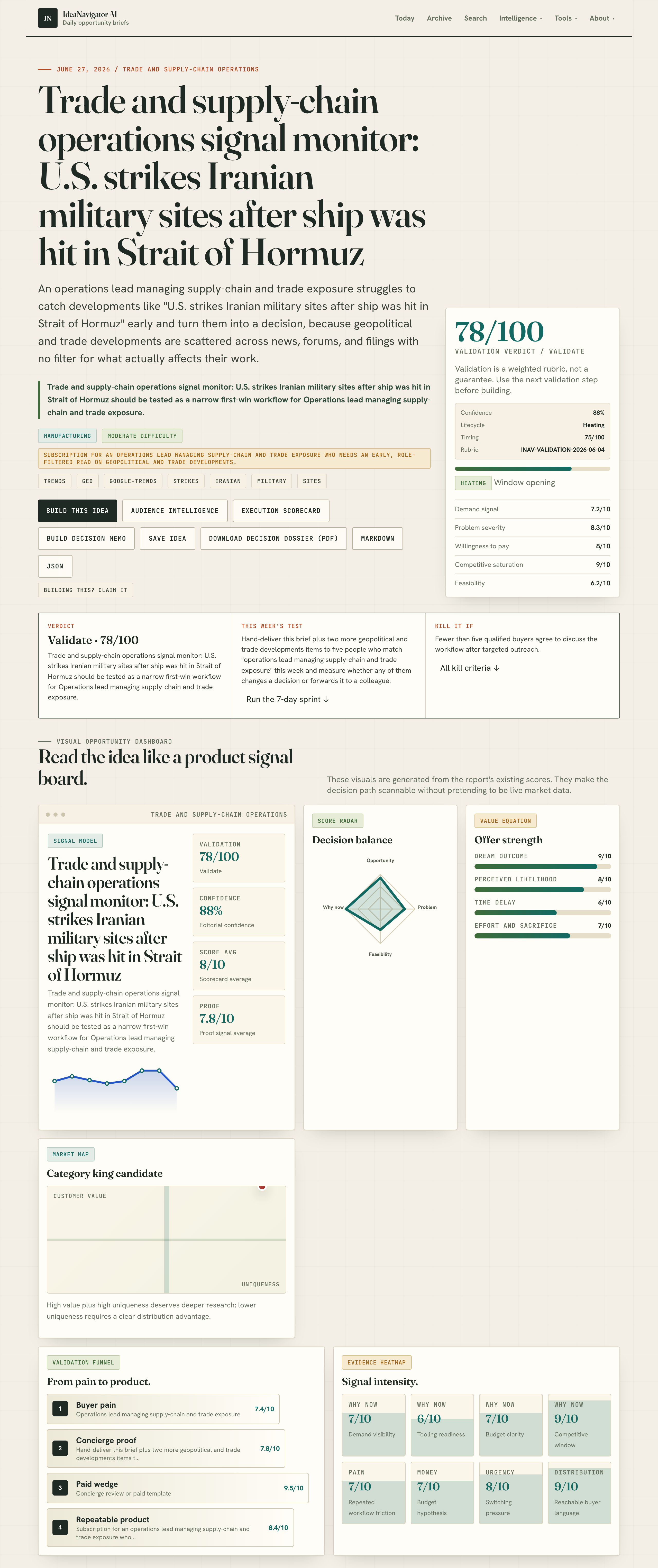
📊 Full opportunity report: Trade and supply-chain operations signal monitor: U.S. strikes Iranian military sites after ship was hit in Strait of Hormuz on IdeaNavigator AI — validation score, market gap, and execution plan.

Get hardware and tech essentials delivered free with Prime
- Fast, free delivery on millions of items
- Prime Video, Amazon Music and more included
- Member-only deals all year
TL;DR
The U.S. has launched strikes against Iranian military sites after a ship was hit in the Strait of Hormuz. The event impacts global trade routes and supply chains, with details still emerging.
The United States has carried out military strikes on Iranian military sites in response to an attack on a commercial vessel in the Strait of Hormuz, according to U.S. officials. This development signals heightened tensions in the region and has immediate implications for global trade and supply chains.
U.S. officials confirmed that military strikes targeted Iranian military installations in the region early today, shortly after a commercial ship was reportedly hit in the Strait of Hormuz. The incident occurred amid ongoing tensions over Iran’s military activities and regional influence. The strike was authorized by U.S. authorities in response to what they described as threats to maritime security and U.S. interests.
Details about the specific locations targeted and the extent of the strikes remain classified or unconfirmed. Iran has not yet issued an official statement regarding the attack or the U.S. response. The incident has sparked concern among international traders and governments about potential escalation and disruption of vital shipping lanes.
Impact on Global Trade and Supply Chains
This escalation could lead to disruptions in the Strait of Hormuz, a critical chokepoint for global oil and goods transportation. The attack and subsequent strikes increase the risk of further military confrontations, which may impact supply chains, insurance costs, and shipping schedules worldwide. For companies managing trade operations, this highlights the importance of monitoring geopolitical developments closely and preparing contingency plans.
geopolitical risk monitoring tools
As an affiliate, we earn on qualifying purchases.
As an affiliate, we earn on qualifying purchases.
Recent Escalations in U.S.-Iran Tensions
Over the past year, tensions between the U.S. and Iran have escalated, driven by Iran’s military activities, sanctions, and regional proxy conflicts. The Strait of Hormuz has been a flashpoint multiple times, with incidents involving oil tankers and military patrols. The current strikes follow a pattern of retaliatory actions and heightened military alertness in the region. The attack on the vessel and the U.S. response are part of ongoing geopolitical dynamics that have kept regional stability fragile.
“The strikes were conducted to neutralize threats against maritime security and protect U.S. interests in the region.”
— U.S. Defense Department spokesperson
supply chain contingency planning software
As an affiliate, we earn on qualifying purchases.
As an affiliate, we earn on qualifying purchases.
Unconfirmed Details and Regional Reactions
It is not yet clear what specific targets were hit, the extent of the damage, or whether further military actions are planned. Iran’s official response remains non-specific, and regional reactions are still emerging, leaving the full scope of escalation uncertain.
maritime security monitoring devices
As an affiliate, we earn on qualifying purchases.
As an affiliate, we earn on qualifying purchases.
Monitoring Developments and Supply Chain Preparedness
Next steps include observing Iran’s response, potential further military actions, and the impact on shipping routes. Companies managing supply chains should assess risk exposure, update contingency plans, and stay informed through real-time geopolitical monitoring tools. Authorities and industry groups are likely to increase alerts and coordinate responses to mitigate disruptions.
shipping route disruption alert systems
As an affiliate, we earn on qualifying purchases.
As an affiliate, we earn on qualifying purchases.
Key Questions
What triggered the U.S. strikes today?
U.S. officials stated the strikes were in response to an attack on a commercial vessel in the Strait of Hormuz and threats perceived from Iranian military targets.
Are there reports of casualties or damage?
There are no confirmed reports of casualties or detailed damage assessments at this time.
Could this lead to broader conflict?
The situation remains fluid, with regional and international actors closely monitoring developments. The potential for escalation exists but is not yet confirmed.
How might this affect global trade routes?
The Strait of Hormuz is a key passage for oil and goods; disruptions could lead to increased shipping costs, delays, and insurance premiums, impacting global supply chains.
What should companies managing supply chains do now?
They should monitor geopolitical updates, assess risks, and prepare contingency plans to mitigate potential disruptions from increased regional tensions.
Source: IdeaNavigator AI
Columbus Day / Indigenous Peoples' Day Picks
long weekend sales
As an affiliate, we earn on qualifying purchases.