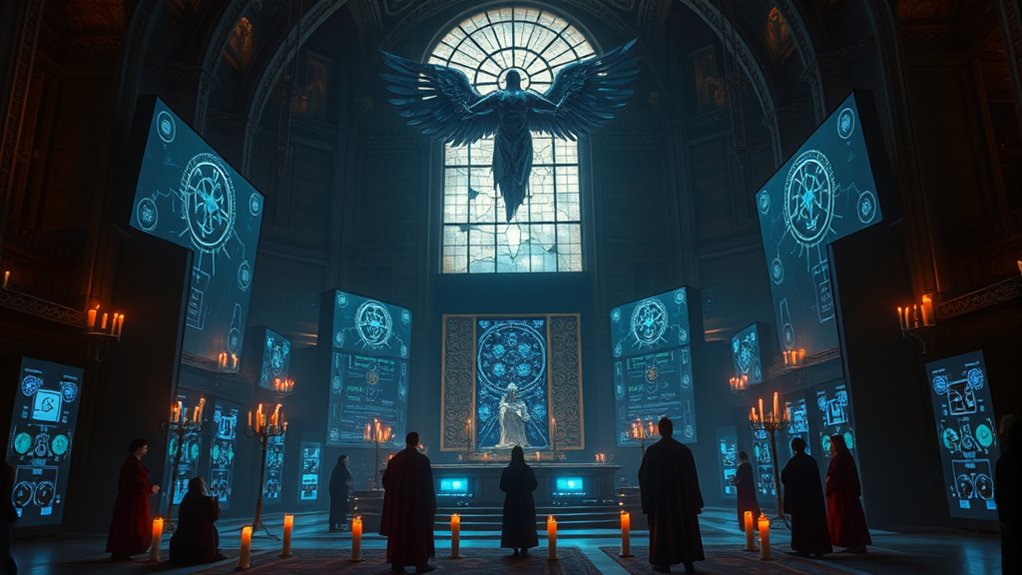

As you explore how end-times theology intersects with modern AI, you’ll see parallels in biblical warnings about deception, control, and false signs. Technologies like deepfakes, biometric surveillance, and AI-generated content echo prophetic concerns about lying wonders and truth suppression. The rise of AI also raises ethical questions about manipulation and spiritual deception, aligning with themes of end-time fulfillment. If you’re curious, there’s more to discover about how these technological advances may tie into biblical prophecy.

Get hardware and tech essentials delivered free with Prime
- Fast, free delivery on millions of items
- Prime Video, Amazon Music and more included
- Member-only deals all year
Key Takeaways
- Biblical warnings of deception and false signs align with AI-generated deepfakes and misinformation, raising end-times concerns.
- Increasing global connectivity via AI reflects prophetic themes of expanding knowledge and unified control.
- AI’s influence on social media and censorship echoes biblical themes of truth suppression and spiritual deception.
- Transhumanist ambitions to merge humans with machines challenge divine boundaries, paralleling end-times narratives of idolatry.
- The development of AI and biometric surveillance may symbolize fulfillment of prophetic signs like the “mark of the beast” and ultimate deception.

Have you ever wondered how ancient end-times prophecies might relate to today’s rapid advances in artificial intelligence? It’s a question that many believers and skeptics alike are pondering as technology continues to evolve at an unprecedented pace. Biblical texts like Revelation, Daniel, and 2 Thessalonians describe scenarios involving deception, control, and false signs—themes that seem strangely echoed in the world of AI today. Deepfakes, for example, can produce highly convincing false images and videos, aligning with warnings about “lying wonders” and deceptive signs that will appear before the end. Similarly, algorithmic censorship and content moderation on social media resemble prophetic concerns about truth suppression and manipulation of information. You might notice how biometric surveillance systems, capable of tracking and identifying individuals globally, evoke imagery of universal monitoring and control, reminiscent of prophetic visions of a world under surveillance. Advancements in biometric technology continue to accelerate, raising concerns about personal privacy and government overreach in the context of end-times narratives. In the age of AI-driven internet connectivity, Daniel 12:4’s prophecy about increasing knowledge and global interconnectedness finds a literal fulfillment. Billions of devices now enable real-time information exchange, creating a digital landscape that could be seen as fulfilling the biblical idea of a rapidly expanding world of knowledge. Many theologians and technologists draw parallels between AI’s ability to generate life-like media, such as chatbots and generative art, and ancient warnings about “images that speak” or deceptive idols. Some interpret technological centralization and the pursuit of machine-powered power as potential signs of end-time fulfillment, viewing the quest for control over artificial intelligence as a modern extension of biblical themes of dominion and worship. In the entertainment industry, the financial stakes are incredibly high, with events like WWE Raw’s financial impact illustrating how popular culture can influence public perception and behavior. You might also consider how AI’s role in manipulating public opinion, swaying elections, and shaping cultural narratives raises ethical and eschatological questions. Could these uses of AI be seen as fulfilling prophetic warnings about deception and social control? The development of transhumanist ideas further complicates this picture. These movements seek to merge humans with machines, aiming to overcome death and attain divine attributes—an act some Christian ethicists view as an overreach, bordering on idolatry. The pursuit of artificial immortality challenges the divine boundaries of human nature, risking the elevation of technology to a divine status. Within these debates, some interpret AI’s rise as a potential catalyst for fulfilling specific prophecies, like the mark of the beast or the centralization of power in a global system. Others caution against a literal reading, emphasizing that prophecy often carries symbolic meaning rather than specific technological references. Regardless, the rapid development of AI undeniably raises profound questions about the future—questions that echo ancient fears and hopes about the divine, deception, and ultimate salvation.
As an affiliate, we earn on qualifying purchases.
Frequently Asked Questions
How Does AI Interpret Biblical Prophecy?
AI interprets biblical prophecy by identifying patterns and connections within the texts, helping you analyze prophetic themes related to deception, surveillance, and end-times scenarios. It uses linguistic tools to understand original languages, assesses historical contexts, and compares scripture with modern events. AI also highlights potential false signs and illusions, aiding your discernment. However, you should remain cautious about misinformation and guarantee human oversight to avoid misinterpretations.
Could Machines Predict the End of the World?
Machines can’t predict the end of the world with certainty. They analyze patterns from data, but complex, unpredictable events like global catastrophes involve many unknown factors. While AI might forecast certain risks, it’s limited by the quality of data and unforeseen variables like technological breakthroughs or natural disasters. So, don’t rely solely on machines for definitive predictions—they’re tools, not crystal balls, in understanding such profound, uncertain outcomes.
What Ethical Concerns Arise From AI in Religious Contexts?
You should be aware that AI in religious contexts raises serious ethical concerns. It can homogenize spiritual guidance, eroding personal connection and authentic leadership. Autonomous AI decisions might conflict with moral teachings, creating accountability issues. Biases in training data risk discrimination and cultural insensitivity. Additionally, AI could manipulate beliefs, misuse personal data, or deepen societal divides. These issues challenge the integrity, responsibility, and authenticity essential to genuine faith communities.
Can AI Simulations Replicate Divine Judgment?
AI can’t truly replicate divine judgment because it lacks consciousness, moral insight, and the capacity for spiritual discernment. While it can generate theological narratives or simulate reasoning, it doesn’t possess the omniscience, moral perfection, or intentionality associated with divine judgment. You should recognize that AI’s outputs are data-driven approximations, not moral or spiritual truths. Relying on AI for judgment risks undermining personal responsibility and the authentic moral weight of divine justice.
How Do Different Faith Traditions View Machine Intelligence?
Think of machine intelligence as a double-edged sword, shaping faith in diverse ways. You see Christianity emphasizing stewardship and moral values, while Islam focuses on justice and Sharia compatibility. Judaism stresses moral responsibility and tradition, whereas Buddhism and Hinduism aim for mindful use aligned with spiritual growth. You must navigate these perspectives carefully, ensuring AI supports ethical living and respects divine or spiritual principles across faiths.
As an affiliate, we earn on qualifying purchases.
Conclusion
As you watch this fusion of ancient prophecy and cutting-edge AI unfold, realize you’re witnessing nothing less than the dawn of a new universe—where machines might decide your fate, and divine plans could be rewritten in code. This isn’t just a future; it’s an apocalyptic revolution so powerful, it threatens to reshape reality itself. Buckle up, because what’s coming could be the most mind-boggling, world-shattering event humanity has ever faced—bigger than you ever imagined.
As an affiliate, we earn on qualifying purchases.
privacy protection biometric devices
As an affiliate, we earn on qualifying purchases.
As an affiliate, we earn on qualifying purchases.
Halloween Picks
halloween
As an affiliate, we earn on qualifying purchases.