
📊 Full opportunity report: Build vs Buy a Prebuilt AI Workstation on ThorstenMeyerAI.com — validation score, market gap, and execution plan.
TL;DR
In 2026, prebuilt AI workstations often match or beat DIY costs due to supply chain issues. They offer faster deployment and reliable support, but building provides maximum customization. The choice depends on your priorities for speed, control, and long-term ownership.
In 2026, prebuilt AI workstations are often more cost-effective and faster to deploy than DIY builds due to recent supply chain disruptions and component shortages, making the choice more nuanced than ever.
Recent data shows that global chip shortages and price spikes have increased the cost of building custom AI workstations, with DIY setups now often costing more than prebuilt systems from vendors like Lambda and Puget. These prebuilt systems arrive ready to run, with validated thermals, warranties, and pre-installed software, reducing setup time and operational risk. While building offers maximum control over hardware and security, it requires significant technical expertise, time, and ongoing management. Deployment timelines have shifted: prebuilt systems typically arrive within 1–2 weeks, whereas DIY builds can take a month or more, affecting project timelines and competitiveness. Cost comparisons reveal that bulk purchasing and validation processes have allowed prebuilt vendors to offer competitive or even lower prices than DIY options, despite the initial perception that building saves money.
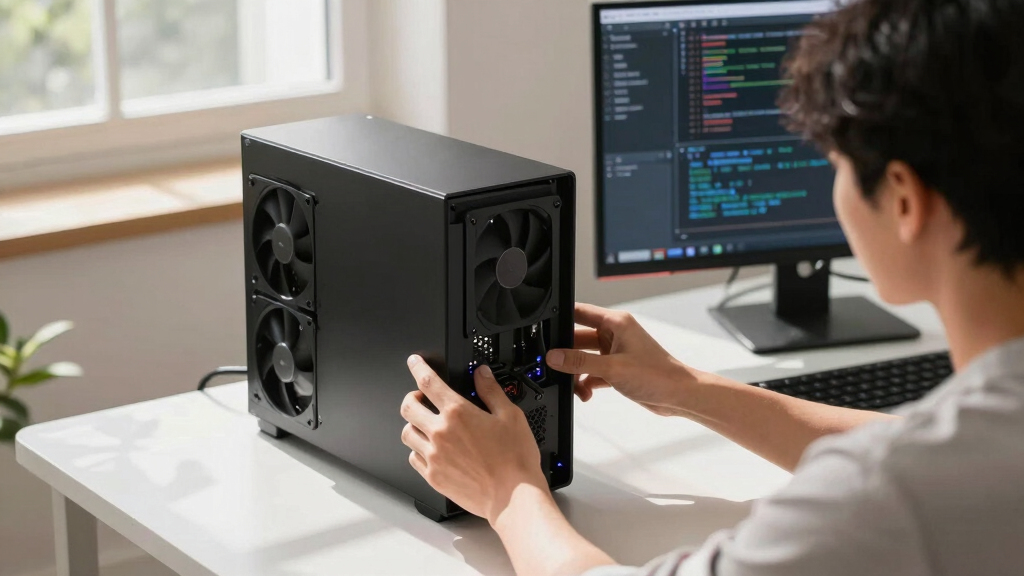
Build vs buy
an AI workstation.
The real question behind this whole series: do you pull the five heat-and-noise levers yourself, or buy a prebuilt where the vendor pulled them for you? And in 2026, the old “building is cheaper” rule has broken. Match your situation in Part 3.
Why the Build vs Buy Choice Is Critical in 2026
This decision impacts operational efficiency, total ownership costs, and project timelines. For organizations needing rapid deployment and reliable support, prebuilt systems reduce risk and downtime. Conversely, those requiring tailored hardware and security controls may find building more suitable, despite higher initial effort. The evolving market conditions mean that choosing the right approach can influence long-term competitiveness, especially as supply chain issues persist and component costs fluctuate.As an affiliate, we earn on qualifying purchases.
Market Shifts and Supply Chain Challenges in 2026
Historically, building a custom AI workstation was considered cheaper, but recent global chip shortages and price spikes have increased component costs significantly. Vendors like Lambda and Puget now offer prebuilt systems with validated hardware, optimized cooling, and support services, often at prices comparable to or lower than DIY builds. These developments have shifted the traditional build vs buy calculus, emphasizing deployment speed and operational risk reduction. The landscape reflects a broader trend of supply chain disruptions affecting hardware availability and pricing, making prebuilt solutions more attractive for many users."Our prebuilt systems are tested for thermal performance and come with support plans, saving customers valuable setup and troubleshooting time."
— John Smith, CTO at Lambda
As an affiliate, we earn on qualifying purchases.
Remaining Questions About Long-Term Upgrades and Support
It is not yet clear how ongoing supply chain disruptions will impact future component availability and pricing. Additionally, the long-term upgradeability of prebuilt systems compared to custom builds remains uncertain, especially as hardware evolves rapidly and support contracts may limit hardware modifications.professional AI workstation with warranty
As an affiliate, we earn on qualifying purchases.
As an affiliate, we earn on qualifying purchases.
Future Trends in AI Workstation Procurement
Expect continued market volatility with potential stabilization of component prices. Vendors may expand hybrid solutions combining prebuilt reliability with customizable options. Organizations should monitor supply chain developments and evaluate total cost of ownership, including hidden costs like maintenance and upgrades, to make informed decisions. Further market data and product innovations are anticipated in the coming months, shaping the build vs buy landscape.As an affiliate, we earn on qualifying purchases.
Key Questions
Are prebuilt AI workstations as customizable as building my own?
Prebuilt systems offer limited customization compared to DIY builds, but many vendors now provide options for upgrades and configurations. Full customization still typically requires building from scratch.
Is it more cost-effective to buy or build in 2026?
Due to supply chain issues and component price spikes, prebuilt systems often match or beat DIY costs when considering total ownership, support, and deployment time. However, specific needs may vary.
How long does it take to deploy a prebuilt AI workstation?
Most prebuilt systems are delivered within 1–2 weeks, ready to run, whereas DIY builds can take a month or more depending on sourcing and assembly.
What are the hidden costs of building my own AI workstation?
Hidden costs include engineering time, troubleshooting, ongoing maintenance, upgrades, and potential security or compliance expenses. These can add significantly to the total cost of ownership.
Can I upgrade prebuilt AI workstations easily later?
Upgradeability varies by vendor and model. While some prebuilt systems support hardware upgrades, others may have limited options, making future modifications more complex.
Source: ThorstenMeyerAI.com