
📊 Full opportunity report: Build vs Buy a Prebuilt AI Workstation on ThorstenMeyerAI.com — validation score, market gap, and execution plan.

Get hardware and tech essentials delivered free with Prime
- Fast, free delivery on millions of items
- Prime Video, Amazon Music and more included
- Member-only deals all year
TL;DR
The traditional cost advantage of building a custom AI workstation has eroded in 2026 due to supply shortages and rising component prices. Buyers now need to weigh cost, time, thermal management, and support when choosing between building or buying prebuilt.
In 2026, the cost difference between building a custom AI workstation and purchasing a prebuilt system has largely disappeared, driven by component shortages and rising prices. This shift is reshaping the traditional decision-making process for AI professionals and enthusiasts, who now must consider factors beyond just cost.
For years, building a personal AI workstation was considered the more economical choice, primarily because consumers could source individual components like GPUs, RAM, and SSDs at lower prices than prebuilt systems. However, in 2026, global supply chain disruptions and high demand for AI hardware have caused prices for critical components—such as DDR5 RAM, high-end GPUs, and SSDs—to spike sharply. As a result, a DIY build that previously cost under $1,000 now often exceeds $1,250 before adding an operating system, making it comparable or even more expensive than prebuilt options.
Meanwhile, large prebuilt manufacturers like Lambda, Puget Systems, and BIZON have secured bulk purchasing agreements and implemented rigorous thermal validation and testing, allowing them to offer systems at prices that are difficult for individual builders to match today. These vendors also provide validated thermals, warranties, and support, often including water-cooling solutions that operate more quietly and efficiently under sustained loads. Consequently, the decision is shifting from a simple cost comparison to evaluating factors such as time savings, thermal management, warranty, and upgradeability.
Build vs buy
an AI workstation.
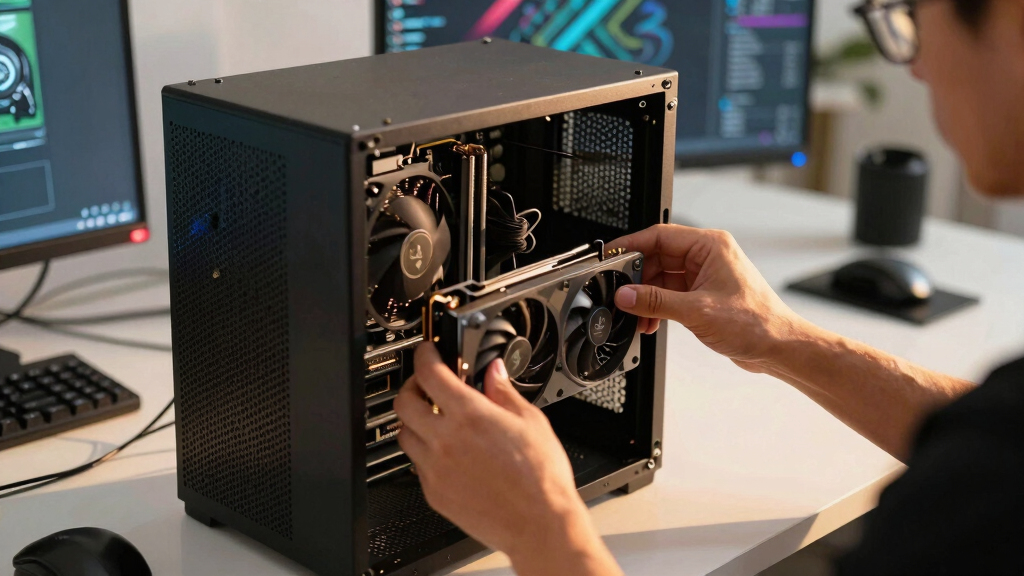
The real question behind this whole series: do you pull the five heat-and-noise levers yourself, or buy a prebuilt where the vendor pulled them for you? And in 2026, the old “building is cheaper” rule has broken. Match your situation in Part 3.
Implications for AI Enthusiasts and Professionals
This shift affects how AI practitioners and hobbyists choose their hardware. With the cost gap narrowing, the decision now hinges more on time, thermal performance, support, and control. Prebuilt systems reduce setup complexity and risk, offering validated thermals and warranties, which can be crucial for professional workloads. Conversely, DIY builds provide customization and learning opportunities but require more expertise and time. The changing market dynamics mean consumers must carefully evaluate their priorities and budget in 2026, as the traditional rule of cheaper DIY builds no longer universally applies.As an affiliate, we earn on qualifying purchases.
2026 Market Dynamics and Component Shortages
Historically, building a GPU-intensive AI workstation was cheaper because individual components could be sourced at lower prices, and builders could optimize thermal and noise performance through manual tuning. However, since late 2023, supply chain disruptions, increased demand from data centers, and the AI boom have caused a significant rise in component prices. DDR5 RAM, high-end GPUs like the RTX 4090 and A100, and SSDs have all experienced price spikes, with shortages further limiting availability. Large vendors, anticipating these shortages, bought components in bulk early, allowing them to offer ready-made systems at competitive prices. This market evolution has flattened or reversed the traditional cost advantage of DIY over prebuilt systems, prompting a reassessment of the build-vs-buy decision.
"In 2026, the cost of building your own AI workstation is often on par or even higher than buying prebuilt, thanks to component shortages and price spikes. Buyers need to consider more than just price now."
— Thorsten Meyer, AI hardware specialist
As an affiliate, we earn on qualifying purchases.
Remaining Uncertainties in Market Trends
It is not yet clear whether component prices will stabilize or continue to rise in the coming months, which could alter the build vs buy decision further. Additionally, the availability of high-end GPUs and other critical parts remains unpredictable, and future technological developments or supply chain improvements could shift the balance between build and buy options.
As an affiliate, we earn on qualifying purchases.
Upcoming Market Developments and Consumer Choices
Consumers and professionals should monitor ongoing supply chain developments and pricing trends throughout 2026. Vendors may introduce new models or pricing strategies, and component availability could improve or worsen. It is advisable to compare current prices carefully and consider support and thermal validation when choosing between building and buying. Future updates are expected as the market stabilizes or shifts again.
professional AI workstation warranty
As an affiliate, we earn on qualifying purchases.
As an affiliate, we earn on qualifying purchases.
Key Questions
Is building a cheaper option than buying in 2026?
Not necessarily. Due to component shortages and price increases, a DIY build may cost as much or more than a prebuilt system, making the decision more about convenience, support, and control than just price.
What are the advantages of buying a prebuilt AI workstation?
Prebuilts offer plug-and-play convenience, validated thermals, warranties, and expert support. They are especially beneficial for users who want reliable performance without the time investment of building and tuning their own system.
Can I upgrade a prebuilt system easily in 2026?
It depends on the design and warranty terms. Many high-end prebuilt systems are upgradeable, but some components may be proprietary or limited by manufacturer design. Always check upgrade policies before purchasing.
Is it worth investing time in building my own AI workstation now?
If you enjoy hardware tuning, want maximum control, and have the time, building can still be rewarding. However, for most users, the cost and effort may outweigh the benefits given current market conditions.
Source: ThorstenMeyerAI.com
Halloween Picks
halloween
As an affiliate, we earn on qualifying purchases.