A standing desk alone won’t improve your workflow if your setup isn’t ergonomic. You need to adjust the desk height so your elbows are at a 90° angle, and the monitor should be at eye level to prevent neck strain. Supporting accessories like monitor arms or keyboard trays can make a big difference. Properly setting up your workspace is key to comfort and productivity. Keep exploring to discover how to optimize your standing desk for better results.

Get hardware and tech essentials delivered free — and shop member deals
- Fast, free delivery on millions of items
- Access to Prime Big Deal Days deals on October 6–7
- Prime Video, Amazon Music and more included
Key Takeaways
- Proper desk height and monitor positioning are essential for comfort and productivity, not just the presence of a standing desk.
- Ergonomic accessories support correct posture, preventing discomfort that undermines workflow improvements.
- Transition strategies and gradual adjustments help prevent fatigue and ensure sustainable standing desk use.
- Workspace layout should minimize unnecessary movements and promote efficient workflow, regardless of desk type.
- Correct ergonomic setup ensures standing desks enhance productivity rather than cause new discomforts.
Are you ready to transform your workspace for better comfort and productivity? If you’ve recently invested in a standing desk, you might think that simply having the right equipment is enough. But the truth is, a standing desk won’t automatically improve your workflow until you set it up properly. It’s all about making ergonomic adjustments that support your body’s natural alignment, which is where ergonomic accessories and desk height adjustment come into play. Without these, you risk creating discomfort or even injury, defeating the purpose of switching to a more dynamic work style.
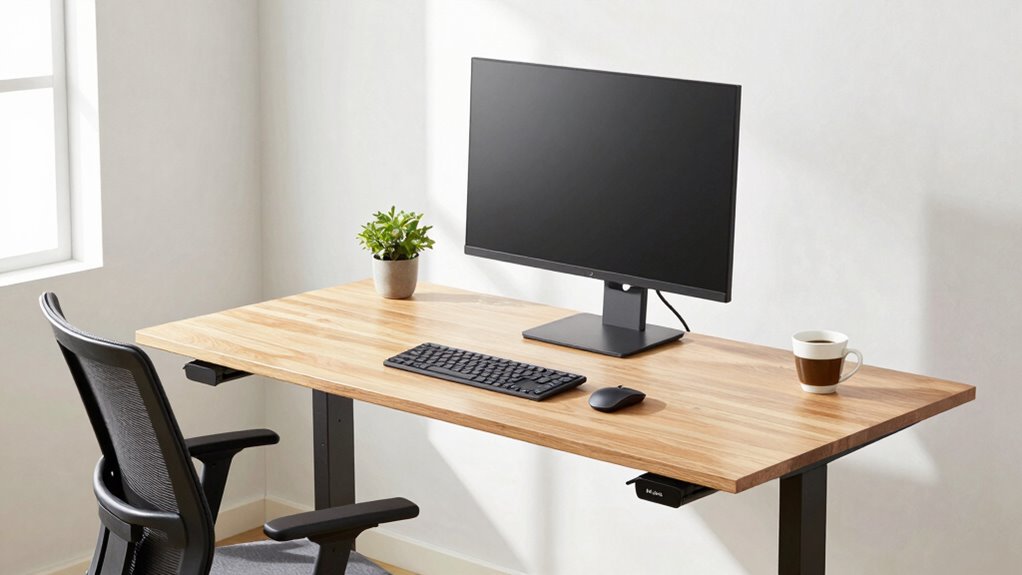
The first step is understanding that your desk needs to be at the correct height. When you stand, your elbows should be bent at roughly 90 degrees, with your forearms parallel to the ground. Your monitor should be at eye level, so you don’t strain your neck or eyes. If your desk isn’t adjustable, you might need a monitor stand or riser to bring your screen to the right height. With proper desk height adjustment, you create a workspace that promotes good posture, reduces fatigue, and prevents long-term musculoskeletal issues. This isn’t about just raising or lowering the desk randomly; it’s about fine-tuning it to fit your body’s specific needs. Paying attention to ergonomic principles can help you design a workspace that supports your health and productivity in the long run. Incorporating proper workspace setup can also help you identify and correct misalignments early on, preventing potential discomfort. Additionally, understanding how to optimize your workspace layout can further enhance comfort and efficiency.
Along with desk height adjustment, ergonomic accessories are essential. An ergonomic chair can complement your standing desk by providing support during seated periods. An anti-fatigue mat can make standing more comfortable by reducing pressure on your feet and legs. Adjustable monitor arms or stands allow you to position screens exactly where your eyes naturally fall, preventing neck strain. Keyboard trays or stands ensure your wrists stay in a neutral position, decreasing the risk of repetitive strain injuries. Proper workspace design also involves considering the overall arrangement to minimize unnecessary movements and optimize comfort. These accessories aren’t just add-ons—they’re critical components that help you maintain proper posture and comfort throughout the day. Incorporating ergonomic accessories into your workspace can significantly enhance your overall comfort and durability.
Additionally, understanding the importance of ergonomic principles can help you design a workspace that supports your health and productivity in the long run. You also need to pay attention to the changeover periods. Switching from sitting to standing without proper setup can lead to discomfort or fatigue. Incorporate gradual changes and listen to your body. Keep your movements intentional: adjust your desk height gradually, use ergonomic accessories to support your posture, and take regular breaks to stretch and reset. Remember, a standing desk is a tool, not a magic fix. Its effectiveness depends on how well you set it up to match your body’s needs and your workflow. When your workspace is aligned with ergonomic principles, standing becomes a sustainable, productive practice rather than a source of discomfort.
As an affiliate, we earn on qualifying purchases.
Frequently Asked Questions
How Do I Adjust My Standing Desk for Different Tasks?
To adjust your standing desk for different tasks, start by changing the desk height to maintain an ergonomic posture. For tasks like typing, keep your elbows at a 90-degree angle and your monitor at eye level. When reading or brainstorming, raise the desk slightly to reduce strain. Always guarantee your wrists are straight and shoulders relaxed, and make quick desk height adjustments to optimize comfort and productivity for each activity.
What Accessories Are Essential for an Effective Standing Desk Setup?
You need ergonomic accessories like an anti-fatigue mat, adjustable monitor arms, and a keyboard tray to guarantee comfort and proper posture. Don’t forget desk organization tools—cable clips, storage trays, and monitor stands—that keep your workspace tidy and functional. These essentials aren’t just accessories; they’re the secret to transforming your standing desk from a setup into a productivity powerhouse. Without them, even the best desk falls short.
How Long Should I Stand Versus Sit During the Day?
You should aim to stand for about 30 minutes to an hour every 2 hours, balancing it with sitting intervals of 20 to 30 minutes. Keep an ergonomic posture when standing, with your monitor at eye level and your wrists straight. Regularly alternating between sitting and standing helps prevent fatigue and strain, promoting better comfort and productivity throughout your day.
Can Standing Desks Help Reduce Back Pain Permanently?
Studies show that using a standing desk can reduce back pain by up to 32%, but only if you avoid ergonomic myths and health misconceptions. Standing alone isn’t a magic fix; proper setup matters. If your desk isn’t adjusted correctly, you might worsen your discomfort. To truly benefit, combine standing with good posture, movement, and ergonomic accessories. That way, you’re more likely to see lasting relief from back pain.
What Are Common Mistakes to Avoid When Setting up a Standing Desk?
When setting up your standing desk, avoid common mistakes like improper ergonomic cushion placement and poor footrest positioning. Make sure your ergonomic cushions support your lower back comfortably, and your footrest is at a height that keeps your hips and knees aligned. Don’t forget to adjust your monitor to eye level and keep your wrists straight. These adjustments promote better posture, reduce strain, and help you stay comfortable throughout your workday.
As an affiliate, we earn on qualifying purchases.
Conclusion
Remember, a poorly set-up standing desk is like trying to steer a ship with a blindfold—nothing will flow smoothly. Your workflow won’t just improve; it’ll soar to heights you never imagined, transforming your workspace into a powerhouse of productivity. When your setup actually makes sense, you’ll wonder how you ever worked any other way. So don’t settle for a desk that’s just standing there—make it a launchpad for your success!
As an affiliate, we earn on qualifying purchases.
As an affiliate, we earn on qualifying purchases.
Halloween Picks
halloween
As an affiliate, we earn on qualifying purchases.