
📊 Full opportunity report: What Is A Vision-Model Kitchen Inspector And Why It Matters on IdeaNavigator AI — validation score, market gap, and execution plan.

Get hardware and tech essentials delivered free with Prime
- Fast, free delivery on millions of items
- Prime Video, Amazon Music and more included
- Member-only deals all year
TL;DR
A pilot program tests an AI-driven vision-model kitchen inspector designed to verify food safety during morning walk-throughs. It aims to replace subjective checklists with verifiable, timestamped data, potentially improving compliance and accountability in restaurant groups.
An AI-powered vision-model kitchen inspector is being tested as a workflow tool for restaurant operations, aiming to turn routine morning walk-throughs into verifiable safety inspections. This development could significantly improve compliance accuracy and accountability for multi-unit restaurant groups, addressing longstanding issues with subjective checklists and unverified reports.
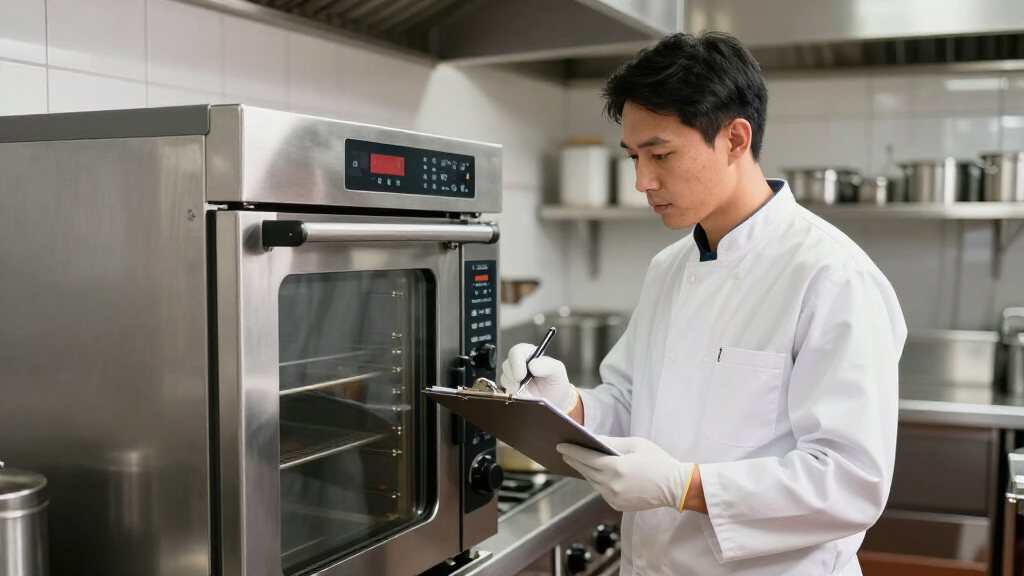
The proposed system involves managers photographing key areas such as prep stations, walk-in refrigerators, handwash sinks, and storage during their morning inspections. A vision model then analyzes these photos to identify violations, assigning severity ratings and generating timestamped reports for each location. This process aims to replace traditional tick-box checklists, which often record that an inspection was done without verifying actual conditions.
According to sources from IdeaNavigator AI, the pilot has been running for two weeks across five restaurant locations. The goal is to compare the AI-flagged violations against findings from a hired health-inspection consultant, to validate the model’s accuracy and reliability. The system is designed to produce a group-wide dashboard, enabling managers to track trends and improve overall food safety compliance.
Potential Impact on Food Safety Compliance
This innovation could transform how restaurant groups conduct and document safety inspections. By providing objective, timestamped evidence of conditions, the system may reduce human error, prevent overlooked violations, and enhance accountability. If successful, it could lead to widespread adoption of AI-driven verification tools in food safety operations, potentially reducing violations and improving public health outcomes.
As an affiliate, we earn on qualifying purchases.
Background and Development of AI in Food Safety Inspections
Traditional restaurant inspections rely heavily on subjective checklists completed by managers or inspectors, which may not accurately reflect actual conditions. Recent advances in AI, particularly vision models capable of analyzing photos for safety violations, have opened new possibilities for automation in this field. The current pilot represents one of the first efforts to test such technology in real-world restaurant settings, aiming to turn routine walk-throughs into data-driven, verifiable processes.
Previous efforts in food safety automation have focused on digital checklists or sensor-based solutions, but these often lack the visual verification component. The new approach leverages existing smartphones and cameras, making it a low-cost, scalable solution for multi-unit operators seeking to improve compliance and reduce liability.
“The vision-model kitchen inspector can reliably flag violations in photos, turning subjective checks into objective, verifiable data.”
— an anonymous researcher
As an affiliate, we earn on qualifying purchases.
Unverified Accuracy and Broader Adoption Challenges
It is not yet confirmed how accurately the vision model will flag violations compared to human inspectors. The pilot is ongoing, and results are still being analyzed. Additionally, questions remain about how quickly the system can be scaled across larger restaurant groups and integrated into existing workflows.
As an affiliate, we earn on qualifying purchases.
Next Steps in Validation and Deployment
The current pilot will run for several more weeks, with results compared against professional health inspections. If the AI system demonstrates high accuracy, developers plan to refine the model and expand testing to more locations. Widespread adoption may follow if validation confirms reliability, with subscription-based software offering a scalable solution for restaurant groups seeking enhanced food safety verification.
As an affiliate, we earn on qualifying purchases.
Key Questions
How does the vision-model kitchen inspector work?
Managers photograph key areas during their morning checks, and the AI analyzes these images to identify violations, flag severity levels, and generate timestamped reports.
What types of violations can the system detect?
The system is designed to flag issues like uncovered containers, propped cooler doors, missing date labels, and other common food safety violations visible in photos.
Will this replace human inspectors entirely?
Currently, the system is intended as a verification tool to supplement human inspections, not replace them. Validation is ongoing to determine its accuracy.
When will this technology be available for broader use?
If validation proves successful, developers plan to expand testing over the coming months, with potential commercial rollout within the next year.
What are the main benefits of using AI for kitchen inspections?
The technology offers objective, timestamped, and traceable data, reducing human error and increasing accountability in food safety compliance.
Source: IdeaNavigator AI
Halloween Picks
halloween
As an affiliate, we earn on qualifying purchases.