
Supercomputers are powerful tools that process massive amounts of data at incredible speeds, helping you make breakthroughs in science, technology, and industry. They are used to accelerate research in pharmaceuticals, improve climate predictions, and support advanced artificial intelligence and healthcare. In space exploration, they simulate cosmic phenomena and assist in designing spacecraft. Their capabilities also enhance national security and drive innovation across various fields. Keep exploring to uncover more ways these digital giants shape our world.
Key Takeaways
- Process vast data quickly, enabling advanced research and real-time analytics.
- Support climate modeling, weather forecasting, and environmental simulations.
- Power artificial intelligence, machine learning, and healthcare applications.
- Simulate cosmic phenomena and assist space exploration efforts.
- Aid national security, defense strategies, and scientific innovations.

Have you ever wondered how supercomputers impact our daily lives? These powerful machines process enormous amounts of data at lightning speed, making them essential for a variety of complex tasks. One of the most exciting developments in this field is quantum computing, which promises to revolutionize how we solve problems that are currently impossible for classical computers. Supercomputers equipped with quantum algorithms can simulate molecular interactions with unprecedented accuracy, accelerating research in pharmaceuticals and materials science. This leap forward not only shortens development times but also reduces costs, ultimately benefiting consumers by bringing innovations to market faster. Additionally, supercomputers play a crucial role in environmental modeling, where they help us understand and predict climate patterns, natural disasters, and ecological changes. By simulating Earth’s systems with high precision, they enable scientists to forecast weather more accurately, plan for extreme events, and develop strategies to mitigate climate change. You might not realize it, but every time you check the weather forecast or hear about climate research, supercomputers are likely behind the scenes, crunching vast datasets to produce those insights. Moreover, advancements in mental health related technologies are increasingly relying on supercomputing power to analyze data and develop new approaches for treatment.
These machines are also instrumental in advancing artificial intelligence. They train deep learning models that power voice assistants, recommendation systems, and autonomous vehicles. The ability to process large datasets rapidly allows AI systems to learn from diverse sources, becoming more accurate and efficient over time. Supercomputers also support national security efforts by analyzing intelligence data and running simulations for defense strategies. Their capacity to handle complex calculations quickly makes them indispensable for governments and organizations seeking to stay ahead in technological and strategic domains. Meanwhile, in healthcare, supercomputers help model the spread of diseases, develop personalized medicine, and analyze genetic information. This accelerates medical research and improves treatment options, ultimately saving lives.
In the domain of space exploration, supercomputers simulate cosmic phenomena, analyze astronomical data, and assist in designing spacecraft. Their computational power enables scientists to explore the universe’s mysteries more deeply than ever before. As you can see, supercomputers are integral to advancing science, technology, and societal well-being. They serve as the backbone for innovations in quantum computing and environmental modeling, shaping a future where complex problems become more manageable. Whether it’s predicting climate change, developing new medicines, or exploring outer space, these machines continue to push the boundaries of what’s possible, impacting your life in ways you might not always see but certainly feel.
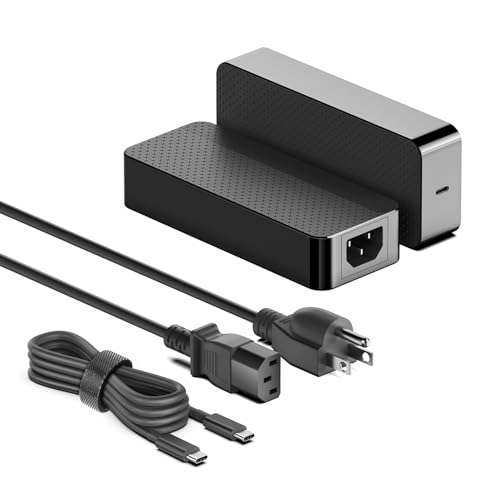
HKY 240W USB C Power Adapter 48V 5A /36V 5A GaN-Based Ultra Compact PD3.1 Power Supply with Detachable USB C Cable for AI Desktop Supercomputer Gaming Laptops PC eBikes Robots Workstation and More
- High Power Output: 240W USB-C Power Delivery for fast charging
- Versatile Voltage Support: Supports 5V to 48V for various devices
- Global Compatibility: Universal AC input 90-264V
As an affiliate, we earn on qualifying purchases.
As an affiliate, we earn on qualifying purchases.
Frequently Asked Questions
How Do Supercomputers Differ From Regular Computers?
Supercomputers differ from regular computers by their incredible processing power, allowing you to handle complex tasks like quantum computing and artificial intelligence. They use thousands of processors working together, unlike standard computers. This enables you to run simulations, analyze vast data sets, and solve problems that would take regular computers years. Their advanced architecture makes them essential for scientific research, weather forecasting, and developing new technologies.
What Industries Benefit Most From Supercomputing Technology?
You benefit most from supercomputing technology in industries like healthcare, finance, and aerospace. These sectors leverage quantum computing and AI integration to analyze vast data sets quickly, optimize complex processes, and develop new innovations. Supercomputers enable breakthroughs in drug discovery, weather forecasting, and financial modeling, giving you a competitive edge. Their power accelerates research and decision-making, making them indispensable tools across these high-impact industries.
Are Supercomputers Accessible to Small Organizations?
Supercomputers are generally not accessible to small organizations due to high cost barriers and limited software accessibility. You might find leasing options or cloud-based supercomputing services helpful, but owning one remains expensive. Smaller organizations often rely on shared resources or cloud platforms, which provide powerful computing capabilities without the hefty investment. This way, you can access supercomputing power without the steep costs, making advanced computation more attainable.
How Energy-Efficient Are Modern Supercomputers?
Imagine a supercomputer as a powerful engine fueled by green technology, aiming for harmony with the environment. Modern supercomputers are increasingly energy-efficient, thanks to innovations reducing energy consumption while maintaining peak performance. They use advanced cooling systems and smarter algorithms to cut waste. While they still consume significant power, ongoing advancements aim to make these technological giants more sustainable, ensuring they serve humanity without draining the planet’s resources.
What Are the Future Advancements Expected in Supercomputing?
You can expect future supercomputers to feature quantum integration, massively boosting processing power for complex calculations. AI optimization will make them smarter and more efficient, enabling quicker problem-solving across fields like climate modeling and drug discovery. These advancements will lead to faster, more energy-efficient systems that push the boundaries of technology, helping you tackle today’s most pressing challenges with unprecedented speed and precision.

Introducing Microsoft Quantum Computing for Developers: Using the Quantum Development Kit and Q#
As an affiliate, we earn on qualifying purchases.
As an affiliate, we earn on qualifying purchases.
Conclusion
As you explore the world of supercomputers, you’ll see how they quietly support groundbreaking discoveries and solve complex problems behind the scenes. Their incredible power gently guides advancements in medicine, climate science, and technology, shaping a better future without fanfare. By understanding their subtle influence, you’ll appreciate how these silent giants help pave the way for progress, making the impossible seem just within reach. In this way, supercomputers quietly steer our world toward brighter horizons.
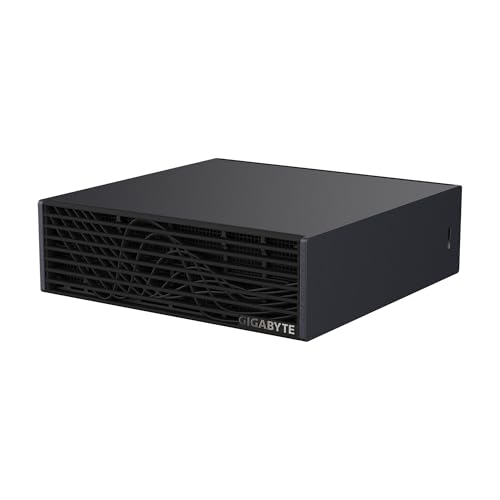
GIGABYTE AI TOP Atom Personal AI Supercomputer, Arm Cortex-X295 + Cortex A725, NVIDIA® Blackwell Architecture, 128GB LPDDR5X, 4TB PCIe 5.0 NVMe SSD, NVIDIA DGX™ OS, Black
- AI Performance: 1 petaFLOP AI performance with 128GB memory
- Advanced AI Architecture: NVIDIA GB10 Grace Blackwell Superchip and 20-Core Arm CPU
- Enhanced AI Utility: Real-time monitoring and memory offloading for AI training
As an affiliate, we earn on qualifying purchases.
As an affiliate, we earn on qualifying purchases.

As an affiliate, we earn on qualifying purchases.