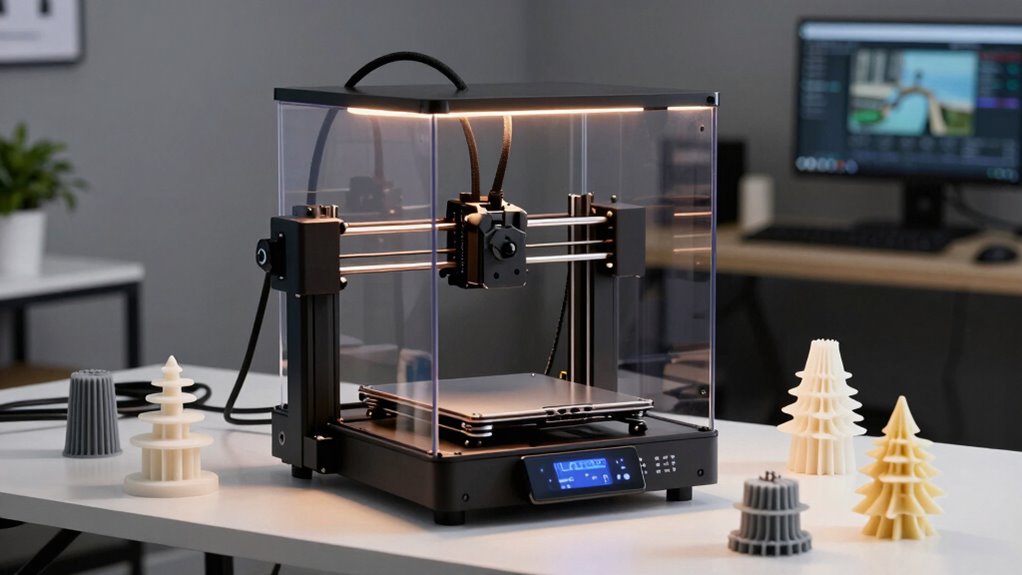

As a small business, you can use a 3D printer more effectively than hobbyists by investing in professional-grade equipment, optimizing workflows, and carefully choosing materials for durability and quality. You can produce customized, high-precision products quickly, scale your capabilities, and reduce waste with efficient design and scheduling. Staying updated on industry trends and maintaining your printer guarantees consistent results. If you keep exploring, you’ll discover how to maximize your 3D printing potential even further.

Get hardware and tech essentials delivered free with Prime
- Fast, free delivery on millions of items
- Prime Video, Amazon Music and more included
- Member-only deals all year
Key Takeaways
- Small businesses leverage 3D printers for scalable, consistent production of customized products, unlike hobbyists who focus on one-off projects.
- They utilize advanced materials and higher-quality equipment to ensure durability and professional-grade results.
- Businesses optimize workflows with calibration, maintenance, and efficient design to maximize productivity and reduce waste.
- They strategically manage resources and production schedules to meet demand and minimize costs effectively.
- Small businesses incorporate innovative features like rapid prototyping and AR integration to stay competitive and responsive to market needs.
professional 3D printer for small business
As an affiliate, we earn on qualifying purchases.
As an affiliate, we earn on qualifying purchases.
What Are the Benefits of 3D Printing for Small Businesses?
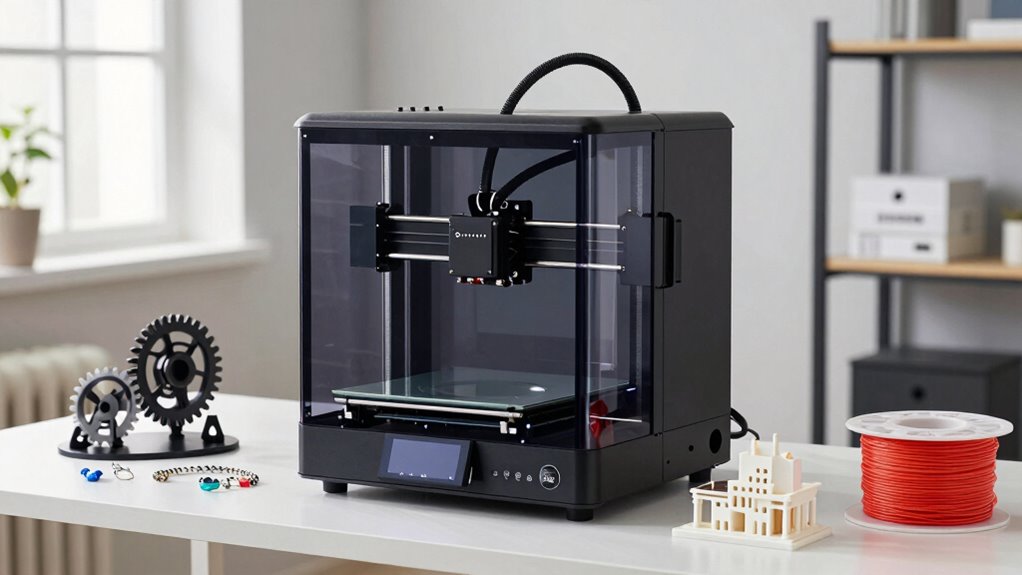
3D printing offers small businesses a powerful way to cut costs and accelerate product development. It also opens new doors for innovative marketing by creating unique, customized promotional items that captivate your audience. When you use 3D printing, you can craft prototypes quickly, reducing the time from concept to market. This rapid turnaround keeps your business agile and responsive to customer needs. Plus, 3D printed products foster better customer engagement—they allow you to offer personalized items that stand out. By showcasing your ability to produce custom designs, you demonstrate innovation and commitment to your clients. These advantages give your small business a competitive edge, making it easier to attract attention, build loyalty, and grow more efficiently.
high precision 3D printer for prototyping
As an affiliate, we earn on qualifying purchases.
As an affiliate, we earn on qualifying purchases.
A Beginner’s Guide to 3D Printing for Small Business Owners
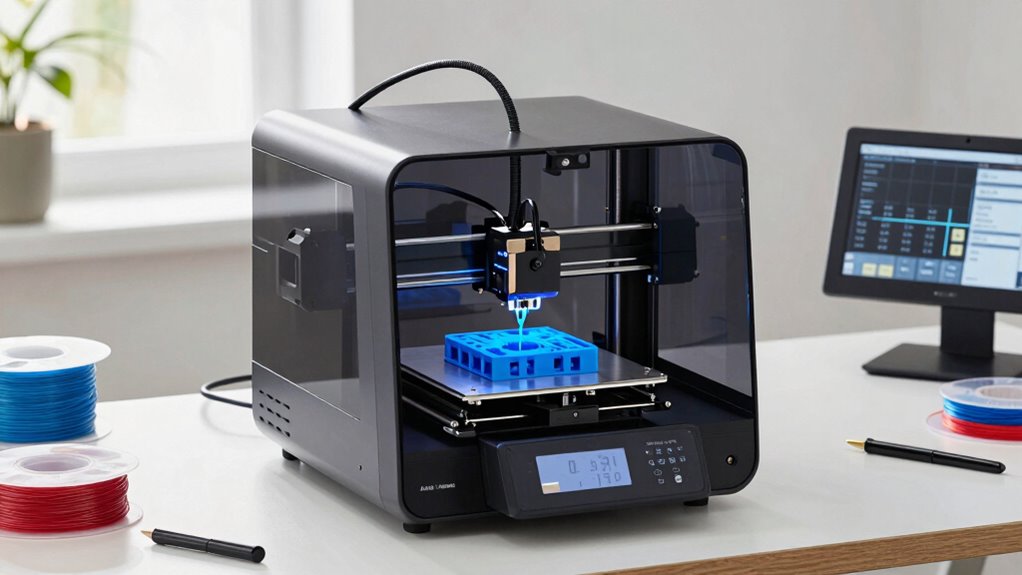
Getting started with 3D printing can seem overwhelming at first, but with the right approach, it becomes a valuable tool for your small business. Focus on developing your creative design skills, which allow you to create prototypes and customized products efficiently. Material selection is essential; choose materials that suit your project’s needs, whether it’s durability, flexibility, or appearance. Experiment with different filaments like PLA, ABS, or resin to understand their properties and how they impact your final product. Use simple design software to bring your ideas to life, and don’t hesitate to start small—learning through hands-on experience. As you grow more comfortable, you’ll discover how 3D printing can streamline production and expand your creative capabilities.
industrial-grade 3D printing filament
As an affiliate, we earn on qualifying purchases.
As an affiliate, we earn on qualifying purchases.
How to Choose the Right 3D Printer for Your Business Needs
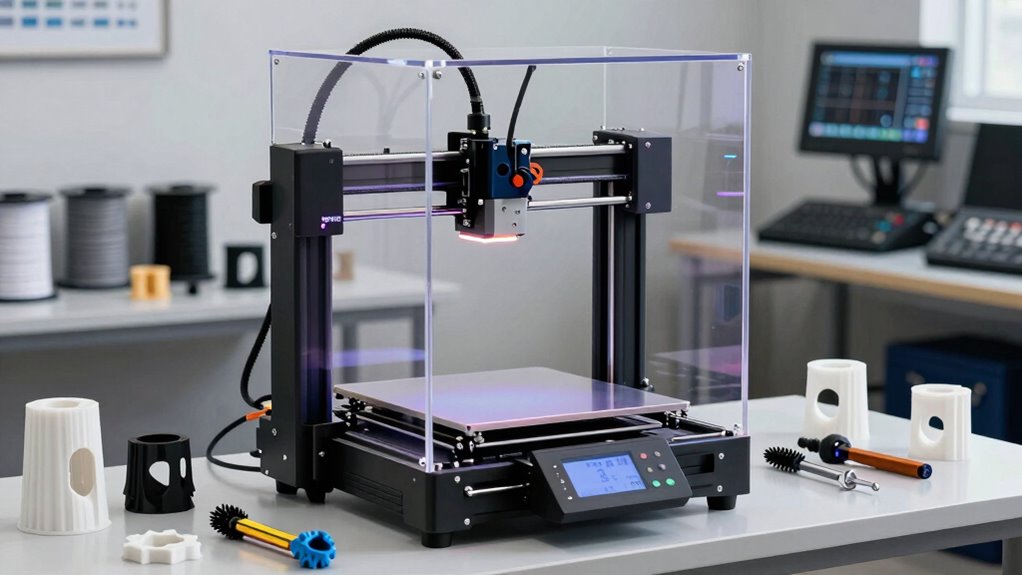
Choosing the right 3D printer for your business starts with understanding your specific goals and production needs. Consider what materials you’ll work with, as material compatibility varies between models. Think about the required precision, build volume, and speed to meet your deadlines. Ease of printer maintenance is also vital; a machine that’s simple to upkeep minimizes downtime. Additionally, evaluate:
- Material compatibility for your product types
- Printer maintenance to guarantee longevity
- Print resolution needed for quality
- Build volume for larger projects
- Speed to meet production deadlines
These factors help you select a device that aligns with your operational demands, avoiding costly mistakes and guaranteeing consistent results. Making an informed choice now saves you time, money, and frustration later. Understanding the importance of digital content formats can also help you optimize your product presentation and marketing strategies. Furthermore, considering the seasons can be beneficial when planning for outdoor or seasonal product releases, as environmental factors may influence print quality and material performance. Being aware of material properties can enhance your ability to choose the best filament or resin for your specific application, especially when considering environmental conditions that might affect material durability.
As an affiliate, we earn on qualifying purchases.
Designing Custom Products With 3D Printing
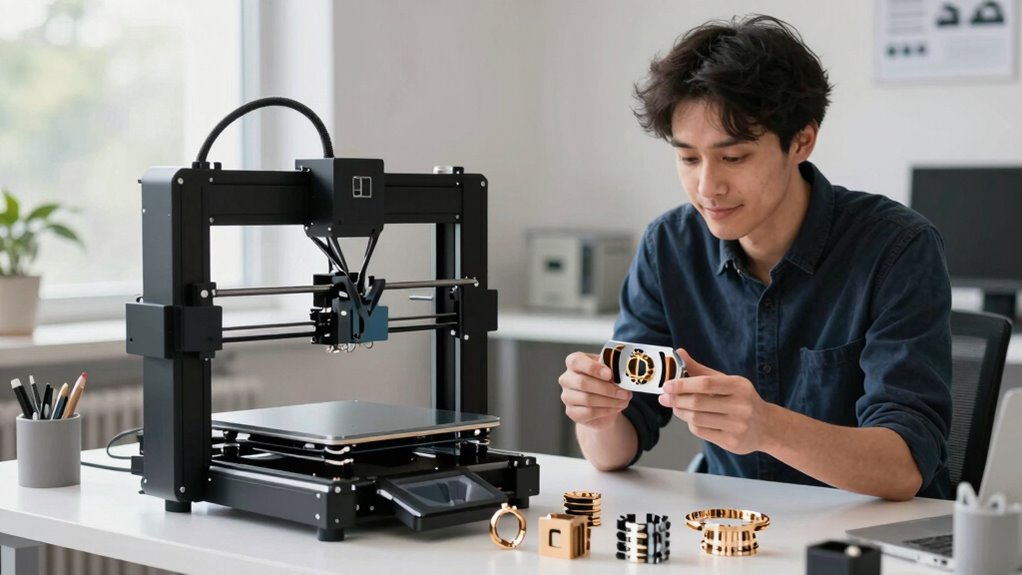
Designing custom products with 3D printing allows you to turn innovative ideas into tangible prototypes or finished goods quickly and cost-effectively. With 3D printing, you can create unique, tailored products that stand out in the market. This technology enables rapid design innovation, letting you test and refine your custom product designs without expensive tooling or molds. You have the flexibility to produce complex geometries and intricate details that traditional manufacturing methods might struggle with. Whether you’re making personalized items for clients or developing new products, 3D printing reduces lead times and costs. It empowers your small business to experiment, adapt, and bring custom products to life with precision and speed, giving you a competitive edge.
How to Integrate 3D Printing Into Your Manufacturing Process
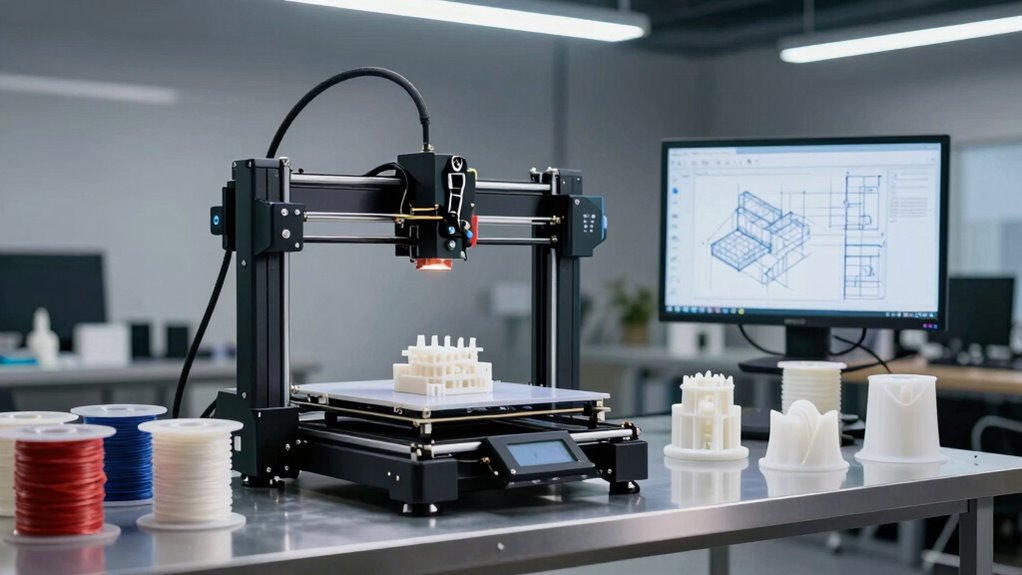
Integrating 3D printing into your manufacturing process requires careful planning to guarantee seamless adoption and maximum efficiency. Focus on aligning your workflow with your business goals, emphasizing creative collaboration to foster innovation. This integration can help you stand out through market differentiation, offering unique products faster and more cost-effectively. Consider these key points:
Seamlessly integrate 3D printing to boost innovation, efficiency, and market differentiation through strategic planning and collaboration.
- Identify parts that benefit from rapid prototyping and customization
- Train your team to operate 3D printers efficiently
- Collaborate across departments for innovative design solutions
- Establish quality control protocols specific to 3D printed components
- Use 3D printing for small batch production to test market response
- Incorporate methods-first principles to ensure your process remains repeatable and reliable, especially when improving your automotive performance parts like flywheels and engine components.
Scaling Up: Growing Your 3D Printing Capabilities
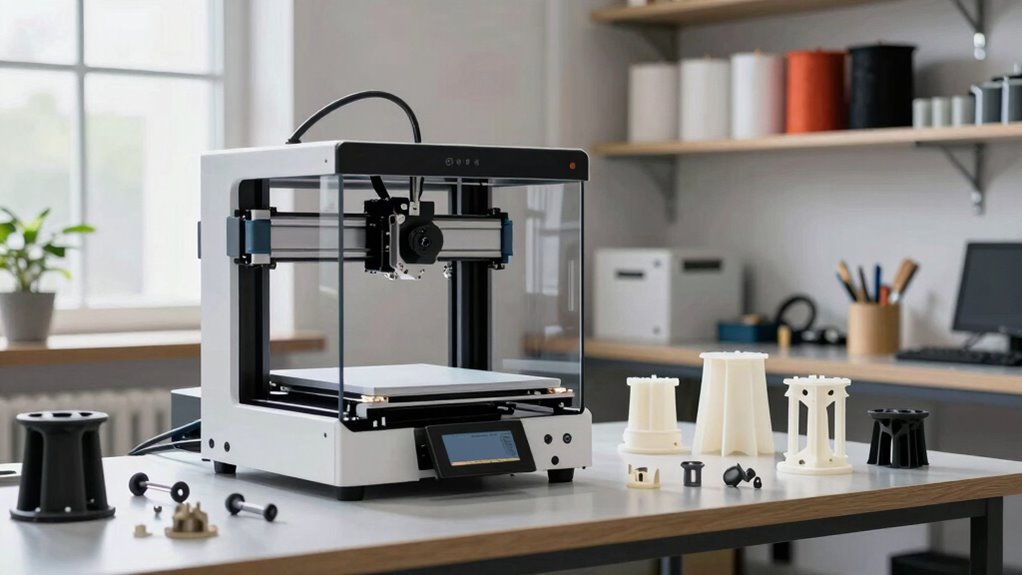
To grow your 3D printing capabilities, you need to invest in advanced equipment that can handle larger volumes and more complex designs. Streamlining your production processes will help you increase efficiency and meet higher demand. Expanding your material options allows you to offer more diverse products and tap into new markets. Additionally, implementing accessibility features can enhance the usability and inclusivity of your designs, broadening your customer base.
Investing in Advanced Equipment
As your small business grows, investing in advanced 3D printing equipment becomes essential for scaling up production and expanding your capabilities. Upgrading allows you to work with sustainable materials, reducing environmental impact while meeting eco-conscious customer demands. It also enhances your rapid prototyping speed, helping you iterate designs faster and bring products to market quicker.
Consider these key benefits:
- Increased precision and detail in complex parts
- Higher print speeds for larger orders
- Expanded material options, including composites
- Better reliability for continuous production
- Greater flexibility for custom or specialized projects
This investment positions your business for growth, enabling you to meet increasing demand and innovate efficiently. Advanced equipment guarantees you stay competitive and deliver high-quality products with a faster turnaround.
Streamlining Production Processes
Scaling up your 3D printing operations requires a strategic approach to streamline workflows and maximize efficiency. Focus on optimizing your processes by organizing print schedules and automating tasks where possible. Take advantage of customization options to tailor each product to customer needs without slowing production. Material versatility plays a key role here; selecting compatible, multi-purpose filaments can reduce the need for frequent equipment changes. Implement batch printing techniques to produce multiple parts simultaneously, saving time and resources. Use software features to set up print jobs efficiently, minimizing manual adjustments. Additionally, understanding the importance of precise measurement tools can help monitor and improve print quality consistently. By refining these workflows, you’ll boost productivity, reduce waste, and meet growing demand without sacrificing quality or speed.
Expanding Material Options
Expanding your material options allows you to meet diverse customer demands and take on more complex projects. By embracing material diversification, you can explore new applications and improve product quality. Sourcing innovation helps you find better, more cost-effective materials, giving you a competitive edge. Consider experimenting with various filaments like flexible, composite, or biocompatible options to broaden your capabilities. This not only enhances your offerings but also opens doors to niche markets. Staying updated on new materials and sourcing methods lets you adapt quickly and efficiently. Remember, expanding material options means investing in knowledge and flexibility, enabling your business to grow and innovate sustainably. Incorporating material innovation into your process can lead to significant breakthroughs and new product possibilities.
How to Reduce Costs and Waste With On-Demand 3D Printing
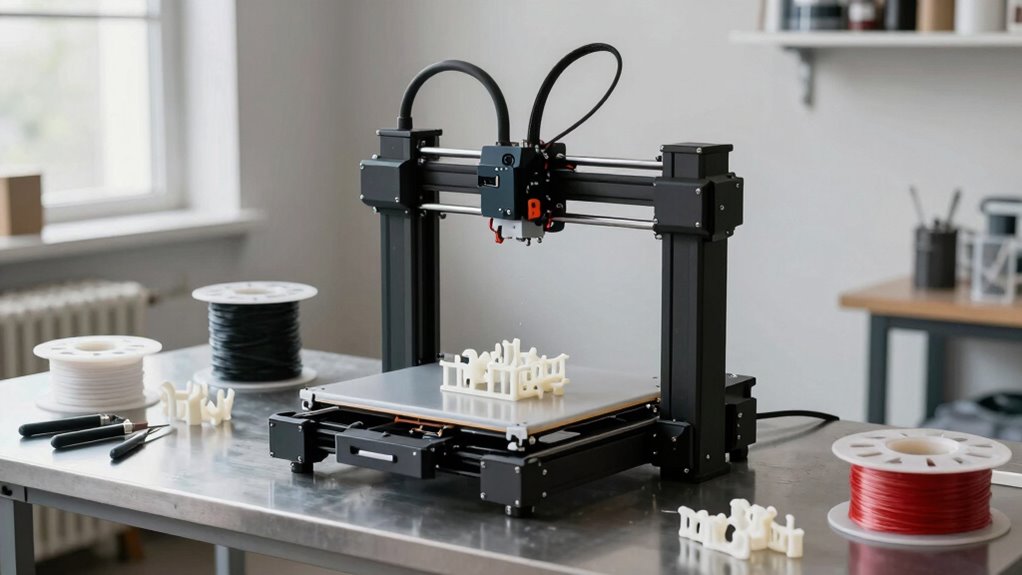
To cut costs and waste, focus on minimizing material use by designing parts efficiently and avoiding excess. You should also optimize your production schedule to guarantee printers run only when needed, reducing idle time and material waste. Implementing these strategies helps you save money and make your on-demand 3D printing more sustainable.
Minimize Material Waste
On-demand 3D printing allows small businesses to substantially cut material waste by producing only what’s needed. This precision reduces excess filament and minimizes scrapped parts. To maximize savings, choose recyclable filaments and biodegradable materials, which lessen environmental impact and disposal costs. You can also optimize your designs to use less material without sacrificing strength or quality. Additionally, adopting multi-part printing setups reduces support structures and waste. Properly calibrate your printer to avoid failed prints, and recycle leftover filament whenever possible. Using these strategies not only cuts costs but also promotes sustainability, making your business more eco-friendly and efficient. Incorporating contrast ratio considerations can help ensure the printed parts meet specific quality standards and visual clarity.
Optimize Production Scheduling
Effective production scheduling is crucial for reducing costs and minimizing waste when using on-demand 3D printing. By carefully planning your production schedule, you guarantee that your 3D printer runs efficiently, avoiding idle time and overproduction. Proper resource allocation means assigning tasks based on your printer’s capacity and material availability, preventing bottlenecks and excess inventory. Use software tools to coordinate print jobs, prioritize orders, and track progress. This helps you identify the ideal times for printing and maintenance, reducing downtime. Consistent scheduling also minimizes material waste by aligning print runs with actual demand, avoiding unnecessary prints. Overall, strategic production scheduling maximizes your resources, cuts costs, and enhances your ability to deliver on time with less waste. Incorporating efficient planning principles can further streamline your process and improve outcomes.
Troubleshooting Common Small Business 3D Printing Challenges
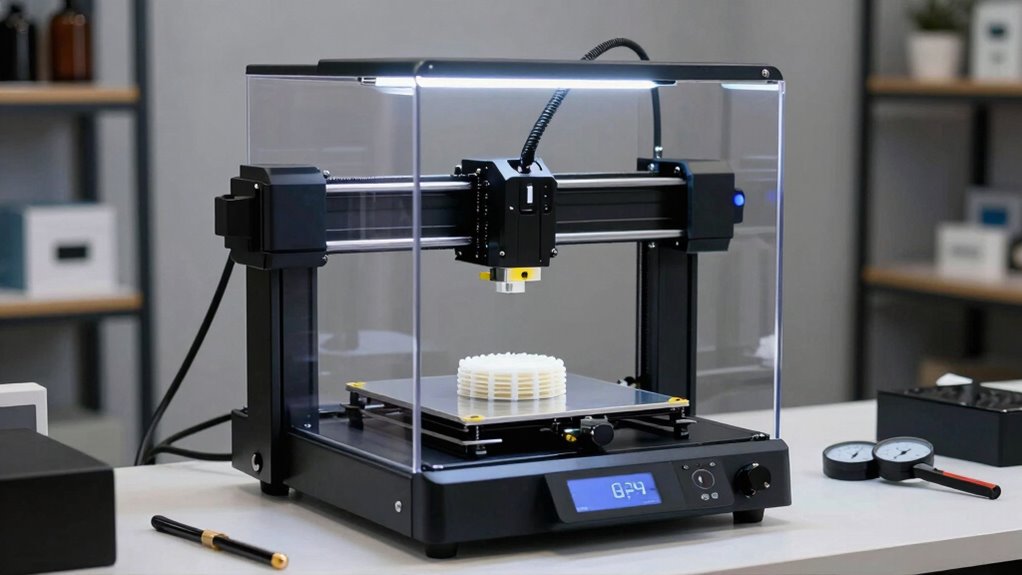
Small businesses often encounter a variety of issues when 3D printing, but most problems have straightforward solutions once you identify the root cause. To improve quality assurance, check your printer’s calibration regularly and maintain consistent filament quality. When you face print defects, consider refining your post processing techniques to enhance finish and durability. Common challenges include warping, layer separation, stringing, and poor adhesion, which can be fixed through proper temperature settings and bed leveling.
Remember these key points:
- Regularly calibrate your printer for better accuracy
- Use quality filament to prevent defects
- Adjust temperature and print speed for ideal results
- Implement effective post processing techniques
- Conduct routine maintenance to avoid mechanical issues
Future Trends and Opportunities in Small Business 3D Printing
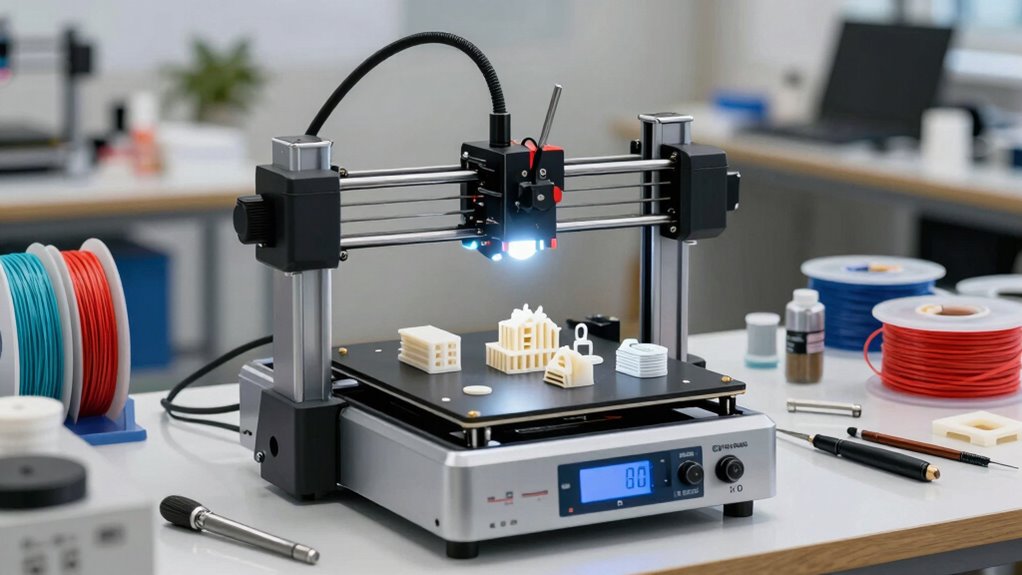
As 3D printing technology continues to advance, small businesses are poised to open new opportunities for innovation and growth. One exciting trend is the integration of Augmented Reality (AR), which allows you to visualize prototypes in real-world settings before printing, reducing costs and improving design accuracy. Additionally, as 3D printing becomes more accessible, protecting your Intellectual Property (IP) will be essential. You’ll need to develop strategies to safeguard your designs from unauthorized use while exploring new markets. Future opportunities also include on-demand production, customization, and rapid prototyping, giving you a competitive edge. Embracing these trends can help your small business stay ahead, leveraging technology to enhance creativity, efficiency, and market responsiveness in a rapidly evolving landscape.
Frequently Asked Questions
How Can 3D Printing Improve My Small Business’s Product Customization?
3D printing enhances your product customization by offering unparalleled design flexibility and access to a wide material variety. You can quickly prototype custom parts, tweak designs on the fly, and produce unique items tailored to your customers’ needs. This agility allows you to deliver personalized products efficiently, stand out from competitors, and reduce manufacturing costs, ultimately boosting customer satisfaction and loyalty.
What Are the Initial Costs of Implementing 3D Printing in a Small Business?
Imagine the gateway to innovation—initial costs for 3D printing in your small business vary, but material selection and cost analysis are key. You’ll need to invest in a quality 3D printer, which can range from a few hundred to several thousand dollars. Beyond that, consider expenses for filament or resin, maintenance, and upgrades. Weigh these costs carefully to guarantee your investment sparks growth without breaking the bank.
How Secure Is My Intellectual Property When Using 3D Printing?
Your intellectual property’s security with 3D printing depends on your digital security measures and patent protection. You can safeguard designs by encrypting files, controlling access, and using secure networks. Registering patents for unique products helps prevent copying. Staying vigilant about cybersecurity and legal protections guarantees your designs remain safe, giving you peace of mind while leveraging 3D printing for your small business.
Can 3D Printing Help Reduce Lead Times for Product Development?
Imagine you’re in the 21st century, not the Stone Age—3D printing dramatically cuts your product development lead times. With rapid prototyping, you can quickly test ideas and refine designs, accelerating your time-to-market. Plus, it boosts supply chain resilience by enabling on-demand production and reducing dependency on external suppliers. This agility helps you stay ahead of competitors and adapt swiftly to market changes, making your small business more nimble and efficient.
What Maintenance Is Required to Keep My 3D Printer Operational?
To keep your 3D printer operational, you need to regularly check and clean the print bed and extruder. Store filament properly in airtight containers to prevent moisture damage, and calibrate your printer using proper calibration techniques to guarantee accuracy. Keep moving parts lubricated, update firmware when necessary, and monitor for wear or misalignments. Consistent maintenance like this helps avoid breakdowns and ensures high-quality prints.
Conclusion
By embracing 3D printing, you can innovate faster, customize more easily, and scale efficiently. You can reduce costs, minimize waste, and stay ahead of the competition. You can design boldly, produce locally, and adapt quickly. With the right tools and mindset, you can turn your small business into a powerhouse of creativity and efficiency. So, seize the opportunity, harness the technology, and watch your business grow beyond expectations.
Fall Picks
fall essentials
As an affiliate, we earn on qualifying purchases.