When choosing a 3D printer for apartment use, noise levels and size are key concerns. The Fully Assembled Mini 3D Printer stands out for its ultra-quiet operation, ideal for shared living spaces. The Entina TINA2S offers WiFi connectivity and low noise, making it excellent for home offices. Meanwhile, the FLASHFORGE Adventurer 5M balances speed with quiet operation, suitable for small workshops. However, tradeoffs like print volume and speed can vary sharply among these options. Continue reading for a detailed comparison that helps you find the best fit for your apartment environment.
Key Takeaways
- Quiet operation is most effectively achieved through enclosed or low-noise stepper motors, which many top models incorporate.
- Size and footprint matter—compact printers often prioritize noise reduction but may sacrifice build volume.
- High speeds like 600mm/s are impressive but often come with increased noise; quieter models tend to operate at lower speeds for stability.
- Auto-leveling features significantly improve user experience, especially in limited spaces where adjustments are harder.
- Price varies widely; the best value models balance noise, size, and performance without hefty price tags.


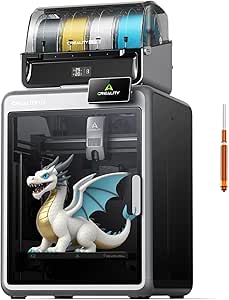


More Details on Our Top Picks
Fully Assembled Mini 3D Printer for Kids & Beginners – Complete Starter Kit with Auto Leveling 3D Printing Machine, 1 Roll of Filament, and SD Card, High-Speed 250mm/s, High Precision, for School Home
This fully assembled mini 3D printer is a standout choice for those new to 3D printing, especially kids or beginners. Unlike larger, more complex models like the FLASHFORGE Adventurer 5M, this compact unit requires no calibration or setup—it’s ready to print out of the box. Its automatic features, such as one-touch auto-leveling and nozzles cleaning, greatly simplify operation, making it ideal for users with limited technical skills. The high speed of 250mm/s minimizes wait times, and the included starter filament helps new users get started immediately. However, the small filament spool and limited build volume may frustrate more experienced users or those working on larger projects. Compared to the AOSEED 3D Printer, this model offers less advanced features but excels in ease of use and immediate plug-and-play functionality. It’s perfect for educational environments or families wanting quick, reliable results without a steep learning curve.
Pros:- Fully assembled and ready to use right out of the box
- Automatic nozzle cleaning and auto-leveling simplify setup
- High printing speed of 250mm/s reduces wait times
- Includes filament and SD card for immediate testing
Cons:- Limited build volume may restrict larger projects
- Small filament spool reduces testing time before needing refills
- Lacks advanced features found in higher-end models
Best for: Beginners or kids seeking a straightforward, beginner-friendly 3D printer to learn the basics.
Not ideal for: Experienced hobbyists or makers who need larger build volumes or advanced features for complex projects.
- Build Volume:4.7 x 4.7 x 4.7 inches
- Max Speed:250mm/s
- Precision:0.01mm
- Extruder Type:Direct Drive
- Heated Bed:PEI Heated Bed
- Connectivity:SD Card
- Assembly:Fully Assembled
- Weight:6.61 pounds
- Input Voltage:100-240V
Bottom line: This printer makes the most sense for absolute beginners or families wanting a simple, reliable introduction to 3D printing.
Entina TINA2S 3D Printers with WiFi Cloud Printing, Fully Assembled with Auto Leveling, Huge Library, DIY Mini 3D Printer for Beginners and Kids, High Precision 3D Printer for Home, Office & School
The Entina TINA2S offers a compelling package for families and educators who want a ready-to-go, quiet, reliable printer with extensive model options. Its WiFi connectivity and cloud support, similar to the AOSEED 3D Printer, enable seamless file transfer and remote operation, making it ideal for home and school environments. With automatic bed leveling and a flexible build plate, it reduces manual adjustments, a feature not as advanced in the Fully Assembled Mini 3D Printer. The quiet operation and enclosed design make it suitable for bedrooms and classrooms. Unlike the high-speed FLASHFORGE Adventurer 5M, which targets faster production, this model emphasizes stability and ease of use over speed. However, the larger footprint and slightly higher price may be drawbacks for very tight spaces or budget-conscious buyers. This printer excels in educational settings or casual creative use where model variety and ease are paramount.
Pros:- Fully assembled with automatic bed leveling
- Supports WiFi cloud printing and app control
- Enclosed design minimizes noise and enhances safety
- Large library of over 1,500 models included
Cons:- Larger footprint may be unsuitable for very small spaces
- Slightly higher price compared to simpler models
- Limited to small print volume (4x4x4 inches)
Best for: Families or educators who want a quiet, stable, easy-to-use printer with access to a large library of preloaded models.
Not ideal for: Professionals needing rapid turnaround or large-scale printing for complex prototypes.
- Build Volume:4.7 x 4.7 x 4.7 inches
- Max Speed:200mm/s
- Precision:0.04mm
- Connectivity:WiFi, App, TF Card
- Auto Leveling:Yes
- Enclosure:Enclosed
- Weight:9.08 pounds
- Filament Compatibility:PLA, TPU
- Control Software:Cura, Simplify3D
Bottom line: Ideal for educational use or family projects where model variety, quiet operation, and ease of use matter most.
AOSEED 3D Printer for Kids, AI-Powered Fully Assembled 3D Printer with Up to 400mm/s Speed, Auto Leveling, 1500+ Models & 17+ Modules, Includes 8 PLA Filaments for Home and School Use, X-MAKER JOY AI+
The AOSEED X-MAKER JOY AI+ pushes the boundaries of children’s creative printing with AI-powered tools and high speed, making it ideal for fast projects and imaginative play. Its AI features, such as voice commands and photo-to-model transformation, differentiate it from simpler printers like the Fully Assembled Mini. The fast heating hotend and speeds up to 400mm/s enable quick completion of small models, perfect for keeping kids engaged without long waits. The extensive model library and multiple modules support personalized, educational, and fun projects. Despite its many advanced features, the size and complexity might be overkill for absolute beginners or very limited spaces. Compared to the Entina TINA2S, it offers more creative tools but can be more costly and less portable. This printer is excellent for kids who want a smart, fast, and highly versatile machine for learning and play.
Pros:- AI-powered model creation via voice, photo, or text
- Fast printing speeds up to 400mm/s
- Includes 8 PLA filaments and 17+ modules for creative projects
- Built-in camera for real-time monitoring and videos
Cons:- Larger, more complex setup may be intimidating for absolute beginners
- Higher price point for advanced features
- Size may limit portability and workspace flexibility
Best for: Parents, educators, and kids interested in fast, creative 3D printing with AI assistance and extensive model options.
Not ideal for: Complete beginners or users with limited space who need a simple, low-cost starter printer.
- Build Volume:6 x 6 x 6 inches
- Max Speed:400mm/s
- Precision:0.05mm
- Hotend Temperature:280°C
- Filament:8 rolls included
- Connectivity:WiFi, App
- Auto Leveling:Yes
- Enclosure:Fully enclosed
- Weight:8.82 pounds
Bottom line: This printer makes the most sense for tech-savvy kids or parents wanting a fast, creative, AI-enhanced 3D printing experience.
Entina Tina2 Plus Smart 3D Printers with 250MM/S Fast Printing, Fully Assembled, 3D Printer for Kids and Beginners with WiFi High Precision 3D Printing, Auto Leveling, Mini 3D Printer with PEI Platform
The Entina Tina2 Plus combines high-speed printing with quiet operation, making it suitable for home or classroom environments. Its Core XY structure and vibration compensation allow it to reach speeds up to 250mm/s, faster than many standard models like the Fully Assembled Mini. Auto-leveling and a PEI build plate simplify setup and ensure consistent first layers, which is crucial for quiet, reliable prints. Its compact size and quiet operation make it a solid choice for apartment use, although the smaller build volume might limit larger projects. Unlike the AOSEED with AI features, this model emphasizes stability and speed without extra digital tools. The FLASHFORGE Adventurer 5M offers even higher speed but lacks the quiet, enclosed design of the Tina2 Plus. Overall, it is ideal for users who prioritize speed, stability, and quiet operation in limited spaces.
Pros:- Fast printing speeds up to 250mm/s
- Fully assembled with auto-leveling
- Quiet operation suitable for apartments
- Vibration compensation for stable results
Cons:- Limited build volume (4x4x4 inches)
- Moderate price for its features
- Smaller print size for large models
Best for: Home users and educators needing a fast, stable, and quiet printer for small projects and regular use.
Not ideal for: Large-scale projects or multi-material printing are limited due to the small build volume.
- Build Volume:4 x 4 x 4 inches
- Max Speed:250mm/s
- Precision:0.02mm
- Hotend Temperature:280°C
- Auto Leveling:Yes
- Connectivity:WiFi
- Enclosure:Enclosed
- Weight:9.93 pounds
- Filament Compatibility:PLA, PETG
Bottom line: This printer is perfect for those needing a quiet, fast, and stable machine for small projects in apartment settings.
FLASHFORGE Adventurer 5M 3D Printer with Fully Auto Leveling, Max 600mm/s High Speed Printing, 280°C Direct Extruder with 3S Detachable Nozzle, CoreXY All Metal Structure, Print Size 220x220x220mm
This model stands out for its extraordinary 600mm/s maximum speed and auto bed leveling, making it ideal for quick turnaround projects. Compared with the Creality Ender 3 V3 SE, the Adventurer 5M dramatically reduces print times, though it trades off some detailed precision at ultra-high speeds. Its CoreXY all-metal frame and 280°C direct extruder support a wide range of materials with stability. The remote monitoring via app adds convenience, but the setup complexity can be daunting for beginners. This printer makes the most sense for users who prioritize speed over absolute resolution, like rapid prototyping teams or those with tight schedules. It involves some maintenance tradeoffs due to high-speed operation, such as more frequent nozzle cleaning.
Pros:- Unmatched 600mm/s printing speed for rapid results
- Fully automatic bed leveling simplifies setup
- Supports high-temperature filaments up to 280°C
Cons:- Less suited for detailed, high-precision parts due to speed limitations
- Higher maintenance needs at extreme speeds
- Complex initial setup for new users
Best for: Professionals and hobbyists needing fast prototyping and mass production in small spaces.
Not ideal for: Beginners seeking detailed or high-resolution prints, as the speed can compromise fine detail.
- Max Speed:600mm/s
- Build Volume:220x220x220mm
- Extruder Temperature:280°C
- Auto Bed Leveling:Yes
- Frame:CoreXY all-metal
- Nozzle Change Time:3 seconds
Bottom line: This pick is best for users who need quick, reliable prototypes rather than fine-detail art prints.
Creality Ender 3 V3 SE 3D Printer, 250mm/s Faster Print Speed CR Touch Auto Leveling Sprite Direct Extruder Dual Z-Axis Auto Filament Loading Ender 3 Upgrade 3D Printer Print Size 8.66×8.66×9.84 inch
This printer makes the list as a balance of speed, ease of use, and quality. Supporting a maximum of 250mm/s, it offers a significant speed boost over older Ender models, with auto bed leveling via CR Touch for straightforward setup. Compared to the Flashforge Adventurer 5M, the Ender 3 V3 SE offers better fine detail at moderate speeds, but it can be slower for large batches. The direct extruder and dual Z-axis improve consistency and reduce wobbling, providing good overall quality. Its easy assembly process makes it perfect for beginners, but the tradeoff is that it lacks the ultra-high speeds of the Adventurer 5M. This printer is ideal for users who want a reliable, upgradeable, and user-friendly machine for daily printing. The main tradeoff is slightly slower speeds for better detail and ease of use.
Pros:- Supports up to 250mm/s printing speed with reliable quality
- Auto leveling with CR Touch for quick setup
- Powerful Sprite direct extruder for versatile filaments
Cons:- Limited maximum speed compared to ultra-high-speed models
- Smaller build volume limits larger projects
- Slightly more complex assembly for absolute beginners
Best for: Beginners and hobbyists seeking a dependable, upgradeable printer with decent speed and high-quality results.
Not ideal for: Pro users needing ultra-fast production runs or detailed fine art printing at high speed.
- Max Speed:250mm/s
- Build Volume:8.66×8.66×9.84 inches
- Auto Leveling:CR Touch
- Extruder:Sprite direct drive
- Dual Z-Axis:Yes
- Print Resolution:0.1 mm
Bottom line: This pick offers a smooth balance of speed, simplicity, and quality for most hobbyists and newcomers.
Creality K2 Combo (A) 3D Printer, Multicolor Printing with CFS, 600mm/s Printing Speed, 95% Pre-Assemble, Smart Al Camera & Auto Leveling, Next-Gen Direct Drive Extruder, Build Volume 260*260*260mm
The K2 Combo stands out for its impressive 600mm/s speed and multicolor capabilities via the four CFS units, supporting up to 16 colors. Compared to the Flashforge Adventurer 5M, it offers even faster speeds and a larger build volume, making it suitable for complex multi-material projects. Its auto leveling and AI camera enhance ease of use, while features like auto filament relay reduce manual intervention. The ultra-quiet operation and pre-assembled design make it accessible for users who want a professional-grade machine out of the box. The main tradeoff involves the higher complexity and cost, which might be overkill for simple hobby projects. This is ideal for those who want multicolor, multi-material production with speed and convenience.
Pros:- Supports up to 16 colors with four CFS units
- Maximum print speed of 600mm/s for fast production
- Smart auto leveling and AI camera for failure detection
Cons:- Higher price point and setup complexity
- Larger footprint requiring more space
- Overkill for simple single-material projects
Best for: Artists, prototyping teams, and advanced hobbyists requiring multicolor and multi-material capabilities in small spaces.
Not ideal for: Beginners or those on a tight budget, as setup and costs are higher with the multiple CFS units.
- Max Speed:600mm/s
- Build Volume:260x260x260mm
- Number of CFS Units:4
- Auto Leveling:Yes
- Filament Support:Up to 16 colors
- Quiet Operation:Yes
Bottom line: This model excels for multi-material, multi-color projects where speed and automation are priorities, not minimal cost.
Creality K2 Combo 3D Printer, Multicolor Printing with CFS, High-Speed 600mm/s, Smart Auto Leveling, Quiet Printing, 300°C Nozzle, Dual AI Camera, Direct Drive Extruder, Build Volume 260x260x260mm
The K2 Combo (second in this list) is distinguished by its 600mm/s printing speed and multi-color support with four CFS units, making it suitable for large, complex, multi-material pieces. It shares many features with the previous model but emphasizes quiet operation and a 300°C nozzle suitable for engineering-grade filaments. Compared with the Flashforge Adventurer 5M, it offers greater speed and multi-color flexibility, ideal for fast-paced production environments. Its auto leveling and AI camera enhance user confidence, but the complexity and price make it less suitable for casual hobbyists. This is a strong choice for professional artists or engineers who need multicolor, multi-material large-volume printing with speed and automation.
Pros:- Supports up to 16 colors with four CFS units
- Maximum speed of 600mm/s for rapid manufacturing
- Dual AI cameras for failure detection and monitoring
Cons:- Expensive and complex setup process
- Requires more space due to large build volume
- Overkill for simple, low-volume prints
Best for: Producers and artists working with multi-materials on large, detailed projects in compact spaces.
Not ideal for: Beginners or casual users due to high complexity and cost.
- Max Speed:600mm/s
- Build Volume:260x260x260mm
- Number of CFS Units:4
- Auto Leveling:Yes
- Filament Support:Up to 16 colors
- Nozzle Temperature:300°C
Bottom line: This printer is tailored for fast, multi-material, large-volume projects where automation and speed outweigh simplicity and cost.
Longer LK5 Pro 3 3D Printer 11.8×11.8×15.7in Large Printing Size FDM 3D Printer Fully Open Source Motherboard Upgrade TMC 2209 with Resume Printing, 95% Pre-Assembled Ideal for Beginners
The Longer LK5 Pro offers a very spacious 300x300x400mm build volume and a large 11.8×11.8×15.7 inch size, making it perfect for big projects at home or in educational settings. Its high-speed 180mm/s printing capability surpasses many entry-level models, and the TMC2209 silent drivers provide a quieter operation suitable for apartments. Compared with the Flashforge Adventurer 5M, it emphasizes larger volume and affordability, but it sacrifices some of the ultra-high-speed capabilities and convenience features. The auto-resume and filament detection increase reliability, but the open-source motherboard requires some technical knowledge for maintenance. This printer is best for users who want a large-volume, cost-effective machine for home or educational projects.
Pros:- Large build volume of 300x300x400mm
- High-speed printing at 180mm/s
- Auto-resume and filament detection features
Cons:- Open-source design may require more maintenance
- Slower than ultra-high-speed models for complex jobs
- Less refined finish compared to premium printers
Best for: Beginners and educational users seeking large, affordable prints with reliable features.
Not ideal for: Pro users needing the highest speed or ultra-fine detail, due to its more basic features.
- Build Volume:300x300x400mm
- Max Speed:180mm/s
- Auto-Resume:Yes
- Motherboard:Open-source TMC2209
- Frame:Pre-assembled aluminum
- Filament Detection:Yes
Bottom line: This printer offers a large, budget-friendly platform for hobbyists and educational settings prioritizing size and reliability.
FLASHFORGE Adventurer 5M Pro 3D Printer with 1 Click Auto Printing System, 600mm/s High-Speed, Quick Detachable 280°C Nozzle, Core XY All-Metal Structure, Multi-Functional 220x220x220mm 3D Printer
This model stands out for blending ultra-fast printing speeds with advanced automation features, making it ideal for small spaces where time and noise are critical concerns. Compared with the Creality Ender 3, which offers reliable basic functionality, the Adventurer 5M Pro excels in speed and ease of use, though it involves a higher price point and more complexity. Its auto bed leveling and remote app control significantly reduce setup time and noise, making it perfect for apartment environments. However, its size and weight can be less convenient for portability, and the high-speed operation might generate more vibration than quieter, slower models. This pick makes the most sense for users who want fast, hands-off operation without sacrificing print quality, but it demands a dedicated, stable workspace.
Pros:- Exceptional printing speed up to 600mm/s reduces wait times significantly
- Smart auto bed leveling and remote control via mobile app enhance convenience
- All-metal Core XY structure ensures stability during high-speed moves
- Supports a wide range of materials, including ABS and PETG
Cons:- Relatively large and heavy, less portable for small apartments or shared spaces
- High-speed operation may produce more vibrations and noise than slower models
- Complex setup process may overwhelm complete beginners
Best for: Tech-savvy hobbyists or small startup studios in apartments who need rapid prototyping with minimal manual calibration.
Not ideal for: Beginners or users with limited space who prefer simpler, more compact printers that prioritize ultra-quiet operation over speed.
- Max Speed:600mm/s
- Build Volume:220x220x220mm
- Nozzle Temperature:280°C
- Frame Material:All-metal
- Auto Bed Leveling:Yes
- Connectivity:Mobile app, WiFi
- Print Head:Quick Detachable Nozzle
- Structure:Core XY
- Weight:32.1 pounds
Bottom line: This printer is ideal for experienced users seeking rapid, automated printing in a space where noise and speed are priorities.
Official Creality Ender 3 3D Printer Fully Open Source with Resume Printing Function DIY Printers Build Volulme 8.66×8.66×9.84 inch
The Creality Ender 3 offers a straightforward, dependable printing experience that is well-suited for newcomers and those with limited space. Its resume printing feature and simple assembly make it approachable for users new to 3D printing, unlike more complex models like the FLASHFORGE Adventurer 5M Pro. While it’s not as fast or automated, its quiet stepper motors and compact footprint help keep noise levels manageable in apartment settings. The tradeoff is slower print speeds and less sophisticated auto-leveling, requiring more manual calibration. Still, for those who prioritize affordability and ease of use, the Ender 3 remains a solid choice, especially where space and budget are limited.
Pros:- Affordable price point makes it accessible for most users
- Open-source design allows for extensive customization and upgrades
- Quiet operation thanks to stepper motor design
- Compact size fits well in small apartments or desks
Cons:- Slower print speeds compared to high-end models like the FlashForge 5M Pro
- Requires manual bed leveling and calibration, which can be challenging for beginners
- Limited touch-screen interface and automation features
Best for: Beginners, students, or small households seeking a reliable, affordable printer that’s easy to maintain in tight spaces.
Not ideal for: Advanced users or those needing high-speed production, as its slower speeds and manual processes may hinder productivity.
- Build Volume:8.66×8.66×9.84 inches
- Power Supply:Protected
- Auto Resume:Yes
- Frame Material:Metal
- Noise Level:Quiet
- Assembly:Partially assembled, about 2 hours
- Connectivity:SD card, USB
- Filament Compatibility:PLA, ABS, TPU
- Weight:15.43 pounds
Bottom line: This printer is best suited for budget-conscious beginners who want a reliable, space-efficient 3D printer with proven community support.

How We Picked
This lineup was selected based on a combination of noise level, size, usability, and feature set. We prioritized printers with proven low-noise operation, either through enclosed designs or quiet stepper drivers, to suit apartment living. Performance factors such as print quality, reliability, and maintenance ease were also key, ensuring these models are practical for everyday use. Price and versatility were considered to offer options for different budgets and user skill levels. Ultimately, the ranking reflects a balance between quietness, size, and overall value, helping buyers make informed decisions suited to small living spaces.Factors to Consider When Choosing Best Quiet 3D Printers For Apartments
Choosing the best quiet 3D printer for an apartment involves more than just noise levels. Several factors influence how well a printer will fit into your living space and meet your needs. Considering size, noise, and ease of use ensures you select a model that integrates seamlessly into daily life without causing disturbances or requiring excessive maintenance.Size and Footprint
In apartments, space is limited, so a compact printer that fits comfortably on a desk or shelf is ideal. Look for models with smaller footprints and integrated enclosures, which help contain noise and fumes. Larger printers may offer more build volume but often become impractical in tight spaces, potentially increasing noise and clutter.
Noise Levels
Low noise operation is crucial for shared living environments. Enclosed designs or printers with quiet stepper drivers significantly reduce sound output. Beware of models with open frames or high-speed fans, as these can generate disruptive noise during long print jobs. Reading user reviews on noise levels can provide practical insights beyond technical specs.
Ease of Use and Setup
For apartment dwellers, a printer that’s easy to set up and operate minimizes disruption and frustration. Features like auto-leveling and touchscreen controls streamline the process, especially in smaller spaces where troubleshooting can be inconvenient. Consider models with good customer support and clear instructions to avoid unnecessary noise from repeated adjustments.
Performance and Reliability
Quiet printers should still deliver consistent, high-quality prints. Look for mechanical stability and reliable components, which prevent failed prints and reduce the need for reprints—saving time and minimizing noise caused by troubleshooting. High-speed printing can be attractive but often increases noise, so balance your speed needs with noise tolerance.
Budget and Value
Prices vary, with premium models offering advanced features like enclosed chambers and ultra-quiet motors. However, budget-friendly options can provide sufficient quiet operation for casual or beginner use. Weigh the cost against features and durability to find a model that offers the best value without sacrificing quietness and performance.
Frequently Asked Questions
How quiet are enclosed 3D printers compared to open-frame models?
Enclosed 3D printers generally operate significantly quieter than open-frame counterparts because they contain noise within a barrier that muffles sound. This enclosure also reduces the noise from fans and stepper motors, making them a preferred choice for apartments. However, the level of noise reduction depends on the quality of the enclosure and the components used. Some open-frame models with low-noise stepper drivers can be nearly as quiet, but enclosures tend to offer the most noticeable noise suppression.
Can I run a 3D printer overnight without disturbing my neighbors?
Running a 3D printer overnight in an apartment can be feasible if the model features low-noise components and an enclosure. Enclosed printers with quiet stepper drivers and well-designed cooling systems tend to produce minimal sound, making overnight operation less disruptive. However, always consider ventilation and safety protocols, since even quiet printers can generate heat or fumes. It’s wise to test your specific model during daytime hours before leaving it unattended overnight.
Are high-speed printers more likely to be noisy?
Yes, generally, printers capable of higher speeds, such as 600mm/s, tend to produce more noise due to faster movements and increased fan activity. Many high-speed models incorporate noise-reduction features, but the tradeoff often remains in noise levels. For apartment use, it’s better to prioritize models that balance speed with quiet operation to avoid disturbing your space or neighbors.
What maintenance helps keep a 3D printer quiet over time?
Regular maintenance such as lubricating moving parts, tightening belts, and cleaning fans can significantly reduce noise levels. Worn or loose components tend to rattle or produce additional sounds, so keeping the mechanical parts in good condition ensures quieter operation. Upgrading to quieter fans or sound-dampening mats can also help maintain low noise levels as your printer ages.
Is a fully assembled 3D printer better for noise reduction than DIY kits?
Fully assembled printers are often better optimized for quiet operation because they are manufactured with tighter tolerances and integrated noise-reduction features. DIY kits may require additional modifications, such as installing quieter fans or soundproof enclosures, to achieve similar noise levels. For those prioritizing low noise, choosing a pre-assembled model with proven quiet performance can save time and effort while providing more consistent results.