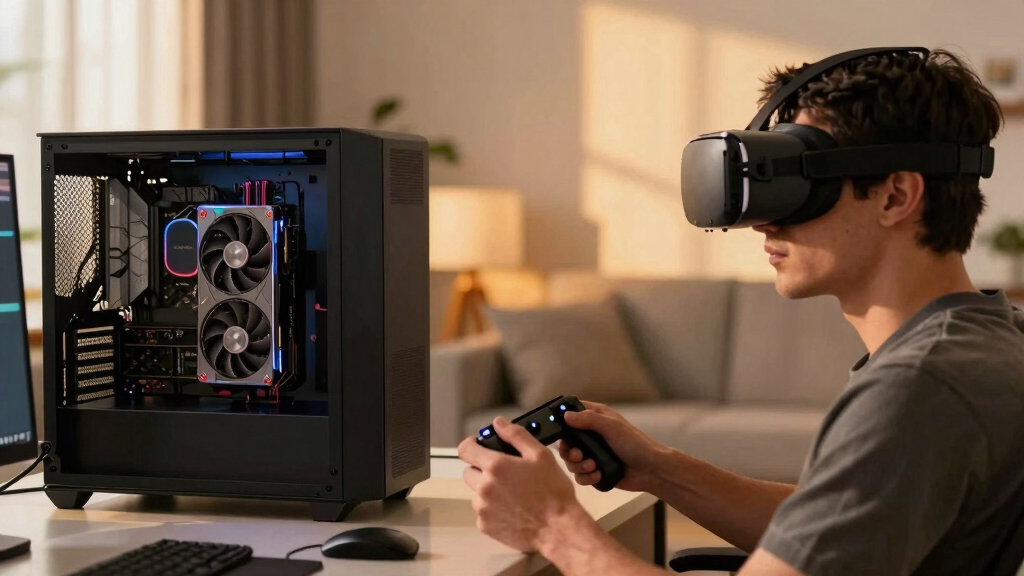

Choosing the best AMD graphics card for VR requires balancing performance, compatibility, and budget. The AMD Radeon RX 7900XT stands out for its powerful 20GB GDDR6 memory, making it ideal for demanding VR experiences. Meanwhile, the XFX RX 7600 offers solid performance at a more accessible price point, perfect for gamers on a budget. The main tradeoffs often involve deciding between raw power and affordability, as higher-end cards deliver smoother VR but come at a premium. Continue reading for a detailed breakdown of the top options and what makes each stand out.
Listen free for 30 days with Audible
Thousands of audiobooks and originals — cancel anytime.
Start your free trialAs an affiliate, we earn on qualifying purchases.
Key Takeaways
- The highest-end AMD cards like the RX 7900XT excel in demanding VR environments but come with a higher price tag.
- Mid-range options such as the RX 6600 XT and RX 570 provide good VR performance for less, suitable for budget-conscious gamers.
- VR readiness varies across models; newer RDNA 3 cards tend to offer improved performance and features.
- Memory size and bandwidth are critical for VR; 8GB GDDR6 is generally sufficient for most VR applications today.
- Build quality and cooling solutions influence long-term reliability and noise levels, especially during extended VR sessions.



More Details on Our Top Picks
maxsun AMD Radeon RX 550 4GB GDDR5 ITX Computer PC Gaming Video Graphics Card GPU 128-Bit DirectX 12 PCI Express X16 3.0 DVI-D Dual Link, HDMI, DisplayPort
This maxsun Radeon RX 550 stands out for its small form factor and lower power consumption, making it ideal for mini PCs or budget builds focused on VR. While it offers decent performance at 1080p, it’s significantly less powerful than the XFX RX 7600, which provides higher frame rates and better VR experiences. The RX 550’s 4GB GDDR5 memory limits its ability to handle complex VR environments smoothly, especially compared with the 8GB VRAM of the RX 7600. Its lower clock speed and fewer stream processors mean you’ll face longer load times and lower frame consistency, which could impact immersion. The card’s all-solid capacitors and efficient cooling help maintain stability during extended VR sessions. However, its limited output options and basic features make it less suited for high-end VR setups. This pick is best for entry-level VR users with small or secondary systems who prioritize space and efficiency over raw power.
Pros:- Compact size fits in small cases
- Low power consumption and cooling noise
- Solid build with stable components
Cons:- Limited 4GB VRAM restricts complex VR environments
- Lower performance compared to 8GB models like RX 7600
- Basic feature set without modern outputs like DisplayPort 2.0
Best for: Budget-conscious VR newcomers or small-form-factor PC builders
Not ideal for: High-end VR enthusiasts or those needing ultra-smooth, high-fidelity VR experiences
- Memory:4GB GDDR5
- Clock Speed:up to 1183 MHz
- Interface:PCI-Express x16
- Outputs:DVI-D, HDMI, DisplayPort
- Size:7.28″L x 4.44″W
- Power:Power supply not included
Bottom line: Great for budget and space-limited VR setups, but not for demanding, high-fidelity VR experiences.
XFX Speedster SWFT210 Radeon RX 7600 Graphics Card with 8GB GDDR6 HDMI 3xDP, AMD RDNA 3 RX-76PSWFTFY
This XFX Radeon RX 7600 makes a strong case for mid-tier VR gaming thanks to its 8GB GDDR6 memory and the latest AMD RDNA 3 architecture, which delivers high frame rates and smooth performance in demanding VR titles. Compared with the MSI RX 570, which is older and less capable, the RX 7600 offers significantly higher clock speeds (up to 2655 MHz) and better VR readiness, making it suitable for immersive experiences. Its dual-fan cooling system ensures stable operation even during extended VR sessions, while its support for 7680×4320 resolution guarantees future-proofing. The card’s outputs—HDMI and 3 DisplayPorts—cover most VR headset connections. However, it is more expensive than older models and requires a more capable power supply. This GPU is best for serious VR gamers wanting high performance without stepping into premium pricing.
Pros:- High clock speeds for smooth VR performance
- 8GB GDDR6 VRAM supports complex environments
- Supports high resolutions with multiple outputs
Cons:- Higher cost than older models like RX 580
- Requires a robust power supply
- No integrated ray tracing for advanced visual effects
Best for: Intermediate VR gamers or users upgrading from older cards like RX 580
Not ideal for: Entry-level users or those with limited power supply capacity
- Memory:8GB GDDR6
- Boost Clock:up to 2655 MHz
- Outputs:HDMI, 3x DisplayPort
- Architecture:RDNA 3
- Size:9.49″L x 5.16″W
- Cooling:Dual Fans
Bottom line: Ideal for gamers seeking a balance of performance and price for immersive VR experiences.
MOUGOL AMD Radeon RX 580 Gaming Graphics Card, 8GB GDDR5 256-Bit, Dual Fan Cooling, DP/HDMI/DVI Video Output, PCI Express X16 3.0, Computer GPU Support Windows 11/10/7 Desktop PC
The MOUGOL RX 580 delivers solid VR performance at a very affordable price point, with 8GB of GDDR5 memory and a 256-bit interface that handles most VR titles at 1080p comfortably. Compared to older cards like the MSI RX 570, it provides marginally better VR capability due to its wider memory bus and slightly higher clock speeds (~1293 MHz). Its dual-fan cooling system helps maintain stability during extended VR sessions, and the multiple output options support various headset connections. While it doesn’t match the latest architectures or higher VRAM models, its value makes it a good choice for entry-level VR users or those on a tight budget. However, it may struggle with very demanding VR titles or future-proofing VR content with more complex graphics.
Pros:- Affordable price with good VR support
- 8GB GDDR5 memory handles most titles
- Dual-fan cooling for stability
Cons:- Older architecture limits future VR performance
- Maximum resolution support is 3840×2160
- No support for ray tracing or DLSS-like features
Best for: Budget-conscious VR gamers or first-time VR users
Not ideal for: High-end VR enthusiasts or users seeking ultra-high fidelity experiences
- Memory:8GB GDDR5
- Memory Bus:256-bit
- Core Clock:1293 MHz
- Outputs:DVI, HDMI, DisplayPort
- Cooling:Dual Fans
- Size:9.45″L x 5.31″W
Bottom line: A sensible choice for entry-level VR gaming on a budget, but not for demanding or future VR titles.
MSI Gaming Radeon RX 570 256-bit 8GB GDRR5 DirectX 12 VR Ready CFX Graphcis Card (RX 570 ARMOR MK2 8G OC)
The MSI RX 570 offers a reliable VR experience with 8GB GDDR5 memory and a 256-bit bus, making it a step above entry-level options like the RX 550. It features a boost clock of 1281 MHz and dual-fan cooling, which helps maintain performance during VR gaming. Compared with the MOUGOL RX 580, the RX 570 generally performs slightly lower but benefits from a more affordable price and similar VR support. Its support for DirectX 12 and VR readiness makes it suitable for casual VR gamers, especially those with less demanding titles. Nonetheless, it’s less future-proof for highly detailed VR environments or upcoming AAA VR titles that require more VRAM and processing power. Its compact size and stable operation make it appealing for budget builds.
Pros:- Good VR support at an affordable price
- Reliable dual-fan cooling system
- Supports VR Ready and DirectX 12
Cons:- Lower performance compared to RX 580 or RX 7600
- Limited future VR headroom for complex environments
- No support for advanced features like ray tracing
Best for: Entry-level VR users or budget gamers upgrading from integrated graphics
Not ideal for: High-fidelity VR or future-proofing for demanding VR applications
- Memory:8GB GDDR5
- Memory Bus:256-bit
- Boost Clock:1281 MHz
- Outputs:DVI, HDMI, DisplayPort
- VR Support:Yes
- Size:10.63″L x 5.12″W
Bottom line: A solid, budget-friendly option for casual VR gaming, but not suited for demanding VR content or high-end setups.
MSI Gaming AMD Radeon RX 6600 XT 8GB GDDR6 128-bit HDMI/DP 2602 MHz Boost Clock FreeSync DirectX 12 VR Ready OC Graphics Card (RX 6600 XT MECH 2X 8G OCV1) (Renewed)
The MSI RX 6600 XT offers impressive VR performance with 8GB GDDR6 memory and a 2602 MHz boost clock, making it a top choice for gamers who want high frame rates and smooth VR experiences without paying premium prices. Compared to the XFX RX 7600, it is slightly less powerful but still excels in VR, especially with its support for DirectX 12 and FreeSync. Its dual-fan cooling ensures stability during extended VR sessions, and its support for high resolutions guarantees future compatibility. The card’s compact size and OC capabilities make it ideal for mainstream VR setups. However, being a renewed product, it may lack the full warranty of new cards, and its performance is slightly below the latest RDNA 3 options. This GPU is best for budget-conscious gamers aiming for high-quality VR experiences.
Pros:- High boost clock speed for smooth VR rendering
- Supports FreeSync and DirectX 12
- Compact size fits most cases
Cons:- Renewed product may have limited warranty
- Less future-proof than newer RDNA 3 models
- No support for ray tracing features
Best for: VR gamers seeking high performance at a lower cost with a reliable brand
Not ideal for: Users desiring the latest architecture or full manufacturer warranty
- Memory:8GB GDDR6
- Boost Clock:up to 2602 MHz
- Outputs:HDMI, DisplayPort
- Architecture:RDNA 2
- Size:10.63″L x 5.16″W
- Cooling:Dual Fans
Bottom line: Excellent for VR gaming with a good balance of price and performance, especially on a budget.
XFX Radeon RX 580 GTS XXX Edition 1386MHz OC+, 8GB GDDR5, VR Ready, Dual BIOS, 3xDP HDMI DVI
The XFX Radeon RX 580 GTS XXX Edition stands out for its proven Polaris architecture, which offers dependable VR performance at a reasonable price. Compared with the RX 570, it provides higher clock speeds and better VR experience due to its 8GB GDDR5 memory and overclocked settings. Its dual BIOS and advanced cooling technology ensure consistent performance during intensive VR sessions, but it does run hotter and consumes more power than more modern options like the RX 7900 XT. This card makes the most sense for VR enthusiasts who want a reliable, tried-and-true GPU without the steep premium of high-end models. BestFor: gamers and VR users who prioritize stability and compatibility. notIdealFor: those seeking cutting-edge performance or power efficiency for future VR titles. pros: Reliable VR performance, Dual BIOS for versatility, Efficient cooling system, Good price-to-performance ratio
cons: Higher power consumption, Slightly higher heat output, Outdated architecture compared to RDNA 3 modelsPros:- Proven Polaris architecture for dependable VR performance
- Dual BIOS for flexibility and troubleshooting
- Enhanced cooling with double dissipation technology
- 8GB GDDR5 memory supports high-quality VR textures
Cons:- Higher power draw requiring robust PSU
- Increased heat output during extended VR sessions
- Older architecture less future-proof compared to newer GPUs
Best for: VR gamers and enthusiasts wanting a stable, proven card for immersive experiences
Not ideal for: users looking for the latest tech or power-efficient solutions
- Boost Clock:1386 MHz
- Memory:8GB GDDR5
- Video Outputs:3x DisplayPort, HDMI, DVI
- Power Requirement:Minimum 500W PSU
- Cooling Technology:Double Dissipation Heatsink
- VR Ready:Yes
Bottom line: This card is ideal for VR users who want proven reliability and balanced performance without the highest price tag.
XFX Radeon RX 570 RS XXX Edition 1286MHz, 8gb GDDR5, DX12 VR Ready, Dual BIOS, 3xDP HDMI DVI
The XFX Radeon RX 570 RS XXX Edition offers a solid entry point into VR with its 8GB GDDR5 memory and support for DirectX 12, making it suitable for budget-conscious VR setups. Compared to the RX 580, it provides slightly lower clock speeds and less power headroom, which might impact high-fidelity VR experiences, but it still delivers smooth performance at 1080p and moderate VR environments. Its dual BIOS and cooling design help maintain stability, yet its older Polaris architecture limits its longevity for future VR titles. This pick makes the most sense for users starting with VR or those with older systems needing a straightforward upgrade. BestFor: beginners or casual VR users on a tight budget. notIdealFor: power users or those planning to upgrade to the latest VR titles that demand higher specs. pros: Good performance for entry-level VR, Ample 8GB VRAM, Dual BIOS for versatility, DX12 support
cons: Lower clock speeds than higher-tier models, Outdated architecture, Less future-proof, Moderate power consumptionPros:- 8GB GDDR5 memory suitable for VR textures
- Supports DirectX 12 for compatibility with modern titles
- Dual BIOS for easy troubleshooting
- Affordable price point
Cons:- Lower clock speeds limit peak VR performance
- Older Polaris architecture reduces longevity
- Less power efficiency compared to newer GPUs
Best for: new VR users or those on a budget wanting decent VR experience
Not ideal for: enthusiasts seeking high-end VR graphics or future-proofing
- Boost Clock:1286 MHz
- Memory:8GB GDDR5
- Video Outputs:3x DisplayPort, HDMI, DVI
- Power Requirement:Minimum 500W PSU
- VR Ready:Yes
- Architecture:Polaris
Bottom line: This card is a good entry-level option for casual VR users wanting reliable performance at a lower cost.
XFX Radeon RX 580 GTS XXX Edition 1386MHz OC+, 8GB GDDR5, VR Ready, Dual BIOS, 3xDP HDMI DVI (Renewed)
The XFX RX 580 GTS XXX Edition (Renewed) offers a cost-effective way to experience VR, with the same core features as the new model but at a lower price. It benefits from Polaris architecture, 8GB GDDR5, and OC settings that deliver solid VR performance, comparable to its newer counterpart, but with potential drawbacks related to age and wear. Its cooling system and dual BIOS enhance stability, yet a renewed unit may have reduced lifespan and higher power consumption compared to fresh models like the RX 7900 XT. This pick is perfect for budget-conscious buyers who want dependable VR performance without paying full retail. BestFor: budget-sensitive users seeking reliable VR at a reduced cost. notIdealFor: those wanting the latest tech or long-term future-proofing. pros: Proven Polaris architecture, 8GB VRAM, Cost savings, Dual BIOS for stability
cons: Potential wear and reduced lifespan, Higher power draw, Not the latest architecture, Slightly louder coolingPros:- Comparable VR performance to current RX 580s
- 8GB GDDR5 memory supports high-quality VR textures
- Dual BIOS adds flexibility and safety
- Cost-effective renewal option
Cons:- Potential wear due to being renewed
- Higher power consumption than newer cards
- Older architecture limits longevity
Best for: VR users on a tight budget who want a proven, reliable card
Not ideal for: future-proofing enthusiasts or users demanding the latest features
- Boost Clock:1386 MHz
- Memory:8GB GDDR5
- Video Outputs:3x DisplayPort, HDMI, DVI
- Power Requirement:Minimum 500W PSU
- VR Ready:Yes
- Architecture:Polaris
Bottom line: This card is a sensible choice for budget-conscious VR users who value proven reliability and affordability.
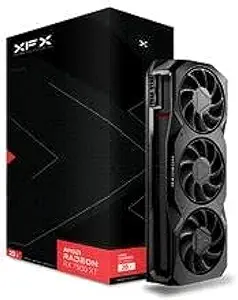
XFX Radeon RX 7900XT Gaming Graphics Card with 20GB GDDR6, AMD RDNA 3 RX-79TMBABF9
The XFX RX 7900 XT with 20GB GDDR6 harnesses AMD’s latest RDNA 3 architecture, offering extremely high frame rates and VR performance at 4K. Compared with models like the RX 580, it provides a substantial leap in VR rendering power, making it suitable for demanding VR environments and future titles. Its 20GB VRAM and high boost clock up to 2400 MHz ensure smooth, responsive experiences, but it comes with a premium price and increased power needs. This card is best suited for enthusiasts who want cutting-edge performance and are willing to invest in a future-proof setup. BestFor: high-end VR gamers and content creators demanding top-tier graphics. notIdealFor: budget-conscious users or those with limited power supplies. pros: Latest RDNA 3 architecture, 20GB GDDR6 VRAM, Exceptional VR performance, High boost clock
cons: High cost, Increased power consumption, Large physical size, Overkill for casual VR usePros:- Ultra-high frame rates for VR at 4K
- Massive 20GB VRAM supports future-proofing
- RDNA 3 architecture for efficiency and power
- High boost clock enhances responsiveness
Cons:- Premium price point
- Requires robust power supply and cooling
- Large size may not fit all cases
Best for: VR enthusiasts and professionals seeking the best possible performance
Not ideal for: users with limited budgets or smaller, less capable power supplies
- Boost Clock:2400 MHz
- Memory:20GB GDDR6
- Video Outputs:DisplayPort
- Architecture:RDNA 3
- Dimensions:Large
- Power Requirement:High wattage PSU
Bottom line: This GPU is ideal for high-end VR setups where maximum performance and future-proofing justify the high investment.
MOUGOL AMD Radeon R5 230 Low Profile Graphics Card with 2G 64Bit GDDR3 Memory Equip with PCI Express*16 2*HDMI
The MOUGOL Radeon R5 230 is a low-profile, budget-friendly card suited primarily for office work and light multimedia tasks. It doesn’t target VR but is included here for users with very basic needs or upgrading older systems. Its 2GB GDDR3 and 625 MHz core clock are insufficient for VR or gaming but perfect for HD video playback and multiple monitor setups on older systems. Its compact size and low power requirements make it ideal for refurbishing legacy PCs, though it offers no support for demanding VR applications. This option makes most sense for users who prioritize stability and basic multitasking over high performance. BestFor: basic office systems or secondary displays. notIdealFor: VR gaming or high-performance multimedia use. pros: Compact low-profile design, Low power draw, Compatible with older systems, Supports modern APIs like DX12
cons: Not suitable for VR, Very limited performance, Outdated GPU architecture, Not future-proofPros:- Low power consumption and small form factor
- Supports modern APIs for general multimedia
- Reliable for HD video and basic multitasking
- Affordable upgrade for legacy PCs
Cons:- Inadequate for VR or gaming
- Low VRAM and outdated GPU
- Limited performance for modern applications
Best for: users needing a basic display upgrade or legacy system refurbishment
Not ideal for: anyone wanting VR-compatible or gaming-capable graphics
- Memory:2GB GDDR3
- Core Clock:625 MHz
- Video Outputs:2x HDMI
- Interface:PCI Express 16
- Built on:28nm technology
- Max Resolution:1920×1080
Bottom line: This card is suitable solely for basic tasks and not recommended for VR or gaming enthusiasts.
How We Picked
The products were evaluated based on their VR performance potential, including GPU architecture, VR-specific features, and real-world compatibility. We prioritized models with recent AMD RDNA architectures for their improved efficiency and performance. Price-to-performance ratios were considered, ensuring options cater to different budgets without sacrificing essential VR capabilities. Additionally, build quality, cooling solutions, and user reviews helped us determine long-term reliability. The ranking reflects a balance between high-end power and affordability, guiding buyers toward the best value for their specific VR needs.Factors to Consider When Choosing Best AMD Graphics Cards For VR
When selecting an AMD graphics card for VR, several factors go beyond raw specs. Understanding these considerations can prevent costly mistakes and help you choose a card that delivers a smooth, immersive experience while matching your budget and system compatibility.Performance & VR Compatibility
VR demands high frame rates and low latency, making GPU performance critical. Look for cards with recent AMD RDNA 2 or RDNA 3 architecture for better efficiency and compatibility with the latest VR headsets. Avoid older models that might struggle with high-fidelity VR, leading to stutter or lag, which can break immersion and cause discomfort. Prioritize VR-specific features like low latency modes and optimized frame pacing to enhance your experience.
Memory Size and Bandwidth
VR applications benefit from higher memory capacity and bandwidth, as they handle large textures and rapid data transfers. An 8GB GDDR6 card is generally sufficient for most current VR titles, but if you’re aiming for future-proofing, consider models with more memory or faster memory interfaces. Low memory configurations like 2GB or 4GB are inadequate for modern VR, risking performance bottlenecks. Be mindful that more memory often comes with a higher price, so balance your needs accordingly.
System Compatibility & Power Requirements
Ensure your PC’s power supply and case support your chosen GPU. Some high-end AMD cards demand significant power and cooling solutions, which might require upgrades if your system is older. Compatibility with your motherboard’s PCIe slots and available space is also essential, particularly for larger, dual-fan designs. Failing to match your system’s capabilities can limit performance or lead to installation issues.
Price & Future-Proofing
While premium cards offer the best performance, they often come at a steep cost. Consider your VR usage frequency and the types of titles you want to run. Investing in a slightly more powerful GPU can extend your system’s relevance, especially as VR titles become more demanding. Conversely, mid-range cards can provide excellent value if your VR needs are modest or you’re upgrading an older system.
Cooling & Noise Levels
Extended VR sessions can push GPUs to higher loads, making cooling solutions important. Cards with robust dual or triple-fan setups tend to run cooler and quieter, enhancing comfort during long play sessions. Over time, poor cooling can lead to thermal throttling and reduced lifespan. Balance cooling effectiveness with your system’s airflow and noise preferences to find the best fit.
Frequently Asked Questions
Is an 8GB AMD GPU enough for VR gaming?
For most current VR titles, an 8GB AMD GPU provides sufficient memory to handle high-resolution textures and complex scenes without bottlenecking performance. However, as VR content continues to evolve, higher memory capacities like 10GB or more may become advantageous for future-proofing. If you primarily play less demanding or older VR games, 8GB is a solid choice, but for cutting-edge experiences, consider higher-end models with more VRAM.
Should I prioritize the latest AMD architecture for VR?
Yes, newer AMD architectures like RDNA 3 offer improved performance, efficiency, and VR-specific features such as lower latency modes and better support for high-refresh-rate headsets. These advancements translate into smoother, more responsive VR experiences, especially at higher resolutions. Opting for the latest architecture can also extend the lifespan of your system, making it a worthwhile investment if your budget allows.
How important is cooling when choosing a VR GPU?
Cooling is very important for VR GPUs, as extended use can lead to increased temperatures that may cause thermal throttling and reduced performance. Efficient cooling solutions, like dual or triple-fan setups, help maintain stable operation during long VR sessions. Additionally, quieter cooling systems contribute to a more comfortable gaming environment. Overlooking cooling can result in higher noise levels and potential long-term damage, so it’s worth choosing a GPU with a proven cooling design.
Can I use a mid-range AMD GPU for high-end VR titles?
Mid-range AMD GPUs, such as the RX 6600 XT or RX 570, can handle many VR titles effectively at 1080p or lower resolutions. However, they may struggle with more demanding, high-fidelity VR experiences, leading to lower frame rates or increased latency. If you plan to run the latest AAA VR games or want the best possible image quality, investing in higher-end models like the RX 7900XT will provide a more consistent and immersive experience.
Is VR performance significantly affected by GPU power or CPU pairings?
Yes, VR performance depends on both GPU and CPU capabilities. A powerful AMD GPU ensures high frame rates and smooth visuals, but a weak CPU can create bottlenecks, limiting overall performance. For the best VR experience, match your GPU with a capable processor and ensure your system’s other components support high data throughput and low latency. This balanced approach helps avoid issues like stuttering and lag that can detract from immersion.
Conclusion
For most users, the AMD Radeon RX 7900XT offers the best overall VR performance, especially if you want to future-proof your system and enjoy demanding titles. Budget-conscious gamers will find strong value in the RX 6600 XT or RX 570, which deliver solid VR experiences at a lower cost. Beginners or those upgrading older systems should consider models with proven compatibility and reliable cooling, like the XFX RX 580. For those seeking premium performance and longevity, investing in the latest RDNA 3 cards makes sense, while casual VR users can get by with mid-range options that balance price and performance.Flea & tick season Picks
flea and tick prevention
As an affiliate, we earn on qualifying purchases.