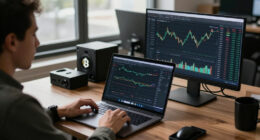
If your mini PC is underpowered, it can cause your multi-monitor trading setup to break fast, leading to lag, crashes, and missed opportunities. Signs include slow response times, flickering screens, or system freezes during trades. Upgrading hardware like the processor, RAM, or graphics card, and optimizing cables and cooling can improve stability. Keep an eye on these issues, and you’ll discover simple ways to enhance your trading performance with the right setup.

Get hardware and tech essentials delivered free with Prime
- Fast, free delivery on millions of items
- Prime Video, Amazon Music and more included
- Member-only deals all year
Key Takeaways
- An underpowered mini PC struggles to process multiple high-resolution displays, causing system lag and crashes.
- Limited CPU and RAM capacity lead to slow data updates and delayed trade executions during intensive trading sessions.
- Inadequate graphics performance results in visual lag, flickering, and blackouts on multi-monitor setups.
- Insufficient cooling and power supply can cause overheating and hardware failures, disrupting trading workflows.
- Outdated or incompatible hardware components hinder real-time data handling, reducing trading efficiency and stability.
How a Slow Mini PC Hampers Your Trading Speed
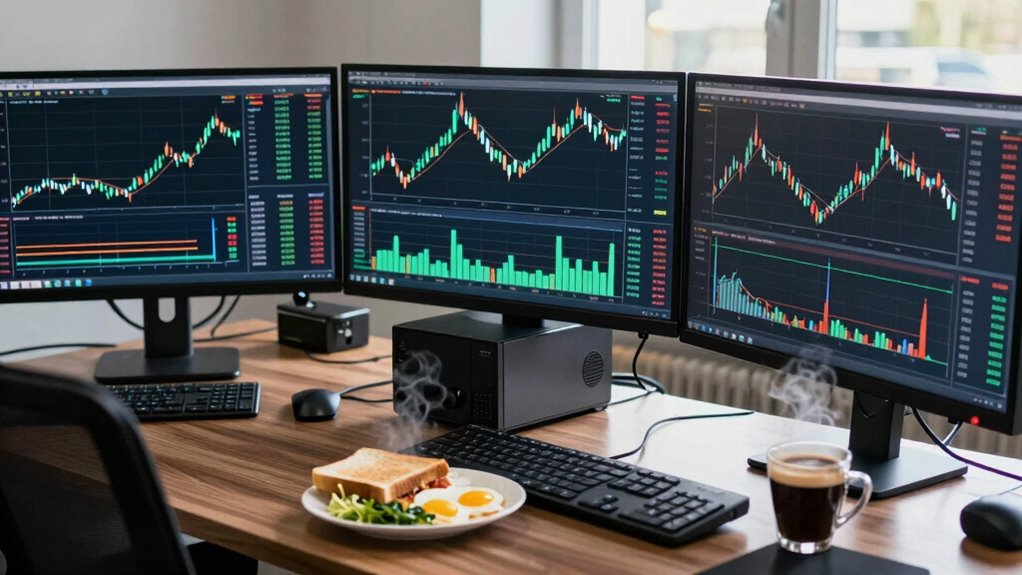
A slow mini PC can substantially hinder your trading speed because it struggles to keep up with the demanding, real-time data processing required in trading. When your system lags, the user interface becomes sluggish, causing delays in executing trades or analyzing charts. This lag can lead to missed opportunities and increased frustration during critical moments. Furthermore, a mini PC with limited processing power may face software compatibility issues, preventing you from running the latest trading platforms or multiple applications smoothly. These inefficiencies force you to wait longer for data updates and trade confirmations, reducing your overall responsiveness. To stay competitive, you need a mini PC that handles high-speed data flow effortlessly, ensuring a seamless user interface and broad software compatibility. Additionally, upgrading your hardware components, such as the processing power, can significantly improve your trading setup’s performance and responsiveness. A hardware upgrade focused on increasing processing capacity ensures your system remains efficient under demanding trading conditions. Ensuring your system maintains software compatibility is crucial for avoiding disruptions during trading sessions. Moreover, optimizing your system configuration can further enhance overall performance and reduce lag during peak trading activity. Keeping your system components aligned with performance optimization best practices can provide a noticeable boost in trading efficiency.
Signs Your Mini PC Can’t Handle Multiple Monitors
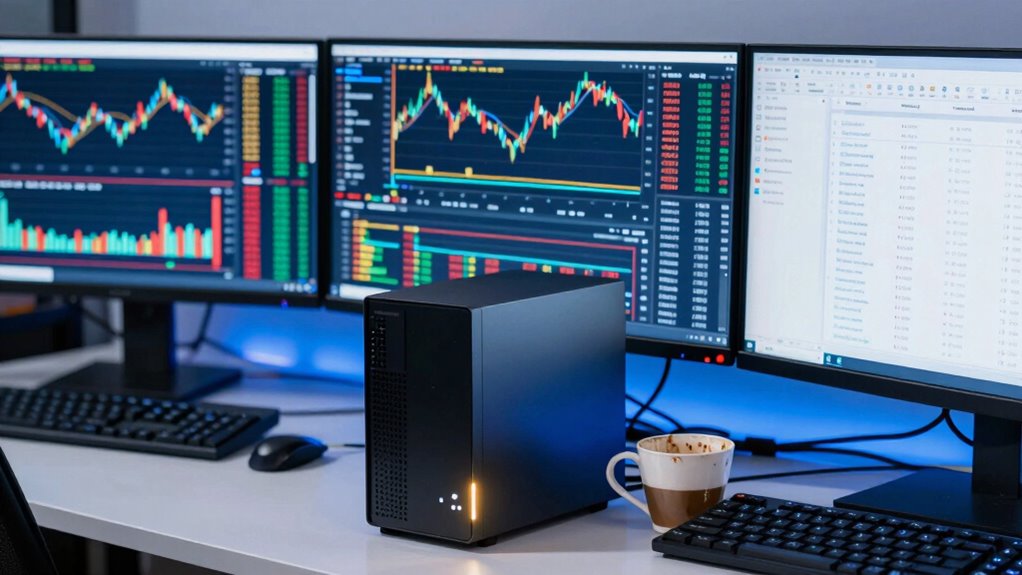
When your mini PC starts struggling with multiple monitors, it becomes clear that its hardware isn’t built for the task. You’ll notice performance issues like laggy displays, frequent freezes, or crashes. These signs point to limited Mini PC durability and inadequate hardware to support multiple screens. Software compatibility issues may also arise, causing display glitches or driver conflicts. Keep an eye on this table:
| Symptom | Cause | Solution |
|---|---|---|
| Laggy or delayed response | Insufficient GPU or RAM | Upgrade hardware or limit monitors |
| Display flickering or blackouts | Outdated or incompatible drivers | Update drivers or check software |
| System crashes or freezes | Overloaded CPU or poor durability | Reduce workload or upgrade device |
| Inability to detect monitors | Hardware or software limitations | Verify compatibility or replace mini PC |
Additionally, understanding how Glycolic Acid Benefits can improve skin might influence your overall device care routine, ensuring your hardware remains in optimal condition for demanding tasks. Regular maintenance and proper cleaning can also help prevent hardware issues that may cause performance degradation over time. Proper cooling and dust removal are crucial for maintaining the longevity of your mini PC and preventing overheating that could lead to hardware failure. Ensuring your device has an adequate power supply is essential, especially when running multiple monitors, to prevent performance drops.
Choosing the Right Mini PC for Smooth Trading
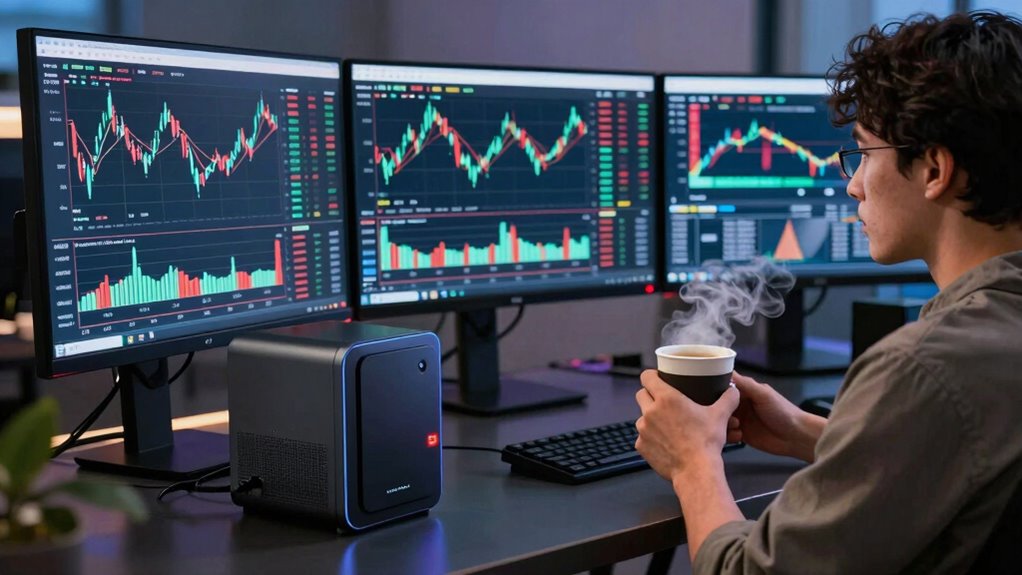
When selecting a mini PC for trading, you need enough processing power to handle multiple applications smoothly. Adequate graphics performance guarantees your charts and data display clearly without lag. Prioritizing these factors helps you maintain a seamless multi-monitor trading setup. Additionally, considering local automation capabilities can enhance your system’s efficiency and responsiveness during trading sessions. Implementing enterprise governance features, such as security scanning and audit trails, can further ensure your trading environment remains secure and compliant. Ensuring your setup includes proper cooling can prevent overheating and maintain optimal performance during intensive trading activities. Optimizing system performance through proper hardware choices also plays a crucial role in preventing slowdowns during critical trading moments. Proper hardware and software configurations are essential for maintaining system stability during extended trading hours.
Processing Power Matters
Choosing the right mini PC is crucial for guaranteeing smooth trading, especially since processing power directly impacts how quickly your system can handle multiple data streams and execute trades. To optimize performance, look for options that allow processor upgrades, giving you room for future improvements. RAM optimization is equally important; more memory enables smoother multitasking and reduces lag when running several trading platforms simultaneously. A powerful processor ensures your system can analyze data swiftly, while ample RAM prevents bottlenecks during high-volume trading. Avoid underpowered machines that struggle with these tasks, as delays could cost you money. Investing in a mini PC with strong processing capabilities ensures your setup remains responsive, stable, and ready to handle the demands of multi-monitor trading. Additionally, selecting a reliable cooling system can help maintain optimal performance during extended trading sessions.
Adequate Graphics Performance
While processing power keeps your system responsive, adequate graphics performance guarantees your multiple monitors display information smoothly and without lag. To achieve this, focus on graphics optimization by selecting a mini PC with a capable GPU or integrated graphics that support high display resolutions. Higher resolutions, like 4K, demand better graphics performance to prevent stuttering or flickering. Confirm the mini PC can handle your required display setup without compromising speed or clarity. Proper graphics performance allows real-time chart updates, smooth video feeds, and seamless multitasking across screens. Without it, your workflow slows down, and critical trading data may become distorted or delayed. Investing in a mini PC with solid graphics capabilities is essential for maintaining an efficient, multi-monitor trading environment. Additionally, understanding graphics performance helps ensure your setup remains reliable during intensive trading sessions. Recognizing the importance of system compatibility can help you choose components that work harmoniously for optimal performance, especially as display demands increase with higher resolutions and more monitors. Moreover, selecting hardware with compatible graphics specifications helps prevent issues related to hardware bottlenecks, ensuring consistent performance.
Key Hardware Features for Multi-Monitor Setups

To create an effective multi-monitor trading setup, selecting the right hardware features is vital. You need a reliable graphics card with enough outputs to support your monitors simultaneously. Prioritize good display calibration to guarantee color accuracy and consistent image quality across screens, which helps reduce eye strain and improves decision-making. Adequate bandwidth for your connections is essential; use high-quality cables and organized cable management to prevent signal interference and clutter. A sturdy, adjustable monitor stand or mount provides ergonomic comfort and flexibility. Ultimately, verify your PC has sufficient ports and power supply to handle multiple displays without performance drops. These hardware features collectively keep your setup efficient, organized, and capable of handling intensive trading tasks seamlessly.
Troubleshooting Lag and Crashes During Trading
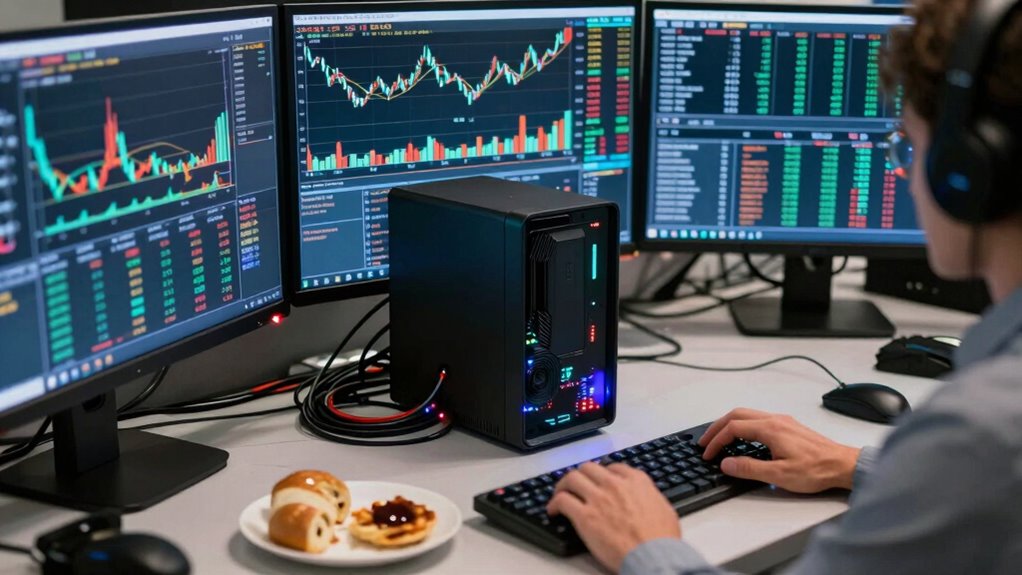
Are lag and crashes disrupting your trading performance? To troubleshoot effectively, focus on a few key areas. First, verify proper monitor calibration so your displays aren’t misaligned, which can cause visual lag. Second, check your cable management; loose or damaged cables can introduce connection issues that lead to crashes. Third, monitor your system’s resource usage; high CPU or RAM utilization indicates your mini PC may be underpowered. Fourth, update your graphics drivers and trading software to fix bugs and improve stability. Additionally, consider closing unnecessary background applications that strain system resources. By addressing these areas, you reduce lag and crashes, creating a smoother, more reliable trading environment. Proper calibration and cable management are simple yet essential steps in maintaining performance.
Tips to Boost Mini PC Speed and Stability
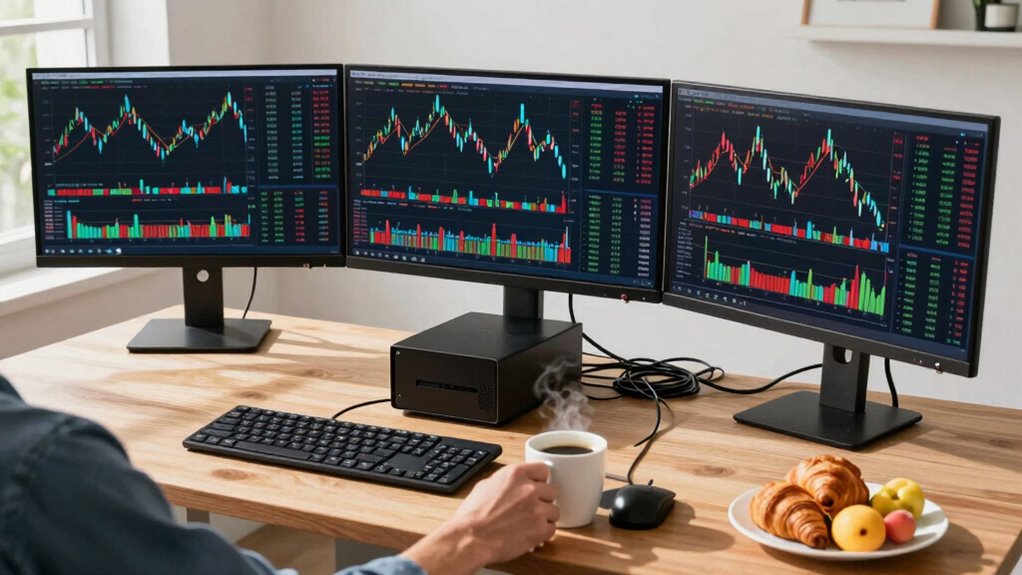
Boosting your mini PC’s speed and stability starts with simple, proactive steps. First, consider overclocking benefits carefully—raising your CPU or GPU speeds can improve performance, but do so within safe limits to prevent overheating. Next, focus on software optimization: delete unnecessary startup programs, clean your system regularly, and keep drivers up to date. Use lightweight applications where possible to reduce resource load. Adjust virtual memory settings to enhance responsiveness, and disable background processes that aren’t essential. Regularly scan for malware to prevent performance dips. These tweaks can considerably enhance stability and speed, making your multi-monitor setup more reliable during demanding trading sessions. Always monitor system temperature and performance metrics to avoid overtaxing your mini PC.
Frequently Asked Questions
Can a Mini Pc’s Performance Affect Trading Accuracy?
Yes, a Mini PC’s performance can considerably affect your trading efficiency. If it’s underpowered, you might experience lag, slow data processing, and delayed order execution, which can lead to missed opportunities and errors. When your Mini PC struggles to handle multiple monitors or intensive trading software, your accuracy drops. To maintain high trading standards, make sure your Mini PC has enough processing power and memory to support seamless, real-time trading activities.
What Are the Long-Term Costs of Upgrading a Mini PC?
Upgrading your mini PC’s long-term costs can be like planting a tree—you’ll invest now, but benefits grow over time. Costs include potential hardware compatibility issues and increased power consumption, which can raise your electricity bill. While a more powerful setup may require initial investment, it guarantees smoother trading, reducing frustrations and downtime. Over time, these upgrades pay off by boosting efficiency and minimizing costly technical hiccups.
How Does Cooling Impact Mini PC Performance During Trading?
Thermal management and cooling solutions directly impact your mini PC’s performance during trading. Efficient cooling prevents overheating, which can cause your system to slow down or crash during critical moments. By upgrading cooling solutions like better fans or heat sinks, you guarantee your mini PC runs smoothly under load. Proper thermal management maintains consistent performance, reduces downtime, and helps you avoid costly hardware failures during high-stakes trading sessions.
Are There Specific Mini PC Brands Recommended for Trading?
Did you know that over 60% of traders prefer compact mini PCs for their setups? For trading hardware recommendations, brands like Intel NUC, ASUS PN series, and Zotac Zbox are highly recommended for their reliability and performance. These mini PC brands offer powerful processors, solid graphics, and good cooling, ensuring your multi-monitor trading setup runs smoothly without lag. Choose reputed brands to avoid underpowered devices that slow down your trading efficiency.
Can Software Optimization Improve Mini PC Trading Performance?
Yes, software optimization can improve your mini PC’s trading performance. By tuning your trading software and managing background processes, you can reduce hardware bottlenecks, making your system more responsive. Keep your software updated, disable unnecessary startup programs, and optimize settings for performance. These tweaks help maximize your mini PC’s capabilities, ensuring smoother multi-monitor setups and faster data processing, even if the hardware isn’t top-tier.
Conclusion
If your mini PC struggles, your trading setup can feel like trying to steer a ship with a broken rudder—slow, frustrating, and prone to crashing. Upgrading your hardware is like giving your system a turbo boost, helping you stay sharp and responsive when every millisecond counts. Don’t let an underpowered mini PC sink your trading success; invest in the right hardware to keep your multi-monitor setup sailing smoothly through even the stormiest markets.
Halloween Picks
halloween
As an affiliate, we earn on qualifying purchases.