
Post-labor ideas are transforming education and policy by shifting focus from jobs to human development, creativity, and well-being. You’re encouraged to pursue lifelong learning and continuous skill-building rather than relying solely on formal schooling. Policies increasingly support flexible education models, online platforms, and social safety nets like universal basic income. This shift fosters innovation and resilience, emphasizing skills like emotional intelligence and creativity. Keep exploring how these changes shape our future, and you’ll discover even more ways society is evolving.

Get hardware and tech essentials delivered free with Prime
- Fast, free delivery on millions of items
- Prime Video, Amazon Music and more included
- Member-only deals all year
Key Takeaways
- Education systems are shifting towards lifelong learning, modular courses, and continuous skill development beyond traditional schooling.
- Policies increasingly prioritize human-centered skills like creativity and emotional intelligence over routine, automatable tasks.
- Integration of automation and innovation fosters adaptable curricula that prepare students for future technological collaborations.
- Societal value is moving beyond employment metrics, with social safety nets and universal basic income supporting lifelong personal growth.
- Emphasis on inclusive, accessible learning environments promotes human potential and resilience in a changing socio-economic landscape.
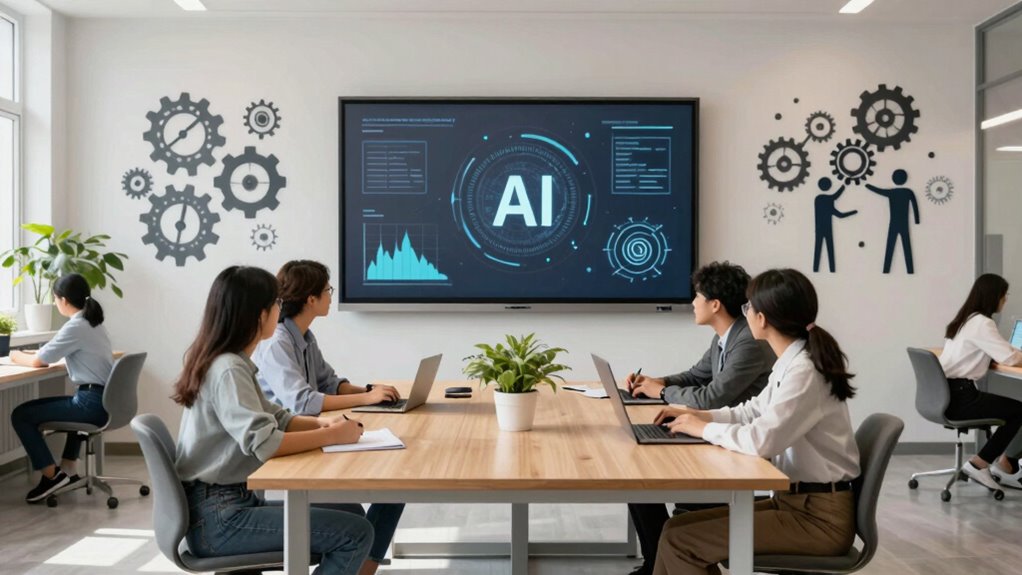
As the nature of work continues to evolve, post-labor ideas are gaining traction for their potential to reshape education and policy. These concepts challenge traditional notions that work must be the central focus of economic and social life, emphasizing instead the importance of human development, creativity, and well-being beyond employment. You might notice that policymakers and educators are increasingly exploring ways to incorporate automation integration into curricula, preparing individuals for a world where machines handle more routine tasks. By doing so, they aim to shift the focus from merely surviving in a job market to thriving through continuous skill development. This approach recognizes that automation will likely displace certain jobs, but it also opens opportunities for new roles and industries. As a result, lifelong learning becomes a cornerstone of future-ready education systems, encouraging individuals to adapt and grow throughout their lives instead of relying solely on initial schooling.
In this evolving landscape, policies are gradually moving away from rigid, one-size-fits-all models toward more flexible learning pathways. You might see this reflected in initiatives that promote modular education, micro-credentials, and ongoing professional development programs. These strategies support the idea that learning shouldn’t stop after formal schooling but should be an ongoing process integrated into everyday life. Governments and institutions are also investing in accessible online platforms and community-based programs to make lifelong learning more inclusive, recognizing that economic security increasingly depends on your ability to continuously update your skills. This shift is further reinforced by a growing recognition of the importance of automation integration in education, which prepares individuals for a future where machines and humans collaborate effectively. Additionally, fostering a culture of innovation within educational environments can help students and workers develop the creative and adaptable mindsets needed for this new era. Incorporating continuous learning as a core principle is vital to ensure individuals remain competitive and resilient in a rapidly changing world. Recognizing the interconnectedness of skills is also crucial, as it highlights how diverse competencies can complement each other in navigating complex social and technological landscapes. Emphasizing human-centered skills such as empathy and ethical reasoning also plays a crucial role in preparing learners for complex social dynamics in a technologically advanced society.
Furthermore, post-labor ideas influence education by emphasizing skills that are difficult to automate—such as creative thinking, emotional intelligence, and complex problem-solving. These skills are increasingly valued in economic policies that aim to foster innovation and resilience. Education systems are adjusting their curricula to prioritize these competencies, encouraging a mindset that embraces change and adaptability. In policy circles, discussions revolve around universal basic income and social safety nets, which provide a foundation for individuals to pursue lifelong learning without the immediate pressure of employment. This shift aims to create a society where work is no longer the sole measure of worth, and individuals have the freedom to explore personal growth and societal contribution on their terms.
Ultimately, post-labor ideas are pushing you to think differently about the future of work, education, and policy. They promote a vision where continuous learning, automation integration, and social support systems work together to build a more adaptable, inclusive society—one that values human potential beyond traditional employment.
online micro-credentials for lifelong learning
As an affiliate, we earn on qualifying purchases.
As an affiliate, we earn on qualifying purchases.
Frequently Asked Questions
How Do Post-Labor Ideas Redefine the Role of Teachers?
You see post-labor ideas shifting the teacher’s role by emphasizing teacher autonomy and curriculum innovation. Instead of following strict protocols, you’re encouraged to design your own lessons, fostering creativity and personalized learning. This approach empowers you to adapt teaching methods to student needs, promoting a more flexible, student-centered environment. As a result, your role becomes less about rigid instruction and more about guiding, inspiring, and innovating within your classroom.
What Are the Economic Implications of Post-Labor Policies on Education Funding?
Post-labor policies, like Universal Basic Income and workforce automation, profoundly impact education funding. You might see reduced reliance on traditional funding sources as automation shifts job markets, and Universal Basic Income provides financial security that can lessen the pressure on public funds. This shift encourages investment in lifelong learning and skills training, ensuring you’re prepared for evolving roles, but it also challenges governments to find sustainable ways to finance education.
How Might Post-Labor Principles Influence Student Employment Opportunities?
Like a river carving new paths, post-labor principles reshape student employment by emphasizing autonomy and flexible scheduling. You might find more opportunities to balance work and study, empowering you to choose roles that align with your goals. This approach encourages you to develop skills on your terms, fostering independence. As a result, you’ll gain real-world experience without sacrificing your education, helping you navigate the evolving landscape of work and learning.
Are There International Examples of Post-Labor Education Reforms?
You’ll find international examples of post-labor education reforms emphasizing global sustainability and technological integration. Countries like Finland and Singapore innovate by incorporating green technologies and digital skills into curricula, preparing students for a future less reliant on traditional labor. These reforms focus on sustainable development and tech-savvy competencies, helping students adapt to evolving job markets while promoting environmental responsibility and creating a more resilient, future-ready workforce worldwide.
How Do Post-Labor Concepts Address Educational Inequality?
Imagine you’re living in the 1960s, but post-labor ideas today focus on reducing equity gaps and access disparities. You see reforms that prioritize universal, flexible learning opportunities, emphasizing community-based support and technology access. These ideas challenge traditional structures, aiming to democratize education. By fostering inclusive policies, you help guarantee marginalized groups gain better access, ultimately narrowing the disparities that keep many from reaching their full potential.
adaptive learning platform subscriptions
As an affiliate, we earn on qualifying purchases.
As an affiliate, we earn on qualifying purchases.
Conclusion
As you explore how post-labor ideas shape education and policy, you’ll see a shift towards more flexible, tech-driven learning models. Notably, a recent survey found that 65% of students favor personalized online courses over traditional classrooms, highlighting a growing demand for adaptable education. Embracing these ideas could redefine how society prepares for the future, making learning more accessible and aligned with a changing economy. Staying informed can help you navigate and influence this evolving landscape.
emotional intelligence training courses
As an affiliate, we earn on qualifying purchases.
As an affiliate, we earn on qualifying purchases.
As an affiliate, we earn on qualifying purchases.
Halloween Picks
halloween
As an affiliate, we earn on qualifying purchases.