

📊 Full opportunity report: Unveiling 9 AI Technologies Shaping 2026 on ThorstenMeyerAI.com — validation score, market gap, and execution plan.

Get hardware and tech essentials delivered free with Prime
- Fast, free delivery on millions of items
- Prime Video, Amazon Music and more included
- Member-only deals all year
TL;DR
Nine AI technologies have been identified as key drivers shaping 2026, with confirmed advancements in areas like natural language processing, autonomous systems, and AI ethics. These developments impact multiple sectors, from healthcare to transportation.
Nine AI technologies are confirmed to be shaping the technological landscape in 2026, impacting industries such as healthcare, transportation, and finance. These innovations are considered critical for future growth and competitiveness, according to industry experts and recent reports.
Industry analysts and technology firms have identified nine AI advancements that are actively being integrated into products and services this year, as detailed in the original analysis. These include breakthroughs in natural language processing, autonomous systems, AI-powered cybersecurity, and ethical AI frameworks. Companies like OpenAI, Google DeepMind, and several startups have announced major milestones in these areas, emphasizing their importance for the year.
For example, improved natural language models now enable more sophisticated virtual assistants and customer service bots, while autonomous vehicle systems are reaching higher levels of safety and reliability. AI-driven cybersecurity tools are increasingly capable of predicting and preventing cyber threats in real time, and new ethical AI guidelines are being adopted to ensure responsible deployment of AI systems.
The 9 picks
- 1
 MSI B850 GAMING PLUS WIFI Motherboard with 32GB DDR5 RAM BundleView on Amazon →
 - 2
 ASUS ROG Strix X870E-A Gaming WiFi 7 Motherboard for AMD AM5View on Amazon →
 - 3
 ASUS ROG Strix X870E-E Gaming WiFi AMD AM5 X870 ATX MotherboardView on Amazon →
 - 4
 MSI MPG X870E Carbon WiFi Gaming Motherboard (AMD Ryzen 9000/8000/7000 Series…View on Amazon →
 - 5
 ASUS ROG Strix X870-A Gaming WiFi AMD AM5 MotherboardView on Amazon →
 - 6
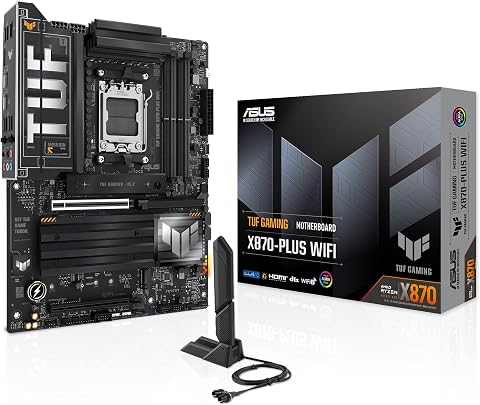 ASUS TUF Gaming X870-PLUS WiFi AMD AM5 MotherboardView on Amazon →
 - 7
 ASUS TUF Gaming Z790-Plus WiFi LGA 1700 MotherboardView on Amazon →
 - 8
 GIGABYTE B850 AORUS Elite WIFI7 AMD AM5 MotherboardView on Amazon →
 - 9
 ASUS ROG Strix B550-F Gaming WiFi II AMD AM4 MotherboardView on Amazon →
Why These AI Technologies Matter for 2026
This development matters because these nine AI technologies are expected to reshape multiple sectors, improve efficiency, and address longstanding challenges such as bias, safety, and ethical concerns. Their widespread adoption could accelerate digital transformation, influence regulatory frameworks, and redefine competitive advantages for companies across industries.
Moreover, these innovations could impact everyday life, from smarter healthcare diagnostics to autonomous transportation, raising questions about regulation, privacy, and employment. Understanding these technologies helps stakeholders prepare for their societal and economic implications.
Key Developments in AI Leading Up to 2026
Over the past few years, AI has rapidly advanced through improvements in machine learning algorithms, increased computational power, and expanded datasets. Major breakthroughs in natural language processing, exemplified by GPT models, have set the stage for more complex AI applications. Governments and international organizations have also begun establishing guidelines for responsible AI use, shaping the development trajectory.
In 2025, several companies announced significant milestones, such as GPT-5’s release and autonomous vehicle trials reaching new safety benchmarks. These milestones suggest a clear momentum toward integrating AI more deeply into everyday life and industry operations, setting the context for the nine technologies confirmed to influence 2026.
“These nine AI innovations are not just incremental improvements; they represent a fundamental shift in how AI will be integrated into society and industry this year.”
— Dr. Emily Carter, AI researcher
Unconfirmed Aspects of the 2026 AI Landscape
While nine AI technologies are confirmed to be influential in 2026, the exact scope of their deployment, regulatory responses, and long-term societal impacts remain uncertain. Details about how quickly these technologies will be adopted across different regions and industries are still emerging, and some claims about their capabilities are based on early-stage implementations rather than widespread deployment.
Next Steps for AI Development and Adoption in 2026
Industry leaders and policymakers are expected to continue refining AI standards and accelerating deployment of these technologies. Monitoring regulatory developments, investment trends, and technological breakthroughs over the coming months will be crucial. Additionally, ongoing research and pilot programs will clarify the full impact of these AI innovations, shaping the future landscape beyond 2026.
Key Questions
What are the nine AI technologies confirmed for 2026?
The nine technologies include advancements in natural language processing, autonomous systems, AI cybersecurity, ethical AI frameworks, AI-powered healthcare diagnostics, AI in financial services, AI-driven automation, AI for climate modeling, and AI-enhanced robotics.
Are these AI technologies ready for widespread use?
Most are in advanced stages of development or early deployment, but widespread adoption varies by industry and region. Regulatory and ethical considerations are also influencing deployment timelines.
How might these AI innovations affect everyday life?
They could lead to smarter healthcare, autonomous transportation, improved cybersecurity, and more personalized digital experiences, while also raising questions about privacy and employment.
Will regulations keep pace with AI development?
Regulatory frameworks are evolving but may lag behind rapid technological advances. Policymakers are actively engaging with industry to establish responsible AI standards.
What industries will benefit most from these AI technologies?
Healthcare, transportation, finance, cybersecurity, and manufacturing are expected to see significant benefits, along with sectors focused on ethical AI and automation.
Source: ThorstenMeyerAI.com
Halloween Picks
halloween
As an affiliate, we earn on qualifying purchases.