
📊 Full opportunity report: 2026 AI Processor Showdown: Which One Reigns Supreme? on ThorstenMeyerAI.com — validation score, market gap, and execution plan.

Get hardware and tech essentials delivered free with Prime
- Fast, free delivery on millions of items
- Prime Video, Amazon Music and more included
- Member-only deals all year
TL;DR
In 2026, multiple AI processors from AMD, Intel, and emerging players are competing for dominance. The showdown focuses on performance, efficiency, and future-proofing, with key developments still unfolding, as detailed in the original analysis.
Multiple companies have launched new AI processors in 2026, sparking a competitive race to determine which chip will dominate the rapidly expanding AI hardware market. These developments matter as AI workloads grow in importance across industries, influencing everything from data centers to consumer devices.
This year, AMD, Intel, and emerging firms introduced new AI-optimized chips, emphasizing performance, power efficiency, and scalability. AMD’s latest Ryzen-based AI processors leverage advanced cache and multi-core architectures, while Intel’s new Ultra series emphasizes energy efficiency and integration with existing data center infrastructure. Several startups have also entered the scene with innovative designs promising higher throughput and lower latency.
Confirmed facts include AMD’s recent launch of the Ryzen 9 7950X3D with AI-specific optimizations, and Intel’s unveiling of the Core Ultra 9 235 with enhanced AI acceleration features. Industry analysts note that these processors are designed to handle increasingly complex AI models, with benchmarks already showing promising results. However, the market remains dynamic, and no single processor has yet established clear dominance.
The 10 picks
- 1
 AMD Ryzen 9 9950X 16-Core Desktop ProcessorView on Amazon →
 - 2
 AMD Ryzen 7 9800X3D 8-Core, 16-Thread Desktop ProcessorView on Amazon →
 - 3
 AMD Ryzen 7 5800X3D 8-core, 16-thread Desktop Processor with AMD 3D V-Cache T…View on Amazon →
 - 4
 AMD Ryzen 7 7800X3D 8-Core, 16-Thread Desktop ProcessorView on Amazon →
 - 5
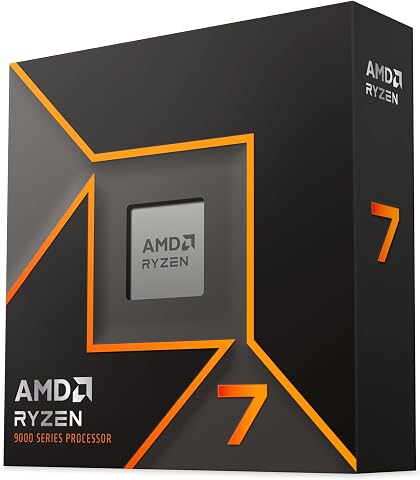 AMD Ryzen 7 9700X 8-Core, 16-Thread Unlocked Desktop ProcessorView on Amazon →
 - 6
 AMD Ryzen 7 5800XT 8-Core, 16-Thread Desktop ProcessorView on Amazon →
 - 7
 AMD Ryzen 7 7700X 8-Core, 16-Thread Unlocked Desktop ProcessorView on Amazon →
 - 8
 Intel Core Ultra 5 Desktop Processor 225, 10 cores (6 P-cores + 4 E-cores), u…View on Amazon →
 - 9
 AMD Ryzen 5 9600X 6-Core, 12-Thread Unlocked Desktop ProcessorView on Amazon →
 - 10
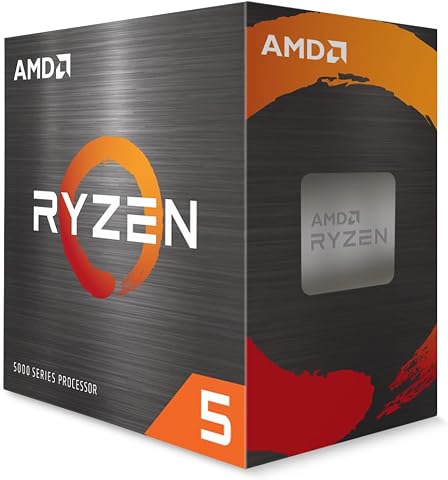 AMD Ryzen 5 5500 6-Core Desktop Processor with Wraith Stealth CoolerView on Amazon →
Implications of the 2026 AI Processor Competition
This competition is shaping the future of AI computing, impacting sectors like cloud services, autonomous systems, and consumer electronics. The leading processor will influence AI development speed, energy consumption, and cost efficiency, affecting both industry players and end-users. As AI models become more sophisticated, hardware performance and scalability will be critical in enabling new applications and innovations.2026 AI Processor Market Developments
The AI processor market has seen rapid growth over the past few years, driven by the surge in AI applications across industries. Major players like AMD and Intel have historically competed in general-purpose CPUs, but in 2026, their focus has shifted toward AI-specific hardware. Recent launches include AMD’s Ryzen 7000 series with AI enhancements and Intel’s Ultra series, both aiming to outperform previous generations. The emergence of startups with novel architectures adds further complexity. Industry experts note that this year’s developments are part of a broader trend toward specialized AI chips designed for training and inference workloads, with future prospects hinging on performance benchmarks and ecosystem support.“The winners will be those who can balance raw AI performance with power efficiency and scalability for future workloads.”
— Jane Liu, industry researcher
Unconfirmed Aspects of the 2026 AI Processor Race
While several processors have been announced and benchmark results are promising, it is not yet clear which chip will achieve long-term dominance. Compatibility with evolving AI frameworks, ecosystem support, and real-world performance in diverse workloads remain to be fully tested. Additionally, the impact of upcoming hardware innovations and potential new entrants could shift the competitive landscape.
Upcoming Developments in AI Processor Competition
Major chipmakers are expected to release updated models and firmware enhancements throughout 2026, with industry benchmarks and real-world testing providing clearer insights. Investors and industry stakeholders will closely watch performance metrics, power efficiency, and AI workload scalability. The market’s trajectory will become clearer as these processors are adopted in data centers, autonomous systems, and consumer devices, shaping the future of AI hardware.
Key Questions
Which AI processor is currently leading in performance?
It is too early to definitively state which processor leads, as benchmarks are still being evaluated and real-world testing is ongoing. AMD’s Ryzen 9 7950X3D and Intel’s Ultra series are among the frontrunners.
Will new AI processors replace existing data center hardware?
Many of the new processors are designed to complement existing hardware, offering higher efficiency and scalability. Whether they fully replace older systems depends on performance, compatibility, and cost considerations.
What factors will determine the market leader in 2026?
Key factors include raw AI processing performance, power efficiency, ecosystem support, scalability, and adaptability to future workloads. Long-term software and hardware integration will also play a role.
Are startups competing with AMD and Intel in AI hardware?
Yes, several startups have introduced innovative AI chip architectures promising higher throughput and lower latency, adding new competition to the market.
When can we expect major updates or new processor launches?
Major manufacturers are expected to release updated models and firmware updates throughout 2026, with ongoing benchmarks and testing shaping the competitive landscape.
Source: ThorstenMeyerAI.com
Halloween Picks
halloween
As an affiliate, we earn on qualifying purchases.