

TL;DR

Get hardware and tech essentials delivered free with Prime
- Fast, free delivery on millions of items
- Prime Video, Amazon Music and more included
- Member-only deals all year
In 2026, ten new AI technologies have emerged, promising to revolutionize sectors like healthcare, manufacturing, and communication. This report highlights confirmed developments and their potential impact.
Ten groundbreaking AI technologies have been identified in 2026, marking a significant leap in artificial intelligence capabilities. These innovations are set to transform various industries, from healthcare to manufacturing, and are confirmed through recent industry reports and official announcements. This development underscores the rapid pace of AI advancement and its increasing integration into everyday life.
Among the confirmed technologies are advanced generative AI models capable of producing highly accurate and context-aware content, and autonomous AI systems that can perform complex tasks without human intervention. For example, companies like OpenAI and Google have announced new models that surpass previous benchmarks in natural language understanding and image synthesis.
Additionally, new AI-powered robotics are entering production lines, enabling more efficient manufacturing processes. These robots feature improved perception and decision-making abilities, confirmed through pilot programs and industry disclosures. Experts note that these technologies are already being integrated into critical sectors, with pilot projects demonstrating their potential to reduce costs and increase productivity.
The 10 picks
- 1
 ASUS ROG Astral NVIDIA GeForce RTX 5080 16GB GDDR7 OC Edition Gaming Graphics…View on Amazon →
 - 2
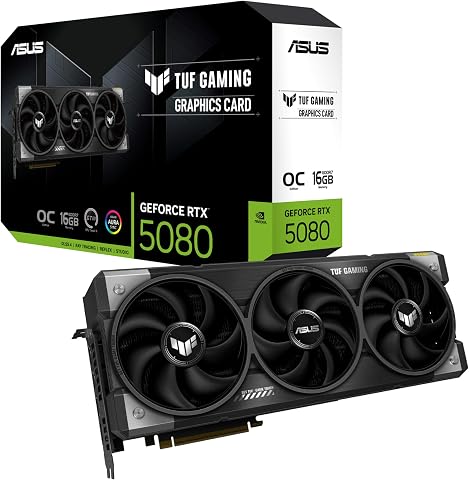 ASUS TUF Gaming GeForce RTX 5080 16GB GDDR7 OC Edition Graphics CardView on Amazon →
 - 3
 PNY NVIDIA GeForce RTX 5080 Epic-X ARGB OC Triple Fan Graphics Card (16GB GDD…View on Amazon →
 - 4
 GIGABYTE GeForce RTX 5070 Ti Gaming OC 16G Graphics CardView on Amazon →
 - 5
 ASUS Prime NVIDIA GeForce RTX 5070 OC Edition Graphics Card (12GB GDDR7, PCIe…View on Amazon →
 - 6
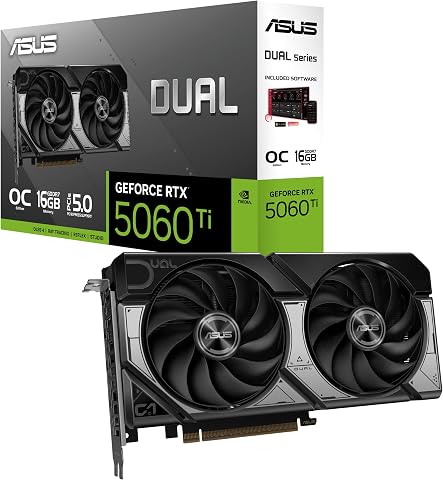 ASUS Dual NVIDIA GeForce RTX 5060 Ti 16GB GDDR7 OC Edition Graphics CardView on Amazon →
 - 7
 XFX Swift AMD Radeon RX 9060 XT OC Triple Fan Gaming Edition with 16GB GDDR6View on Amazon →
 - 8
 GIGABYTE Radeon RX 9060 XT Gaming OC ICE 16G Graphics CardView on Amazon →
 - 9
 ASUS Dual NVIDIA GeForce RTX 5060 8GB GDDR7 OC Edition Graphics CardView on Amazon →
 - 10
 GIGABYTE GeForce RTX 5060 WINDFORCE OC 8G Graphics CardView on Amazon →
Impacts of 2026’s AI Innovations on Industry and Society
The emergence of these AI technologies in 2026 is poised to reshape multiple sectors, offering increased efficiency, new capabilities, and economic opportunities. Healthcare, for instance, could see faster drug discovery and personalized treatment plans, while manufacturing may benefit from fully autonomous production lines. These advances could also influence employment patterns, raising questions about workforce adaptation and regulation. The confirmed progress signals a new era of AI-driven transformation with widespread implications for consumers, businesses, and policymakers.
Recent Developments Leading to 2026’s AI Breakthroughs
Over the past few years, AI has seen consistent growth, driven by breakthroughs in deep learning, increased computational power, and large-scale data availability. Major tech companies have announced incremental innovations, but 2026 marks a pivotal year with multiple breakthroughs announced simultaneously. Notably, the release of large language models with enhanced capabilities and the deployment of autonomous systems in real-world environments have set the stage for this wave of innovation.
Industry insiders note that these developments follow years of research and substantial investments, with collaborations between academia and industry accelerating progress. While some claims about future capabilities remain speculative, the current confirmed technologies demonstrate tangible advancements already impacting markets.
Unconfirmed Claims and Future Possibilities in AI
While many AI technologies announced in 2026 are confirmed through industry reports and pilot programs, some claims about fully autonomous, general-purpose AI remain unverified. Experts caution that certain breakthroughs are still in experimental stages or limited to specific applications, and broader societal impacts are yet to be fully assessed. Regulatory and ethical considerations are also still evolving, making some future applications uncertain.
Next Steps for AI Development and Regulation in 2026
Industry leaders and regulators are expected to focus on scaling confirmed AI technologies, establishing standards for safety and ethics, and addressing workforce impacts. Further research and pilot programs will clarify the capabilities and limitations of these innovations. Governments and organizations may also introduce new policies to manage AI deployment and ensure responsible use, with ongoing updates anticipated throughout the remainder of 2026.
Key Questions
What are the most impactful AI technologies confirmed in 2026?
Confirmed impactful AI technologies include advanced generative models, autonomous systems for industrial use, and improved natural language processing tools, all demonstrating significant progress over previous years.
Are these AI innovations already being used commercially?
Yes, many of these technologies are in pilot phases or early deployment, with companies actively integrating them into healthcare, manufacturing, and communication platforms.
What are the main uncertainties surrounding these AI developments?
Uncertainties include the full capabilities of some autonomous systems, ethical and regulatory implications, and the potential societal impacts of widespread AI adoption.
How might AI in 2026 affect jobs and the economy?
AI advancements could lead to increased automation and productivity, potentially transforming job markets. However, the specific economic impacts are still being evaluated as technologies mature and regulations develop.
Source: ThorstenMeyerAI.com
Halloween Picks
halloween
As an affiliate, we earn on qualifying purchases.