
TL;DR

Get hardware and tech essentials delivered free with Prime
- Fast, free delivery on millions of items
- Prime Video, Amazon Music and more included
- Member-only deals all year
Nine innovative AI tools are anticipated to reshape various sectors in 2026. This report details confirmed features, potential impacts, and what remains uncertain about these technologies.
Nine revolutionary AI tools are expected to launch or become widely adopted in 2026, according to industry sources and expert forecasts. The Rise Of AI: Top 10 Trends To Watch In 2026 These tools are poised to transform sectors including healthcare, finance, creative industries, and more, making their development highly relevant for businesses and consumers alike.
Among the confirmed tools, OpenAI’s GPT-6 is anticipated to significantly advance natural language processing, with improvements in contextual understanding and multi-language support. Similarly, Google’s DeepMind is developing AlphaCode 2.0, a coding AI that aims to automate complex programming tasks with greater accuracy. Other confirmed developments include the release of NVIDIA’s Omniverse AI for real-time 3D simulation, and IBM’s WatsonX platform expanding into personalized medicine.
While these tools are already in advanced testing phases or announced for release, specific features, deployment timelines, and integration capabilities are still being refined. You can learn more about upcoming AI trends in Future Focus: 9 AI Trends To Watch In 2026. Industry insiders suggest that several tools will incorporate multi-modal capabilities, combining text, images, and video understanding, but official specifications are yet to be released. For more insights, see the original analysis.
The 10 picks
- 1
 ASUS ROG Astral NVIDIA GeForce RTX 5080 16GB GDDR7 OC Edition Gaming Graphics…View on Amazon →
 - 2
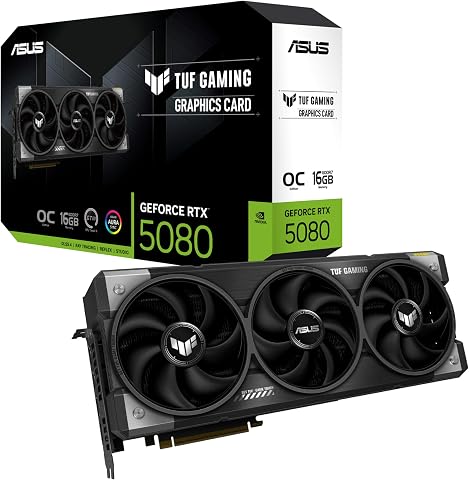 ASUS TUF Gaming GeForce RTX 5080 16GB GDDR7 OC Edition Graphics CardView on Amazon →
 - 3
 PNY NVIDIA GeForce RTX 5080 Epic-X ARGB OC Triple Fan Graphics Card (16GB GDD…View on Amazon →
 - 4
 GIGABYTE GeForce RTX 5070 Ti Gaming OC 16G Graphics CardView on Amazon →
 - 5
 ASUS Prime NVIDIA GeForce RTX 5070 OC Edition Graphics Card (12GB GDDR7, PCIe…View on Amazon →
 - 6
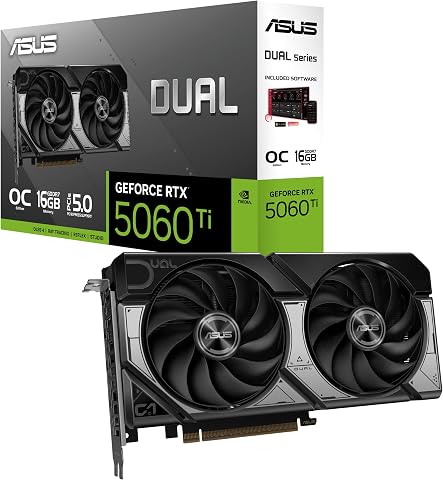 ASUS Dual NVIDIA GeForce RTX 5060 Ti 16GB GDDR7 OC Edition Graphics CardView on Amazon →
 - 7
 XFX Swift AMD Radeon RX 9060 XT OC Triple Fan Gaming Edition with 16GB GDDR6View on Amazon →
 - 8
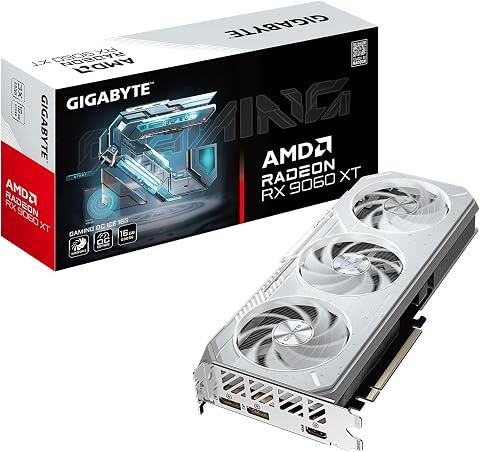 GIGABYTE Radeon RX 9060 XT Gaming OC ICE 16G Graphics CardView on Amazon →
 - 9
 ASUS Dual NVIDIA GeForce RTX 5060 8GB GDDR7 OC Edition Graphics CardView on Amazon →
 - 10
 GIGABYTE GeForce RTX 5060 WINDFORCE OC 8G Graphics CardView on Amazon →
Potential Industry Transformations from 2026 AI Tools
These AI tools are expected to dramatically increase productivity, automate complex tasks, and enable new applications across multiple industries. For example, advances in AI-driven healthcare diagnostics could improve patient outcomes, while AI-enhanced creative tools might revolutionize content creation. The widespread adoption of these tools could also raise ethical and regulatory questions, making understanding their capabilities and limitations crucial for stakeholders.Current State of AI Development and 2026 Outlook
AI technology has seen rapid growth over the past few years, with major companies investing heavily in research and development. Tools like GPT-4 and DALL-E have already demonstrated AI’s potential in language and image generation. Experts predict that by 2026, AI will reach new levels of sophistication, with multi-modal models and more autonomous systems becoming mainstream. However, the timeline for widespread deployment remains uncertain due to technical, ethical, and regulatory challenges.
Unconfirmed Details and Development Challenges
Many of the predicted AI tools are still in prototype or testing phases, with official release dates and detailed features not yet confirmed. It remains unclear how quickly these tools will be adopted at scale, and whether unforeseen technical or ethical hurdles could delay or alter their development. Additionally, regulatory frameworks for advanced AI are still evolving, which could influence deployment timelines and usage limitations.
Next Steps for AI Development and Adoption in 2026
Industry leaders and developers will continue refining these AI tools through pilot programs and beta testing over the coming months. Major tech conferences and industry events in late 2025 and early 2026 are expected to reveal more concrete timelines and feature sets. Stakeholders should monitor regulatory developments and prepare for integration strategies to maximize the benefits of these emerging AI capabilities.
Key Questions
Which of the nine AI tools are most likely to be released first in 2026?
While exact timelines are still under wraps, tools like OpenAI’s GPT-6 and Google’s AlphaCode 2.0 are among the frontrunners, with some industry sources suggesting early 2026 releases.
How might these AI tools impact jobs and industries?
These tools could automate many complex tasks, increasing productivity and enabling new workflows. However, they may also displace certain roles, prompting discussions around workforce adaptation and ethical use.
What are the main challenges in deploying these AI tools at scale?
Technical issues such as ensuring reliability and safety, as well as ethical concerns and evolving regulations, are the primary hurdles to large-scale adoption.
Will these AI tools be accessible to small businesses and consumers?
Accessibility will depend on pricing, integration ease, and regulatory policies. Some tools are expected to be available via cloud services or APIs, broadening their reach.
Are there any risks associated with these upcoming AI tools?
Potential risks include misuse, privacy violations, and unintended biases. Responsible development and regulation are essential to mitigate these concerns.
Source: ThorstenMeyerAI.com
Halloween Picks
halloween
As an affiliate, we earn on qualifying purchases.