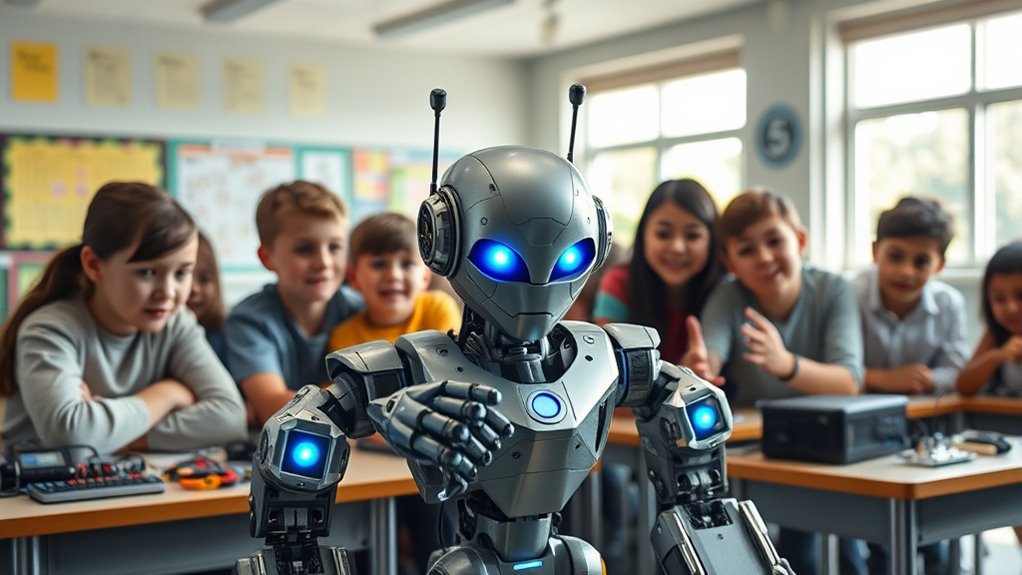

Cleveland’s innovative robotics programs are revolutionizing how students engage with STEM, offering hands-on experiences that build skills, teamwork, and confidence. By providing affordable kits, fostering industry partnerships, and connecting students with cutting-edge technologies like 3D printing and medical robotics, Cleveland sets a powerful example. These initiatives inspire future leaders and could be a model for Ohio’s broader success. Keep exploring to discover how this approach can spark change across the entire state.

Get hardware and tech essentials delivered free with Prime
- Fast, free delivery on millions of items
- Prime Video, Amazon Music and more included
- Member-only deals all year
Key Takeaways
- Cleveland’s extensive robotics kits and programs make STEM accessible, engaging diverse students across the community.
- Partnerships with NASA, universities, and industry provide hands-on experience with advanced manufacturing.
- Affordable kits and inclusive initiatives aim to close STEM participation gaps among underrepresented groups.
- Student participation in competitions and skill-building courses fosters innovation, teamwork, and technical proficiency.
- Cleveland’s successful model can serve as a blueprint to expand robotics education statewide in Ohio.
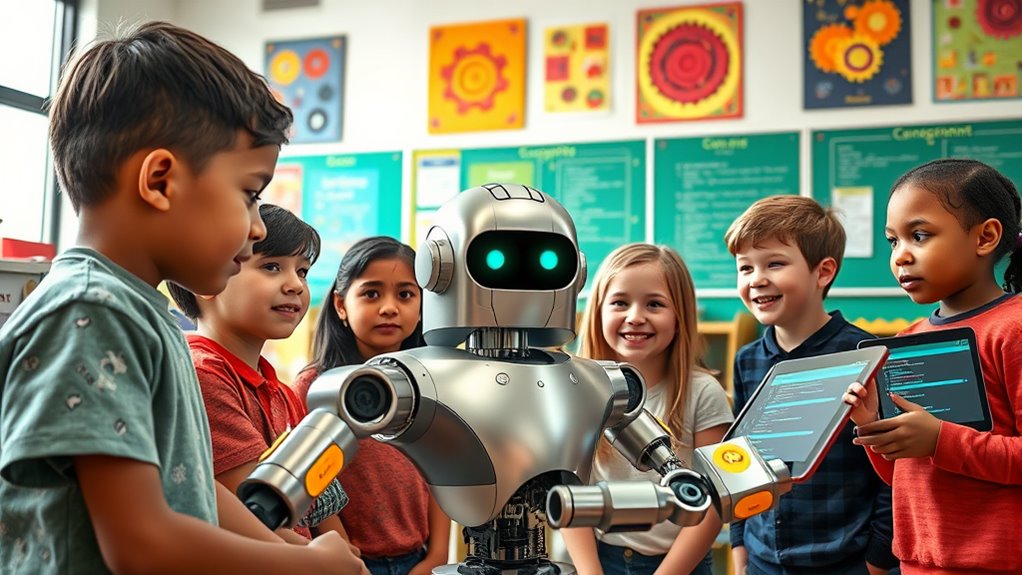
Have you ever wondered how Cleveland is transforming STEM education and robotics innovation? The city’s efforts are creating a dynamic environment where students gain real-world skills, thanks to innovative programs and strategic partnerships. Cleveland Metropolitan School District (CMSD) leads the way with the Experiential Robotics Platform (XRP), a groundbreaking initiative that distributes over 1,000 robotics kits across the district. These kits aren’t just tools; they’re gateways to hands-on learning, designed to make STEM education accessible and engaging for all students. What’s more, the XRP program has already delivered over 25,000 kits globally, showing its far-reaching impact. The district also offers an educational masterclass series featuring global leaders in additive manufacturing, giving students exposure to cutting-edge content and inspiring future careers. The XRP program is supported by state and community investments, ensuring sustainability and expansion. Furthermore, data-driven strategies are implemented to continuously assess and improve these educational initiatives. Community partnerships play an essential role in Cleveland’s robotics scene. The Community Manufacturing Initiative (CMI) deploys 3D print farms alongside robotics kits, allowing students to work with advanced manufacturing technologies firsthand. These collaborations ensure that students aren’t just learning theory—they’re actively building and experimenting with real-world applications. Accessibility remains a priority, so robotics kits are priced below the cost of a textbook, making these resources available to a broad demographic. This approach helps to close the gap in STEM participation and sparks interest among students who might not have otherwise considered careers in tech. Meanwhile, NASA Glenn Research Center is actively involved in nurturing young talent through high school robotics teams and immersive facility visits. Students get to tour NASA’s cutting-edge labs, such as the Simulated Lunar Operations and Graphics and Visualization Laboratories, offering a glimpse into advanced robotics and space exploration. These experiences motivate students by connecting classroom learning with real-world applications, and interactions with NASA professionals help ignite their passion for STEM careers. STEM challenges, like building truss structures, sharpen their problem-solving skills, preparing them for future challenges in engineering and science. Local educational institutions also support robotics development. MC²STEM High School spearheads projects that boost student engagement, while Cleveland State University provides mentorship and training opportunities. Students participate in FIRST Robotics competitions, designing and testing robots that solve complex problems. These hands-on experiences not only develop technical skills but also foster teamwork and innovation. Cleveland State Community College offers a flexible robotics technician course that emphasizes industry trends, communication, and leadership—skills critical for advancing in manufacturing and engineering fields. Cleveland’s efforts extend into medical robotics too. The Cleveland Clinic hosts conferences on robotics in plastic surgery, highlighting how these innovations are transforming healthcare. All these initiatives work together to create a well-rounded ecosystem that nurtures curiosity, builds skills, and inspires the next generation of STEM leaders. Cleveland’s robotics experiment is proving that with the right resources and partnerships, students can thrive—and that model should inspire Ohio to expand its reach and impact.
affordable robotics kits for students
As an affiliate, we earn on qualifying purchases.
As an affiliate, we earn on qualifying purchases.
Frequently Asked Questions
How Are Students Selected for the Cleveland Robotics Program?
You get selected for the Cleveland robotics program through an application process. You’ll typically receive an application from your instructor or team member around October, and then you’ll go through an interview at a designated location like Tri-C Metro Campus. To qualify, you need to be in good academic and behavioral standing, complete permission slips, and agree to follow the program’s code of conduct. Active participation and teamwork are also essential.
What Age Groups Benefit Most From the Experiment?
You benefit most from the Cleveland robotics experiment at every age, starting with young children as early as 4 years old. As you grow, you gain new skills through targeted programs—building foundational STEM skills in early years, applying them in competitions during middle school, and mastering advanced robotics in high school. These programs progressively prepare you for college and careers, ensuring continuous growth and opportunity at every stage.
Are There Plans to Expand the Program Statewide?
Yes, there are plans to expand the program statewide. State education officials see the Cleveland rollout as a model for broader adoption across Ohio, aiming to make robotics education accessible in urban, suburban, and rural districts. While no official timeline or funding is set yet, community support and industry partnerships are key to fueling this growth. Your involvement and advocacy can help push for a faster, equitable expansion to benefit all students.
What Skills Do Students Develop Through Participation?
When you participate in robotics programs, you develop hands-on engineering skills, learn programming, and deepen your understanding of STEM concepts. You’ll also sharpen problem-solving, adaptability, and creativity. Working in teams, you’ll boost your communication, leadership, and time management abilities. These experiences prepare you for future careers, open college opportunities, and foster critical thinking. Fundamentally, you gain practical skills and confidence that can shape your academic and professional journey.
How Is Success Measured in the Cleveland Robotics Initiative?
You measure success in the Cleveland robotics initiative through various indicators. You look at student achievements in regional and international competitions, tracking improvements in technical skills like coding and engineering. You also assess soft skills such as teamwork and leadership. Additionally, you consider participation rates among underserved populations, student confidence, and career readiness. Regular data analysis and KPIs help you evaluate progress, identify challenges, and celebrate milestones, ensuring continuous program growth and impact.
As an affiliate, we earn on qualifying purchases.
Conclusion
This Cleveland robotics experiment is a spark that’s igniting young minds like a wildfire, spreading innovation and curiosity across Ohio. By giving students hands-on experience, you’re planting seeds that will grow into future tech leaders. Embrace this movement, because when you inspire students today, you’re shaping the bright, unstoppable wave of tomorrow’s robotics revolution. Let’s turn this small spark into a blazing trail that lights the way for the entire state.
robotics competition kits for high school
As an affiliate, we earn on qualifying purchases.
As an affiliate, we earn on qualifying purchases.
medical robotics educational models
As an affiliate, we earn on qualifying purchases.
As an affiliate, we earn on qualifying purchases.
Fall Picks
fall essentials
As an affiliate, we earn on qualifying purchases.