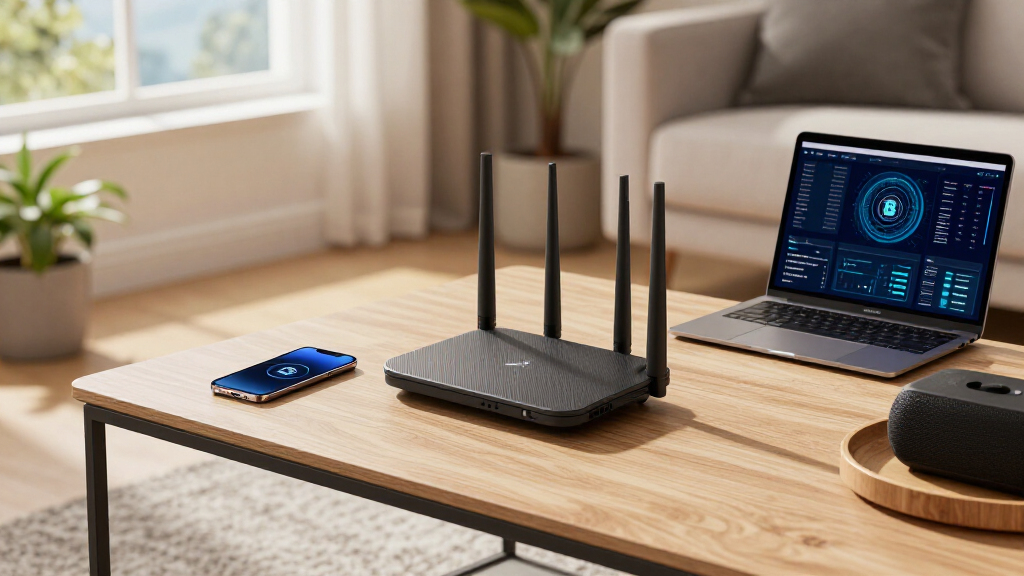

🔍 Read the full analysis: 2026 Mesh WiFi Systems For Fast And Stable Internet on ThorstenMeyerAI.com

Get hardware and tech essentials delivered free with Prime
- Fast, free delivery on millions of items
- Prime Video, Amazon Music and more included
- Member-only deals all year
TL;DR
In 2026, new mesh WiFi systems leverage WiFi 6 and WiFi 7 standards to deliver faster, more stable internet. Leading models include Deco 7 Pro Tri-Band WiFi 7 and NETGEAR Orbi 360 Series WiFi 7, targeting demanding households. The development aims to meet increasing bandwidth needs amid growing device density, as detailed in the original analysis.
Manufacturers are launching new mesh WiFi systems in 2026 that incorporate the latest WiFi 7 technology, promising faster speeds and more reliable coverage. For a detailed overview, see the original analysis of top mesh WiFi systems. These systems are designed to meet the needs of large homes, dense device environments, and future connectivity demands, making them highly relevant for consumers seeking robust home networks.
Leading the pack is the Deco 7 Pro Tri-Band WiFi 7 BE10000, which offers ultra-fast speeds and extensive coverage, suitable for demanding households with multiple high-bandwidth devices. On the premium side, the NETGEAR Orbi 360 Series WiFi 7 introduces cutting-edge technology aimed at users with very high performance needs. Meanwhile, the TP-Link Deco X55 AX3000 remains a popular choice for those seeking a balance between cost and performance, supporting WiFi 6 with solid coverage and speed.
These new systems are characterized by increased speed capabilities—WiFi 7 systems can theoretically support multi-gigabit speeds—and improved network stability, especially in environments with many connected devices. The number of nodes in these systems, typically 3-pack configurations, is designed to optimize coverage across larger or multi-story homes, with some models supporting expansion.
Manufacturers emphasize ease of setup and management via intuitive mobile apps, catering to non-technical users. The adoption of WiFi 7 also aims to future-proof networks, although device compatibility remains a consideration for consumers planning upgrades.
The 10 picks
- 1
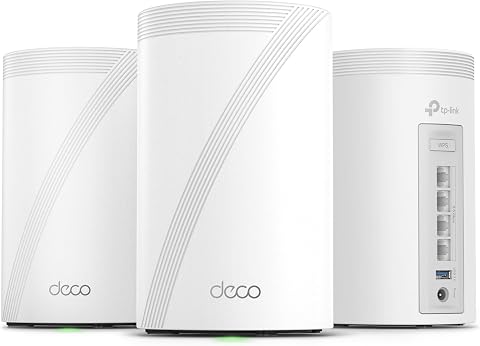 Deco 7 Pro Tri-Band WiFi 7 BE10000 Whole Home Mesh System 6-Stream 10 GbpsView on Amazon →
 - 2
 eero 7 Dual-Band Mesh Wi-Fi 7 Router (3-Pack)View on Amazon →
 - 3
 NETGEAR Orbi 370 Series WiFi 7 Mesh System, 3 PackView on Amazon →
 - 4
 Deco 7 Dual-Band WiFi 7 Mesh System with 4 Streams and 5 Gbps SpeedView on Amazon →
 - 5
 TP-Link Deco XE75 AXE5400 Tri-Band WiFi 6E Mesh System – 3 PackView on Amazon →
 - 6NETGEAR Orbi 360 Series WiFi 7 Mesh System, 3 PackView on Amazon →
- 7
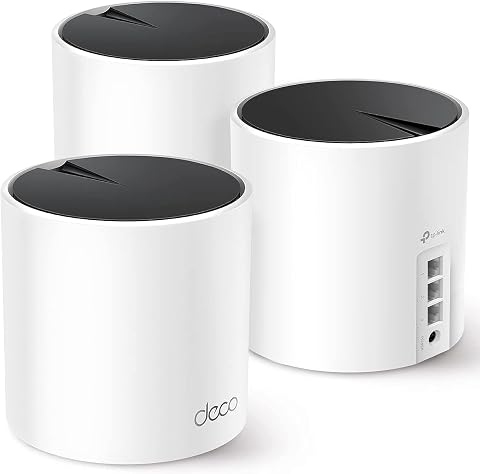 TP-Link Deco X55 AX3000 WiFi 6 Mesh System (3-Pack)View on Amazon →
 - 8
 TP-Link Deco S4 Mesh AC1900 WiFi System (3-Pack)View on Amazon →
 - 9
 TP-Link Deco X55 AX3000 WiFi 6 Mesh System (2-Pack)View on Amazon →
 - 10
 TP-Link Deco X15 Dual-Band AX1500 WiFi 6 Mesh Wi-Fi System, 3-PackView on Amazon →
Why 2026 Mesh WiFi Systems Are a Game-Changer
The 2026 release of advanced mesh WiFi systems marks a significant step forward in home networking, addressing the increasing demand for high-speed, reliable internet amid the proliferation of smart devices, 4K and 8K streaming, and remote work. These systems aim to eliminate dead zones, reduce congestion, and prepare households for the next generation of connected technology.
For consumers, this means potentially lower frustration with slow or unstable connections, especially in large or complex homes. For internet service providers and device manufacturers, it signals a shift toward more integrated, high-performance home networks that can support the growing ecosystem of connected devices.
However, the actual impact will depend on device compatibility, pricing, and consumer adoption of WiFi 7 hardware. The transition also raises questions about affordability and the longevity of existing equipment, as early adopters seek to upgrade to the latest standards.
2026 Mesh WiFi Systems Build on WiFi 6 and WiFi 7 Advances
Mesh WiFi technology has been evolving rapidly, with early systems supporting WiFi 5 and WiFi 6 standards. In recent years, WiFi 6 systems like the Deco X55 AX3000 gained popularity for their affordability and performance, especially in crowded environments. The arrival of WiFi 7, promising multi-gigabit speeds and lower latency, is expected to further revolutionize home networking.
Leading brands such as Netgear, TP-Link, and Asus have announced upcoming models integrating WiFi 7, with some prototypes already showcased at industry events. These developments are part of a broader industry trend toward higher capacity, more reliable home networks capable of supporting 8K streaming, virtual reality, and smart home ecosystems.
Historically, the transition to new WiFi standards has taken several years, with early adoption driven by high-end devices. The 2026 launch of WiFi 7 mesh systems aims to accelerate this shift, encouraging wider consumer and device manufacturer adoption.
Unanswered Questions About 2026 Mesh WiFi Systems
While many details about the 2026 mesh WiFi systems are confirmed, several aspects remain uncertain. It is not yet clear how quickly consumers will adopt WiFi 7-compatible devices, which is essential for realizing the full benefits of these new systems. Additionally, the exact pricing, availability, and compatibility with existing hardware are still to be clarified by manufacturers.
Questions also remain about the longevity of early WiFi 7 systems in the face of rapid technological advancements, and how widespread support for new standards will be among device manufacturers and internet providers.
Upcoming Launches and Consumer Adoption Timeline
Manufacturers are expected to begin releasing WiFi 7 mesh systems throughout 2026, with early models available in the first quarter. Consumer adoption will depend on device compatibility and pricing, with early adopters likely to be tech enthusiasts and demanding households. Industry analysts predict that widespread adoption could take several years, paralleling previous WiFi standard transitions.
In the coming months, more details about specific models, pricing strategies, and compatibility requirements are expected to be announced at industry events and by individual companies. Consumers should monitor these developments to determine the best time to upgrade their home networks.
Key Questions
Will my current devices work with the new mesh WiFi systems in 2026?
Most new mesh WiFi systems will support backward compatibility with older devices, but to take full advantage of WiFi 7 speeds and features, your devices will need to be WiFi 7-compatible. Check device specifications before upgrading.
Are WiFi 7 mesh systems worth the investment now?
WiFi 7 systems offer significant performance improvements but come at a higher cost. They are most beneficial for households with high bandwidth needs or large homes. For average use, WiFi 6 systems may suffice for now.
How long will WiFi 7 mesh systems remain relevant?
WiFi 7 is expected to be the standard for several years, but rapid technological advances could lead to further upgrades. Early adoption provides future-proofing but may involve higher costs.
Can I expand my mesh network later with WiFi 7 nodes?
Many WiFi 7 systems are designed to be scalable, allowing additional nodes to be added later. Confirm compatibility with your chosen system to ensure seamless expansion.
Source: ThorstenMeyerAI.com
Fall Picks
fall essentials
As an affiliate, we earn on qualifying purchases.