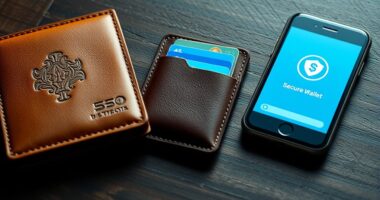
Blockchain is revolutionizing wallets by making them more secure, decentralized, and smarter. You now hold private keys directly with non-custodial options, reducing reliance on third parties. Innovations like hardware wallets store your assets offline, protecting them from hacks. Blockchain’s transparent ledger adds trust and safeguards your transactions. As wallets evolve with features like automation and DeFi integration, you’ll gain more control over your digital assets. Continue exploring to discover how these changes impact your experience.
Key Takeaways
- Blockchain enables decentralized wallets, giving users direct control over private keys without relying on third parties.
- Transaction transparency on blockchain enhances wallet security and trust through immutable records.
- Innovations like multi-signature and biometric features improve security in blockchain-based wallets.
- Hardware wallets store private keys offline, leveraging blockchain’s security to protect assets from online threats.
- Blockchain’s evolving technology drives the development of smart, automated, and DeFi-integrated wallets for advanced functionality.

Have you ever wondered how digital currencies like Bitcoin and Ethereum securely store and transfer value? It’s a good question, especially as more people jump into the world of cryptocurrencies. The answer lies in how blockchain technology has revolutionized the concept of wallets. Unlike traditional wallets, which hold physical cash or cards, cryptocurrency wallets are digital tools that store your private keys, allowing you to access and manage your digital assets. Thanks to blockchain, these wallets aren’t just static storage; they’re evolving with wallet innovations that enhance security and usability.
Cryptocurrency security is paramount because, unlike cash, digital assets can’t be physically recovered if lost or stolen. Blockchain offers a decentralized and transparent ledger that records every transaction, making it nearly impossible for hackers to manipulate the system. But the real game-changer is how wallet innovations have improved security measures. Modern wallets now incorporate multi-signature features, biometric authentication, and hardware components to safeguard your funds. These innovations markedly reduce the risk of hacking and unauthorized access, giving you more control and peace of mind.
Wallet innovations also include the development of non-custodial wallets, where you hold your private keys instead of trusting third parties. This shift puts the power back into your hands, making your crypto holdings less vulnerable to centralized points of failure. Additionally, hardware wallets—physical devices that store your private keys offline—are gaining popularity for their high level of security. These devices keep your keys isolated from internet threats, making them a preferred choice for long-term storage and large holdings.
Another notable development is the rise of smart wallets integrated with blockchain apps. These wallets can automatically execute transactions based on predefined rules, reducing human error and increasing efficiency. They also support features like QR code scanning and seamless integration with decentralized finance (DeFi) platforms, making transactions faster and more secure. As blockchain continues to evolve, so do these wallet innovations, which are designed to adapt to new security challenges and user needs.
Furthermore, the decentralized nature of blockchain and support hours means that technical support for wallets and related services may vary by region and time, emphasizing the importance of understanding your service provider’s availability. Ultimately, blockchain technology is transforming wallets from simple storage units into sophisticated security centers. These innovations are making digital currencies safer and more accessible. With each advancement, you gain better protection, more control, and a clearer understanding of how your assets are managed. As you navigate this digital landscape, it’s reassuring to know that wallet innovations are constantly working to secure your cryptocurrency security while improving your overall experience.
Frequently Asked Questions
How Secure Are Blockchain Wallets Against Hacking?
Blockchain wallets are generally secure against hacking thanks to strong cryptographic security measures. You enhance safety by using secure user authentication methods, like two-factor authentication and strong passwords. While no system is entirely foolproof, storing your private keys offline or in hardware wallets can markedly reduce risks. Stay vigilant, keep your software updated, and choose reputable wallets to protect your digital assets effectively.
Can Blockchain Wallets Store Multiple Cryptocurrencies Simultaneously?
Did you know that over 80% of blockchain wallets now support multiple cryptocurrencies? You can easily manage your assets with a single wallet, thanks to multi-asset management and cross-chain compatibility. This means you don’t need separate wallets for Bitcoin, Ethereum, or other tokens. Instead, your wallet adapts, offering a seamless experience for storing and transferring various cryptocurrencies simultaneously, making your digital assets more versatile and accessible.
What Are the Risks of Losing Access to a Blockchain Wallet?
Losing access to your blockchain wallet can happen if you don’t follow proper backup strategies or overlook recovery options. If you lose your private keys or seed phrase, you might permanently lose your funds. To prevent this, always securely back up your wallet’s recovery options and store them offline in a safe place. Regularly update your backups to guarantee you can regain access quickly if needed.
How Do Blockchain Wallets Ensure User Privacy?
You can guarantee your privacy with blockchain wallets through encryption protocols that safeguard your data and transactions. These wallets use advanced cryptography to keep your information secure and private. Additionally, they rely on identity verification processes that confirm your identity without revealing unnecessary personal details. By combining these methods, blockchain wallets protect your privacy while allowing you to manage your digital assets confidently and securely.
Are Blockchain Wallets Compatible With Traditional Banking Systems?
Blockchain wallets aren’t fully compatible with traditional banking systems yet. You might face regulatory challenges and limitations with digital identity verification. While some institutions are exploring integrations, most blockchain wallets operate independently, emphasizing decentralization. You’ll need to navigate different platforms and adhere to varying regulations. As adoption grows, expect more interoperability, but for now, you should be prepared for these compatibility issues and evolving regulatory landscapes.
Conclusion
As blockchain continues to evolve, your understanding of wallets will become even more refined. You might find that these digital tools are gently guiding you toward greater security and convenience, subtly reshaping how you manage your assets. Embracing these changes could lead to a smoother, more seamless experience in your financial journey. So, stay curious and open-minded—after all, the future of wallets is quietly but surely transforming, just waiting for you to discover its full potential.