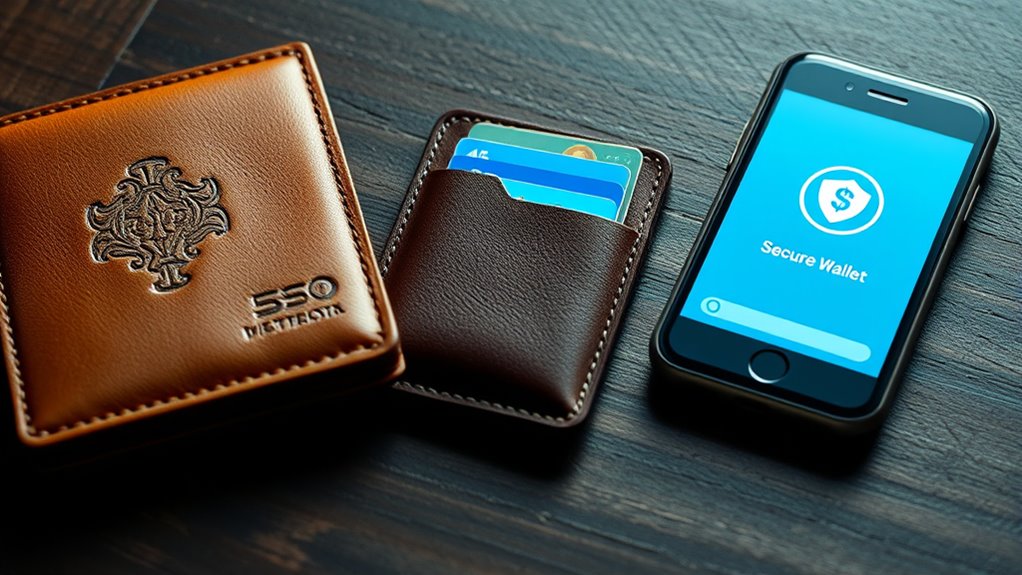

The evolution of wallets has gone from simple leather pouches to advanced digital tools. Today, you use smartphones equipped with NFC, biometrics, and secure encryption to manage your money effortlessly. Digital wallets offer instant transfers, added security, and seamless integration with banking and cryptocurrencies. This shift reflects not just technology, but a move toward more convenient, secure, and personalized financial experiences. If you’re curious about how wallets keep transforming, there’s much more to discover ahead.

Get hardware and tech essentials delivered free with Prime
- Fast, free delivery on millions of items
- Prime Video, Amazon Music and more included
- Member-only deals all year
Key Takeaways
- Wallets evolved from simple leather pouches to sophisticated digital tools reflecting technological advancement.
- Physical cards and cash are increasingly replaced by digital wallets for convenience and efficiency.
- Biometric security like fingerprint and facial recognition enhance digital wallet safety and user experience.
- Features such as NFC tap-and-pay, real-time notifications, and expense tracking modernize money management.
- Future trends include AI integration and personalized financial services, further transforming digital wallets.

Throughout history, wallets have transformed from simple leather pouches to sophisticated digital tools, reflecting advances in technology and changes in how we handle money. Today, your wallet isn’t just about holding cash or cards; it’s about security, convenience, and integration with cutting-edge financial technology. As you navigate this evolution, biometric security emerges as a game-changer. Instead of relying solely on physical cards or PINs, many digital wallets now incorporate fingerprint scans or facial recognition, making transactions more secure and seamless. This shift means you don’t need to remember passwords or carry multiple cards; your biometric data becomes the key to accessing your funds, reducing the risk of theft or fraud.
Biometric security in digital wallets makes transactions more secure, seamless, and personalized.
The rise of financial technology, or fintech, has revolutionized how you manage and transfer money. Mobile payment apps and digital wallets enable you to make transactions instantly, whether you’re shopping online or paying at a store. These innovations are rooted in complex algorithms and secure encryption methods, ensuring your financial data stays protected. You can link your bank accounts, credit cards, or even cryptocurrencies to these platforms, giving you a consolidated view of your finances at your fingertips. The integration of fintech has also introduced features like budgeting tools, real-time notifications, and expense tracking, helping you stay in control of your money.
As you adopt these new technologies, you’ll notice that wallets have become more than just containers—they’re gateways to your financial universe. Smart wallets equipped with NFC (near-field communication) technology allow you to tap and pay, eliminating the need for cash or physical cards. Many of these devices also use biometric security to verify your identity before completing a transaction, adding an extra layer of protection. This integration of biometric security within financial technology means that your wallet is personalized and secure, adapting to your lifestyle and providing peace of mind.
The evolution from leather to digital wallets reflects a broader trend toward convenience and security. You no longer need to carry bulky cash or worry about losing your cards; instead, you can manage your money digitally with confidence. As technology advances, expect your digital wallet to become even smarter, leveraging AI and biometric innovations to offer personalized financial services. This ongoing transformation ultimately empowers you to handle your finances more efficiently, securely, and effortlessly, marking a significant milestone in the history of wallets.
Frequently Asked Questions
How Do Digital Wallets Ensure User Privacy and Data Security?
Digital wallets protect your privacy and data security by using encryption protocols that scramble your information, making it unreadable to hackers. They also require biometric authentication, like fingerprint or facial recognition, to ensure only you access your funds. These combined measures help keep your sensitive data safe, giving you confidence when making digital transactions. With these security features, you can enjoy the convenience of a digital wallet without compromising your privacy.
What Materials Are Used in the Latest Traditional Wallet Designs?
You might think traditional wallets are just leather, but innovative materials now take center stage. Modern designs blend traditional craftsmanship with materials like vegan leather, recycled fabrics, and high-tech composites, offering durability and style. These innovations enhance sustainability while maintaining classic appeal. So, in your wallet, you’ll find a mix of timeless craftsmanship and cutting-edge materials, ensuring your accessory is both functional and eco-friendly.
Are There Environmental Impacts Associated With Digital Wallet Manufacturing?
Yes, digital wallet manufacturing has environmental impacts. You should know that producing electronic components often involves the use of unsustainable materials and energy, which contribute to environmental degradation. Additionally, electronic waste from outdated devices can pollute ecosystems if not properly recycled. To reduce your impact, opt for companies that prioritize sustainable materials and responsible disposal practices, helping to lessen the environmental footprint of digital wallets.
How Do Cultural Differences Influence Wallet Design Evolution Worldwide?
You’ll notice that cultural differences greatly shape wallet design worldwide. Cultural symbolism influences features, colors, and materials, reflecting local values and beliefs. Regional aesthetics drive the style, size, and craftsmanship, making wallets unique to each culture. You’ll see traditional patterns in some areas and minimalist designs in others. This diversity celebrates cultural identity, ensuring wallets are not just functional but also meaningful, resonating with local customs and visual preferences.
What Future Innovations Are Expected in Digital Wallet Technology?
Imagine your digital wallet as a high-tech vault, shimmering with possibilities. Future innovations include seamless biometric authentication, making access as effortless as a fingerprint touch, and blockchain integration, ensuring your transactions are as secure as a fortress. These advances will create a smoother, safer experience, transforming your wallet into an intelligent, intuitive tool that adapts to your needs while safeguarding your assets with cutting-edge technology.
Conclusion
So, here you are, clutching your sleek, digital wallet, probably wondering how leather could’ve ever held your cash without Wi-Fi. As you swipe and tap with confidence, just remember: someday, your fancy app might be replaced by a chip in your brain—no wallet required. But hey, at least until then, you can enjoy the thrill of watching your physical cash slowly vanish into the digital abyss. Cheers to progress—let’s see what’s next!
Halloween Picks
halloween
As an affiliate, we earn on qualifying purchases.