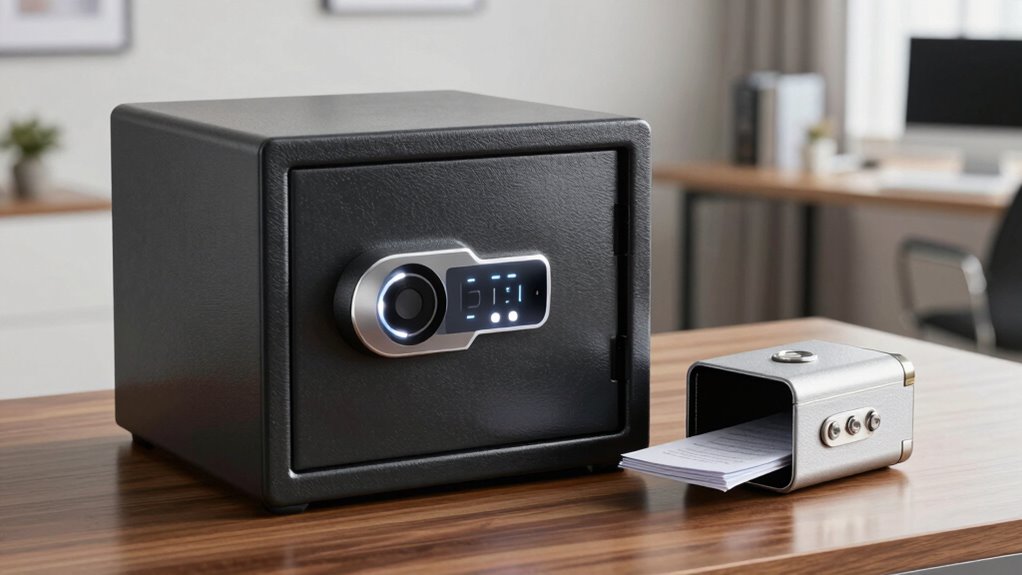

For home crypto storage, a biometric safe is usually a better option than a key lockbox because it offers faster, more secure access and advanced tamper resistance. Biometric safes use fingerprint or iris scans, providing exclusive control and reducing the risk of lost keys. They also incorporate environmental safeguards and durable materials. If you want a secure, convenient solution, you’ll find more details below to help you make the best choice.
Key Takeaways
- Biometric safes offer quick, contactless access, ideal for emergencies and reducing key loss risks.
- Lockboxes are more traditional, durable, and may be simpler but can be less secure against sophisticated intruders.
- Biometric safes provide advanced security features like tamper resistance and unique user authentication.
- Lockboxes may lack modern encryption and are vulnerable to environmental damage over time.
- For home crypto, biometric safes are generally preferable due to enhanced security and faster, more reliable access.
How to Choose the Best Home Crypto Storage Solution

Choosing the right home crypto storage solution is essential for keeping your digital assets secure. You need to evaluate how well the device manages passwords, ensuring your access codes are both strong and organized. You might also consider emerging trends in digital security to stay ahead of potential threats. Look for a safe that offers seamless password management, so you won’t struggle with remembering or securely storing multiple codes. Hardware compatibility also matters—make sure the safe works with your existing devices and systems. If you have a specific operating system or smart home setup, verify that the storage solution integrates smoothly. A reliable home crypto safe should balance security features with ease of use, so you can confidently access your assets without risking exposure. Prioritize solutions that check your password management needs and Hardware compatibility to make an informed choice. Understanding affiliate disclosure policies can help you make more transparent and informed decisions when selecting your storage device. Staying aware of privacy and security best practices can further enhance your overall digital safety. Additionally, considering user-friendly interfaces can improve your overall experience with managing your assets securely.
Key Differences Between Biometric Safes and Lockboxes
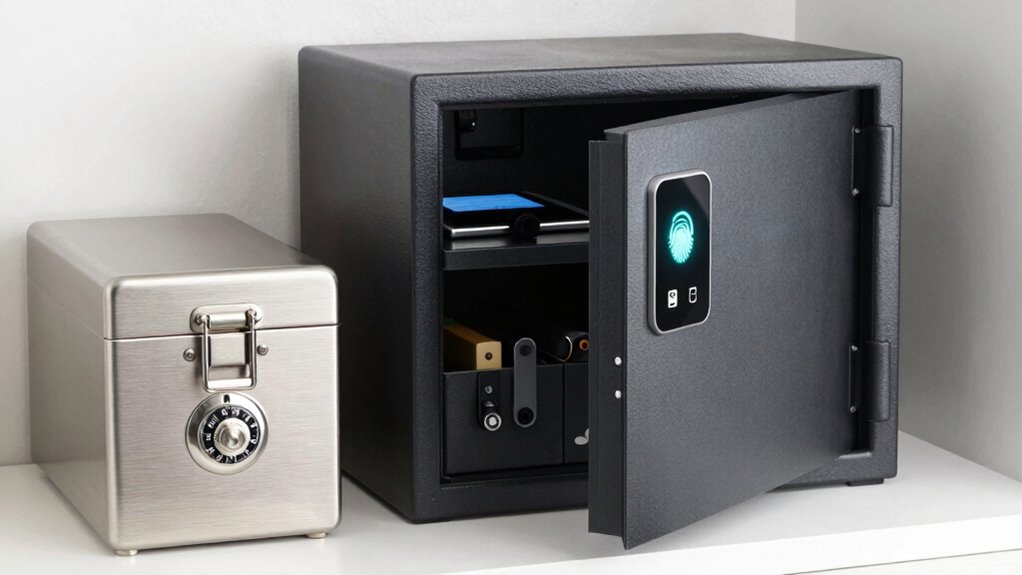
Biometric safes and lockboxes serve different security needs and offer distinct advantages. Biometric safes use biometric authentication, like fingerprint scans, for quick and secure access, making them ideal for frequent use. Lockboxes, on the other hand, rely on traditional keys or combinations, often emphasizing lockbox durability to withstand physical wear and tear. Additionally, the contrast ratio in security methods influences how well each option performs under different conditions. The choice between them often depends on specific security priorities and the environment in which they are used. For example, some models incorporate advanced locking mechanisms to enhance security against tampering, and understanding the security features of each can help users make better decisions based on their needs.
What Features Make Biometric Safes Ideal for Crypto?
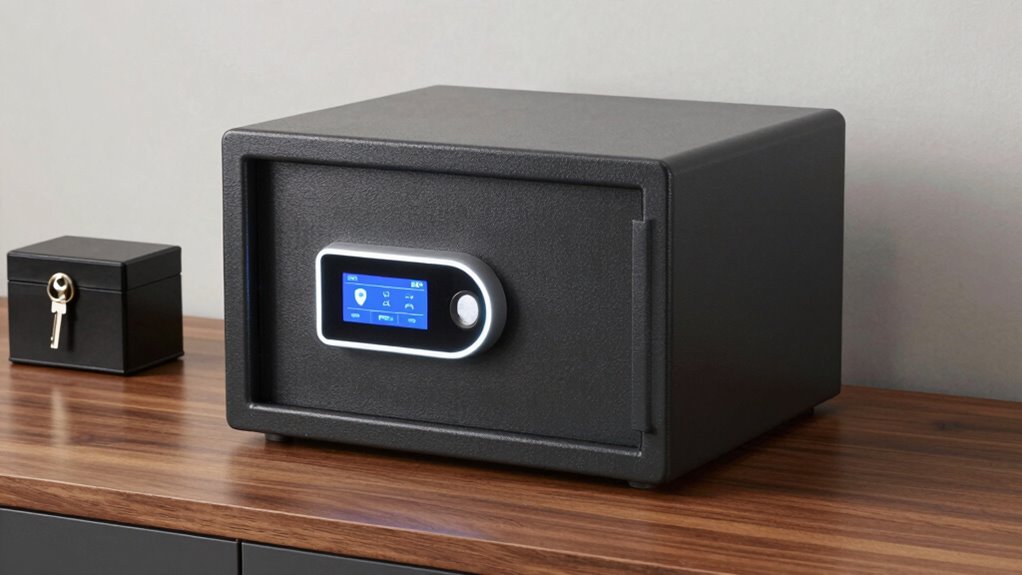
Because cryptocurrencies are valuable digital assets that require strong security, biometric safes offer features tailored to safeguard them effectively. Biometric authentication ensures only you can access your crypto by using your unique fingerprint or iris, eliminating the risk of forgotten codes or stolen keys. This quick and reliable access can be crucial during emergencies. Additionally, a tamper-proof design enhances security by preventing unauthorized attempts to open or manipulate the safe. These safes often include reinforced materials and alert systems that activate if tampering occurs, adding an extra layer of protection. Incorporating recovery routines like foam rolling can also support your overall well-being, helping you stay calm and focused when managing your assets. Proper water damage prevention measures can also help protect your safe from environmental threats, ensuring your digital assets remain secure in various conditions. Designing a safe that blends seamlessly with your outdoor environment can further deter potential intruders and protect your valuables from environmental hazards. Moreover, understanding physical security measures is essential for creating a comprehensive security plan for your crypto assets. Implementing these measures alongside biometric features provides a holistic approach to security, giving you peace of mind knowing your digital assets are well protected from theft, hacking, or physical intrusion.
Are Lockboxes Still a Good Option for Cryptocurrency?
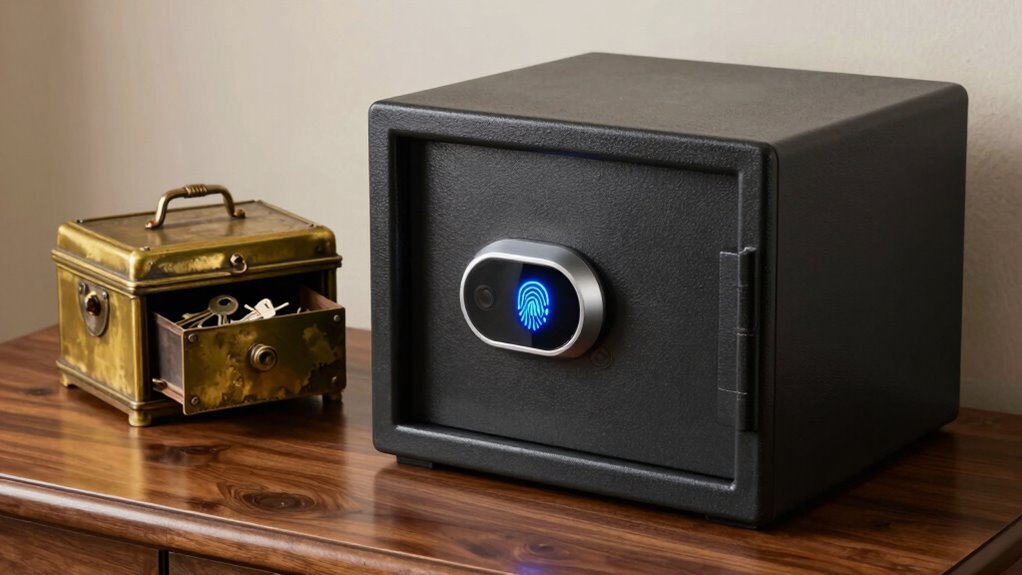
Lockboxes have traditionally been a straightforward way to store crypto, but are they still the best choice today? You’ll need to weigh their security level against newer options, considering both convenience and the latest technological advancements. Understanding these factors can help you decide if lockboxes remain a reliable solution for your crypto storage needs.
Security Level Considerations
While lockboxes have traditionally provided a simple means of safeguarding valuables, their security level for cryptocurrency storage is increasingly questionable. Their effectiveness depends heavily on factors like biometric accuracy and lockbox durability. Consider these points:
- Biometric accuracy can vary, leading to false rejections or unauthorized access.
- Lockbox durability might be compromised over time, making physical attacks easier.
- Lockboxes often lack advanced encryption, leaving digital assets vulnerable.
- Physical security measures may not prevent determined intruders from bypassing locks.
- Incorporating self-awareness into your security practices can help you recognize vulnerabilities before they are exploited.
- Additionally, understanding the limitations of physical security can help you better assess whether lockboxes meet your security standards. Recognizing these security vulnerabilities is essential as threats evolve rapidly and sophisticated attack methods become more accessible. Moreover, staying informed about emerging cybersecurity risks is crucial to ensure your assets remain protected in an increasingly digital landscape. Considering the rapid pace of technological change can also help you adapt your security measures proactively rather than reactively.
Given these considerations, lockboxes alone might not offer sufficient protection for your cryptocurrency assets. You should evaluate whether their limitations align with your security needs, especially considering the rapid evolution of hacking techniques and physical threats.
Convenience and Accessibility
Are lockboxes still a convenient option for storing cryptocurrency? While traditional key lockboxes are simple, they lack quick access features. Biometric authentication enhances convenience by allowing you to unlock your lockbox with a fingerprint or other biometric data, eliminating the need for keys or combinations. This improves access control, so only authorized users can reach your crypto assets. Lockboxes with biometric options offer faster, more reliable access, especially during emergencies or when you’re in a hurry. However, they depend on power sources or batteries, which can be a drawback. Overall, if you prioritize ease of use and controlled access, lockboxes with biometric authentication can be a practical option for home crypto storage, blending security with user-friendly accessibility.
Technological Advancements
Advancements in security technology have considerably impacted the effectiveness of traditional lockboxes for cryptocurrency storage. Quantum encryption now offers near-unbreakable protection, making unauthorized access virtually impossible. Biometric integration enhances security further by using your unique fingerprint or retina scan, eliminating the risk of lost keys or codes. With these innovations, lockboxes face increased scrutiny. Consider these factors:
- Quantum encryption provides advanced data security against hacking attempts.
- Biometric integration simplifies access while maintaining high security.
- Smart lockboxes can be updated remotely, adapting to emerging threats.
- Encryption standards evolve, ensuring ongoing protection. Additionally, integrating whole-home water systems can improve overall safety and efficiency in your residence, complementing your security upgrades. As technology continues to advance, the reliance on digital security solutions for crypto storage is increasingly evident.
Moreover, the development of advanced cryptography techniques has further strengthened the security landscape for digital assets. While lockboxes have evolved, they still lag behind digital solutions that leverage these technologies. For home crypto setups, investing in biometric safes with quantum encryption features often proves more secure and future-proof.
What Factors Influence Easy and Secure Access?

Several factors determine how easy and secure it is to access a biometric safe or key lockbox. User authentication plays a critical role; biometric safes offer quick, contactless access through fingerprint or facial recognition, while key lockboxes rely on physical keys or combinations. The reliability of this authentication method affects both security and convenience. Biometric authentication can sometimes fail due to dirt, moisture, or technical issues, which underscores the importance of choosing a reliable system. Physical durability is equally important, as a safe must withstand tampering, environmental damage, and regular use without malfunctioning. A highly durable lockbox ensures ongoing security and ease of access over time. Additionally, proper maintenance of the locking mechanism can prevent common issues and extend the lifespan of your security device. Considering security features, such as alarms or tamper alerts, can further enhance protection. Ultimately, the best option balances seamless user authentication with sturdy construction, preventing unauthorized access while remaining easy for you to open when needed.
How Much Should You Invest in Crypto Storage?
Deciding how much to invest in crypto storage depends on the value of your holdings and your willingness to accept risk. You should consider the importance of investment diversification to spread risk across different assets and storage methods. Also, account for market volatility, which can cause sudden value swings. To determine your approach, think about:
- The total amount of crypto you own.
- Your risk tolerance for potential losses.
- The need for liquidity versus long-term security.
- How much of your portfolio is dedicated to crypto versus traditional investments.
Risks and How to Protect Your Crypto Safely
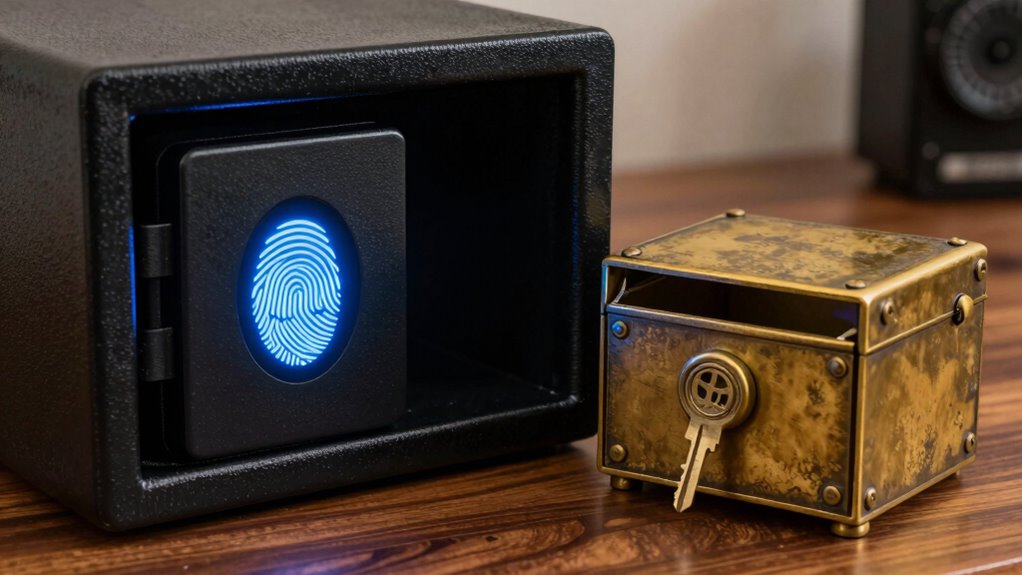
While storing your crypto securely is vital, it’s equally important to recognize the risks involved and take steps to protect your assets. Environmental hazards like fire, flooding, or extreme temperatures can damage or destroy your storage device, making backups and environmental safeguards essential. Legal considerations also matter; mishandling private keys or failing to comply with local regulations can lead to legal issues or loss of access. To minimize these risks, choose a durable storage method suited for your environment, such as fireproof safes or off-site backups. Stay informed about applicable laws in your jurisdiction, and guarantee your crypto assets are protected against natural disasters and legal pitfalls. Being proactive helps safeguard your investments against unforeseen threats.
When Is a Biometric Safe the Right Choice?
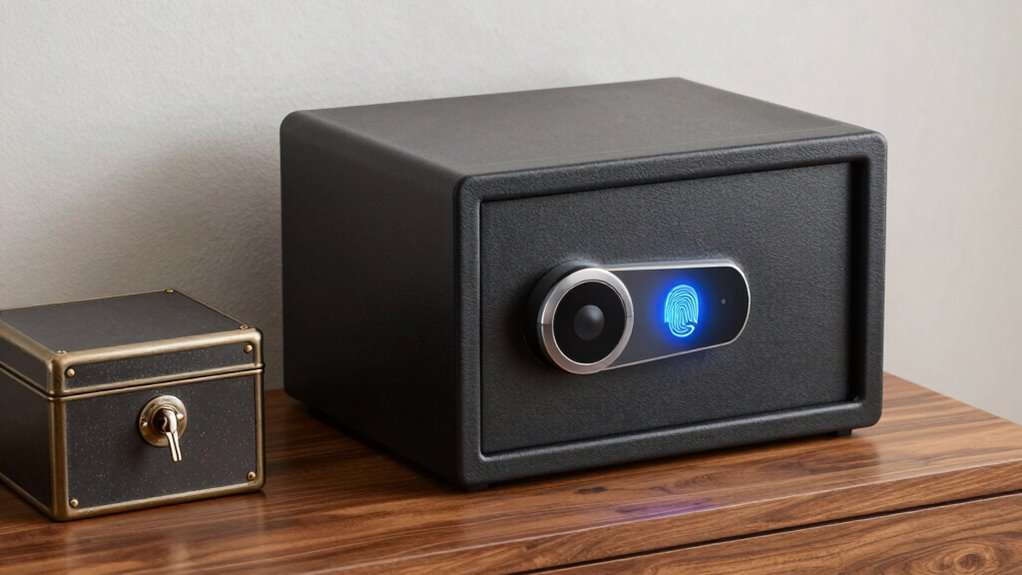
A biometric safe is an excellent choice when you need quick, secure access to your crypto assets and want to minimize the risk of lost or stolen keys. You should consider a biometric safe if:
- You prioritize biometric accuracy for reliable identification, reducing false rejections.
- You need a lockbox with high durability, resistant to tampering or environmental damage.
- Speed is essential, and you require instant access without fumbling for keys or combinations.
- You want an advanced security feature that’s harder to breach than traditional locks.
Biometric safes excel when these factors matter most, offering fast, reliable, and durable protection. This makes them ideal for users seeking convenience combined with strong security for their home crypto setup.
Final Tips for Securing Your Crypto at Home
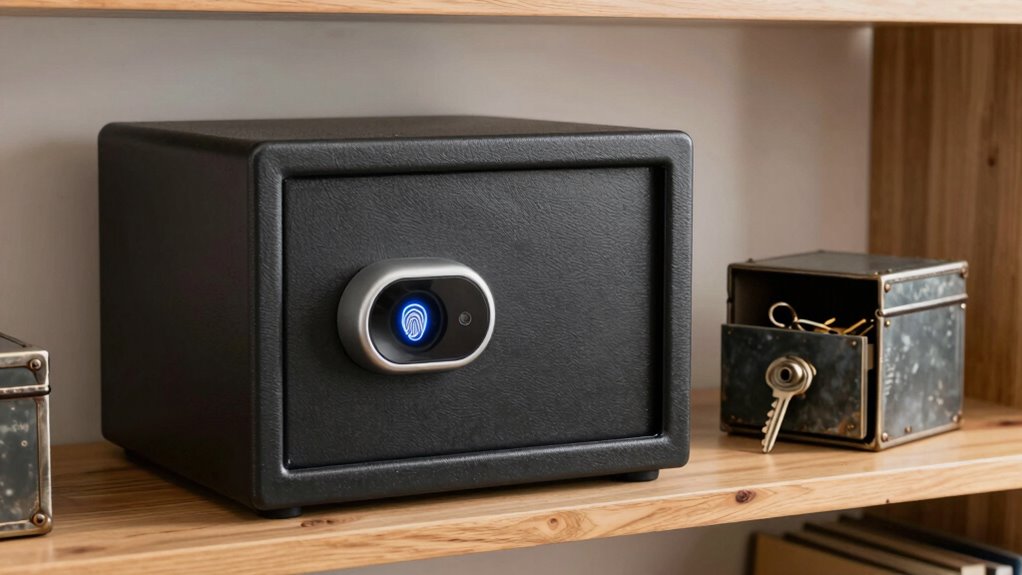
To effectively secure your crypto assets at home, you need to implement multiple layers of protection. Start with strong password management; avoid simple passwords and use a reputable password manager to keep track of complex, unique credentials. Regularly update your passwords and enable two-factor authentication where possible. Prioritize hardware durability by choosing a secure, tamper-resistant safe or lockbox that can withstand physical attacks. Guarantee your storage device is physically inaccessible to others. Keep backup copies of your private keys in separate, secure locations. Limit access to your crypto storage to trusted individuals only. By combining effective password management with durable hardware, you create a resilient defense against theft or loss, keeping your assets safe in the long run.
Frequently Asked Questions
Can Biometric Safes Be Hacked or Tampered With?
Biometric safes can potentially be hacked or tampered with, but biometric security systems are designed to be highly secure. Skilled attackers might attempt safe tampering or exploit vulnerabilities in fingerprint or facial recognition technology. However, for most users, these safes offer robust protection. To minimize risks, choose models with advanced biometric features and tamper alarms, and guarantee proper setup and maintenance.
What Are the Long-Term Maintenance Costs of Biometric Safes?
Imagine your biometric safe as a quiet guardian, quietly requiring occasional updates or sensor calibrations over time. The long-term maintenance costs are generally low, mainly involving security integration updates and occasional sensor cleaning. User convenience remains high since biometric systems typically need minimal intervention, ensuring smooth access. While costs are manageable, staying vigilant with software updates and sensor care helps keep your crypto assets secure and accessible for years to come.
How Do Lockboxes Compare in Durability Over Time?
Lockboxes generally offer solid durability over time, especially if made from sturdy materials like steel, but they can develop security vulnerabilities, such as lock picking or forced entry, if not well-designed. Environmental durability varies; some lockboxes resist weather and corrosion better than others. You need to choose a lockbox that balances durability with security features, ensuring it withstands environmental conditions while protecting your crypto assets from potential breaches.
Are There Legal Restrictions on Storing Crypto at Home?
You might find it surprising, but there are legal restrictions on storing crypto at home. You must guarantee legal compliance, especially if you’re handling large amounts or using your crypto for business. Failing to do so can impact your insurance implications, as some policies may exclude coverage for certain types of digital assets stored improperly. Stay informed about regulations in your jurisdiction and keep detailed records to avoid legal pitfalls.
What Backup Options Exist if Biometric or Lockbox Fails?
If biometric safes or lockboxes fail, you have alternative security options like a secure paper backup of your private keys stored separately. You should also establish an emergency access plan with trusted contacts who can help retrieve your crypto in emergencies. These backups guarantee you’re not locked out, providing peace of mind and reliable access to your digital assets when primary security measures fail.
Conclusion
Just like Pandora’s box, your crypto storage holds immense potential—and risks. Choosing the right safe, whether biometric or lockbox, can be the key to revealing security and peace of mind. Trust your instincts, weigh the features, and remember that the right choice keeps your digital treasures protected from unforeseen dangers. In the end, safeguarding your crypto isn’t about luck, but about making the smart move—because fortune favors the prepared.