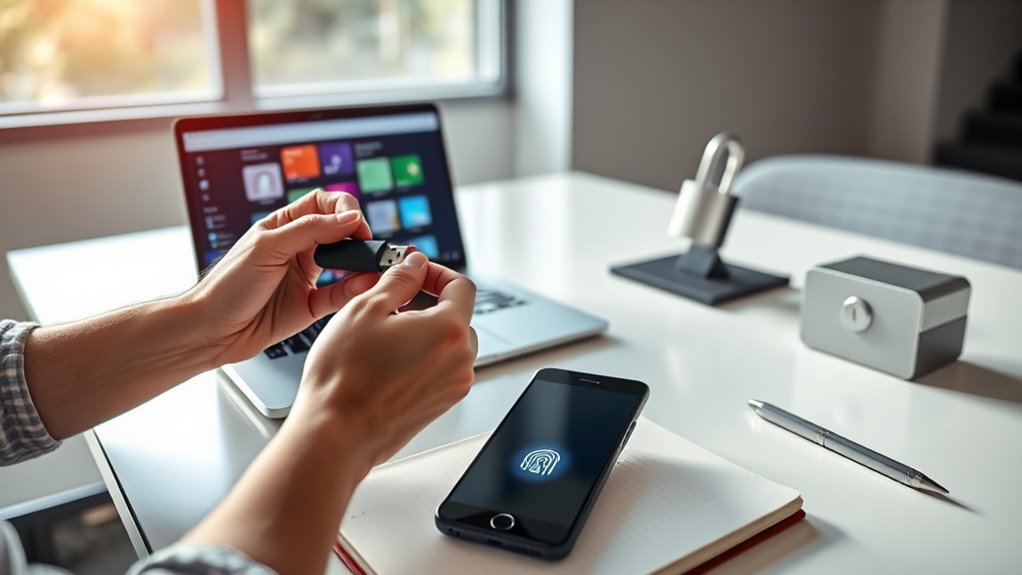

To back up your digital wallet securely, use strong encryption like AES-256 on your backup files, and store them offline in a safe location such as a hardware wallet or fireproof safe. For online backups, enable two-factor authentication and encrypt files before uploading to cloud services. Regularly update and verify backups to make certain they work properly. Keep your private keys and recovery phrases confidential, and you’ll find more effective methods to protect your assets.
Key Takeaways
- Use strong encryption like AES-256 to protect wallet backups from unauthorized access.
- Store backups securely offline on hardware wallets or encrypted USB drives in safe locations.
- Regularly update and verify backups by testing restoration and ensuring decryption works properly.
- Enable two-factor authentication on cloud storage and encrypt files before uploading for added security.
- Keep physical backups private, protected from damage or theft, and avoid sharing recovery phrases.

Backing up your digital wallet is essential to protect your assets and prevent data loss. Digital wallets hold valuable cryptocurrencies and sensitive information, making them attractive targets for cybercriminals. Understanding how to securely back up your wallet is crucial. One of the main concerns is security vulnerabilities, which can expose your backups to hacking attempts or malware. If your backup isn’t protected, attackers might access your private keys or recovery phrases, putting your entire investment at risk. Consequently, employing robust security measures is vital. Backup encryption is a key step in safeguarding your wallet data. By encrypting your backup, you add a layer of protection that makes it much harder for unauthorized individuals to access your private information, even if they obtain your backup file. When choosing a backup method, ensure that encryption is strong, using reputable tools or encryption algorithms like AES-256. Additionally, understanding the importance of Personal Growth can motivate you to adopt consistent and secure backup practices.
You should also consider where you store your backup. Cloud storage services offer convenience, but they can introduce vulnerabilities if not properly secured. Always enable two-factor authentication (2FA) on your cloud accounts and use encrypted folders or files. Alternatively, hardware wallets or offline devices like USB drives provide a more secure environment, especially if you keep backups disconnected from the internet. Physical backups should be stored in a safe, fireproof location, and you should avoid sharing recovery phrases or private keys with anyone, even trusted individuals. Remember, the security vulnerability isn’t just digital; physical access to your backup can be just as damaging if not properly protected.
Another best practice is to regularly update your backup. As you make transactions or change wallet configurations, your backup should reflect those updates. This guarantees that in case of device failure or loss, you can restore your wallet to the most current state. When creating your backup, always verify that the encrypted backup works correctly by testing the restoration process on a secure device. Do not rely solely on the backup files themselves—confirm that your backup encryption process is reliable and that you can decrypt and restore without issues.
Frequently Asked Questions
How Often Should I Back up My Digital Wallet?
You should back up your digital wallet regularly, ideally aligning with your backup schedule and frequency considerations. How often depends on your activity level—if you frequently make transactions, consider daily or weekly backups. For less active wallets, monthly backups might suffice. It’s essential to safeguard your data whenever you add new assets or change security settings to prevent data loss. Consistent backups ensure your funds stay protected, no matter what happens.
Can I Automate the Backup Process for My Wallet?
Did you know that over 60% of digital wallet users experience data loss? You can automate your backup process by setting up scheduled backups through your wallet’s software. Just guarantee your wallet encryption is strong, and always verify backups regularly. Automation saves time and reduces errors, but don’t forget to double-check backup integrity to keep your funds safe and accessible whenever you need them.
What Are the Risks of Not Backing up My Wallet?
If you don’t back up your wallet, you risk losing access to your funds if hardware security fails or your device gets damaged. Without proper private key management, recovery becomes impossible, and hackers could exploit vulnerabilities. This negligence can lead to permanent loss of assets, stressing the importance of regular, secure backups. Protect your digital wealth by ensuring your private keys are safely stored and backed up frequently.
How Do I Recover My Wallet if I Lose Access?
Think of your wallet as a treasure chest; if you lose access, recovery options are your key to restoring it. You can use your seed phrase or recovery phrase for wallet restoration, which acts as a map guiding you back. Keep these details safe and private. If needed, contact your wallet provider’s support for further help. With the right tools, you can reopen your digital treasure, no matter the obstacle.
Are There Secure Cloud Options for Wallet Backups?
Yes, there are secure cloud options for wallet backups, but you should prioritize cloud security and privacy concerns. Choose services with strong encryption, two-factor authentication, and a solid reputation for security. Be cautious about storing sensitive wallet data on less reputable platforms, and consider encrypting your backup files before uploading. This way, you balance convenience with protection, ensuring your digital assets stay safe even if you lose access.
Conclusion
By now, you see that backing up your digital wallet isn’t just a chore—it’s your safety net in the digital storm. Think of your backups as a treasure chest, protecting your precious assets from unforeseen mishaps. With the right methods and best practices, you’re not just securing your funds; you’re building peace of mind. So, take action today—because in the digital world, a well-backed-up wallet is your strongest armor.