TL;DR

Get hardware and tech essentials delivered free with Prime
- Fast, free delivery on millions of items
- Prime Video, Amazon Music and more included
- Member-only deals all year
In 2026, leading tech companies have launched the most advanced USB microphones integrated with AI technology. These devices aim to enhance sound clarity, reduce noise, and simplify setup for streamers, podcasters, and professionals. The new models mark a significant step forward in microphone innovation, though details about availability and pricing are still emerging.
Several leading audio equipment brands have unveiled their most advanced USB microphones for 2026, integrating artificial intelligence (AI) technology to deliver superior sound quality and ease of use. For a detailed overview, see the original analysis of top models. These new models are designed to meet the demands of content creators, streamers, and professionals seeking high performance in a compact, plug-and-play device. Learn more about the latest innovations in AI-powered webcams. While exact release dates and pricing are still being finalized, the announcement signals a significant leap in microphone technology for the year.
The new AI-enabled USB microphones, developed by companies including Logitech, Rode, and Shure, feature integrated AI algorithms that automatically optimize audio input. These enhancements include real-time noise suppression, adaptive sound calibration, and voice clarity enhancement, all accessible through intuitive software interfaces. The models also boast improved hardware components such as high-resolution capsules, multi-pattern pickup options, and customizable controls, providing versatility for various recording environments. For related hardware, see the latest OLED gaming monitors with AI features.
According to official statements from the manufacturers, these microphones are designed to analyze ambient noise and speech patterns dynamically, adjusting settings on the fly to ensure consistent, professional-quality audio. Some models incorporate AI-driven feedback systems that alert users to issues like proximity or background noise, helping maintain optimal recording conditions. Early prototypes have demonstrated significant reductions in background noise and echo, making these microphones suitable for both professional studio work and casual streaming.
The 9 picks
- 1
 Logitech Blue Yeti USB Microphone for PC, Mac, Gaming, Recording, Streaming,…View on Amazon →
 - 2
 NEEWER UM01 AI Noise Canceling USB Microphone, Cardioid Condenser with RGB Li…View on Amazon →
 - 3
 TONOR Conference USB Microphone, Omnidirectional Condenser PC Mic G11View on Amazon →
 - 4
 Aokeo AK-10 USB/XLR Dynamic Desktop Microphone for Gaming, Podcast, Streaming…View on Amazon →
 - 5
 FIFINE K669B USB Microphone, Condenser Recording Mic for Vocals, MeetingsView on Amazon →
 - 6
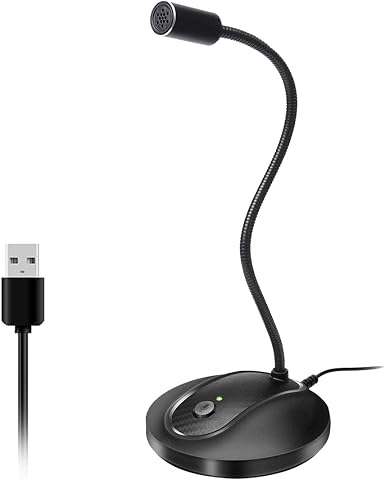 USB Microphone with Adjustable Gooseneck, Mute Button, and Noise-Canceling Te…View on Amazon →
 - 7
 CMTECK Conference USB Microphone, Plug-and-Play Omnidirectional Desktop MicView on Amazon →
 - 8
 CMTECK USB Computer Microphone G009, Noise-Cancelling Desktop Mic for PC/Lapt…View on Amazon →
 - 9
 Plug & Play USB Computer Microphone with Flexible Gooseneck and Mute ButtonView on Amazon →
Impact of AI Integration on USB Microphone Performance
The integration of AI technology into USB microphones represents a major advancement in audio recording, promising to make high-quality sound more accessible and consistent. For content creators and professionals, this development could reduce the need for extensive post-production or expensive external equipment. It also addresses common challenges such as background noise, inconsistent voice levels, and setup complexity, potentially transforming how users approach recording and streaming. However, it remains to be seen how these AI features perform in diverse real-world environments and whether they will justify higher price points.
Evolution of USB Microphones and AI Adoption
USB microphones have become increasingly popular over the past decade, favored for their simplicity and plug-and-play connectivity. Leading models like the Blue Yeti and FIFINE K669B have set standards for sound quality and ease of use, especially for amateurs and semi-professionals. The move toward AI integration reflects a broader trend in consumer electronics, where intelligent algorithms enhance device capabilities without requiring user technical expertise. Previous attempts at noise reduction and sound optimization relied on hardware or manual software adjustments, but AI promises to automate and improve these processes significantly.
Industry insiders suggest that the push for AI-powered microphones aligns with the growing demand for professional-grade audio in home studios, remote work, and online content creation. Companies are investing heavily in machine learning and audio processing to differentiate their products and meet rising expectations for sound fidelity and user experience. The 2026 launches mark a pivotal moment, as AI features move from experimental to standard in consumer-grade microphones.
Unanswered Questions About AI Microphone Deployment
Details about the final pricing, availability, and specific AI features are still emerging. It is unclear how well these microphones will perform outside controlled demonstrations, especially in highly noisy or unpredictable environments. Additionally, the long-term durability of AI components and software updates remains to be seen, as does the potential for proprietary algorithms to lock users into specific platforms or ecosystems. Manufacturers have not yet disclosed comprehensive technical specifications or user privacy policies related to AI data processing.
Upcoming Release Dates and Market Availability
Manufacturers are expected to begin shipping these AI-powered USB microphones later in 2026, with initial models available through select retailers and direct sales channels. Industry analysts anticipate that early reviews will focus on real-world performance, compatibility with streaming and recording platforms, and user interface ease. As the market adapts to this new technology, competitive pricing and feature differentiation will influence adoption. Further updates on firmware improvements and software updates are likely as companies gather user feedback post-launch.
Key Questions
Will AI-enhanced USB microphones replace traditional models?
AI features are designed to complement existing microphone technology, offering automatic optimization and noise reduction. While they may become standard in many models, traditional microphones without AI will still be available and suitable for specific professional applications requiring manual control.
Are AI microphones compatible with all streaming platforms?
Most models are expected to be compatible with major platforms like OBS, Streamlabs, and Zoom. However, full functionality of AI features may depend on software integration, which manufacturers are still finalizing.
Do AI microphones store or analyze audio data?
Manufacturers have not yet fully disclosed data privacy policies, but AI processing typically involves analyzing audio locally or in the cloud. Users should review privacy policies before purchasing to understand data handling practices.
What is the price range for these new AI USB microphones?
Pricing details are still emerging, but early indications suggest that AI-enabled models may range from $150 to over $300, depending on features and brand. Higher-end models will likely include more advanced AI capabilities and hardware enhancements.
Source: ThorstenMeyerAI.com
Halloween Picks
halloween
As an affiliate, we earn on qualifying purchases.