TL;DR

Get hardware and tech essentials delivered free with Prime
- Fast, free delivery on millions of items
- Prime Video, Amazon Music and more included
- Member-only deals all year
This article reviews the top 10 AI camera technologies anticipated in 2026, based on current industry trends and expert analyses. It highlights key models, their features, and what makes them significant for consumers and professionals alike.
Industry experts predict that by 2026, the top AI camera technologies will include models from Sony, Canon, Nikon, and emerging startups, driven by rapid advancements in AI-driven image processing and automation. These developments are expected to influence professional and consumer photography, emphasizing smarter, more autonomous devices, as detailed in the original analysis.
Current industry analyses, including insights from Thorsten Meyer AI, suggest that the 2026 landscape of mirrorless cameras will feature at least 10 leading AI-enabled camera models. These models are distinguished by their integration of AI for autofocus, scene recognition, and image enhancement. Notably, Sony’s Alpha series, Canon’s EOS R line, and Nikon’s Z series are expected to lead the market, with new entrants leveraging AI to offer ease of use and creative control. Experts highlight that the focus will be on improving user experience through smarter autofocus, real-time scene adaptation, and enhanced video capabilities, including AI-assisted stabilization and noise reduction.While specific models are yet to be officially announced, industry insiders indicate that upcoming releases will emphasize AI-powered features that simplify complex shooting scenarios, making high-quality photography more accessible. The trend also points toward increased adoption of AI in mirrorless cameras, with a growing ecosystem of compatible lenses and accessories designed to maximize AI functionalities. For more on top options, see the best mirrorless cameras for every skill level.
The 10 picks
- 1
 Sony Alpha 1 II Full-Frame Mirrorless Interchangeable Lens Camera (Body) BundleView on Amazon →
 - 2
 Sony Alpha 7 IV Full-Frame Mirrorless Camera with 28-70mm Zoom Lens KitView on Amazon →
 - 3
 Nikon Z50 II with Two Lenses – Compact Mirrorless Camera with 20.9MP Sensor,…View on Amazon →
 - 4
 Canon EOS RP Full-Frame Mirrorless Camera with RF24-105mm Lens KitView on Amazon →
 - 5
 Canon EOS R50 Mirrorless Camera with RF-S 18-45mm F4.5-6.3 IS STM Lens KitView on Amazon →
 - 6
 Sony Alpha a6400 Mirrorless Camera with 16-50mm LensView on Amazon →
 - 7
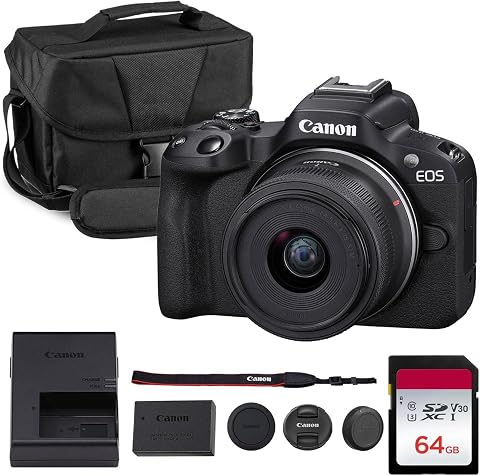 Canon EOS R50 Mirrorless Camera Kit with 18-45mm Lens, 4K Video, Dual Pixel A…View on Amazon →
 - 8
 Canon EOS R100 Mirrorless Camera with RF-S 18-45mm f/4.5-6.3 IS STM LensView on Amazon →
 - 9
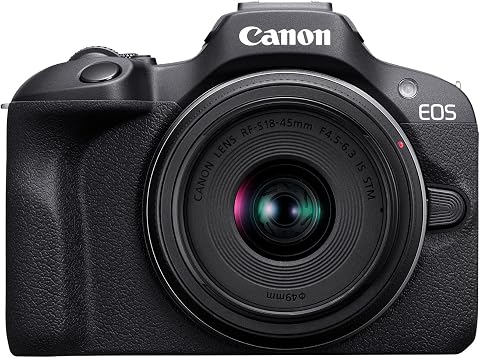 Canon EOS R100 Mirrorless Camera RF-S 18-45mm F4.5-6.3 IS STM Lens KitView on Amazon →
 - 10
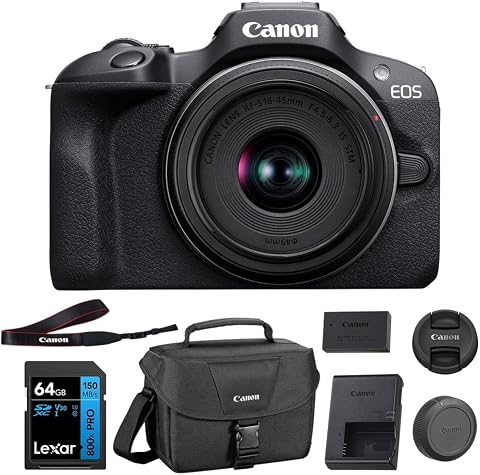 Canon EOS R100 Mirrorless Camera with RF-S18-45mm F4.5-6.3 IS STM Lens Kit, 2…View on Amazon →
Impact of AI-Driven Camera Advancements in 2026
The integration of advanced AI features into cameras will influence both professional and amateur photography. These technologies aim to improve image quality, streamline workflows, and enhance creative options. For consumers, this may result in devices that are easier to operate and produce better results with less technical effort. For professionals, AI can enable more precise autofocus, faster editing, and new creative tools, potentially influencing industry standards. The adoption of AI in cameras also raises considerations regarding data privacy, AI bias, and manual photography techniques, making it a noteworthy development in the field.Current Trends in AI Camera Development
The push toward AI integration in cameras has accelerated over recent years, with major manufacturers including Sony, Canon, and Nikon investing significantly in AI research. In 2023, models like the Sony Alpha 7 IV and Canon EOS R50 showcased AI features such as autofocus tracking and scene recognition, setting the stage for more advanced systems. Industry analysts forecast that by 2026, these features will become standard, with AI capabilities expanding into areas like real-time editing, automatic framing, and personalized shooting modes. The market is also witnessing increased activity from startups developing AI-centric imaging solutions, further fostering innovation. This evolution aligns with broader trends in AI-powered consumer electronics, emphasizing automation, user-friendly interfaces, and connectivity enhancements.“By 2026, AI will be integrated into many aspects of camera operation, influencing how images are captured and processed.”
— Thorsten Meyer, AI Camera Expert
Unconfirmed Details About Specific 2026 Models
Details regarding specific models, their features, pricing, and availability are currently unavailable, as many are still in development or early announcement stages. Official information is expected to be released by manufacturers closer to their launch dates.Upcoming Announcements and Industry Events to Watch
Manufacturers are expected to introduce new AI camera models at major industry events such as CES 2024 and Photokina 2024. These events will likely provide additional information on features, pricing, and positioning of upcoming models. Industry analysts will monitor these launches to evaluate how AI integration continues to evolve and influence consumer choices. Additionally, ongoing research and development efforts suggest that incremental updates and software improvements will be introduced throughout 2024 and 2025, preparing the market for 2026 releases.Key Questions
Which brands are leading in AI camera technology for 2026?
Major brands such as Sony, Canon, and Nikon are expected to be at the forefront, with emerging startups also contributing innovative AI features to the market.
What AI features are most likely to become standard in 2026 cameras?
Features such as autofocus tracking, scene recognition, real-time image enhancement, AI-assisted stabilization, and automated editing are anticipated to be common in upcoming models.
Will AI cameras be affordable for amateur photographers?
As AI technology matures, it is expected that more affordable models will incorporate these features, increasing accessibility for a broader range of users.
How will AI impact manual photography techniques?
While AI is expected to automate many aspects of photography, manual techniques will continue to be valued for creative control. AI may also assist by providing guidance or suggestions for manual adjustments.
When will the first AI cameras for 2026 be announced?
Initial announcements are anticipated at major industry events such as CES 2024 and Photokina 2024, with further details released subsequently.
Source: ThorstenMeyerAI.com
Fall Picks
fall essentials
As an affiliate, we earn on qualifying purchases.