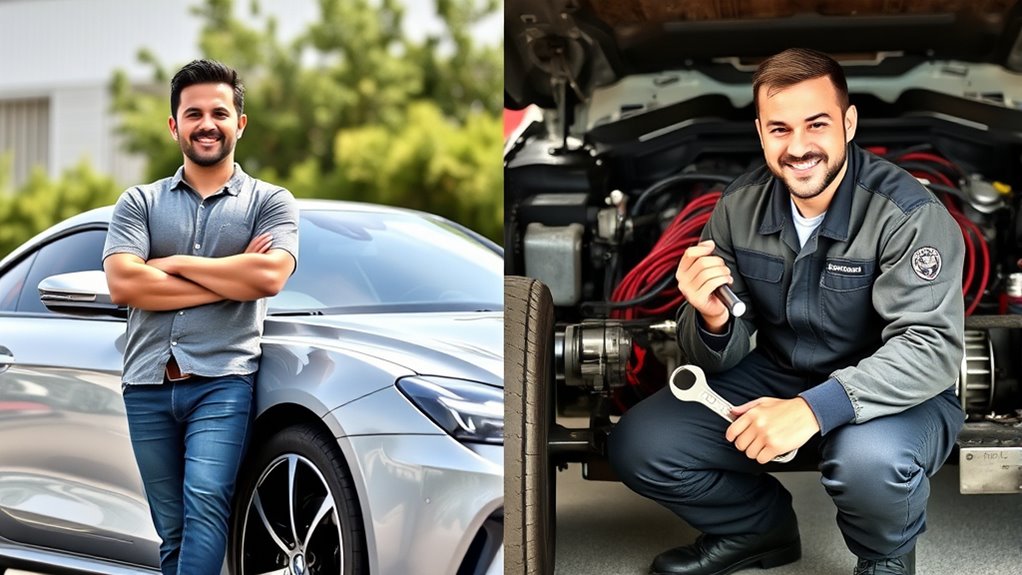

Understanding whether you’re truly running your business or just working in it can be a game-changer. As a technician, you focus on the craft, which feels rewarding but may limit growth. Shifting to an owner mindset involves leadership and strategic thinking, opening doors to expansion. Recognizing where you stand now can set the stage for future success—so, are you ready to explore what it takes to move from technician to owner?
Key Takeaways
- An owner focuses on strategic growth, leadership, and business development, while a technician emphasizes hands-on work and technical skills.
- Assess whether your daily tasks involve managing the business or primarily providing technical services.
- Owners prioritize delegation, team building, and long-term planning, whereas technicians often handle immediate client work.
- Transitioning from technician to owner requires shifting mindset from doing to leading and developing scalable systems.
- Long-term success depends on balancing technical expertise with leadership skills to drive business expansion.

Deciding whether to take on the role of owner or technician can substantially impact your business’s success and your personal satisfaction. When you’re hands-on, performing technical tasks, you often feel connected to your craft and immediate results. However, if you want your business to grow beyond your direct involvement, stepping into an owner’s role requires a shift in mindset. It’s about balancing technical expertise with leadership skills that drive your business forward. Recognizing which role suits your long-term goals is essential because each path demands different priorities and skill sets.
Choosing between technician and owner roles shapes your business’s growth and your personal fulfillment.
If you stay primarily in the technician role, your focus remains on delivering quality work. That’s valuable, but it can also limit your business’s growth. You might find yourself busy with daily tasks, leaving little time for strategic planning or expanding your customer base. While being technically skilled makes you an asset, it’s equally important to develop leadership skills that allow you to delegate, motivate, and manage teams. Without these skills, your business risks stagnation because you’re caught in a cycle of doing everything yourself. To foster business growth, you need to see yourself as more than just a technician. You must cultivate leadership qualities that empower others, streamline operations, and create scalable systems.
Transitioning from technician to owner involves a mindset shift. You’ll need to prioritize business development, marketing, and financial management over hands-on work. This doesn’t mean abandoning your technical skills; it means recognizing when to step back from certain tasks to focus on strategic goals. Developing leadership skills becomes critical here. It involves learning how to communicate vision, build a strong team, and delegate effectively. These skills enable you to leverage your technical expertise to guide and inspire your staff, creating a more resilient and expanding business. Additionally, understanding the importance of exfoliation and other skin care principles can help you better serve clients and differentiate your services.
Your ability to balance technical proficiency with leadership capacity directly influences your business’s potential for growth. If you focus solely on technical work, your growth might be limited by your capacity to handle everything yourself. Conversely, if you invest in leadership skills and strategic thinking, you’ll create opportunities for your business to scale. Deciding your primary role isn’t just about what you enjoy doing; it’s about what will ultimately make your business sustainable and successful. Embracing the owner mindset can [disclose / reveal / open] new levels of business growth, but it requires you to step out of your comfort zone and develop skills that foster long-term success.
Conclusion
Whether you see yourself as an owner or a technician, remember that growth often whispers softly. Embrace the gentle nudge to step into leadership when the time feels right, trusting that nurturing your broader vision can lead to a more resilient, thriving business. Sometimes, the most meaningful progress comes from subtle shifts — a quiet invitation to evolve, deepen your impact, and reveal your true potential. The next chapter awaits, waiting patiently for your embrace.