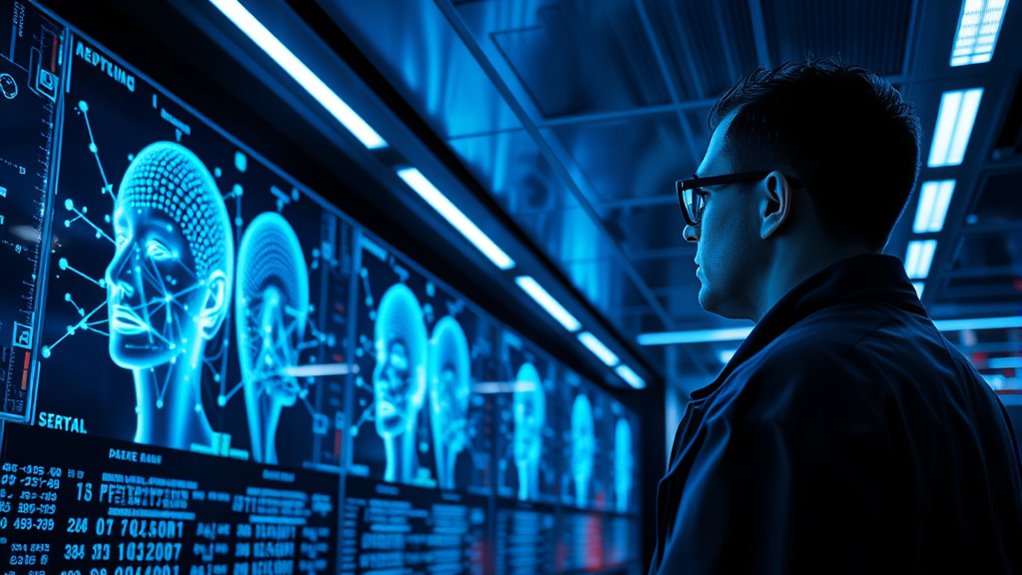

Facial recognition technology captures your facial features from photos or live video and converts them into a digital map based on key landmarks like eye distance and nose shape. It then compares this data against large databases using advanced algorithms and machine learning to identify or verify you. While it can improve security and streamline services, it also raises privacy concerns around tracking, surveillance, and misuse. If you’re curious about how these implications impact us all, there’s more to explore.
Get ready for Prime Big Deal Days — try Prime free
Exclusive member deals on October 6–7, plus fast free delivery. Cancel anytime.
As an affiliate, we earn on qualifying purchases.
Key Takeaways
- Facial recognition captures facial features, creates a digital map, and compares it to large databases for identification.
- It utilizes advanced algorithms and machine learning models that improve accuracy over time.
- Benefits include enhanced security, rapid identification, and personalized services in various sectors.
- Privacy concerns involve digital footprints, tracking without consent, and risks of misuse or hacking of biometric data.
- Ethical debates focus on balancing security benefits with civil liberties, transparency, and preventing mass surveillance.
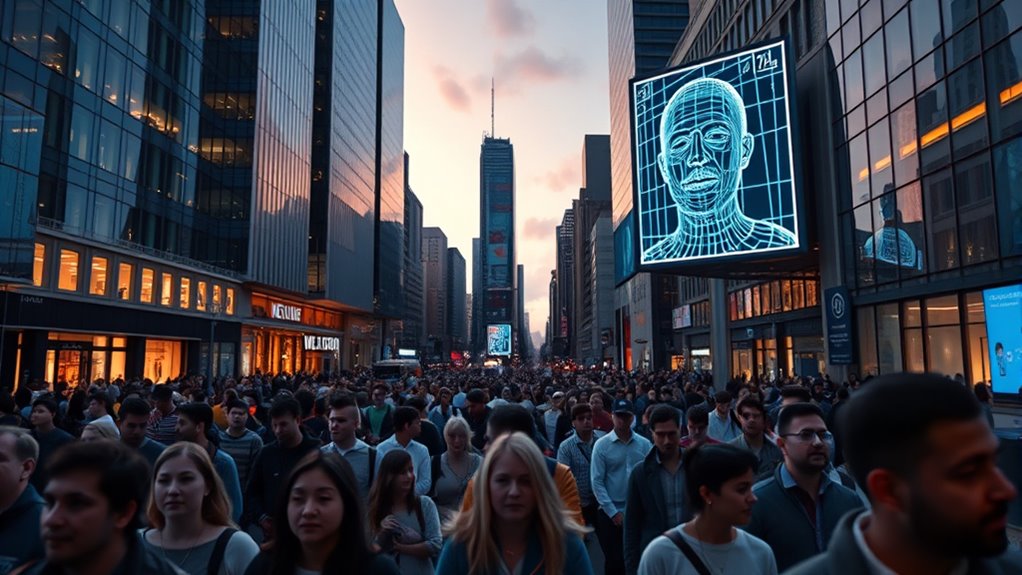
Facial recognition technology has rapidly become a powerful tool for security, law enforcement, and commercial applications. It enables systems to identify or verify individuals by analyzing facial features from images or live video feeds. When you look at a camera, the technology captures your face and converts it into a digital map based on unique facial landmarks like the distance between your eyes, nose shape, and jawline. This data is then compared against large databases to find a match or verify your identity. The process relies on advanced algorithms and machine learning models that get smarter over time, improving accuracy and speed. As you might imagine, this capability has revolutionized how organizations manage security, streamline access controls, and personalize services. Recognizing the importance of evidence-based techniques, developers continually refine these systems to enhance reliability and fairness.
However, along with its benefits, facial recognition raises significant privacy concerns. When your face is scanned and stored, it creates a digital footprint that can be tracked across multiple locations and platforms without your explicit consent. Critics argue that such pervasive surveillance can lead to a loss of anonymity in public spaces, making people feel constantly watched. This ongoing collection of biometric data has the potential to be misused or hacked, risking your personal information falling into the wrong hands. Governments and companies often face criticism for deploying these systems without clear guidelines or transparency, fueling fears about mass surveillance and potential abuse.
These concerns spark ongoing ethical debates about the balance between security and individual rights. On one side, proponents claim that facial recognition enhances safety—helping catch criminals, prevent terrorist attacks, or locate missing persons quickly. On the other side, opponents worry about how this technology could be misused to infringe on civil liberties, suppress dissent, or discriminate against certain groups. There’s also the question of consent: are individuals aware when their faces are being scanned and how their data is stored or shared? Many argue that deploying facial recognition should be accompanied by strict regulations and oversight to prevent abuse and protect privacy rights. Without proper safeguards, the technology’s benefits could come at the cost of personal freedom, leading to a future where constant monitoring becomes the norm.
Frequently Asked Questions
Can Facial Recognition Identify Emotions Accurately?
Facial recognition can identify emotions with some accuracy through emotion detection by analyzing facial expressions. You might notice that it interprets smiles as happiness or frowns as anger, but it doesn’t always get it right. Factors like lighting, cultural differences, and individual expressions can affect results. While it’s a useful tool, you should remember that emotion detection isn’t foolproof and should be used alongside other methods for better understanding.
How Secure Is Facial Recognition Data From Hacking?
Facial recognition data isn’t completely secure from hacking, and privacy concerns are real. You might picture your data like a vault that’s only as strong as its security measures. While companies use encryption and strict access controls, data breaches happen, exposing sensitive info. To protect yourself, stay informed about a company’s security practices and advocate for stronger regulations, so your biometric data remains as safe as possible.
Does Facial Recognition Work in Low-Light or Obscured Conditions?
Facial recognition struggles in low-light conditions and when faces are obscured. You might find it less accurate during nighttime or in crowded, dimly lit areas because low light challenges the camera’s ability to capture clear images. Obscured recognition also becomes difficult if someone wears masks, sunglasses, or hoods. While improvements are ongoing, these challenges still limit the technology’s effectiveness in certain real-world situations.
Are There Differences in Facial Recognition Accuracy Across Races?
Yes, facial recognition accuracy varies across races due to racial bias in the algorithms. You might notice that it works better for some groups than others, leading to accuracy disparities. These differences stem from biased training data and limited diversity in datasets. As a result, the technology can misidentify or fail to recognize individuals from certain racial backgrounds, raising important concerns about fairness and equality.
How Is Facial Recognition Used Beyond Security and Law Enforcement?
Imagine walking into a store where your preferences are gently understood. Facial recognition helps retail marketing by identifying customers, allowing businesses to deliver personalized advertising and tailored experiences. Beyond security, it creates a more engaging shopping environment. You might find that your favorite products are highlighted just for you, making shopping more enjoyable. This technology aims to enhance customer satisfaction while subtly transforming how brands connect with you on a personal level.
Conclusion
As you step into a world where faces become symbols of identity and trust, remember that each scan is a mirror reflecting society’s values. Facial recognition is more than technology; it’s a gateway to connection and caution. Just as a key unfastens a door, it can also open Pandora’s box of privacy concerns. Stay aware of this delicate balance, for in recognizing others, you hold the power to shape a future rooted in both innovation and integrity.
NFL season / tailgating Picks
team gear
As an affiliate, we earn on qualifying purchases.